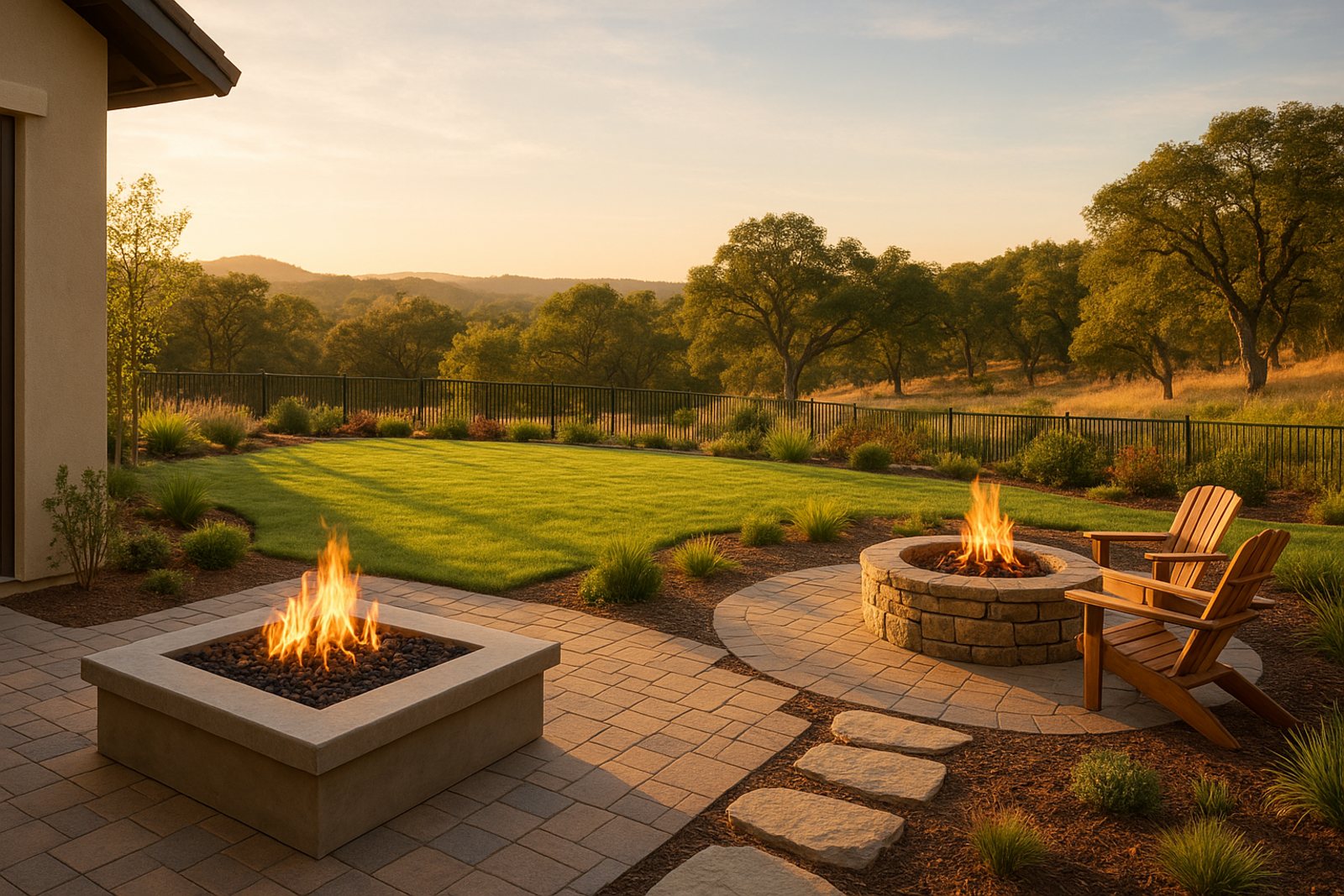
Gas vs Wood Fire Pits: Practical Comparison for Local Homes
Choosing between a gas and wood fire pit in the Rocklin, Roseville, or Folsom area has unique pros, cons, and local regulations. Here’s what homeowners need to know.
Fire pits add warmth and ambiance to any outdoor space, but there’s more to choosing one than just design. Whether you’re drawn to wood crackle or gas convenience, understanding the local rules and each fuel’s pros and cons is key before you build.
Choosing a Fire Pit for Placer, Sacramento, and El Dorado Counties
Fire pits are a favorite gathering spot for backyards across Rocklin, Roseville, Granite Bay, Folsom, Auburn, and nearby. But what works in one part of California may not be best in another. Local climate, seasonal fire restrictions, and neighborhood preferences all factor in. For example, certain dry months might mean fire safety rules impacting your options.
In our foothill and valley communities, open burning risks are a real concern. That means local regulations can determine not only if you can burn wood, but also how and when. Some areas also have air quality rules, especially concerning wood smoke on certain days. Considering these realities at the start saves time—and possible headaches—later.
California Hardscapes has worked with all types of outdoor features, including both wood and gas fire setups. With decades of regional expertise, we know the real-world impacts these factors have on everyday outdoor living. We’ll help you weigh not just the romance of a fire pit, but how it fits your property and local guidelines.
- Some neighborhoods limit wood burning during summer
- Check HOA rules before building or lighting any fire pit
- Gas options often face fewer air quality restrictions
Compare local options or learn more about features on ourFire Pitspage.
Gas Fire Pits: Clean, Convenient, and Low-Maintenance
Gas fire pits have grown in popularity throughout the Placer and Sacramento regions for a few practical reasons. First, they’re easier to light—just a switch or ignition—and provide steady heat without waiting. Cleanup is virtually nonexistent, with no ash or wood debris. That means less work, and no smell lingering on clothes or furniture.
Another big advantage is compliance. Gas fire pits are almost always approved during Spare the Air days, when wood burning is banned to control air pollution. They also sidestep most open burning concerns, provided installation is managed by professionals who follow municipal codes. This makes them great for neighborhoods with stricter rules.
In terms of design, gas fire pits can be fully customized with decorative stone, glass, or concrete finishes. Some homeowners opt for natural gas lines plumbed in professionally, while others use portable propane options. Either way, you can enjoy the same fire ambiance with easier controls and fewer restrictions.
- Meet most air quality rules year-round
- No firewood storage or cleanup needed
- Ignition is instant and heat is consistent
Wood Burning Fire Pits: Tradition, Warmth, and Local Challenges
There’s nothing quite like the crackle and scent of real wood burning in the evening air. For homeowners who value that authentic campfire feel, a wood-burning fire pit fits perfectly into backyard entertaining. The flames are lively, the cooking options are endless, and the experience is nostalgic.
But in Rocklin and surrounding areas, wood fire pits come with some extra limitations. Local authorities restrict wood burning during high fire danger months as well as on designated Spare the Air days. Homeowners must be ready to check daily advisories and keep up with weather updates before lighting up.
Additionally, safe placement is a must. Wood fire pits need to be a set distance from structures, fences, and trees, with proper hardscaping or non-flammable surfaces beneath. This ensures your yard remains safe, neighborly, and up to code throughout fire season and beyond.
- Check city or county websites for up-to-date burn restrictions
- Use seasoned, dry hardwood only to reduce smoke
- Regular cleaning and safe ash disposal are essential
| Feature | Gas Fire Pits | Wood Fire Pits | Local Compliance | Maintenance |
|---|---|---|---|---|
| Lighting & Use | Instant ignition | Manual, takes time | Gas is almost always allowed | Gas is simplest |
| Smoke Emissions | None | Smoke can be heavy | Wood may be banned on high-risk days | Wood needs ash cleanup |
| Installation | Requires gas line/professional install | Simpler, location flexible | Gas install may need permit | Gas easy, wood ongoing work |
| Atmosphere | Steady, clean flame | Classic fire sound/scent | Both types must meet safety rules | Design options for both |
What Local Regulations Mean for Your Fire Pit Decision
In Placer, Sacramento, and El Dorado counties, fire safety and air quality rules shape what’s allowed in residential outdoor spaces—especially as drought and wildfires remain local issues. Regulations often vary not only by city but by season. Gas fire pits are usually permitted year-round, provided they’re professionally installed and maintained.
Wood-burning options, on the other hand, can be prohibited during hot, dry months or outright banned on air quality alert days. Homeowners should expect to check local ordinances or HOA guidance before building or using any fire pit. Some areas may also have size, screening, or setback rules for both types.
Proper permitting can be required for any permanent installation, especially involving natural gas. Respecting these local requirements ensures your investment adds value and safety—not headaches or fines—to your outdoor living.
- Always seek local permit guidance before construction
- Natural gas lines typically require licensed installation
- Ask your installer for current code compliance knowledge
Cost Considerations: Installation, Fuel, and Upkeep
Initial installation for fire pits varies widely based on type, materials, and site prep. Gas units may have a higher up-front cost if natural gas lines need to be run, while wood pits can often use a simpler design and placement. Both need a safe, level hardscape base—custom patios or concrete pads are popular choices.
Ongoing costs are also different. Gas fire pits use either natural gas (via monthly bills) or propane (periodic refills). Wood burners rely on regular firewood purchases or storage, plus the labor of cleanup and occasional maintenance. Homeowners with access to seasoned hardwood may find wood less expensive in the short term.
Consider long-term effort as part of the cost equation. Gas pits require little upkeep, aside from checking connections; wood pits demand ash removal and safe storage nearby. Factoring in all costs and work helps clarify which type aligns with your lifestyle.
- Propane tanks are portable but must be refilled
- Natural gas lines are permanent and require planning
- Wood storage solutions should keep logs dry and pest-free
Browse the full lineup ofOutdoor Livingsolutions for your yard and patio.
Aesthetic and Functional Planning: What Suits Your Outdoor Living?
Gas and wood fire pits offer different character and ambiance. Gas units provide sleek, modern lines and blend into almost any patio design. Wood fire pits, on the other hand, evoke a rustic, traditional setting—ideal for homes with natural landscaping or classic hardscapes.
Function drives many choices. If you’ll use the fire pit for grilling or marshmallow roasting, wood offers more old-fashioned cooking flexibility, but spills and messes are inevitable. Gas options focus more on low-maintenance warmth and ambiance, without the risk of embers.
Consider your hosting style, too. For frequent, spontaneous gatherings or a seamless look, gas delivers speed and ease. For longer, ritualistic evenings, wood can add a soulful gathering point—when regulations allow.
- Gas is quieter, clean-lined, and modern
- Wood delivers lively flame and fire sound
- Either can anchor conversation and relaxation outside
Safety Tips and Local Best Practices
Safety should always guide your fire pit installation and use. Ensure any fire pit is set well away from flammable surfaces, over a proper hardscape or patio, and in view of the house. Gas units must use quality-rated connections, and wood pits need protection from wind and flying sparks.
Always have water or a fire extinguisher nearby when lighting any outdoor fire. Check forecasted wind and air quality conditions before you begin. For wood pits, fully extinguish ashes and coals after each use, and store ash in metal bins.
Regularly inspect your fire pit for damage, blockages, or fuel leaks. Homeowner vigilance keeps gatherings safe and in line with local regulations—protecting not just your property, but the surrounding community.
- Maintain clear space around all fire pits
- Extinguish flames completely when done
- Inspect gas connections for leaks regularly
How to Move Forward: Assessing Your Property and Preferences
Every property in Rocklin, Folsom, or Granite Bay is unique—what works on one site may not fit another. Before deciding between gas or wood, evaluate your yard’s space, existing structures, and how neighbors’ homes are situated. A site visit or professional consultation can clarify what’s best.
Think hard about your style, hosting habits, and day-to-day convenience needs. Is minimal upkeep the priority, or does tradition rule? Safety, longevity, and regulatory compliance should factor in right alongside design and ambiance.
If you’re ready to start or just debating possibilities, California Hardscapes is always happy to walk you through options, answer regulatory questions, and suggest practical solutions for your outdoor space. Thoughtful planning ensures your fire pit becomes a highlight of every season.
- Contact a pro if you’re unsure about local codes
- Consider future home improvement plans
- Check with HOAs or local authorities for restrictions
For tailored advice, request aconsultationwith California Hardscapes.
Planning an outdoor living project?
Call or text 916-741-0633, or email sales@californiahardscapes.com with your address, a short description and a few photos, and we will arrange a consultation.