Built-In Fire Pits: Premium Design, Real Comfort
A professionally built fire pit is more than a backyard upgrade—it’s an invitation to gather, relax, and make memories you’ll treasure for years.
Why Choose a Built-In Fire Pit?
Best for: Homeowners seeking a permanent, durable outdoor gathering spot that enhances both value and day-to-day enjoyment.
A built-in fire pit transforms any backyard or patio into a four-season retreat. Done right, it becomes the natural focal point—drawing friends and family together no matter the temperature. Our region’s cool nights and dry climate make fire pits a cozy centerpiece for gatherings, storytelling, or a quiet evening under the stars.
At California Hardscapes, we believe a fire pit should do more than just look good on day one. It must be efficient, safe, and protected from the elements—built with quality materials suited to our soils and seasons. Properly designed, your fire feature will outlast trends and stand up to regular use, while complementing your landscape and lifestyle.
Homeowners in Placer, Sacramento and El Dorado County face choices: wood or gas, round or linear, stone or block, integrated seating or standalone. This guide explains what to consider before adding a fire pit—clear-eyed about technical trade-offs, practical tips, and what real quality looks like. We don’t compete on being the cheapest. We compete on quality, integrity, and results that exceed expectations.

Fire Pit Design Choices: Finding Your Fit
Wood-Burning vs. Gas Fire Pits
Wood-burning fire pits offer the classic campfire experience—rustic, aromatic, and able to provide substantial warmth for a group. Gas fire pits (natural gas or propane) offer easier ignition, adjustable flame, and less smoke or ash, making them lower-maintenance and a better fit for smoke-sensitive situations or tighter HOA rules.
Round vs. Linear Shapes
Round fire pits encourage group seating and equal warmth distribution, ideal for open conversation. Linear (rectangular) fire pits offer a contemporary look and can better define seating areas or double as a tabletop along patios. The right shape depends on your space and how you entertain.
Block and Stone Construction
Concrete blocks create a consistent, clean structure that’s cost-efficient and strong, especially for circular shapes and seat walls. Natural and manufactured stone finishes add texture, color, and a sense of permanence—blending harmoniously with patios and landscape walls. Each has options for capstones, veneer, and detailing.
Fire Pit Liners & Burner Pans
Steel or stainless fire ring liners protect masonry from direct flame, intensify heat reflection, and extend longevity—critical for wood-burning models or tightly grouted stone. Gas fire pits use burner pans sized to match the pit shape, helping distribute fuel evenly and safely.
Seating Circles & Seat Walls
Custom seat walls or curved benches provide fire-safe, permanent seating, creating a gathering circle and helping define the fire pit zone. Walls can double as low planting beds or visual backdrops. For flexibility, combine built-in walls with moveable chairs or ottomans.
Spacing, Drainage & Safety Details
Placement matters: keep fire pits at recommended distances from structures, fence lines and overhanging limbs, and comply with city or HOA setbacks. Drainage (gravel layers, weep holes or drains) in the pit base prevents water pooling. For safety, require heat-resistant surfaces, proper venting, and consider wind, pets, and small children.
How a Quality Fire Pit Is Built
Every project is built as if it were our own home: no corners cut, every step deliberate. Professional construction means your fire pit is safe, stable, and will stand up to years of local weather and active use. Here’s what goes into doing it right—from excavation through finishing touches.
- Subgrade: Excavate the fire pit footprint well below finished grade, removing all organic material, utility hazards, and soft soil until undisturbed native soil or compacted fill remains.
- Base Preparation: Place and mechanically compact a layer of granular base rock to create a stable, well-draining foundation—especially important in clay soils or terraces prone to shifting.
- Forms & Layout: Mark exact locations, using forms or templates to guide circular or linear shapes. For gas fire pits, rough-in gas supply lines and burner placement before proceeding.
- Structural Wall Construction: Build the fire pit walls using concrete block, natural stone, or a combination, ensuring full mortar bedding and plumb alignment. Install liner ring (wood) or burner pan (gas) according to manufacturer specs.
- Seat Wall Construction (If Included): Stack or pour seat walls to the chosen radius and height. Cap with natural stone, pavers, or custom concrete for a finished look and comfortable seating.
- Joints, Finishing, and Detailing: Tool mortar joints for water shedding, finish wall surfaces with your selected veneer or cap, and create drainage channels or weep holes in the base as needed.
- Finishing Touches: After curing, check all fire features for safety. For gas: pressure-test lines, add media (lava rock or glass). Optionally, seal masonry to resist stains and ease cleaning.

Pros and Cons: Built-In Fire Pits
Strengths
- Long-lasting structure that enhances outdoor living and resale value.
- Custom design fits your space, style, and social needs.
- Low ongoing maintenance (especially with gas and sealed masonry).
- Safer and more reliable than portable or DIY kits, with better drainage and stability.
- Permanent seating and walls add comfort, beauty, and wind protection.
Trade-offs
- Initial investment is higher than portable pits; quality installation is labor-intensive.
- Wood fires may be restricted seasonally or entirely in some neighborhoods.
- Changing design or location after install is difficult and costly.
- Gas models require coordination with a plumber or utility for supply lines, plus regular burner maintenance.
What Does a Built-In Fire Pit Cost?
There’s a broad range in cost for built-in fire pits, depending on size, materials, gas vs. wood fuel, seating details, finish complexity, and site conditions. Quality construction is always an investment, but it pays off in decades of safe use and lasting beauty. We never compromise to cut corners, and always build to a standard we’d want for our own property.
- Type and price of materials chosen (block, stone veneer, custom caps, burners).
- Size, height, and complexity of the fire pit layout (round, linear, terraced, or sunken).
- Whether integrated seat walls, steps, or special lighting are included.
- Site conditions: demolishing old patios, excavating clay or slopes, and drainage needs.
- Access for equipment and materials—tight lots or hillside sites require more labor.
- Type and length of utility hookups (gas lines, electrical for ignition or lighting features).
Care, Longevity & Maintenance
Gas fire pits have relatively simple upkeep: keep burners free of debris, occasionally check for leaks, and gently clean fire glass or lava rock. Wood-burning pits need periodic ash removal, inspection for cracks or settlement, and cleaning of grates or liners. All masonry benefits from seasonal sweeping to reduce stain buildup from soot, leaf litter, or hard water.
Resealing stone or block caps every 2–5 years will help repel moisture, resist stains, and limit freeze-thaw damage—particularly if your site is exposed to irrigation overspray or winter downpours. Lifespan depends on the construction details, materials, how often the fire pit is used, and whether surfaces are kept clean and maintained. With care, your fire feature can easily last decades.
Compare other options

Fire tables and fire bowls
Learn about gas fire tables & fire bowls in Rocklin: concrete & metal bowls, poolside fire-water features, placement, controls, safety and care.
Explore →
Wood pergolas
Wood pergolas Rocklin homeowners love: cedar, redwood and pressure-treated options, construction, care and common questions answered.
Explore →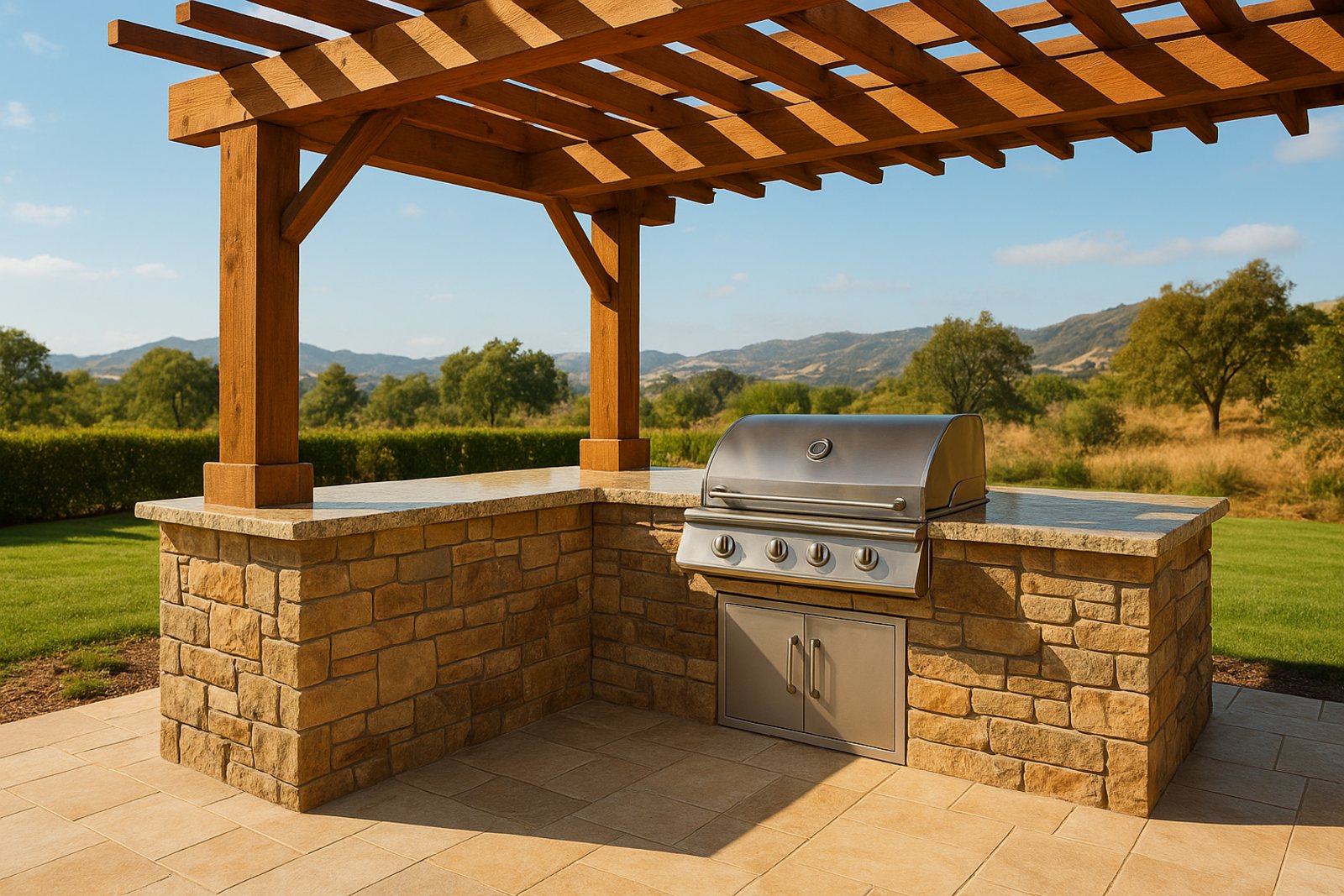
Outdoor kitchens
Outdoor kitchens Rocklin homeowners love: layouts, finishes, appliances and lighting, planned and built for lasting results.
Explore →Fire Pit FAQs for Our Region
Do I need a permit for a built-in fire pit?
Permit requirements depend on your city, county, and sometimes your HOA. Most areas require review for natural gas lines or permanent structures, and fire safety rules may affect wood-burning pits. Check with your local building department before starting—it’s always better to plan than pay for changes later.
How far does a fire pit need to be from my house or fence?
It’s best practice to keep any built-in fire pit at least 10–20 feet from buildings, fences, or low-hanging branches. HOAs and cities may have stricter rules, especially for wood-burning models. We help homeowners check local setbacks and recommend safe, convenient locations tailored to your layout.
Is a gas or wood fire pit better in Rocklin and nearby?
Wood offers a classic campfire feel and more radiant heat but creates smoke and may be limited by air quality rules, especially in summer and fall. Gas fire pits are cleaner, easier to light, and often favored by HOAs for their safety and low maintenance. Most clients choose based on desired experience and local regulations.
Will my fire pit work during winter and rainy season?
Yes—with correct drainage and liner protection, a built-in fire pit can be enjoyed year-round. Keep caps sealed, check drains before big storms, and cover burners if not in use for long stretches. If snow or hard freeze is expected, avoid lighting gas burners until any ice in the pit base melts away.
Can I build a fire pit myself to save money?
While there are DIY kits, quality built-in fire pits require excavation, masonry, gas utility work, and careful drainage—mistakes can compromise safety or lead to costly repairs. Our philosophy: do it right, no corners cut. For lasting value and peace of mind, professional installation is worth considering.
How long does installation take?
Most quality built-in fire pits take from several days to a week or more, depending on size, complexity, weather, and cure times for masonry. Added features like seat walls, custom caps, or integrated lighting can extend timelines. Advanced planning ensures the process is smooth and minimizes disruption.
What’s involved in maintaining a fire pit over time?
Plan for routine cleaning—ash disposal, clearing drains, sweeping surfaces—and periodic inspection for cracks or shifting. Resealing caps and stone every few years helps maintain appearance and durability. Gas burners should be checked annually to keep them running safely and efficiently.
What if my yard is sloped, or I have lots of tree roots?
Sloped yards may require extra excavation, small retaining seat walls, or terracing to create a safe, level space. If there are large tree roots (like oaks), flexible joints or root barriers can help minimize future shifting. Every site gets a custom solution—one reason it pays to consult an experienced builder.
Ready to Explore Your Custom Fire Pit?
Call or text 916-741-0633, or email sales@californiahardscapes.com with your address, a brief description of your vision, and a few photos of your space. We’ll give you honest, expert feedback—no pressure, just the details you need to make a smart decision.