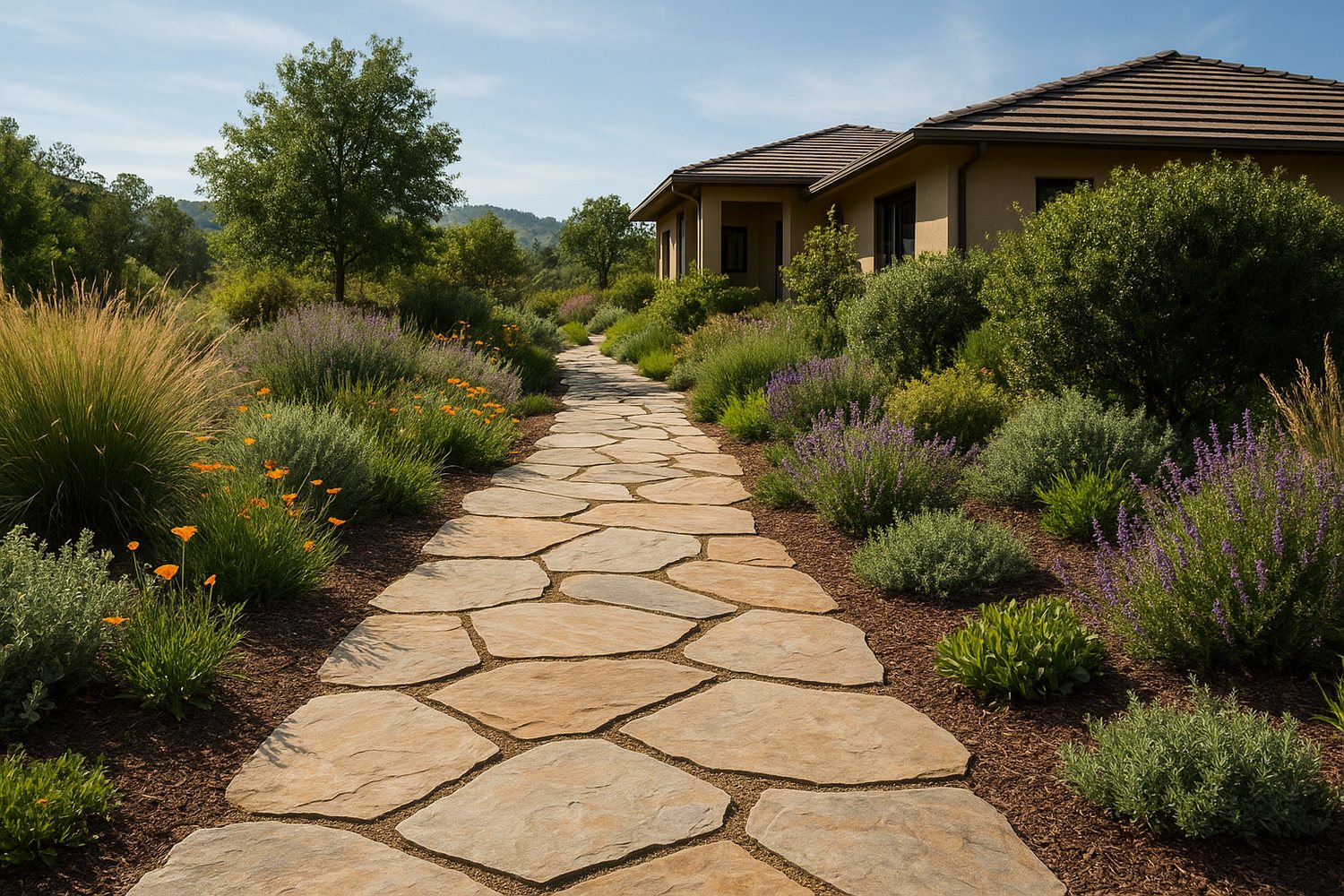
Dry-Laid vs Mortar-Set Flagstone & Natural Stone Patios: A Practical Comparison
Choosing between dry-laid and mortar-set flagstone patios? Compare installation methods, durability, drainage, and maintenance to decide what’s right for your home.
Flagstone and natural stone patios bring timeless style to California homes. If you’re choosing between dry-laid and mortar-set installation, understanding each method’s strengths will help you get the right blend of beauty and durability.
Understanding Flagstone and Natural Stone Patio Options
Flagstone and natural stone patios are a classic choice for California homes, offering a natural look that works well in the varied settings of Rocklin, Roseville, Granite Bay, Folsom, and Auburn. Homeowners gravitate toward these materials for their organic shapes and durability over time. Each patio installation can be tailored to fit your unique property and preferences.
Before breaking ground, it helps to understand the two primary installation methods: dry-laid and mortar-set. Dry-laid patios are set on a compacted gravel and sand base, with no concrete or mortar underneath. Mortar-set patios use a concrete slab with stone set in mortar, making for a more rigid and permanent installation.
Your community’s soil type, intended patio use, and desired maintenance level all play a role in what’s best for you. What works on a hillside in Auburn could be different from a shaded Roseville backyard. The right base and technique ensure your investment performs well season after season.
- Dry-laid: flexible, sits on compacted gravel/sand
- Mortar-set: rigid, stones set in mortar on concrete
- Aesthetic & functional differences matter locally
For more inspiration and detailed information, visit ourFlagstone and natural stone patiospage.
Dry-Laid Flagstone Patios: Pros, Cons, and Practical Considerations
Dry-laid flagstone patios offer flexibility and classic rustic appeal. The flagstones are set atop a compacted gravel base, then swept with sand or fine gravel to lock them in place. This approach provides built-in drainage, making it less likely to puddle, which is particularly helpful given our winter rains in Placer and Sacramento counties.
Because there’s no mortar or concrete, dry-laid patios can move slightly with shifting soils or roots without cracking. That makes them well suited for areas with expansive or clay-heavy ground, like many neighborhoods in Rocklin and Folsom. The natural gaps also make repairs and adjustments more straightforward if stones settle over time.
On the downside, weeds and ants can sometimes find their way into the joints, especially if not maintained. You may also notice some stones shift, which can require periodic repositioning. For a casual look and good drainage, though, dry-laid is often a practical option.
- Excellent drainage for wet seasons
- Best for moving or expansive soils
- Low initial maintenance, occasional tweaks
Mortar-Set Flagstone Patios: When Durability and Clean Lines Matter Most
Mortar-set flagstone patios give a crisp and permanent feel. Each stone is set on a poured concrete slab, then secured with mortar between each joint. This installation type resists settling, shifting, and weed growth, which can be especially valuable for areas you want perfectly stable—think dining patios or poolside spaces.
When done correctly, mortar-set patios provide a seamless finish that’s easy to keep clean and works well with formal landscapes. The solid base makes them better suited for areas supporting furniture or frequent foot traffic. They are less prone to settling and shifting, which means less maintenance over the years.
However, mortar joints are susceptible to cracking, particularly with frequent freeze-thaw cycles or on highly expansive local soils. Drainage also needs careful planning—an improper slope or poor drainage design can lead to water pooling or premature deterioration under and around the stones.
- Stable under heavy use
- Low weed growth, easy to clean
- Requires proper drainage planning
| Feature | Dry-Laid | Mortar-Set |
|---|---|---|
| Base | Compacted gravel & sand | Concrete slab |
| Drainage | Excellent/natural | Requires planning |
| Maintenance | Re-sanding, weed control | Monitor mortar, repair cracks |
| Adaptability | Handles soil movement | Can crack on moving soils |
| Look | Natural, rustic | Formal, crisp |
| Repair Ease | Individual stones adjustable | Repairs require mortar work |
Comparison: Which Method Fits Your Home and Lifestyle?
It’s important to weigh both practical and aesthetic factors when deciding between dry-laid and mortar-set patios. Assess your needs: Do you want to prioritize year-round drainage and a more organic appearance, or is your main goal long-term stability and a clean, formal layout?
For sloped backyards or variable soils, dry-laid patios may provide better performance and require less intervention over time. Mortar-set installations excel when total stability is needed, or if you prefer sharp lines and nearly maintenance-free joints.
Budget and installation timing might also play a role, as mortar-set patios are typically more labor-intensive and costly upfront, while dry-laid options may be quicker to install. Ultimately, considering site factors and how you plan to use your patio leads to the right decision.
- Evaluate patio purpose (entertaining vs. informal pathways)
- Consider local soil, drainage, and tree root activity
- Balance appearance, maintenance, and cost
Drainage and Climate: Key Local Factors
Our region’s soil and climate matter more than you might expect when choosing a flagstone patio method. Winter rains in Placer, Sacramento, and El Dorado counties can be intense, so both styles need proper grading and base prep to avoid future problems.
Dry-laid patios naturally allow water to drain through the joints, which is a benefit in areas where water runoff is a concern. Mortar-set patios, on the other hand, need carefully engineered slopes and possibly drains to avoid standing water, as water will be less able to escape vertically.
Tree roots and shifting clay soils—common in Rocklin, Folsom, and surrounding areas—pose risks for rigid patios. Dry-laid construction can flex and move as the ground shifts, but mortar-set patios may develop cracks if not installed with attention to expansion and soil movement.
- Assess winter rainfall and drainage needs
- Check for expansive clay or tree root growth
- Address slope and runoff in patio planning
Explore other options on ourHardscapes & Patios overviewto see what fits your backyard vision.
Maintenance and Long-Term Care
Every patio needs some level of care to stay looking its best. Dry-laid patios generally require seasonal sweeping and occasional re-sanding of joints, especially after heavy rains or if nearby soil shifts. Weed control and ant deterrents may also be needed periodically.
Mortar-set patios require less frequent joint attention, as weeds find it harder to grow between stones. However, you’ll want to keep an eye out for cracks in the mortar, which can eventually allow water in and cause further damage. Prompt repairs prevent minor issues from becoming major repairs down the line.
Cleaning both styles is straightforward: a gentle pressure wash or broom keeps the surface clear of debris. Sealing isn’t always necessary, but it can help protect specific stones from stains or weathering, depending on your patio’s exposure and stone type.
- Dry-laid: sweep, re-sand, weed control as needed
- Mortar-set: monitor and repair mortar cracks
- Routine cleaning keeps patios looking fresh
Material Choices and Installation Tips for Local Conditions
Flagstone and natural stone options abound: sandstone, slate, quartzite, and more, each with distinct colors and textures. When selecting your stone, consider how it will withstand our hot summers and cool, wet winters—not all stones perform equally in direct sun or during freeze-thaw.
Darker stones can be warmer underfoot in summer, while lighter and denser stone types often better resist weathering. When choosing between dry-laid and mortar-set, the stone’s thickness is key—thicker pieces are usually preferred for dry-laid installations to keep everything stable.
Work with crews familiar with our region’s conditions to ensure your patio is installed for longevity. Proper base preparation, correct grading, and thoughtful stone layout are the foundation for a beautiful, trouble-free flagstone patio.
- Select stone type for climate and sun exposure
- Thicker, denser stones are more stable for dry-laid patios
- Pro installation is key to long-term performance
Making the Final Choice: A Guided Approach
Choosing between dry-laid and mortar-set flagstone patios isn’t just about appearance—it’s about matching your priorities to your property’s unique conditions. Take stock of your goals: What patio experience suits your lifestyle, and what level of maintenance are you comfortable with?
In the Rocklin and greater Placer county area, site visits and consultations help reveal the best option for long-term satisfaction. Collaboration with knowledgeable pros ensures your patio is constructed to suit our climate, soils, and usage patterns.
Take your time exploring both approaches, considering both short- and long-term needs. The right decision balances beauty, performance, and the realities of California’s changing weather, giving you a patio that endures and enhances your outdoor living.
- Review maintenance and usage expectations
- Consult experts who understand local factors
- Prioritize both form and function
Ready to start designing?Request a consultationto talk with our experienced Rocklin-based team.
Planning a hardscapes & patios project?
Call or text 916-741-0633, or email sales@californiahardscapes.com with your address, a short description and a few photos, and we will arrange a consultation.