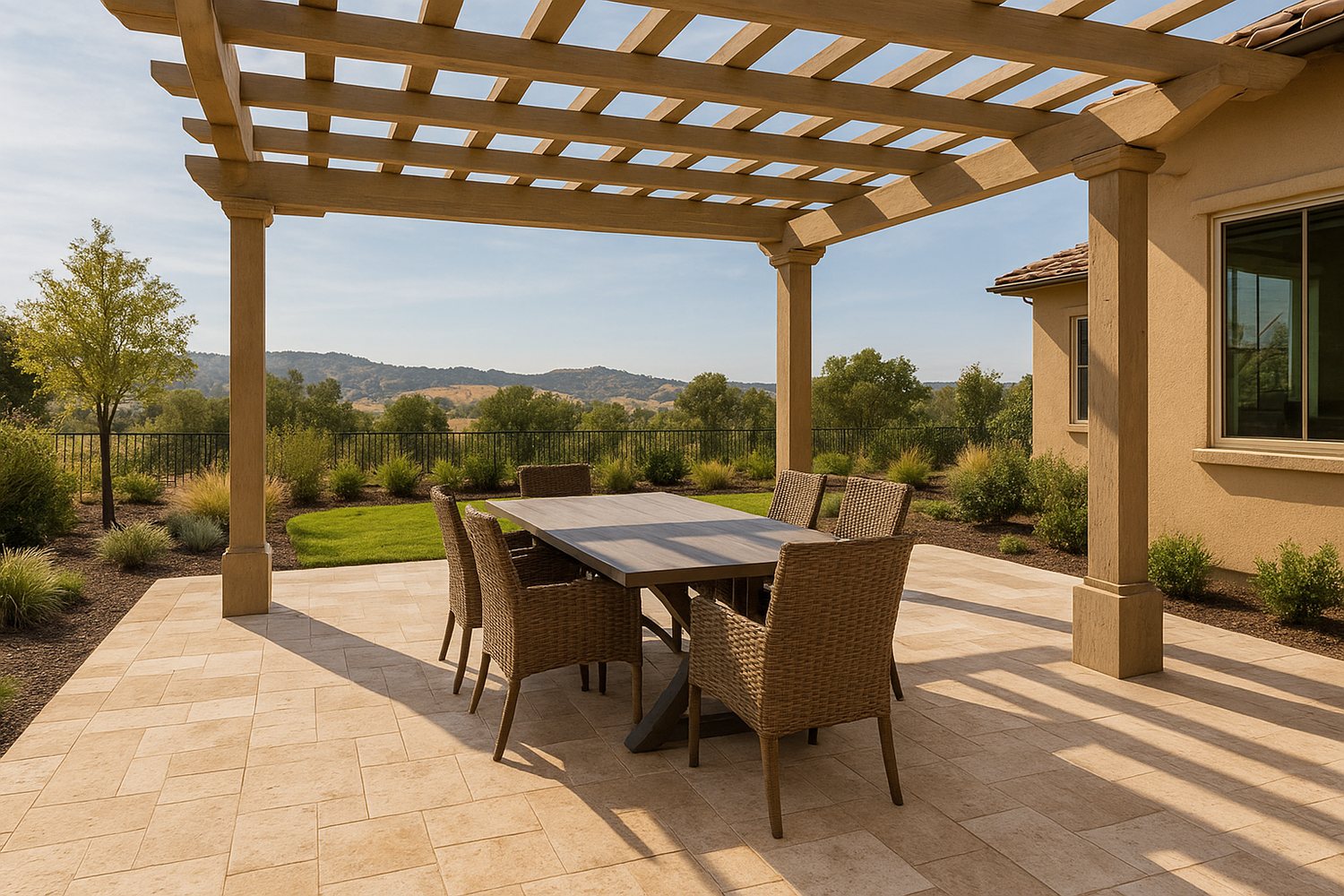
How to Seal and Care for Travertine Pavers Outside
Travertine pavers deliver lasting beauty for patios and hardscapes, but proper sealing and regular care are key. Here’s how to protect your investment.
Travertine pavers are valued for their natural elegance, but Rocklin-region weather demands smart care. Here’s everything you need to know about outdoor travertine maintenance.
Why Travertine Pavers Are Special in Northern California
Travertine pavers are a premium choice for outdoor patios and hardscapes. Their natural color variation, cool surface temperatures, and slip resistance make them ideal for local backyards. These stones are favored not only for their good looks, but also for their ability to stay comfortable under the hot California sun.
Homeowners in places like Roseville, Granite Bay, and Folsom appreciate how travertine stands up to local weather swings—from hot, dry summers to cool, rainy winters. Unlike concrete or brick, travertine handles temperature changes with minimal cracking, keeping patios and pool decks looking clean and refined.
Still, travertine is naturally porous, so it does require specific care. Dust, irrigation overspray, and rainfall can penetrate the stone if left untreated, leading to staining or weathering over time. Understanding how to protect your travertine will help it stay beautiful season after season.
- Feels cool underfoot in summer
- Elegant, natural stone look
- Resistant to temperature swings
Learn more about styles, finishes, and installation on ourTravertine paverspage.
What Makes Sealing Essential for Travertine Outdoors
Because travertine is porous, sealing is a must—not just a bonus feature. If pavers aren’t sealed, water, dirt, and even minerals from sprinklers can seep deep into the surface, creating stains that are difficult or impossible to remove.
A premium sealer acts like a barrier against the elements, making cleaning easier and helping to prevent mold growth in shaded or wet areas. The right sealant enhances color, adds protection, and can even make the surface less slippery, especially important around pools.
In our region, landscaping debris such as oak leaves or pine needles can cause tannin stains. Sealing your travertine pavers early and maintaining the coating over time is crucial for preserving both the appearance and the integrity of your patio or hardscape.
- Reduces risk of deep stains
- Guards against winter moisture
- Easier to clean year-round
Choosing the Right Sealer for the Local Climate
Not all sealers perform equally in our Rocklin-area weather. Water-based sealers are eco-friendly and provide good stain resistance, but may need more frequent re-application. Solvent-based sealers usually last longer and deliver deeper color enhancement, but require careful ventilation during application.
A penetrating (or impregnating) sealer soaks into the stone and repels water and contaminants below the surface, which is best for lasting protection. Topical sealers, which coat the surface, can create more gloss and grip, but sometimes need more upkeep, especially in high-traffic areas.
Your choice should match how you use your space. Entertaining often? Spills happen. Have full sun, or shade and leaf litter? Each scenario can change your ideal product, so a local expert can help you choose what’s right for your patio.
- Choose penetrating for lasting protection
- Water-based for eco-friendliness
- Solvent-based for deep color and long life
| Material | Porosity | Color Variety | Maintenance Needs | Typical Reseal Interval |
|---|---|---|---|---|
| Travertine | High | Wide/natural | Moderate | 2–3 years |
| Concrete | Low–Mod | Many (artificial) | Low | 3–5 years |
| Brick | Medium | Limited (reds, browns) | Moderate | 2–4 years |
| Porcelain | Very low | Wide (manufactured) | Low | 4–7 years |
Step-by-Step: Sealing Your Travertine Pavers
Sealing travertine is straightforward but must be done with care. Start by making sure the pavers are completely dry and free of dirt or debris; a power wash at low pressure and time to air-dry is best. Remove any moss, algae, or stubborn spots with a gentle cleaner appropriate for natural stone.
Next, apply the sealer evenly with a pump sprayer or roller, following the manufacturer’s directions. Work in small sections to ensure full coverage, and avoid walking on newly sealed areas until they are fully cured. Multiple thin coats are better than one heavy application.
Plan your sealing on a dry day with mild temperatures, ideally between 60–80°F, and avoid windy conditions. Full cure may take up to 48 hours. Proper application today means easier cleaning and lasting good looks for years.
- Always start with a clean, dry surface
- Apply in thin, even coats
- Allow extra time to cure before using
Maintaining Your Travertine Patio or Hardscape
Routine care is simple but essential. Sweep leaves, dust, and debris off your travertine regularly so nothing has a chance to stain or etch the surface. For deeper cleaning, use a pH-neutral cleaner made for natural stone; harsh chemicals or acidic cleaners can damage the stone and degrade the sealer.
If weeds appear in joints or edges, pull them promptly. For minor stains (like wine or grease), blot immediately, rinse with water, and clean with a gentle stone-safe product. Reseal high-traffic or weather-exposed areas as needed—often every 2–3 years for best results.
Winter brings rain and possible standing water. Make sure drains are clear, and avoid letting organic debris sit in shaded corners. Simple attention through the seasons keeps your outdoor living space looking fresh and bright.
- Sweep regularly to prevent leaf or dust stains
- Use only pH-neutral, stone-safe cleaners
- Plan a reseal every few years
Explore all our surfaces and features with theHardscapes & Patiosguide.
How Travertine Care Compares to Other Paver Materials
If you’re comparing travertine to concrete, brick, or porcelain pavers, care and maintenance needs do differ. Travertine’s natural beauty comes with responsibility: it’s more porous than porcelain or brick but typically less prone to cracking than poured concrete patios.
While concrete may need occasional resealing to ward off stains, it’s more forgiving if left bare. Brick resists some stains, but moss growth between joints is common in shady Rocklin or Auburn yards. Porcelain pavers require minimal upkeep but offer less traction when wet and don’t deliver the warm, organic look of natural stone.
Understanding your priorities—looks, slip resistance, maintenance time—will help you make the right call for your home and lifestyle.
- Travertine: best for elegant looks and summer comfort
- Concrete: easiest basic maintenance but less natural feel
- Porcelain: lowest upkeep but cooler appearance
When to Reseal and Signs It’s Needed
A freshly sealed travertine patio will bead water on the surface. Over time, rain and regular use will wear down this protection, especially in high-traffic spots or under patio furniture. Monitor the surface each season—if water stops beading, or dirt and spills seem to soak in faster, it’s time for reapplication.
Faded color can also signal sealer wear, as can stubborn stains that weren’t an issue before. The climate in areas like Granite Bay or Folsom, with alternating hot spells and winter rains, means most homeowners will need to reseal every two to three years.
Resealing at the right time prevents bigger issues and keeps your outdoor space looking vibrant. If you’re unsure, a quick spot test with drops of water is a reliable indicator.
- Water no longer beads on surface
- Color looks faded or chalky
- Dirt, stains, or spills penetrate quickly
Professional Help vs. DIY: Choosing What’s Right for You
Some homeowners enjoy tackling sealing as a DIY weekend project. If you’re detail-oriented and willing to follow manufacturer instructions, this can be a cost-effective choice. Remember to always choose sealer products designed for natural stone and handle all safety precautions, especially with solvent-based products.
That said, professional installation offers peace of mind. A skilled team knows exactly how to prep, apply, and cure sealants for our soil, climate, and local water quality. Experienced hands often spot emerging issues—such as subtle stone damage or drainage problems—before they become costly repairs.
Whether you go DIY or hire a pro like California Hardscapes, regular upkeep and attentive sealing will make the difference in how your travertine space ages. Both routes can deliver results if you have the right information and take your time.
- DIY saves money if instructions are followed closely
- Professionals ensure prep and application are done right
- Quality materials and patience are key for both approaches
Ready to protect and personalize your patio?Request a consultationwith our expert team.
Planning a hardscapes & patios project?
Call or text 916-741-0633, or email sales@californiahardscapes.com with your address, a short description and a few photos, and we will arrange a consultation.