Garden Streams vs Waterfalls: Choosing the Right Water Feature
Considering a garden stream or waterfall? Get practical, region-specific advice to help you decide what’s right for your property.
Both garden streams and waterfalls bring the sights and sounds of running water to your landscape. Weighing local climate, maintenance, and effect can help you choose what suits your outdoor space.
Garden Streams and Creeks: The Subtle Approach
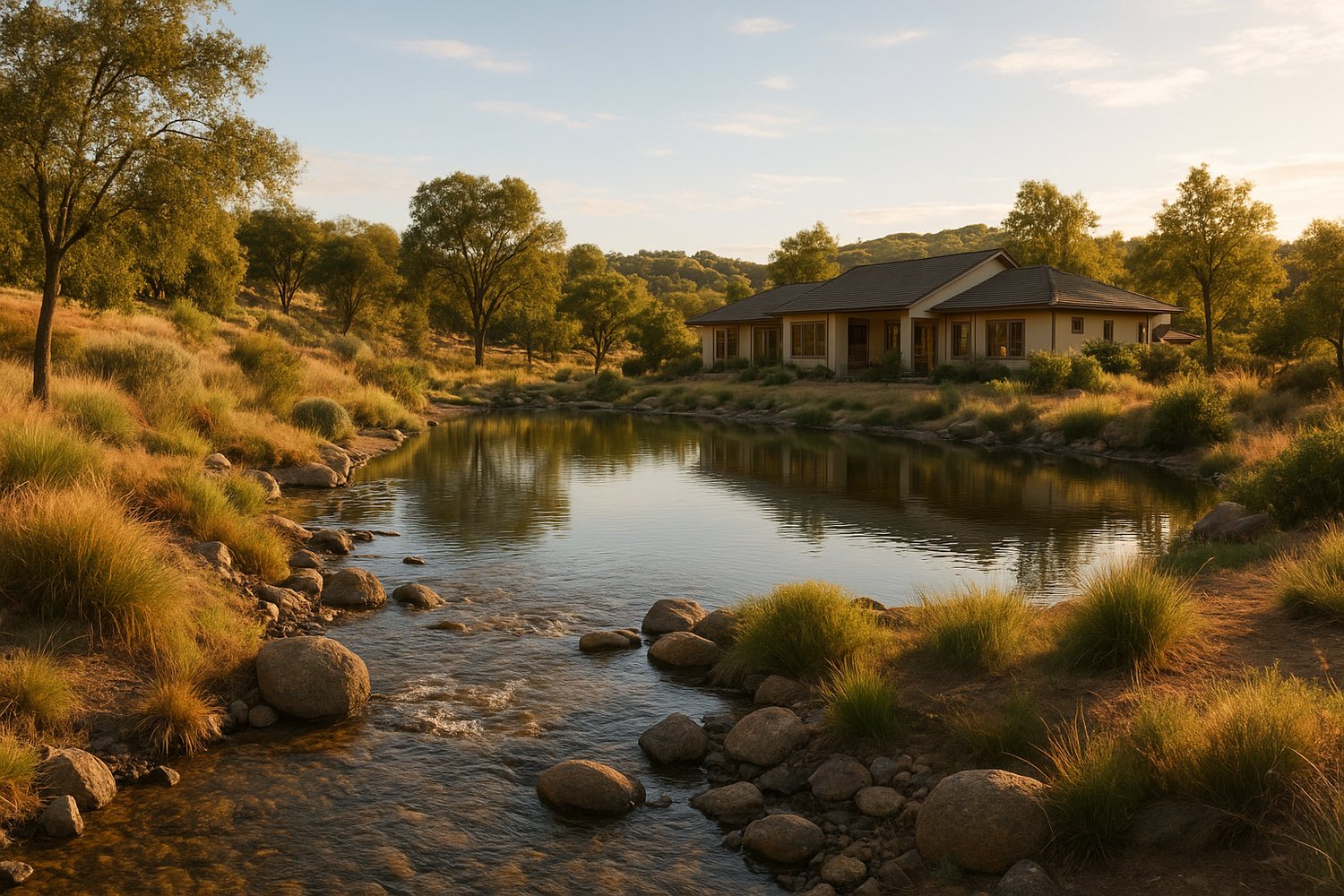
Garden streams and creeks mimic natural watercourses. Their gentle movement creates a peaceful backdrop and complements a California landscape with oaks, grasses, and native rock. Unlike louder features, streams offer subtle sound and can be designed to meander through your yard, adding character without dominating the space.
In Rocklin, Roseville, and nearby foothill communities, streams are effective at attracting native wildlife, from birds to dragonflies. They integrate beautifully with both formal gardens and looser, naturalistic plantings, fitting a wide range of landscape styles and lot shapes. Stream beds can also be used to create dry creek beds for seasonal water or stormwater control.
The construction of a stream typically involves grading, laying liner, and installing a circulating pump system. Maintenance is straightforward, primarily involving leaf debris and algae management. With careful design, a stream’s water use can stay moderate even through dry summers.
- Blends with existing plantings
- Attracts wildlife
- Flexible layout options
Learn more about options and benefits on ourGarden streams and creekspage.
Waterfalls: Impact and Drama in the Landscape
Waterfalls create a focal point—both visually and acoustically. The sound of falling water can mask neighborhood noise, making backyards in Folsom or Granite Bay more private and tranquil. Whether naturalistic or modern, waterfalls draw attention and can transform slopes or elevation changes into dramatic highlights.
For properties with higher grades or natural changes in elevation, a waterfall becomes easier to incorporate. The movement adds cooling humidity and fosters lush microclimates for moisture-loving plants nearby. Waterfalls can stand alone or feed into a pond, pool, or combined creek system for an integrated look.
While waterfalls are low-maintenance in terms of equipment, splash zones, and water loss from evaporation and wind can require occasional adjustment. Pump sizing and electrical access should be planned with a skilled contractor for safety and efficiency, especially during our hot, dry summers.
- Masks outdoor noise
- Works well with slopes
- Makes a dramatic statement
Climate Considerations for Placer and Sacramento Counties
Both streams and waterfalls must be planned with our climate in mind. Hot, dry summers—common across Auburn, Rocklin, and the valley—mean evaporation is a key concern. Well-designed recirculating systems will minimize water waste and ensure consistent operation even during drought.
Seasonal leaf drop, especially from native oaks and pines, can affect water clarity. Proper pre-filtration and easy-access debris baskets are important. Some homeowners add automatic fill valves to compensate for evaporation, but even a simple manual system can suffice with proper monitoring.
Cold winters do rarely cause freezes, but winterizing pumps and protecting plumbing from overnight lows is still advisable. Working with a contractor who understands local weather patterns helps ensure your feature is durable and easy to maintain all year.
- Account for summer evaporation
- Design with local plant debris in mind
- Plan ahead for winter freeze events
| Feature Type | Best for | Noise Level | Ideal Placement | Maintenance |
|---|---|---|---|---|
| Stream/Creek | Wildlife, subtlety | Quiet/Low | Flat or gently sloped yards | Leaf debris, low-medium |
| Waterfall | Sound masking, drama | Moderate–Loud | Slopes, yards needing focal points | Splash, evaporation |
| Hybrid | Blended effect | Variable | Any with creative layout | Maintenance depends on design |
A Practical Comparison: Streams vs Waterfalls
Choosing between a stream or waterfall means weighing aesthetics, property layout, noise preference, maintenance, and practicalities of local climate. While streams often offer a natural look and wildlife attraction, waterfalls deliver high impact and can overcome challenging grades.
Consider your space: smaller, flatter yards make streams easy, while slopes favor waterfalls. Maintenance time is similar but can differ based on plant debris and accessibility of pump intakes. Water use is largely determined by design and system efficiency, not feature type.
For many homeowners in El Dorado or Placer counties, a hybrid feature—where a stream feeds a waterfall or vice versa—may merge the benefits of both. Ultimately, think about which sound and sight you want to experience as you step outside—gentle flow or dynamic cascade.
- Streams: quieter, subtle
- Waterfalls: bold, sound masking
- Hybrid options possible
Sound and Ambiance: What’s Best for Your Outdoor Living?
The ambiance of water is personal—what calms one person may be a distraction to another. In denser Roseville neighborhoods, the masking sound of a waterfall can cover traffic, pets, or nearby activity. On quieter lots, the gentle trickle of a stream might be just enough.
Sound carries differently across hard surfaces like patios and concrete walks—something California Hardscapes considers during layout. Planting trees, shrubs, and groundcovers close to water features softens both the look and the echo of moving water.
Try listening to water features in similar yard settings, if possible, before you commit. This first-hand experience can help set expectations, leading to satisfaction long after installation.
- Waterfall for masking loud surroundings
- Stream for subtle, relaxing sound
- Plant placement affects acoustics
For inspiration beyond streams and waterfalls, see our fullWater Featureslineup.
Construction Techniques: From Concrete to Natural Stone
California Hardscapes uses skilled, licensed contractors and materials suited to our regional conditions—think sturdy concrete, native stone, and engineered liners rated for California’s sun and temperature swings. Basin depth and pump capacity are matched to your yard’s needs and feature size.
Concrete work forms the backbone for many water features, especially in sloped yards or where retaining walls are needed. Natural rock, boulders, or even custom-carved concrete can create edges that look authentic and last for years.
Material selection matters: lighter colors stay cooler, and local river rock or granite blends visually into Sacramento Valley and Sierra foothill landscapes. Durable options mean less repair over time—important for homeowners who value a blend of beauty and practicality.
- Concrete, stone, and liners for durability
- Custom site grading for stability
- Material choices reflect local style
Practical Maintenance for Lasting Enjoyment
Maintenance is part of any water feature, but careful design can limit effort. Avoiding leaf-heavy areas, ensuring smooth flow, and using covers or skimmers help keep water features running with minimal fuss. Larger pumps and correct plumbing sizing improve efficiency.
Cleaning out debris baskets and checking pumps a few times each month is typically enough, especially after windy days or in the fall. Algae growth can be managed by controlling sunlight exposure, using stones and plantings to provide shade, or adding safe water clarifiers.
Choosing the right location on your property—away from heavy tree litter and with good sunlight control—can extend pump life, reduce cleaning, and help ensure your stream or waterfall stays inviting throughout the year.
- Regular debris checks reduce clogs
- Sun and shade control algae
- Position features thoughtfully
Making the Best Choice for Your Home
Ultimately, your decision comes down to personal taste and the unique aspects of your property. Consider consulting a knowledgeable contractor who understands local soil, climate, and plant life to ensure your water feature delivers lasting value and ease of care.
Whether you’re looking for a natural stream to wind past your patio or a bold waterfall to anchor an entertaining space, work with someone who can customize plans to your goals and constraints. Local expertise helps avoid common missteps and costly adjustments.
Take time to walk your yard and picture how each type of water feature would change your experience outdoors. With purpose-driven choices, your outdoor living space can become a favorite, refreshing retreat.
Not sure where to start?Request a consultationwith our team for tailored, practical advice.
Planning a water features project?
Call or text 916-741-0633, or email sales@californiahardscapes.com with your address, a short description and a few photos, and we will arrange a consultation.