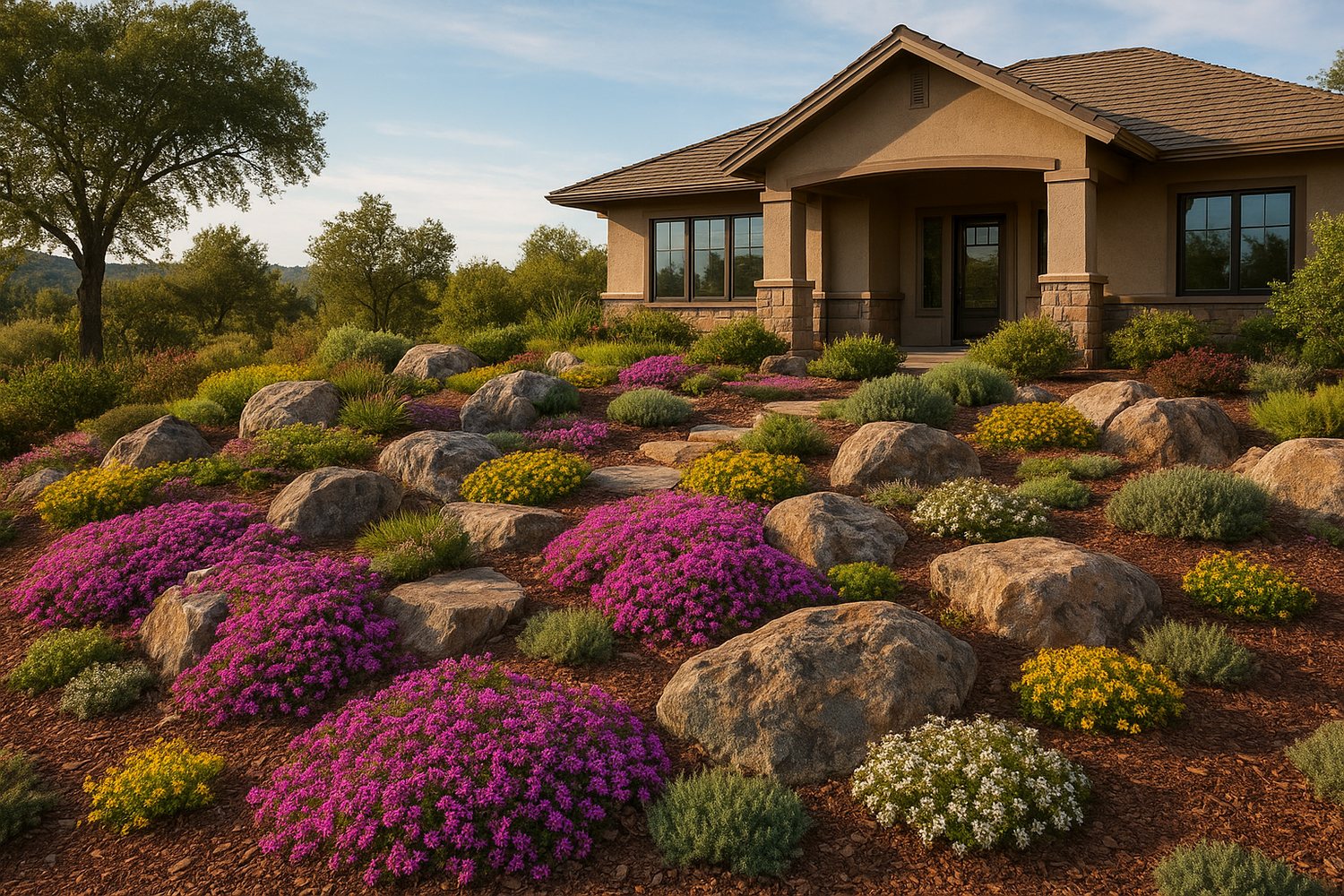
Gravel Mulch vs. Bark: Choosing for Rock Gardens in Placer & Sacramento
Discover how the right mulch—gravel or bark—affects boulders and rock garden performance, maintenance, and water efficiency in our region.
In the Sierra foothills and greater Sacramento area, boulders and rock gardens add beauty and function to outdoor spaces. Choosing the right mulch—gravel or bark—around rocks shapes the garden’s look, longevity, and water usage.
Understanding Rock Gardens and Mulches
Rock gardens are popular across Rocklin, Roseville, and Folsom for their natural style and drought-smart performance. Boulders anchor a landscape visually, while mulch surrounds them to suppress weeds and retain moisture. But not just any mulch will do.
Homeowners in the Sacramento Valley and foothill communities often choose between gravel, stone, and bark as their primary mulching material for rock gardens. Each brings distinct visual and practical qualities to boulder groupings and drought-tolerant plantings.
Clarifying the differences between bark and gravel mulch—and how each works locally—can help you build a beautiful, durable landscape. Before making a decision, it pays to consider the needs of your soil, plants, water bills, and long-term garden maintenance.
Explore design ideas and benefits for your property on ourBoulders and rock gardenspage.
Key Benefits of Gravel Mulch
Gravel mulch offers a clean, refined look that makes boulders and plantings stand out. River rock, crushed granite, and decomposed granite each have unique color and texture options. Gravel doesn’t decompose or blow away easily, so it stays in place through Folsom’s winds and Rocklin’s hot, dry summers.
Gravel drains well, preventing root rot in drought-tolerant plants common to foothill gardens. It’s low maintenance—rarely needs replenishing—and slows weed growth if installed over weed fabric. In wildfire-prone areas like Auburn or Granite Bay, stone-based mulch is naturally fire-resistant.
It’s worth noting that gravel can heat up in direct sun, affecting some plants. Still, for homeowners seeking a clean, lasting, and region-appropriate look, gravel mulch pairs beautifully with the stone textures of boulders.
- Permanent, doesn’t decompose
- Fire-resistant; ideal near structures
- Excellent drainage in clay soils
- Wide range of colors and sizes
- Suppresses weeds effectively
Key Benefits of Bark Mulch
Bark mulch makes for a warm, earthy look around boulders and among native plants. Shredded bark, nuggets, and wood chips are common choices in California landscapes. Bark helps improve soil as it gradually decomposes, adding organic matter over time.
Bark is lighter and stays cooler underfoot than gravel, which is beneficial for people, pets, and shallow-rooted plants. It also suppresses weeds and holds in moisture—especially important for young plantings and during hot, dry summer months in Roseville and Granite Bay.
However, bark requires regular top-ups every couple of years as it breaks down or washes off in strong rains. While bark mulch reduces water use short-term, it isn’t fire-resistant and may not be ideal close to homes in wildfire-prone communities.
- Adds organic matter to clay soils
- Gentle on bare feet and paws
- Improves moisture retention
- Suppresses weeds well
- Needs replenishment every 1-2 years
| Attribute | Gravel Mulch | Bark Mulch | Best Used In |
|---|---|---|---|
| Longevity | 10+ years | 1–2 years | Low-maintenance areas (gravel), Soil enrichment zones (bark) |
| Fire Resistance | High | Low | Near structures (gravel), Remote beds (bark) |
| Soil Improvement | None | Organic matter added | Planting beds needing amendment (bark) |
| Water Retention | Good | Excellent | Dry gardens (gravel), Moisture-loving plants (bark) |
| Maintenance | Minimal | Annual top-up | Forget-it zones (gravel), Shaded/woodland beds (bark) |
Major Considerations for Placer & Sacramento Counties
Folsom, Roseville, and the Sierra foothills each have their own soil and climate quirks. During summer, local clay soils can be slow-draining, which supports gravel mulch for drought-tolerant species. Bark can help improve soil quality where native plants need more organics but may not last long on steep slopes or in heavy rainfall.
Fire risk is a real concern in much of Placer, El Dorado, and Sacramento counties—especially as summers heat up. Gravel mulch is a safer choice within defensible space recommendations, whereas bark mulch is usually best for gardens set back from structures.
Aesthetics also play a big part. Some homeowners prefer the neat, contemporary look of a gravel-based landscape, while others love the woodland feel of bark nestled among larger boulders. Either material can be used effectively when tailored to your property’s unique needs.
Installation and Maintenance Requirements
Both bark and gravel can be installed as a DIY project, but each requires good site prep. Gravel mulch should be laid over a well-prepared, weed-free base—typically landscape fabric or specialty underlayment—for a tidy finish that keeps out weeds and prevents gravel from mixing with soil.
Bark mulch is lighter and easier to transport, but because it breaks down, areas may need to be topped up every couple of years. Edging is especially helpful with bark to keep it from washing out during thunderstorms common in Auburn and eastern foothills.
Ongoing care varies: with gravel, occasional raking or blowing off debris keeps it clean. Bark may need more frequent mulch supplements, leaf removal, and attention where decomposition creates unevenness. Both require spot weed-pulling as needed.
- Install 2–3 inches thick for best performance
- Edging controls mulch movement
- Gravel lasts longer with less reapplication
See all your options in outdoor spaces with our completeLandscaping solutions overview.
Performance in Our Region’s Seasons
Local summers are hot and dry, while winter storms can bring wind and heavy rain. Gravel stands up to both, allowing water to soak through without washing away in a downpour, making it reliable for years with minimal shifting.
Bark mulch insulates the soil from extreme temperatures and helps maintain soil moisture, but may decompose faster in hot months or move during strong rain and wind events. In shaded rock gardens with thirsty plants, bark can be a smart choice.
In wildfire-prone seasons, bark’s combustibility is a disadvantage compared to gravel. Each mulch has its seasonal strengths, so consider placement: gravel near structures and on open slopes, bark in protected or shaded areas further from buildings.
Wildlife, Plant Health, and Water Conservation
Insects and small wildlife respond differently to mulch. Bark mulch attracts beneficial insects and promotes soil health for plants that prefer richer soil conditions—often a plus if you’re fostering pollinator-friendly wildflowers or native shrubs around boulders.
Gravel mulch, in contrast, is less hospitable to pests and is hypoallergenic, making it a choice for low-allergy landscapes. It’s the go-to mulch when building dry gardens, cactus/succulent beds, or where you want lower maintenance and fewer critters.
Both types aid water conservation by protecting soil from direct sun and reducing evaporation. Both can be used in combination—bark under trees and shrubs, gravel around cacti or as a decorative top layer around dramatic boulders.
How to Decide for Your Landscape
Choosing between gravel and bark depends on your goals and conditions. If low maintenance, fire safety, and visual permanence top your list, gravel is favored. Where nurturing soil and a woodsy, hydrated look matter more, bark mulch offers natural appeal.
Don’t be afraid to combine materials. Split your garden into zones based on sunlight, drainage, plant types, and proximity to structures, using gravel where safety and durability are key, and bark anywhere organic matter and cooler coverage benefits your plants.
Whatever your choice, site preparation and thickness matter as much as the material itself. Plan for future maintenance, and check how your preferred mulch aligns with local code for defensible space in wildfire areas. Local experts can help you get the mix right for our climate and soil.
Ready to talk details for your yard?Request a California Hardscapes consultationtoday.
Planning a landscaping project?
Call or text 916-741-0633, or email sales@californiahardscapes.com with your address, a short description and a few photos, and we will arrange a consultation.