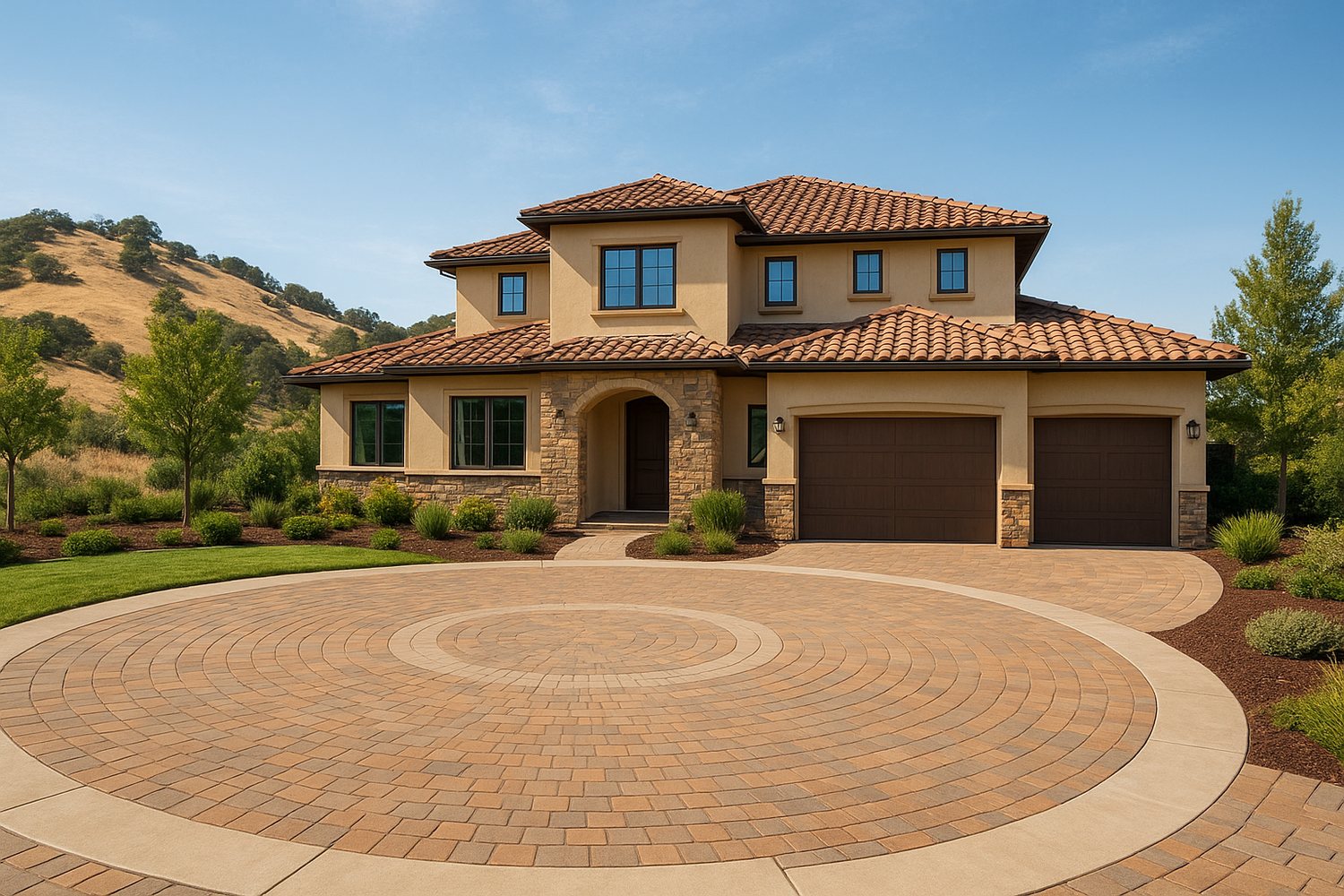
Why Paver Driveways Need a Strong Base and Herringbone Patterns
A well-built paver driveway starts with a deep base and a smart pattern choice. This article explains why these steps matter most in our local soils and climate.
Homeowners in Rocklin, Roseville, and surrounding areas face real choices when it comes to paver driveways. A solid base and the right installation pattern make all the difference.
Why Your Paver Driveway Base Matters Most
When it comes to building a paver driveway, the unseen foundation under your pavers is the most crucial part. Many homeowners notice only the top surface, but it’s what’s beneath that determines how well the driveway holds up to vehicles and weather. In the Rocklin and greater Placer County area, soils can be clay-heavy, which means the base depth is even more important than in some other regions.
A driveway endures far greater loads than a patio or walkway. Cars, trucks, and even delivery vehicles put concentrated stress on a surface over time. Without a stable base, these loads can shift pavers, create ruts, or cause unsightly dips. Investing in a proper base up front prevents the headaches of rework or early replacement down the road.
The industry standard for driveway pavers typically requires a compacted aggregate base much deeper than you’d use under a patio. Local projects often call for at least 8–12 inches of compacted base rock, but soils and site conditions can command even more depth. This level of preparation ensures drainage, locks pavers in place, and keeps your driveway looking sharp for years.
For more depth on driveway paver options and base requirements, explore thePaver drivewayspage.
How California Soils Shape Your Driveway Build
If you live in the Rocklin, Roseville, Folsom, or Auburn area, your property probably sits on a mix of clay, sand, or decomposed granite. Each of these soils reacts differently to heavy loads and our seasonal rains. Clay soils in particular expand in winter, shrink during summer, and can wreak havoc beneath shallow or unprepared driveways.
A deep, properly compacted base stops the worst soil movement from showing up up top. The thicker the base, the more ‘buffer zone’ there is between your pavers and trouble below. It can’t stop all movement, but it minimizes cracks, sags, and weed growth in the joints—especially during our wet winters or hot, dry summers.
Local experience matters. Contractors familiar with Northern California’s soil quirks know when extra steps are needed: adding geo-fabric for clay, more drainage layers for heavy rain areas, or even switching base materials on the fly. These decisions set apart a lasting driveway from one that fails after a few seasons.
- Clay soils expand and contract—risking surface movement
- Deep aggregate buffers against seasonal shifts
- Site-specific base materials improve longevity
What Makes Herringbone Patterns Strongest for Driveways
The way your pavers are arranged is just as important as the materials themselves. For driveways, the herringbone pattern isn’t just a design choice—it’s the most structurally sound option. The zigzag interlock of herringbone disperses weight and resists the shifting forces of turning wheels better than other visual layouts.
Herringbone distributes pressure across multiple directions, not just in the way the cars drive or park. This pattern helps ‘lock’ the pavers, so they’re less likely to spread apart, rut, or settle at odd angles under stress. Over time, this extra strength pays off, especially for households that see daily in-and-out traffic, SUVs, or work trucks.
If visual interest is a concern, you’ll appreciate that a herringbone pattern isn’t just practical—it’s timeless. It brings a sense of craftsmanship to your driveway, signaling quality to neighbors and potential buyers. But above all, it’s a sensible choice for keeping your surface tight and smooth, year after year.
- Resists ruts and movement from vehicle traffic
- Creates strongest interlock of any paver pattern
- Classic style suits any home exterior
| Aspect | Patio Pavers | Driveway Pavers | Herringbone Pattern | Benefits |
|---|---|---|---|---|
| Base Depth | 4–6 inches | 8–12+ inches | Recommended for driveways | Handles heavier loads |
| Pattern | Varied (random, basketweave, etc) | Herringbone preferred | Strongest interlock | Less rutting and shifting |
| Traffic Type | Foot traffic | Vehicle traffic | Resists tire pressure | Longer lifespan |
| Maintenance | Less frequent | Inspect annually | Easy paver replacement | Simple repairs |
Driveway Base: How Deep is Deep Enough?
Not all driveways see the same use, and not all require the same base depth. Still, the worst mistake is cutting corners and laying pavers over an undersized base. For our region, most residential driveways need eight to twelve inches of well-compacted aggregate base, especially on clay soils or where vehicles are frequently parked.
Some properties with heavier soil movement or preferred long-term durability may need even more. It’s also important to consider local freeze-thaw cycles, though we see far less of that than colder climates. Factoring for trash trucks or occasional RV parking may call for reinforced bases or thicker installations than the typical spec.
Site access, slope, drainage patterns, and overall traffic use are details your contractor should address up front. Local know-how and honest site assessment mean your base matches both your soil type and your family’s habits. This is the key to a driveway that keeps its good looks and functionality for decades—not just a few years.
- Standard patios: 4–6 inch base
- Typical driveways: 8–12 inch base
- Heavy-duty use: may require 14 inches or reinforcement
Patio vs. Driveway: The Similarities and Key Differences
It’s easy to think patios and driveways follow the same construction rules, but the reality couldn’t be more different. A patio may use the same paver colors or shapes but handles only foot traffic and light use. Driveways, by contrast, support tons of weight every day and have to manage the strain of vehicles turning, braking, and parking.
Both patios and driveways use similar surface materials—concrete pavers, compacted bases, and joint sand. The real differences come in the depth of the base, type of pattern chosen, and, at times, reinforcing details. If you’ve had a patio installed before, be prepared for a bigger—and more critical—job when it’s time for a driveway.
A patio with a driveway-style base and pattern would last a lifetime. But for a driveway, there’s just no substitute for building it right with extra attention to the foundation, more robust patterns, and drainage details. The up-front work is what keeps that great curb appeal over the years.
- Patios handle foot traffic; driveways handle wheels
- Driveways demand deeper base and stronger patterns
- Similar surface materials, different build specs
Get an overview of more possibilities at our mainHardscapes & Patiosoptions guide.
What to Ask Your Contractor Before Work Begins
Getting the driveway you want starts before any ground is broken. Ask your contractor how they determine the needed base thickness—do they test the soil or just use one approach everywhere? Local experience means adapting the plan to match your property’s unique needs, not just following a universal playbook.
Make sure the contractor describes their compaction process. Multiple machine passes, careful moisture management, and base layering are all part of a driveway that resists future ruts and sags. For clay sites, installing a separation fabric or extra drainage is a marker of someone who understands our region’s specific soil issues.
Equally, don’t be shy about asking for details around paver patterns and edge restraints. Herringbone does more than look nice—it specifically combats the movement from vehicles turning. Setting borders or restraints tightly and flush to the base keeps those edges tight for the driveway’s lifetime.
- Ask about soil testing and base calculation
- Review compaction techniques and drainage strategy
- Confirm pattern and border installation details
Maintenance: Keeping Your Driveway Looking Great
A properly built paver driveway is relatively easy-care, but a few regular habits can keep it looking and performing its best. Brushing joint sand periodically, checking for settling, and cleaning spots or leaves are maintenance basics. Because pavers are modular, repairs—if needed—are usually far simpler than with concrete slabs.
Monitor high-traffic areas for shifting or rutting, especially after the first rainy season or a hot summer. If you notice a dip or loose edge, early intervention is always best. The right contractor can reset only the affected area, preserving your original investment.
Long-term, resealing your pavers every few years can help prevent staining and make cleaning a breeze. Weed growth in joints, if it appears, is quickly handled with a stiff brush or special sand. Maintenance can mostly be a weekend task, not a full-time headache.
- Sweep in joint sand as needed
- Reseal every few years for easy cleaning
- Spot fix minor dips or loose pavers promptly
Making a Smart Investment for Your Home
Choosing a paver driveway is about more than looks—it’s about protecting your investment and enjoying years of reliability. Prioritizing a deep, well-compacted base and a herringbone pattern is not an upgrade; it’s the tried-and-true approach for our region’s weather and soil conditions.
Expertise in local soils, honest site assessment, and attention to detail set a quality contractor apart. It may not be the obvious part of your driveway, but a foundation built right is what keeps your home’s curb appeal and resale intact. Patterns like herringbone add not just strength but enduring style you’ll enjoy every time you pull in.
For homeowners in Rocklin, Granite Bay, Folsom, and nearby communities, the smart choice is a driveway built on solid knowledge and experience. When you’re ready, reach out for a no-nonsense consultation—your driveway deserves a foundation that goes the distance.
If you’re ready to talk specifics for your home,request a consultationwith California Hardscapes.
Planning a hardscapes & patios project?
Call or text 916-741-0633, or email sales@californiahardscapes.com with your address, a short description and a few photos, and we will arrange a consultation.