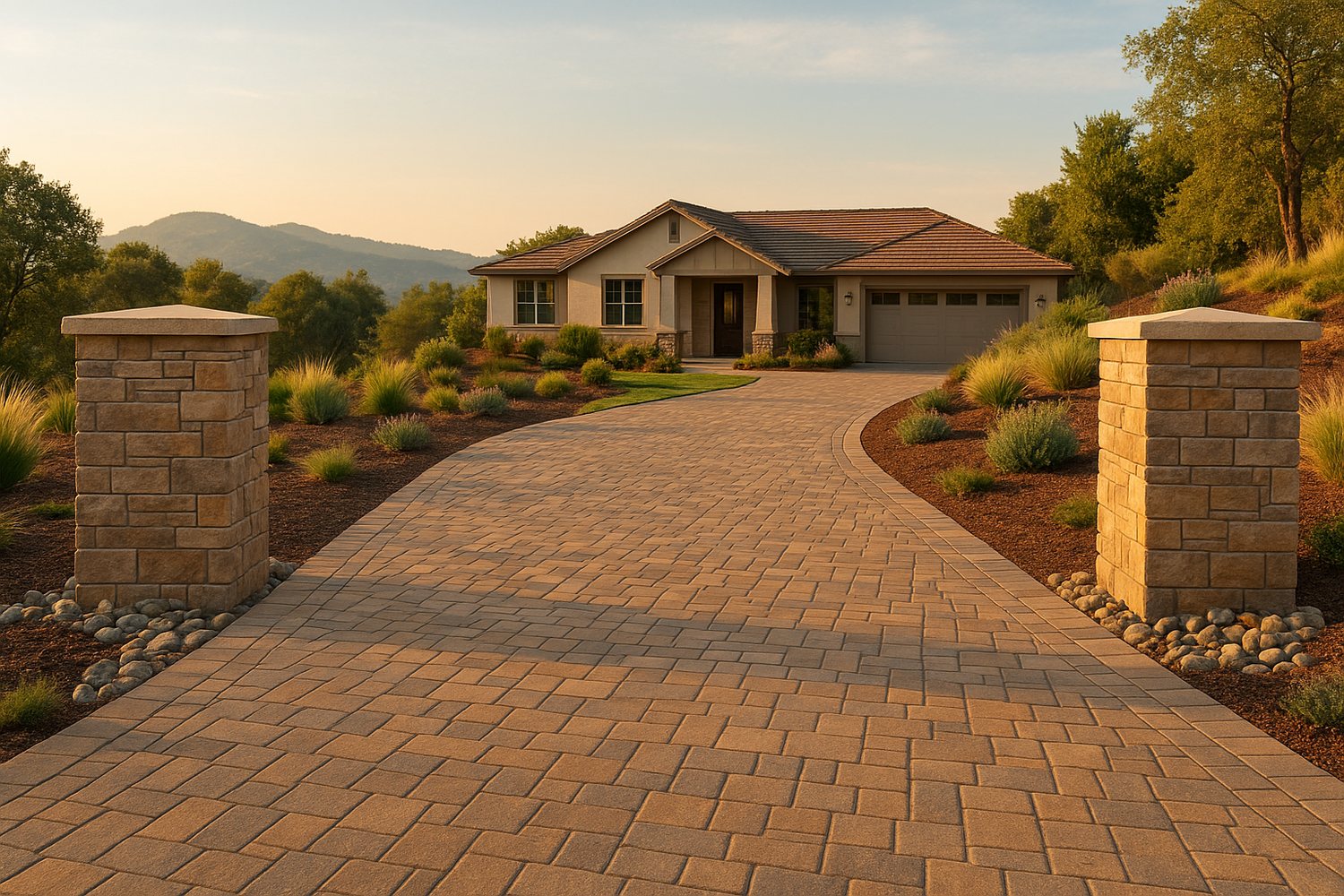
How to Maintain Your Paver Driveway: Oil, Tire Marks & Weed Control
Paver driveways look sharp but demand care. Here’s how to tackle oil stains, tire marks, and weeds common in Sacramento-area homes.
A new paver driveway is a major outdoor upgrade. But to keep it looking top-notch, you’ll want to know how to deal with everyday issues like oil, tire marks, and weeds.
Understanding What Your Paver Driveway Faces
Living in Rocklin, Roseville, or Folsom means your driveway lives through our hot, dry summers and the occasional wet winter. These swings challenge even the most resilient hardscape finishes. It’s not just the weather—driveways endure cars, bikes, messy projects, and plenty of family chaos.
Unlike simple concrete, pavers offer more flexibility and resist cracking. But paver driveways do collect stains and annoyances all their own. Understanding how oil, tire rubber, and even weeds settle in helps you prevent lasting problems and keep things looking clean and polished.
Paver driveway care isn’t complicated, but it is hands-on. You’ll get better, longer-lasting results by handling stains and weeds early. Plus, informed maintenance helps you avoid unnecessary repairs or replacements down the road.
For a deeper look at paver driveway options, see ourPaver drivewayspage.
Dealing with Oil Stains on Pavers
Oil leaks and spills are almost inevitable. Car, RV, or boat, any engine can leave a patchy, dark stain. The good news? Pavers make oil easier to clean than porous concrete. Act fast: Absorb as much oil as possible right away with kitty litter or baking soda. Let it sit, then sweep or shop-vac it up.
For leftover stains, use a stiff nylon brush and a degreasing cleaner suited for masonry, readily available at hardware stores across Placer County. Always avoid wire brushes, which can damage the paver’s surface. Work the cleaner in, then rinse thoroughly—repeating as needed for older or stubborn spots.
If a stain resists your best efforts or if you’re unsure about cleaning agents, call in a professional. Leaving oil to sit for weeks bakes it in, especially during our hot northern California summers. Early attention keeps stains from becoming permanent eyesores.
- Absorb fresh oil immediately with kitty litter or baking soda.
- Use detergent and nylon brush for set-in stains.
- Avoid harsh chemicals that may bleach or etch pavers.
Removing Tire Marks the Smart Way
Tire scuffs—especially from high-performance or turning tires—leave black rubber streaks that make pavers look neglected. These marks are mostly surface grime but can set in during hot weather. The best approach: hose the area, then apply a mild degreaser or paver-safe cleaner.
Work with a stiff, nylon-bristled brush after letting the cleaner sit for 10–15 minutes. Avoid pressure washers at high settings, which can dislodge paver sand. Instead, use medium pressure and direct the spray at a shallow angle to keep sand between joints in place.
Most fresh tire marks come up with a bit of elbow grease. For persistent or older streaks, a second round with cleaner may be needed. Maintenance cleaning every couple of months keeps your driveway looking fresh and prevents buildup.
- Hose and clean tire scuffs quickly for best results.
- Never use a wire brush or harsh solvent.
- Routine maintenance avoids heavy buildup.
| Issue | DIY Approach | Pro Approach | Prevention |
|---|---|---|---|
| Oil Stains | Absorb, scrub with cleaner | Commercial degreaser, extraction | Seal drive, blot ASAP |
| Tire Marks | Mild cleaner, nylon brush | Pressure wash, specialty solvents | Routine light washing |
| Weeds | Hand pull, torch, spot-treat | Re-sand joints, steam or herbicide | Polymeric sand, sweep debris |
How to Keep Weeds from Invading Your Paver Driveway
Weeds sprouting between pavers are common from Auburn to Granite Bay, especially as spring brings wet weather. Paver joints can collect dust, soil, and organic debris, giving weeds a place to root—even when pavers sit over compacted base.
Regular sweeping to remove organic material and occasional joint sand top-ups help prevent weed growth. When weeds appear, pull them by hand before they go to seed. For stubborn growth, use a torch-style weed burner or spot-treat with a paver-safe, non-toxic weed killer.
For long-term control, consider re-sanding joints with polymeric sand, which hardens and blocks weeds and ants. Check paver joints each year—especially before rainy season—for any gaps or settling that give weeds a foothold. Proactive care keeps your driveway looking manicured.
- Sweep regularly to keep joints free of debris.
- Hand pull weeds before they mature.
- Re-sand with polymeric sand for long-term weed suppression.
Preventive Maintenance: What Actually Works Here
Our Northern California climate—especially in Placer and Sacramento counties—means pavers handle both sun exposure and winter moisture. That’s why annual maintenance is smart. Start with pressure washing on a low/medium setting each spring to clear dirt before it settles deep.
Inspect for areas where joint sand has eroded or pavers have settled. Top up sand, and replace or re-level any loose stones. This prevents shifting and weed invasions. If your pavers were installed with polymeric sand, you’ll have fewer issues, but all driveways still need a check-up.
Consider sealing your paver driveway every 3–5 years for added stain resistance and easier cleaning. Be sure any sealer is made for interlocking concrete pavers and is applied when pavers are clean and fully dry. Sealing can help with oil, tire marks, and weed prevention all at once.
Preventive tasks:
Explore all your outdoor living possibilities with ourHardscapes & Patiosoverview.
Paver Replacement: When to Replace, When to Repair
Individual pavers can crack or stain beyond cleaning. The beauty of interlocking systems is that you can replace single pavers without disturbing the whole driveway. If a problem area is small, swapping out a few stones usually restores your driveway’s appearance and function.
Widespread sinking, shifting, or major staining may signal a bigger issue with the sub-base, especially if it’s over 10–15% of the driveway. At this point, professional help is recommended to assess drainage, compaction, and possible full or partial replacement.
Routine check-ups each year spot issues before they worsen. If you’re not sure what you’re seeing—such as uneven settling or deep stains that resist all cleaning—reach out to a local expert. Better to fix a few pavers now than redo the driveway later.
- Replace single damaged pavers, not the whole driveway.
- Address large problem areas quickly to avoid more costly repairs.
- Consult a professional if you notice ongoing settling.
Choosing the Right Tools and Cleaners
Having the right gear makes all the difference with paver maintenance. At minimum, you’ll want a stiff nylon brush, a quality masonry-safe cleaner, and polymeric sand for joints. A shop-vac helps with lifting loose debris or sand after scrubbing.
Avoid anything too abrasive—wire brushes, high-powered pressure washers, or harsh chemicals like bleach can damage surface color and texture. For eco-minded homeowners, there are effective non-toxic cleaners and weed killers safe for use around pets and kids.
Always test cleaners on a small, inconspicuous paver first to confirm they won’t harm the finish. Consider wearing gloves and eye protection, especially when using chemical cleaners or torches. Safety and patience go a long way toward keeping your outdoor spaces beautiful.
- Stiff nylon bristle brush
- Masonry/paver-safe cleaner
- Polymeric sand for joints
- Shop-vac or broom
Getting Help: When Pros Make Sense
Some situations call for an expert touch. If oil, tire, or weed issues become too much despite regular maintenance, a local hardscape pro can deep clean, re-sand, reseal, or even replace pavers as needed. It’s also smart to get help when shifting, large cracks, or widespread weed growth persist.
Professional crews have access to commercial equipment and experience with common problems in places like Roseville, Granite Bay, and Rocklin. Their work is efficient and thorough, saving you time and sparing your pavers from accidental damage from heavy-handed DIY.
Don’t hesitate to ask questions or request an evaluation of your driveway’s condition. There’s no shame in calling for backup—your driveway is a major home investment, and quality care means more curb appeal and years of reliable use.
- Deep cleaning and sealing by pros for tough stains
- Repair and leveling for shifting or sinking sections
- Professional inspection for unknown issues
Ready to talk about your driveway or patio project?Request a consultationwith our team today.
Planning a hardscapes & patios project?
Call or text 916-741-0633, or email sales@californiahardscapes.com with your address, a short description and a few photos, and we will arrange a consultation.