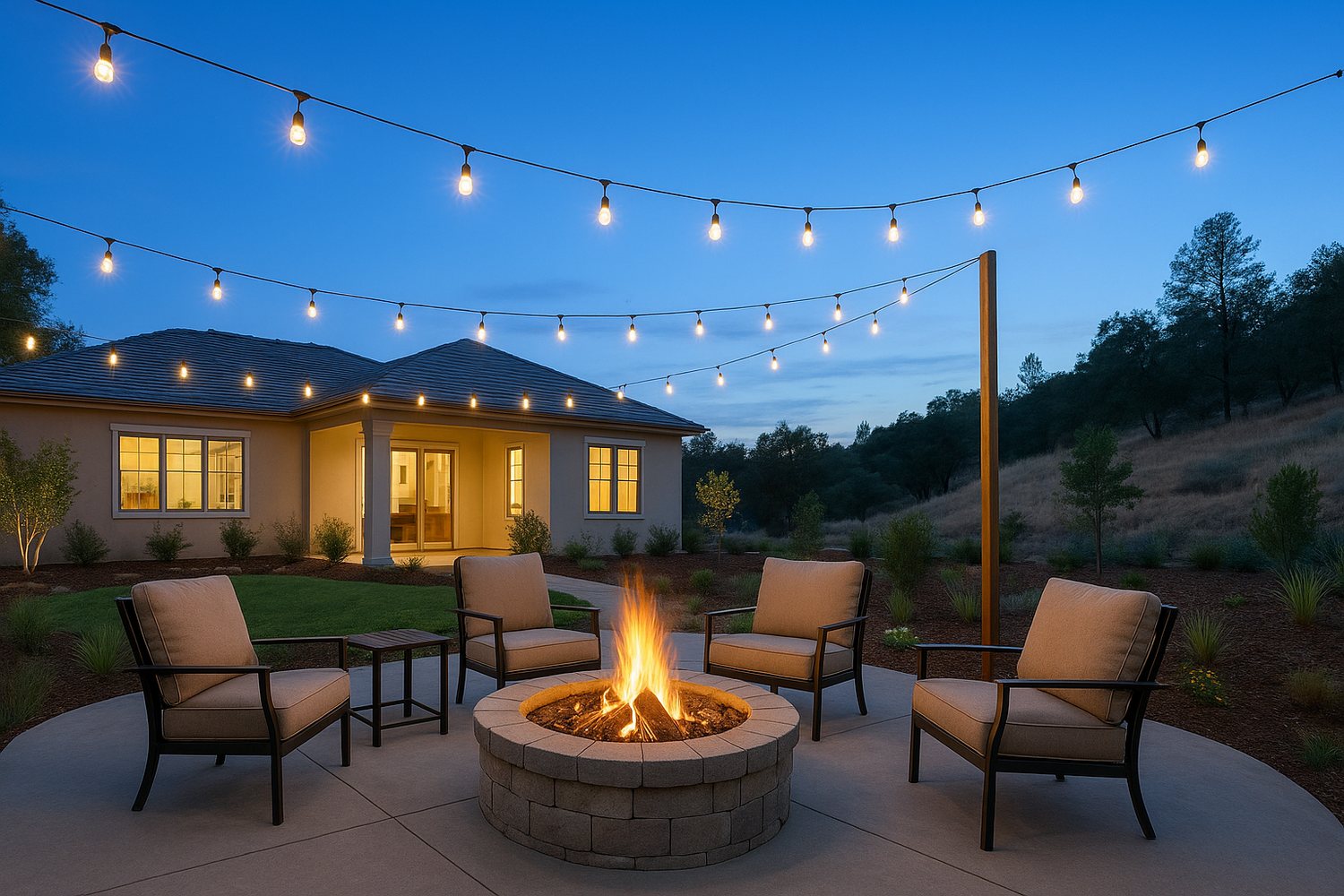
Planning Permanent String and Cafe Lights for Your Outdoor Space
Planning permanent string and cafe lights? Explore the essentials of posts, cables, and design choices for enduring outdoor lighting success in California.
Well-planned permanent string lights can transform your backyard and patio. Set yourself up for years of enjoyment by making smart choices about posts, cable supports, and placement in California’s climate.
Why Choose Permanent String Lights?
Permanent string and cafe lights bring both charm and function to outdoor spaces in Rocklin, Roseville, Granite Bay, Folsom, Auburn and surrounding communities. Unlike seasonal setups, they’re designed to last year after year, requiring minimal maintenance. With the right planning, these lights become a long-term enhancement for your yard, patio, or poolside retreat.
Whether you host gatherings or simply enjoy quiet nights outdoors, reliable lighting creates ambiance, ensures safety, and extends your use of the space. Permanent installations stand up to wind, wet weather, and our region’s hot summers—something temporary sets rarely manage. That durability makes thoughtful material and layout choices worthwhile.
If you value a tailored look and stress-free enjoyment, investing in a well-planned system is the way to go. With posts and support cables sized and spaced correctly, your outdoor lighting will look intentional—not cobbled together—while providing even coverage and sleek lines.
For more tips on designing with bistro-inspired lighting, visit our mainString and cafe lightsresource.
Assessing Your Yard for Light Placement
Start by defining your lighting zones. Map out where you need visibility and where you want an inviting glow—think dining areas, patios, pool decks, and footpaths. Survey your space for existing anchor points, such as mature trees or structural posts, but be realistic about their suitability for long-term loads.
Walk your property at twilight to spot dark corners and notice how people move through the space. Overlap your string light coverage to avoid harsh shadow lines. Always factor in the local environment: large oaks, palms, and pines common in Placer and El Dorado counties may not be ideal for permanent attachment, especially if tree movement or growth will shift your lights.
Careful planning up front helps avoid surprises. Marking proposed post positions with stakes and laying out string on the ground reveals sight lines, cable runs, and any potential obstacles—like irrigation heads or planters—before installation.
Choosing Materials: Posts, Cables, and Lighting
Selecting suitable posts and support cables is just as critical as picking the lights themselves. Galvanized steel poles offer long-term strength and resist rust, while powder-coated aluminum blends into modern landscapes. For a more natural look, pressure-treated wood can work, but maintenance increases with age.
Cables should be stainless steel, sized to handle both the weight and potential wind loads. Properly tensioned cable reduces sag and prolongs the system’s life. For hardware, opt for commercial-grade turnbuckles, eye bolts, and cable clips—these withstand seasonal weather shifts here in California much better than lighter-duty alternatives.
When it comes to the lights, consider LED string bulbs for energy efficiency and longevity, plus shatter-resistant options if children or pets use the space. Choose warm color temperatures for relaxed, inviting outdoor ambiance. Match fixture design to your style while prioritizing durable, weather-rated casings.
- Galvanized steel or aluminum posts: low-maintenance, very durable
- Pressure-treated wood: natural aesthetic, higher upkeep
- Stainless steel cables: won’t rust or stretch unevenly
| Material | Maintenance | Durability | Appearance | Cost Level |
|---|---|---|---|---|
| Galvanized Steel Post | Low | High | Modern/Industrial | High |
| Powder-Coated Aluminum Post | Very Low | High | Sleek/Contemporary | High |
| Pressure-Treated Wood Post | Medium | Moderate | Natural/Warm | Moderate |
| Stainless Steel Cable | Very Low | Very High | Minimal/Neutral | Moderate |
| Commercial Grade Bulbs (LED) | Very Low | Very High | Classic/Versatile | Moderate |
Installing Posts and Cables: What to Expect
Installing posts is often the hardest part. Posts need to be deep enough—at least two feet into the ground for most residential installations, depending on soil and exposure. In areas with clay or shifting soils (common around Rocklin and Auburn), concrete footings or sonotube forms offer added stability. Posts should line up with planned cable paths for neat, intentional geometry.
Cables must be pulled taut and anchored solidly. Expect to fine-tune the tension as you attach each section and after the lights are up—the weight of commercial-grade string lights can surprise you. Corner posts often need diagonal bracing or larger footing sizes to counter tension pull.
Whenever possible, avoid stretching cable spans over 30-40 feet without intermediate support; longer runs may sag or sway too much, especially in windy foothill locations. Careful alignment during installation means crisp, dependable lighting lines and fewer future adjustments.
String Light Layouts That Work in California Yards
Popular patterns include zig-zagging across a patio, outlining the perimeter, or radiating from a central mast. The best shape depends on yard size, anchor point locations, and how you use the space. Avoid running lines directly beneath heavily shedding trees to reduce future cleaning and bulb replacement.
For typical rectangular patios, parallel runs or gentle fans from one wall out to posts create a modern look. Where outdoor kitchens or conversation pits are focal points, consider enclosing the space with a soft canopy of overlapping strings. Shapes that invite groups to gather—circular arcs and V-formations—work well for entertainment zones.
Always finalize your pattern before digging post holes. Use string or painter’s tape to visualize lines overhead. If you plan to add landscape elements down the road, choose layouts that allow room for growth without blocking future plantings or walkways.
- Avoid major tree drip zones and leafy overhangs
- Leave clearance for foot traffic and outdoor furniture
- Plan for grill smoke and wind direction
To discover landscape, deck, and additional solutions, see our fullOutdoor Lightingoverview.
Dealing with Weather and Regional Conditions
Our local summers get hot, while occasional strong valley and foothill winds can shake loose anything not firmly anchored. Posts should be adequately set and designed to handle wind loads on both cables and light strings, especially in open layouts.
Use weather-resistant hardware at every connection point. Checking tension and hardware annually—before and after the rainy season—prevents mid-year setbacks. For hilly lots in Auburn or larger spaces around Folsom Lake, consider slightly thicker cables or more support posts to combat both terrain and weather.
Western sun exposure fades light casings and can cook lower-grade wiring fast. Choose dark, UV-stable materials, and run cabling along eaves or under patio covers where possible for added longevity.
- Install thicker cables or extra supports in breezy zones
- Check for UV-resistant ratings on all hardware
- Secure cables away from ground-level water runoff
Tying It All Together with Professional Know-How
Even for the seasoned DIYer, getting posts and cables just right can be a challenge. Subtle mistakes in alignment or anchoring reveal themselves year after year. Locally, soils, lot slopes, and yard layouts add variables that are best addressed with experience.
Coordinating with experienced professionals pays off in time and lasting quality. They spot issues (like utility lines) before digging, ensure clean cable runs, and select hardware suited to our region’s particular weather patterns. Licensed, bonded, and insured contractors deliver peace of mind, handling both the installation and any site surprises that arise.
If you’re not certain about structural or electrical details, a consult can clarify your vision and safeguard your property. A qualified local team can bring your lighting plans to reality, no matter the outdoor features or complexity.
Next Steps for Beautiful, Lasting Outdoor Lighting
The right plan for string lights comes down to combining beauty, durability, and safety. Assess your space, get help where you need it, and insist on materials built for California’s climate. Whether you’re updating a patio in Rocklin or starting from scratch in Granite Bay, an informed layout and careful installation make for years of beautiful evenings.
Document your design ideas and material preferences. When you’re ready, reach out to discuss details, answer questions, and find solutions tailored to your property and lifestyle. Remember, the right partner can streamline installation and provide insight beyond online tutorials.
Permanent string and cafe lighting is the finishing touch that ties together your outdoor living space. With careful planning and reliable support, the results are both immediate and long-lasting.
Curious about the best plan for your yard?Request a consultationfor tailored advice from our team.
Planning an outdoor lighting project?
Call or text 916-741-0633, or email sales@californiahardscapes.com with your address, a short description and a few photos, and we will arrange a consultation.