A Homeowner’s Guide to Planning Your Concrete Project
Concrete is one of the most versatile materials for residential hardscaping. Here’s how homeowners in Placer, Sacramento, and El Dorado County can approach their project with clarity.
Getting concrete work right starts long before the first truck arrives. This practical guide shares essential steps to help you plan, time, and budget your project.
Assessing Needs and Defining Scope
Start by clarifying what you want out of your concrete project. Define spaces—patio, walkway, driveway, pool deck—based on your family’s lifestyle and how the area is used. Map the boundaries, consider how you’ll move between features, and take a fresh look at traffic patterns. The right scope keeps the project realistic and prevents midstream changes.
In this region, climate and soil conditions can affect where concrete will perform best. Consider shade, slope, nearby trees, and water drainage. Protecting the integrity of the installation starts with understanding these site factors. Walk the likely locations at different times of day: hot sun, shade, wind, and tree litter all matter.
List your functional goals alongside your aesthetic wishes. Are you aiming for a low-profile modern patio or a textured look that complements your home’s style? Jot down priorities for size, surface finish, and color. Bring initial ideas to your contractor to discuss options and feasibility.
bullets": ["Patio, walkway, driveway: start with purpose","Map traffic flow and access","List functional and visual goals"]
For deeper insights into our process, visit ourConcretemain page.
Choosing the Right Materials and Finishes
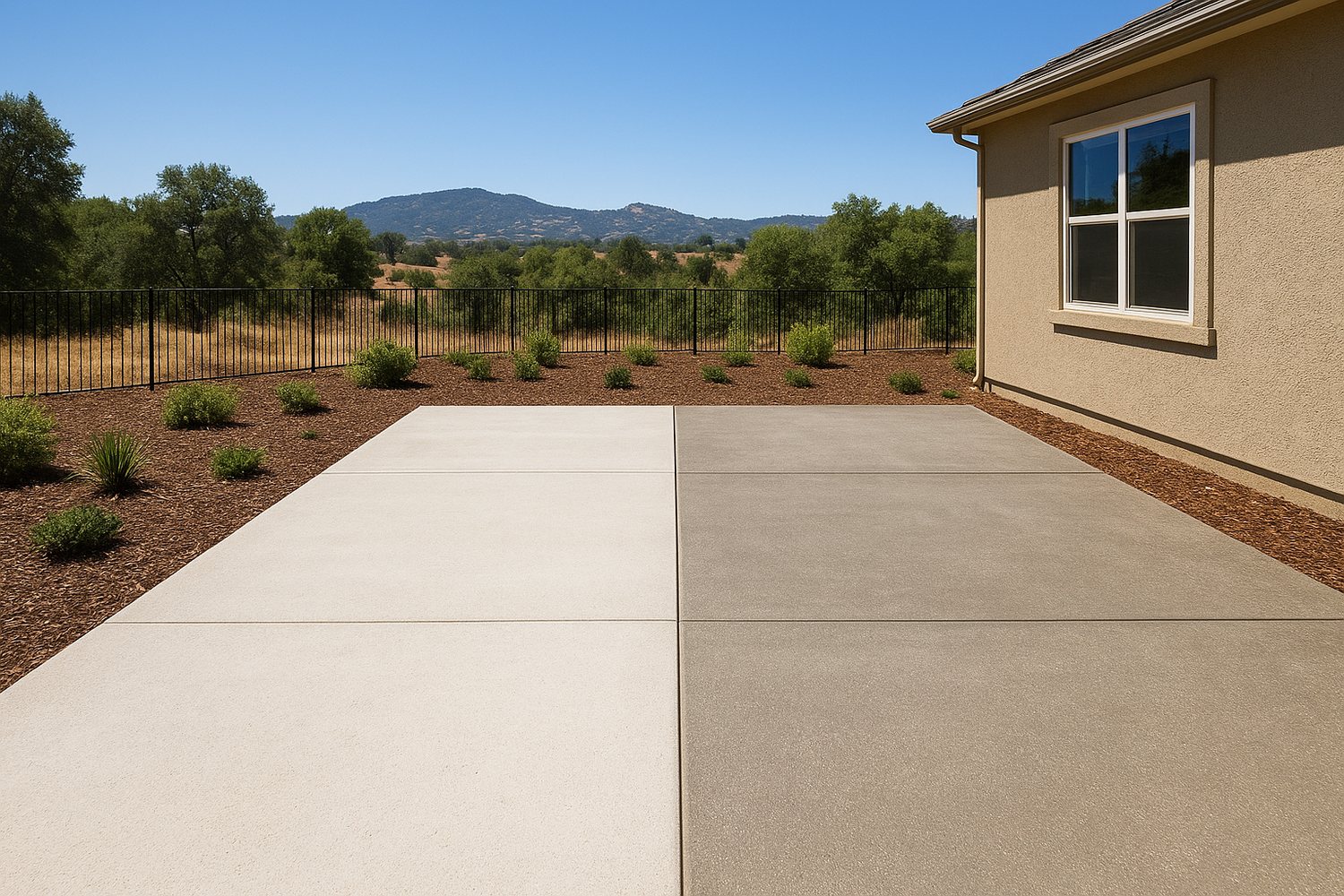
There are many concrete options available beyond basic gray. Consider broom finishes for slip resistance, exposed aggregate for texture, or colored and stamped surfaces for added design impact. Think about how finishes look both dry and wet—safety and appearance matter equally, especially near pools or entryways.
Local climate plays a big part in material decisions. In the Sacramento and foothill areas, summer heat and seasonal rains demand concrete mixes that resist cracking and stand up to thermal expansion. Ask about admixtures and curing practices tailored to local weather patterns.
Review sample boards to touch and see finishes before making a final choice. If you’re coordinating concrete with stone, pavers, or landscaping, bring those samples into the discussion. Matching color and texture is easier with physical examples, leading to a more cohesive finished project.
bullets": ["Broom, exposed, stamped or colored options","Select finishes for safety and style","Coordinate with existing home features"]
Project Timing: When to Build
California’s seasons play a role in your project’s schedule. Spring and fall are prime times for concrete work in this region—temperatures are mild, and heavy rains are less likely. Avoiding peak summer heat means better curing and fewer weather-related interruptions.
Contractors’ calendars often fill fast during optimal months. Factor in lead times for estimates, material ordering, and city reviews, especially if you want your space ready for a certain event or season. Booking early improves scheduling options and helps prevent rushed decisions.
Certain projects may take longer due to size or complexity. Prepare for possible disruptions to access, especially if driveways or main paths are involved. Communicate with your contractor about your family’s needs to minimize inconvenience and keep everybody on the same page.
bullets": ["Best windows: spring and fall","Plan ahead for contractor availability","Factor in project duration and access needs"]
| Project Type | Surface Finish Options | Thickness Range | Curing Priority | Common Regional Factors |
|---|---|---|---|---|
| Driveway | Broom, exposed | 4–6 inches | High | Heavy vehicles, sun exposure |
| Patio | Broom, stamped, colored | 4 inches | Medium | Outdoor living, slip resistance |
| Walkway | Broom, exposed | 3.5–4 inches | Medium | Drainage, tree roots |
| Retaining Wall | Smooth, split-face | Varies | Critical | Slope, drainage, soil conditions |
Setting a Budget: Concrete Costs and Value
Budgeting for concrete means balancing design aspirations with practical requirements. Break down the elements—surface area, thickness, finish type, and site conditions—all impact price. Complicated layouts or specialty finishes often require more labor.
Be upfront with your contractor about your budget range and must-haves. This helps everyone target solutions that fit both vision and resources. Expect upfront discussions about possible trade-offs; sometimes simple tweaks in shape or finish can yield big savings without sacrificing quality.
Remember, investing in well-planned concrete brings lasting value—curb appeal, ease of maintenance, and a finished space you’ll use for years. If questions about materials or process affect the budget, ask for clear explanations specific to our region’s needs.
bullets": ["Budget by surface, finish, and complexity","Share budget goals early with your contractor","Explore trade-offs for long-term value"]
Comparing Local Concrete Project Types
The type of concrete project impacts decisions around construction techniques, timeline, and design. Residential driveways may need thicker pours and reinforcement than patios or walkways. Choose a contractor familiar with a wide range of flatwork to ensure the right approach for each surface.
Patios in this region can be more versatile, supporting seating, outdoor kitchens, or fire features. Textured finishes add slip resistance and visual interest. Walkways must address both appearance and year-round safety, especially across sloped yards or areas prone to puddling.
Retaining walls require different materials and drainage considerations compared to ground-level flatwork. A seasoned contractor like Marty, who understands both the installation and underlying soils, can guide you through these distinctions.
bullets": ["Driveways, patios, walkways, retaining walls—all require tailored planning","Thickness and reinforcement vary by use","Drainage is vital for retaining walls and walkways"]
If you want to compare styles and finishes, check out ouroverview of all Concrete options.
Understanding Approvals and Site Prep
Permits aren’t always required for small concrete work, but larger projects—driveways, retaining walls, patios with structures—could fall under city or county rules. Confirm what’s needed before work begins to avoid project delays or compliance headaches.
Proper site prep makes all the difference. Clearing vegetation, managing slopes, and establishing forms are foundational. In the foothill areas, poor grading or organic soils can threaten durability. A thorough prep process tailored to your site’s conditions sets the stage for success.
Review with your contractor how utilities, irrigation, and drainage will be addressed. These elements protect your investment and prevent issues down the road, especially after heavy rains typical in this region.
bullets": ["Check city or county approval needs","Remove plants and establish forms","Plan for water, irrigation, and drainage"]
Communication and Project Oversight
Transparent, ongoing communication is essential for smooth project delivery. Set expectations up front: ask contractors how they’ll keep you updated about timelines, milestones, and any changes that may crop up along the way.
Ask about who’ll be onsite day-to-day and who to contact with questions. Having a point person keeps things moving and allows quick decision-making if site surprises come up. Professional oversight—like that provided by Marty at California Hardscapes—makes sure that standards are upheld throughout every stage.
Document key decisions, approvals, and site walks as the job progresses. This record cuts down on misunderstandings and ensures your project stays aligned with the vision you started with.
bullets": ["Set communication expectations","Clarify roles onsite","Keep a record of major decisions"]
Next Steps: Planning Your Concrete with Confidence
Every project is unique, but good planning always delivers better results. By clarifying needs, choosing materials wisely, respecting local weather, and communicating clearly, you lay the groundwork for concrete work that lasts.
Start early to secure your timeline and maximize choices for finishes and layouts. Consulting with experienced professionals can reveal considerations you haven’t thought of and ensure your investment delivers both beauty and function.
If you’re ready to discuss ideas or map out a scope, bring your questions and goals to the table. A bit of thoughtful prep now makes each step—design, budgeting, and installation—that much smoother.
bullets": ["Plan needs and budget in advance","Get advice from local professionals","Consider all surface, weather, and access factors"]
Ready to start?Request a consultationfrom California Hardscapes to talk specifics about your project.
Planning a concrete project?
Call or text 916-741-0633, or email sales@californiahardscapes.com with your address, a short description and a few photos, and we will arrange a consultation.