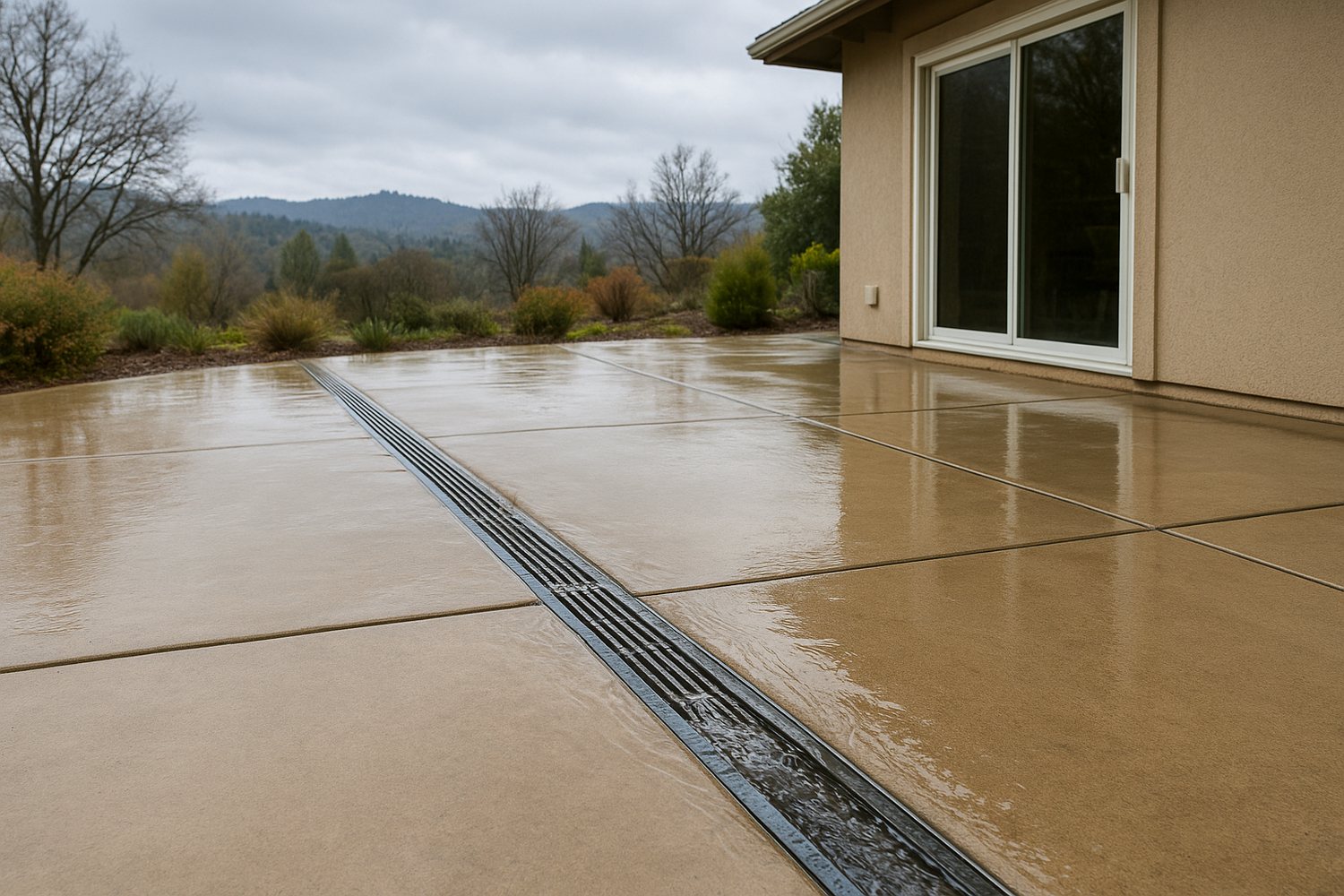
Building Durable Concrete in Placer and Sacramento Counties
Discover the materials and methods California Hardscapes uses to create strong, lasting concrete driveways, patios, and more—built for Placer and Sacramento County’s climate.
If you’re searching for concrete work that looks great and lasts, it’s important to understand what really matters from a materials standpoint. The details behind a durable concrete slab go far beyond just pouring and finishing.
What’s Really in Concrete—and Why It Matters Here
Concrete may look simple, but its formula can make a big difference in performance. At its core, concrete is a blend of cement, sand, gravel, and water—customized depending on local needs. For residential projects in Placer, Sacramento, and El Dorado Counties, we use mixes designed for our region’s weather swings and expansive native soils.
A standard mix here often involves 3000–3500 psi concrete for patios and walkways, and sometimes higher strengths for driveways or structural features. Cement content is adjusted for strength and workability, not just to meet a minimum spec. Local sands and aggregates are selected to match expansion, contraction, and appearance needs.
If you want a slab that stands up to summer heat, winter rains, and occasional frost, materials selection makes a significant difference. Local experience is key to choosing the right blend, balancing strength, finish, and cost for your specific setting.
- Cement, sand, aggregate, water—all carefully proportioned
- Mixes tailored for regional heat, rain, and clay soil movement
- Higher strength for driveways and heavy-use areas
Read more about our services on theConcretepage for additional details.
The Base: Crucial Support Underfoot
Even the best concrete mix needs a good base beneath it. Around Rocklin, Roseville, and Granite Bay, soils can vary from well-drained decomposed granite to dense clays. A proper subgrade is compacted and leveled before any concrete is placed, with recommendations customized to each site.
Road base, Class 2 aggregate, or similar materials are typically used for driveways and patios. At least four inches of compacted base layer helps resist settling and unevenness. In areas with problematic soil, base thickness or materials may be upgraded for added stability.
Skipping or skimping on the base is a shortcut that costs more in the long run. A well-built base keeps your concrete flat, strong, and less likely to crack or shift—even as seasons and moisture levels change.
Subgrade compacted to the right firmness for local soil
- Subgrade compacted to the right firmness for local soil
- Quality base materials: road base or Class 2 aggregate
- Base thickness tailored to use—more for driveways
Steel and Reinforcement: Insurance Against Cracks
Concrete is strong in compression but weak in tension, which means reinforcing steel is essential for slabs that last. In this region, rebar, wire mesh, or fiber reinforcement may be used based on project size and load expectations.
A typical residential patio or walkway uses 3/8" or 1/2" rebar tied in a grid or, for larger slabs, wire mesh. These reinforcements help control cracking due to soil movement or temperature swings. For driveways and retaining walls, reinforcement is often heavier and spaced more tightly.
Local clays and weather cycles put extra pressure on flatwork. Added reinforcement goes a long way to keep slabs intact, especially at joints, corners, or where weight will be concentrated.
- Rebar or wire mesh selected for project type
- Fiber mesh may be added for extra crack control
- Custom reinforcement for driveways, walls, and heavy-use areas
| Concrete Element | Purpose | Local Tip | Typical Options |
|---|---|---|---|
| Mix Design | Strength & durability | Tailor for soil and climate | 3000–4000 psi, local sands |
| Base Material | Support & drainage | Compact for clay soils | Class 2, 3/4" aggregate |
| Reinforcement | Control cracks | Mesh/rebar for wide slabs | #3/#4 rebar, wire mesh |
| Joints | Manage movement | Extra in large patios | Tooled, saw-cut, or felt |
| Curing Method | Maximize strength | Cover in summer heat | Wet cure, curing compound |
Joints in Concrete: Control, Expansion, and Purpose
Joints are intentional breaks or lines in your slab, designed to let concrete move without unsightly random cracking. Control joints can be tooled in during finishing, or saw-cut soon after placement—ideally no more than 8–10 feet apart on patios.
Expansion joints, like felt or rubber strips, help absorb movement from temperature swings or nearby structures. Placement around the slab’s perimeter, next to buildings, or where two types of flatwork meet is especially important in our climate.
Proper joint design is based on slab size, shape, and usage. Skipping joints or putting them in the wrong place leads to unpredictable cracks over time, especially in expansive California soils.
- Control joints placed to manage shrinkage cracks
- Expansion joints protect against movement and buckling
- Joint spacing and depth tailored to project and soil conditions
Curing Concrete: The Overlooked Longevity Step
Curing is the critical process of keeping new concrete moist and at the right temperature after placement. In the dry, warm days common in Folsom, Auburn, and nearby areas, this step matters even more—rapid drying weakens finished concrete.
Various methods—including water spray, evaporation-reducing compounds, or plastic sheeting—are used to lock in moisture for several days. Proper curing ramps up final strength and reduces future surface dusting, cracking, or scaling.
Cutting corners with curing may not show up right away, but months or years later, lesser slabs show premature aging. Patience and methodical work here truly pay off in the life of your hardscape.
- Moisture retention for at least 3–5 days after pouring
- Curing compounds or wet blankets for hot, dry periods
- Helps achieve full design strength and smooth finish
Explore theoverview of our Concrete optionsto see the full range available.
Finishes and Sealers: Practical Decisions
Once the concrete is placed, there are choices to make about its finished surface. Popular finishes in this region include broom (for slip resistance), exposed aggregate (for texture), and stamped patterns for added design flair.
Depending on usage and placement, sealers may be applied to reduce staining or weather exposure. Not every slab requires a sealer, but for patios and outdoor living areas, it’s a common step for added protection against the elements and daily use.
The practical choice of finish or sealer depends on how you plan to use the space, its position relative to sun and water, and your design goals. A custom approach can combine beauty and function to match your setting.
- Broom, exposed aggregate, and stamped finishes are common
- Sealers can reduce staining from leaves, food, and rain
- Finish choice affects safety, comfort, and maintenance
Why Regional Know-How Makes a Difference
Experience with Northern California soils and weather is essential to building hardscapes that last. Different neighborhoods in Rocklin, Roseville, and Granite Bay may need tailored approaches, not just a one-size-fits-all recipe.
From concrete mix to base prep, reinforcement, and finishing, each step can be tuned to suit our local clays, slopes, and the weather patterns unique to this area. This is where professional judgment pays off—choosing exactly what each project needs based on real-world experience.
Understanding the region’s quirks means fewer surprises and tougher, longer-lasting outdoor spaces. For homeowners, this offers real value and confidence in your investment.
- Knowledge of Rocklin, Roseville, and Auburn soils
- Concrete mixes and reinforcements selected for local use
- Techniques adapted for sun, wind, heat, and moisture patterns
Get Help With Your Concrete Project
It’s easy to focus on surface details, but what’s underneath and inside your concrete counts most. For a project that stands the test of time—and California weather—it pays to ask about mix design, base prep, reinforcement, and joint layout, not just price.
Good communication and experienced guidance can make the difference between a slab that looks right for years and one that disappoints far too soon. Experienced contractors will walk you through site inspection, choices, and smart trade-offs for your budget and property.
If you’re planning a concrete patio, driveway, or path, don’t settle for guesswork. Bringing in proven expertise helps ensure your new space is something you can be proud of, season after season.
- Know what to ask: mix, base, reinforcement, curing, finish
- Discuss specific needs for your site and use
- Reach out for local insights before starting your project
Ready to talk?Request a consultationby email for site-specific guidance.
Planning a concrete project?
Call or text 916-741-0633, or email sales@californiahardscapes.com with your address, a short description and a few photos, and we will arrange a consultation.