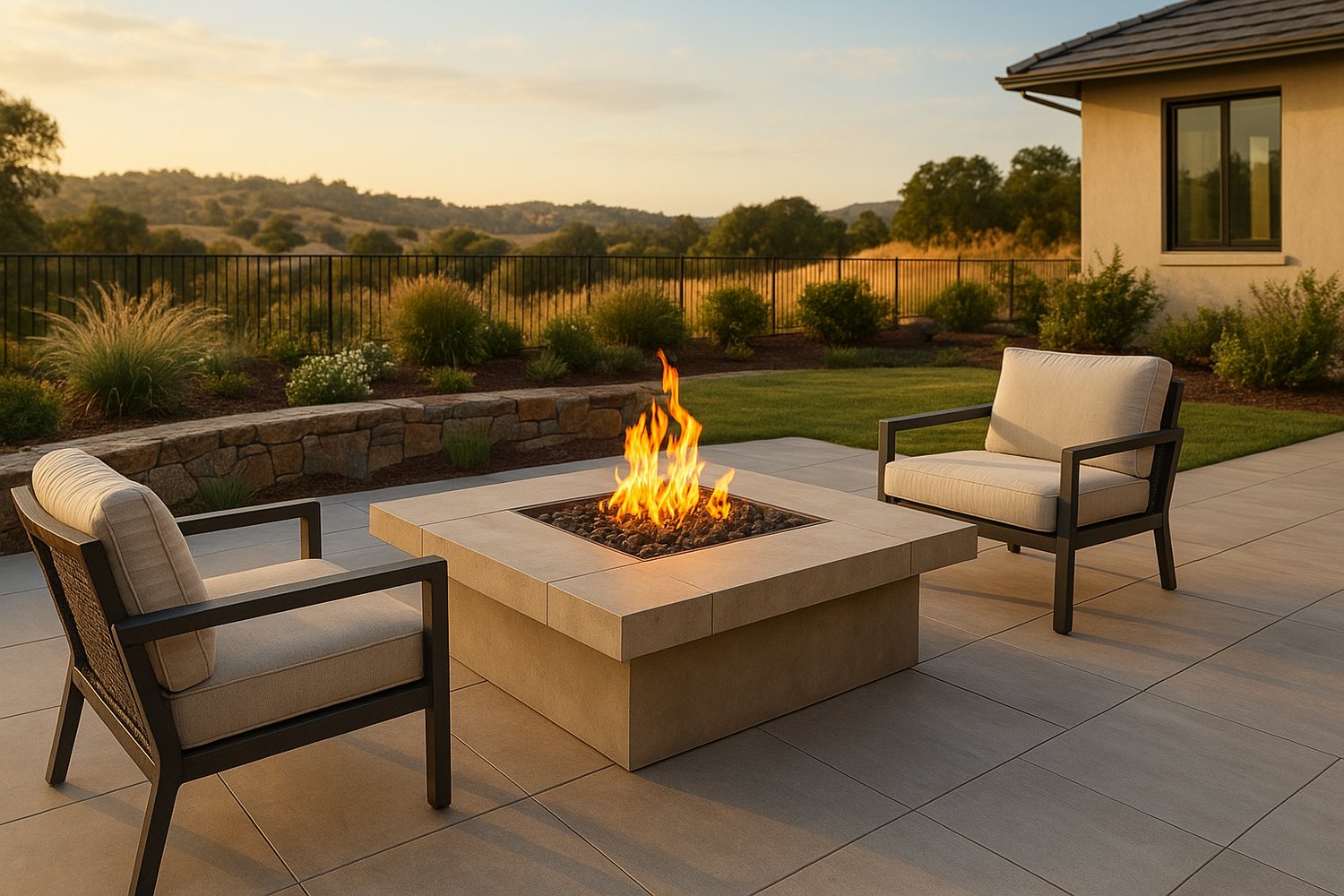
Porcelain vs. Concrete Pavers: Best Choice for Modern Patios
Choosing between porcelain and concrete pavers impacts your patio’s longevity, style, and maintenance. Here’s what sets them apart for Northern California homeowners.
Modern hardscapes reshape how we use our outdoor spaces. The choice between porcelain and concrete pavers is more than appearance—it affects everything from maintenance to comfort.
First Impressions: What Makes Porcelain and Concrete Pavers Different?
For homeowners picturing a modern patio, both porcelain and concrete pavers offer a fresh look—but they begin with very different materials. Porcelain pavers are manufactured from dense ceramic clay baked at high temperatures. Concrete pavers are made with a mix of cement, stone aggregates, and pigments, hardened in molds.
Porcelain stands out for its fine texture and sharp lines, often mimicking natural stone, wood, or designer patterns. Concrete pavers look and feel more like classic stonework or traditional brick, with slight surface texture variations depending on the finishing process.
In the context of Rocklin, Roseville, Granite Bay, and Folsom, local design trends lean toward clean-lined hardscaping that still feels inviting. Both options fit that bill—though they set different tones right from the start with their material DNA.
Discover more about process, style choices, and installation considerations on ourPorcelain paverspage.
Weathering the California Elements
Porcelain pavers are nearly nonporous, resisting stains from spilled food, wine, and the infamous oak pollen that descends each spring. They shrug off the cycle of wet winters and hot, dry summers distinctive to this region. Porcelain’s color runs all the way through each tile, so surface scratches or chips are less noticeable.
Concrete pavers, though durable, are inherently a bit more porous and prone to absorbing moisture. Over time, they can develop efflorescence (white salt deposits) and may darken around sprinkler overspray. Seasonal sealing helps concrete resist stains and slow down weather-related fading.
Marty and the California Hardscapes team have seen how both materials can last—if chosen and installed with the right local knowledge and expectations about upkeep and weather resistance.
- Porcelain: frost-resistant, doesn’t fade with UV
- Concrete: may need periodic sealing
- Both: handle regional heat and rain well
Design Versatility: Textures, Patterns, and Patio Personality
Porcelain pavers are factory-calibrated with sharp, uniform edges. This means they can be laid with tight joints, supporting sleek and contemporary layouts—ideal for a modern Roseville or Granite Bay backyard. Their patterns and colors are highly consistent across batches.
Concrete pavers, on the other hand, offer a more rustic charm. They come in an array of shapes—rectangle, square, tumbled, cobblestone—and the finishes may vary even within a single batch. Custom color blends can add warmth or replicate vintage flagstone looks prized in older neighborhoods.
Think carefully about what you want your patio to say: Porcelain projects precision and modernity; concrete offers organic variety. Both can be used for creative borders, inlays, and walkways.
- Porcelain: mimics wood, stone, or slab with less maintenance
- Concrete: customizable shapes and colors
- Both: work with modern outdoor furniture and landscaping
| Feature | Porcelain Pavers | Concrete Pavers |
|---|---|---|
| Visual Styles | High consistency, modern | More variation, classic/rustic |
| Slip Resistance | Excellent (textured) | Very good (varies by finish) |
| Porosity | Nearly nonporous | Moderately porous |
| Maintenance | Low (just sweeping, hosing) | Requires sealing, periodic cleaning |
| Heat Comfort | Stays cooler | Can get warm |
Practical Performance: Installation, Comfort, and Upkeep
Porcelain and concrete pavers are both set on compacted bases, but porcelain often requires extra attention to avoid cracking, especially on uneven subgrades. It’s lighter than concrete, but denser—cutting and drilling take special equipment.
When it comes to comfort underfoot, porcelain often stays cooler than concrete on hot Sacramento Valley afternoons—a plus for pets and bare feet. Its slip-resistant textures make it suitable even around pools or spa patios.
Maintenance is another point of difference. Porcelain’s stain resistance keeps it looking new with just a hose and broom. Concrete will need periodic cleaning and sealing, especially in shaded areas prone to algae. Both are practical, but porcelain has the maintenance edge for most busy homeowners.
Cost Considerations: Investment vs. Value Over Time
Generally, porcelain pavers come with a higher upfront cost for both materials and installation due to the specialized handling and leveling required. Concrete pavers are widely available and, in some cases, can be more budget-friendly to install at scale.
However, porcelain’s lower maintenance and superior resistance to staining often translate to less ongoing investment, particularly for patios that see a lot of entertaining or have mature trees overhead.
Consider long-term value, not just installation day costs. Factor in the frequency of cleaning, sealing, or repair, as that may tip the scale depending on your lifestyle.
Explore all your options on ourHardscapes & Patios overviewfor ideas beyond just pavers.
Regional Reality: Choosing What Works in Placer, Sacramento, and El Dorado
Every region is different. In new-build communities or contemporary remodels in Rocklin and Folsom, porcelain pavers fit right in with modern architecture and low-maintenance living. Expect sharp lines, designer finishes, and confidence in facing down pollen, pool splashes, or barbecue messes.
For classic homes or settings with lots of mature landscaping, concrete pavers can integrate beautifully with stone walls, planting beds, and winding garden paths. The variation in color and organic edges make concrete feel rooted to the property.
Whichever material you lean toward, local climate, soil, and site prep are just as important as product choice. Consulting with experienced builders familiar with our soils and water tables pays off in both durability and aesthetics.
Decision Framework: How to Pick for Your Project
Start by ranking your must-haves. Is ease of cleaning top priority? Want a modern, uniform look—or a softer, handmade vibe? Budget, traffic levels, and sun/shade balance matter too.
Consulting with a knowledgeable team means you’re not guessing when it comes to drainage, base prep, or future maintenance needs. Ask direct questions about slip resistance, compatibility with furniture, or how pavers might age under nearby trees.
California Hardscapes brings a practical perspective to balancing premium materials with realistic installation advice. Choosing between porcelain and concrete should be a confident, informed process—not a leap of faith.
Next Steps: Connect with California Hardscapes
If you’re ready to weigh your options for a modern patio, the next move is a conversation. Whether you’re drawn to porcelain’s crisp lines or the timeless appeal of concrete, thoughtful design starts with an honest discussion.
Marty and the team welcome questions from homeowners throughout Rocklin, Roseville, Auburn, and the surrounding areas. Transparent advice helps you land on a solution that fits your site, home style, and how you actually live outdoors.
Reach out today to take the first step. California Hardscapes makes modern patios and hardscapes a reality—never rushed or pushy, always focused on what will work in your space.
Have questions or ready to move forward?Request a consultationwith California Hardscapes today.
Planning a hardscapes & patios project?
Call or text 916-741-0633, or email sales@californiahardscapes.com with your address, a short description and a few photos, and we will arrange a consultation.