Reflecting Pools & Still Water: Lasting Calm, Stunning Reflection
Discover the value, function, and craftsmanship that go into still water and reflecting pool features for Northern California homes.
What Makes Reflecting Pools Unique?
Best for: Reflecting pools and still-water features are ideal for homeowners seeking a bold, tranquil focal point with clean lines and a calm, meditative effect.
Few landscape elements bring a sense of calm and sophistication like a well-placed reflecting pool or still-water feature. Whether anchoring a modern courtyard or finishing a formal garden, these shallow, mirror-like basins turn sunlight, sky, and landscape into living art. Their drama and serenity make them one of the most compelling ways to add value and atmosphere to your property.
Unlike fountains or rushing streams, reflecting pools rely on a perfectly level basin and subtle water movement—or none at all—to create undisturbed reflections. Achieving this effect in our Northern California climate means careful design: depth, edge detail, materials, and water clarity all play a role. When properly built, even a modest reflecting pool can transform a space, making it appear both larger and more intentional.
This page covers everything a thoughtful homeowner should know before deciding if a reflecting pool or still-water feature is right for your yard. We draw on decades of hands-on experience and tough lessons learned: from shaping basins in local clays, to choosing coping that stays elegant, to honest discussions of ongoing maintenance. At California Hardscapes, we don’t compete on being the cheapest. We compete on quality, integrity, and results that exceed expectations. Done right, no corners cut; every project built as if it were our own home.
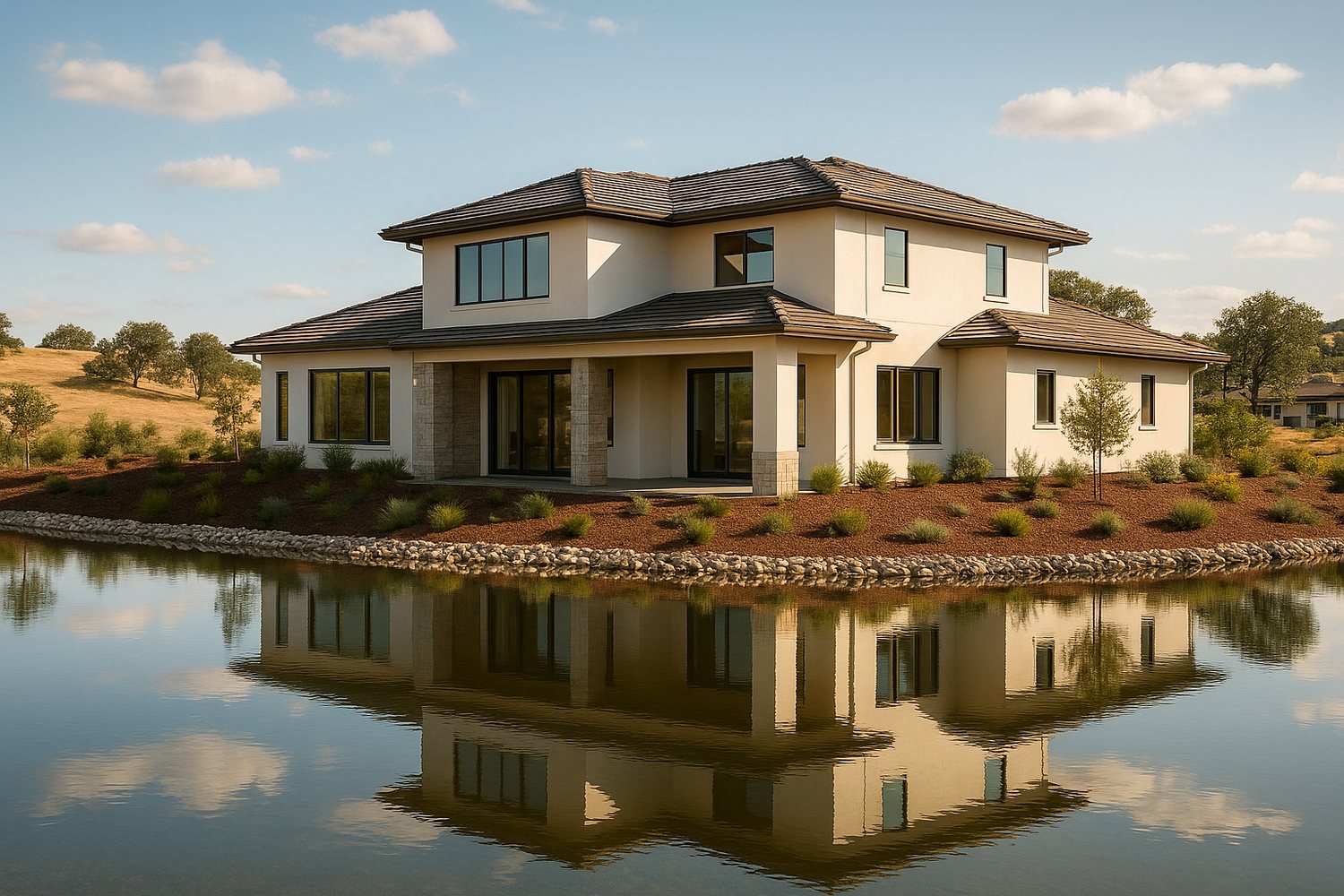
Reflecting Pool and Still Water Design Options
Shallow Basin Depth
Reflecting pools are typically 12" to 18" deep—just enough for safety, easy care, and crisp reflections. This shallow build maximizes the glass-like effect while minimizing heat loss and water use, but does require careful leveling to prevent low spots or uneven edges.
Dark-Toned Interior Surfaces
A dark-colored interior—often black, charcoal, or deep blue plaster, tile, or integral-colored concrete—heightens the visual impact. It absorbs light and enhances the reflectivity, creating a natural ‘mirror’ for the sky and surrounding landscape. Lighter colors are less effective but may suit some design palettes.
Crisp Edges and Coping
A sleek, knife-edge or slightly raised coping emphasizes the pool’s architectural lines and helps produce sharp, clear reflections. Material options include poured-in-place concrete, precast coping, stone, or porcelain pavers—each brings its own look and feel, with subtle differences in warmth, texture, and slip resistance.
Integrated Water Circulation
To keep water clear and algae-free, subtle circulation is built in. Hidden skimmers, low-profile returns, or in-floor jets help gently circulate and filter water while avoiding visible ripples—preserving the perfectly still surface essential for a true reflecting pool.
Formal vs. Modern Geometry
Formal pools often use rectangles, axes, and clean symmetry, paired with clipped hedges or paving. Modern styles may break from symmetry, use long narrow basins, or contrast hardscape with wild planting. Edges may be sharp or overflow design (where water spills seamlessly into a slot drain).
Custom Sizing and Placement
Reflecting pools can be sized to fit a range of outdoor spaces—from long, narrow runs along a patio, to central focal points, or integrated features within courtyards. Placement is critical to catch desired sky, tree, or building reflections, and avoid future shade from growing trees.
Building a Reflecting Pool: How Quality is Built, Step by Step
A flawless reflecting pool isn’t the result of shortcuts. Our process is shaped by decades of experience across California soils, climate, and construction challenges. Here’s how a quality-focused crew brings a still-water feature from concept to stunning reality:
- Site Prep and Subgrade: After setting final pool elevation, all roots, debris, and soft soils are removed. Stable subgrade is compacted, checked for slump, and laser-leveled for evenness—a critical step, especially in local expansive clay.
- Base Installation: A thick aggregate base (typically class 2 road base or similar) is installed and compacted. This reduces settling risk, manages hydrostatic pressure, and adds an extra layer of stability—especially on slopes or in decomposed granite areas.
- Formwork and Layout: Forms for the pool shell, including coping and any water overflow edges, are built to tight tolerances. All backfilling, vapor barriers, and slots for plumbing and lighting are installed before placing concrete.
- Reinforcement: Steel rebar grids or mesh are placed per engineered layout, tied securely, and set on chairs to prevent settlement. This reinforcement is essential for resisting movement and small shifts caused by our clay soils and freeze/thaw cycles.
- Concrete, Waterproofing, or Shell Installation: Shell material is placed in a single pour (or precast sections installed), vibrated and finished for a perfectly smooth interior. Waterproof membranes or chemical sealers are applied as specified, providing moisture protection and longevity.
- Edge Finishing and Coping: Coping and edge treatments are installed with careful attention to pitch, alignment, and detail—whether a crisp, knife-edge or subtle overhang. Finish materials like stone, tile, or special concrete are detailed for both aesthetics and comfort.
- Curing, Sealing, and Equipment Setup: Concrete is slow-cured to maximize strength, then sealed as needed for stain resistance and dark luster. Pumps, skimmers, filtration, and all controls are installed and tested for silent, efficient operation with minimal surface ripple.

The Real Pros and Cons of Reflecting Pools
Strengths
- Striking visual impact—doubles garden and sky with one versatile, artful surface.
- Creates a sense of tranquility and calm, ideal for meditation, relaxation, and high-end entertaining.
- Low water depth means less evaporation and lower water use compared to many other water features or full-depth pools.
- Can be designed as a focal point or a subtle architectural element in both traditional and contemporary landscapes.
- Well-built reflecting pools are durable, with lasting materials and finishes that resist sun, freeze, and chemical damage.
Trade-offs
- Requires precise design, engineering, and ongoing care—shortcuts can lead to cracking, leaks, or persistent cloudiness.
- Still water will show every leaf, bug, and pollen grain; regular cleaning and filtration are needed to keep the surface pristine.
- Not intended or safe for swimming; mainly visual and sensory use with limited recreation value.
- Initial costs can be significant due to the technical demands of proper construction and premium finishes.
Cost Factors for Reflecting Pools and Still Water Features
Reflecting pools are an investment in lasting quality and design. Their cost is shaped by a range of factors, all of which we transparently discuss during planning. We believe in clear communication up front—no surprises, no shortcuts, and never choosing materials or methods just because they’re the cheapest. Instead, we focus on what will last and look exceptional for years to come.
- Size and complexity of the pool (length, width, irregular shapes, or multiple basins).
- Material choices for the shell, interior finish (plaster, tile, specialty coatings), and coping.
- Site grading needs: removal of poor soils, correction for existing slope, or drainage enhancements.
- Type and sophistication of the filtration, circulation, and control systems (hidden skimmers, smart controls, in-floor returns).
- Edge details and finish treatments: knife-edge, overflow slot, integral lighting, or specialty tile.
- Planting, lighting, and overall landscaping integration surrounding the feature.
Maintenance & Care: Keeping Reflections Crisp Year After Year
Routine care for a reflecting pool includes weekly skimming to remove debris, brushing of interior surfaces, checking water chemistry (if chlorinated), and backwashing or rinsing filters. Circulation equipment should be monitored for silent operation and cleaned of blockages. In our region’s warm months, algae can develop quickly in still water; consistent maintenance is key to keeping water clear and reflective.
Most interior sealers or finishes last between 2–7 years before reapplication or deeper service is needed, depending on exposure, water chemistry, and quality of original construction. Lifespan is maximized by not draining the pool unnecessarily, keeping filtration running in hot weather, and cleaning leaves quickly to prevent staining. With regular maintenance, a well-built reflecting pool should deliver decades of beauty—even in tough California climates.
Compare other options

Pumps, plumbing and power for water features
Understand pumps, plumbing, and power for water features in Rocklin. Sizing, energy use, access, quiet operation, and honest cost factors explained.
Explore →
Koi and garden ponds
Learn everything about koi and garden ponds in Rocklin, CA—depths, liners, filtration, plants, upkeep, fish health, and more. Built for lasting quality.
Explore →
Bubbling urns and bubblers
Explore bubbling urns & boulder bubblers for small-space, low-upkeep water features. See design options, build steps, pros, cons & local expertise.
Explore →Reflecting Pools & Still Water FAQs
How deep should a residential reflecting pool be?
Most residential reflecting pools are designed 12 to 18 inches deep. This is deep enough for robust reflections and water clarity, yet shallow enough to remain safe and cost-effective. Deeper designs rarely improve the visual effect and often require more structure and maintenance.
What does it take to keep the water absolutely clear?
Effective water clarity comes down to precise construction (no leaks), subtle continuous circulation, moderate filtration, and regular debris removal. Most pools use hidden skimmers and low-profile returns to keep surface water clean without disturbing the mirror finish. Ultraviolet or ozone systems are optional upgrades but not always necessary.
Can I use a reflecting pool as a pond (with plants or fish)?
Technically, yes—but there are important differences. A classic reflecting pool is designed for flat water and sharp reflected images, which requires fine filtration and clean surfaces. Adding aquatic plants or fish can make water maintenance tougher, cloud the reflection, and change the feel from modern/focal to natural/wild. Discuss intended use early in planning so your pool setup matches your vision.
Are reflecting pools safe for children and pets?
Reflecting pools are shallow, but as with any body of water, supervision is necessary. Unlike deep or recreational pools, they rarely pose drown hazards, but the slick edges, water depth, and smooth finishes can be a slip risk for small children or animals. Custom covers and safety fencing are available where desired.
How do reflecting pools handle high winds, falling leaves, or pollen?
High winds or heavy leaf drops will disrupt the perfect reflection and can overwhelm filters if not managed. Strategic placement, windbreak planting, and a routine skimming schedule help maintain surface quality. In high leaf seasons, temporary nets or covers can help keep the feature pristine on breezy autumn days.
Will the pool crack or settle on local clay soils?
With proper excavation, compaction, and reinforcement, a reflecting pool should perform well—even on expansive clay or decomposed granite soils typical of our region. Failure to address soil movement is a common shortcoming in budget builds; we treat every project to stand up to local ground and weather conditions.
What is the maintenance workload compared to other water features?
Reflecting pools require less total water and typically less chemical balancing than full-depth pools but can need more frequent surface cleaning since every bit of debris is visible. The expectation is a few minutes of skimming every few days, with more intensive cleaning as needed seasonally. Properly installed circulation keeps underlying maintenance reasonable.
Are permits or special approvals needed to build a reflecting pool?
Yes—most cities, HOAs, and counties require review of plans, setbacks, drainage, and sometimes engineering for new water features. Requirements differ by exact address. We encourage starting the approval process early, as it can add several weeks to the timeline. Local experience smooths this process, but there’s no universal shortcut.
Let’s Talk About Your Reflecting Pool Vision
Ready to explore if a reflecting pool or still-water feature is right for your home? Email sales@californiahardscapes.com with your address, a short project description, and photos to start the conversation.