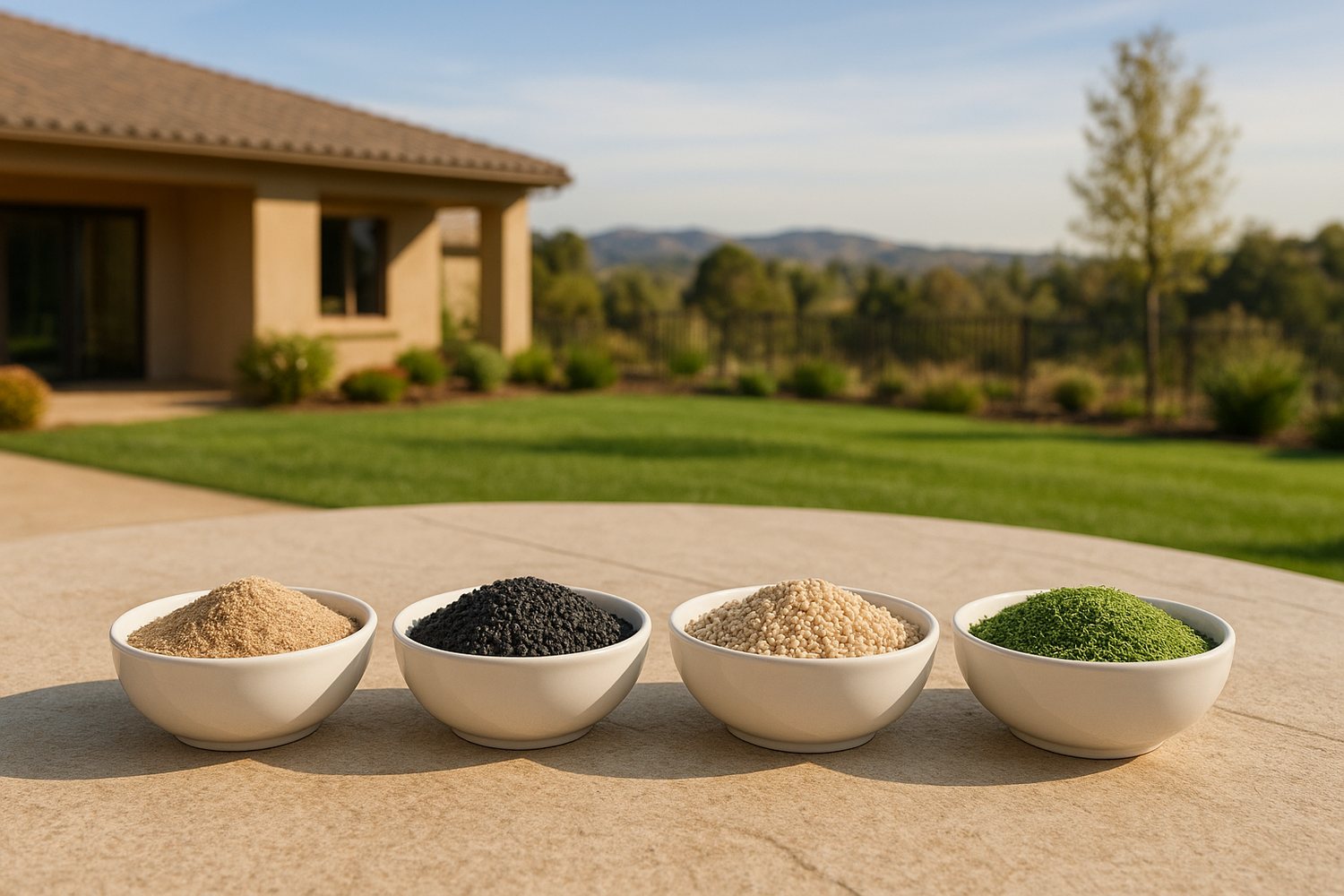
Comparing Turf Infill Materials for Heat Control
Homeowners in Rocklin, Roseville, and nearby areas can find clear turf infill comparisons and heat control advice. Understand your options for artificial lawns.
Choosing the right turf infill for heat control is key for comfortable yards. Here are real-world details specific to our California climate.
Why Turf Infill Matters
Turf infill might seem like a small detail, but it plays a big role in how your artificial lawn feels, looks, and performs. For homeowners near Rocklin and Roseville, efficient heat control during hot summer months is critical. The right infill can help keep artificial turf surfaces cooler – and make all the difference for activities, pets, and barefoot comfort.
Besides heat regulation, infill provides weight and stability to keep turf blades standing upright. It helps simulate the natural cushioning you’d get with soil and real grass. This is especially important in high-traffic backyards and areas where kids or pets play.
The region’s hot, dry climate means not all infill performs the same. Understanding these differences is essential for anyone installing or upgrading an artificial lawn. With so many infill products available, making an informed decision matters more than ever.
- Heat mitigation varies by infill material
- Stability impacts turf durability and comfort
- Right choice improves yard value and enjoyment
Learn more about keeping your lawn cool by visiting ourTurf infill and heat controlresource page.
Silica Sand Infill: Pros and Cons
Silica sand is the most common and affordable infill option for artificial turf. It’s widely available and provides a solid base to help the turf blades stand up, giving your lawn a firm, level feel. Many homeowners in Placer and Sacramento counties start here for cost reasons.
However, silica sand absorbs and retains heat, which can make the turf surface very warm in peak sun. If your yard is in full sunlight during summer afternoons, you’ll likely notice this heat build-up underfoot, especially compared to cooler alternatives.
Despite its heat-retentive nature, silica sand remains popular for low-traffic areas or locations with partial shade. Consider it if budget is a concern, but know you may sacrifice some midday comfort, especially for active families and pets.
- Most economical option
- Offers good turf blade support
- Can be very hot in direct summer sun
Crumb Rubber: Old School, Less Common
Crumb rubber infill, made from recycled tires, was once the standard for synthetic turf where cushioning was needed. It’s known for its shock absorption, making it a frequent pick for sports fields and high-impact surfaces.
Residential use in Folsom, Granite Bay, and nearby areas has declined, mostly due to concerns over heat retention. Like silica sand, crumb rubber absorbs a significant amount of sunlight and can get uncomfortably hot. Some homeowners also dislike the potential for rubber odor, especially in our warm, dry climate.
If extra cushion is necessary, crumb rubber can still work in shaded spots or under play equipment. Most families around our region prefer alternatives that offer better heat control without the mess or smell.
- Provides cushioning for impact
- Absorbs and holds heat strongly
- Becoming less popular for backyards
| Infill Type | Heat Retention | Odor Control | Best For | Comfort |
|---|---|---|---|---|
| Silica Sand | High | Low | Shaded, low-traffic lawns | Firm |
| Crumb Rubber | Very High | Low | Play areas needing cushion | Soft, but hot |
| Zeolite (Mineral) | Low | High | Pet owners, full sun lawns | Cool, soft |
| Cork/Organic | Low | Medium | Families, barefoot areas | Very comfortable |
Organic and Mineral Infill: Modern Solutions
Organic infills, such as cork or coconut husk, have gained popularity in Placer and El Dorado counties for their natural origins and improved heat management. These materials don’t absorb heat like sand or rubber, so they stay cooler in our intense sun.
Mineral infills, especially products made from zeolite (a porous volcanic mineral), also perform well. Zeolite absorbs moisture and can help minimize odors from pets. Both organic and mineral options bring valuable cooling and odor-absorbing benefits for active outdoor households.
Expect a higher upfront cost for organic or mineral infill, but the improved surface comfort and temperature reduction are worth it for many local families. These options feel more natural underfoot and are often chosen when pets, children, or frequent outdoor use are factors.
- Stays cooler in direct sunlight
- Reduces odors from pet use
- More comfortable for bare feet
Heat Control: What Actually Works Here
In the hotter parts of Sacramento and surrounding counties, controlling turf temperature goes beyond picking just any infill. Dense urban areas and backyards without much shade can heat up quickly and stay warm throughout the day.
Organic and mineral infills make a noticeable difference when it comes to comfort. Zeolite and cork infill hold less heat than sand or rubber, staying up to 30% cooler during extreme sunlight. Keeping turf infill moist can also help, which is easier with these newer materials.
If you’re designing a play space, pet run, or an area where family and friends will be spending time outside, prioritize infills that cool quickly and resist heat buildup. A cooler turf surface simply makes those outdoor moments more pleasant, June to September.
- Zeolite and cork outperform sand/rubber in hot climates
- Shaded turf stays much cooler regardless of infill
- Rinse occasionally to boost cooling with mineral infills
For a broader look at available surface options, see ourArtificial Turfoverview.
Pet-Friendly Considerations
For pet owners in Granite Bay, Folsom, and Auburn, choosing the right turf infill isn’t just about cooling—it’s about health and cleanliness too. Odors can build up quickly and pets feel surface heat under their paws.
Zeolite infill is especially recommended for homes with dogs. Its structure naturally absorbs and neutralizes ammonia, keeping pet odor under control—even after multiple uses. Plus, it’s non-toxic and comfortable for daily pet activity.
Organic infills like coconut and cork are also safe and cooling for pets but may require more frequent topping-up after heavy use. Knowing your pets’ routine, climate exposure, and maintenance tolerance can help pin down the best infill for your yard.
- Zeolite neutralizes pet odors effectively
- Organic infills are natural and safe
- Easy clean-up matters in peak heat months
Installation and Maintenance Tips
No matter what infill you choose, proper installation is crucial for comfort, longevity, and temperature control. The infill should be evenly distributed and brushed into the turf for best effect—uneven application can lead to hot or lumpy spots.
Regular maintenance includes brushing the turf to keep blades upright, replenishing infill if settlement occurs, and rinsing with water during extreme heat. Consider periodic checks, especially after heavy use by pets or kids.
If odor or heat is an ongoing concern, look for signs such as visible compacted infill, recurring hot patches, or increased pet odor. Early attention keeps your turf looking great and feeling comfortable all season long.
- Install infill to manufacturer’s recommended depth
- Brush frequently in summer and after parties
- Top up infill as needed for pets or heavy use
Making Your Choice: What Works for Your Family
Your best infill choice depends on how you’ll use your yard, the amount of direct sun your turf receives, and how much you prioritize heat control versus budget. Homeowners in Rocklin, Roseville, and nearby communities often find value in balancing performance and comfort.
For low-traffic, shaded sections, basic silica sand may be just fine. For bare feet, pets, and summer fun, it’s often worth moving up to mineral or organic infills, even if it costs a bit more up front. These modern materials provide peace of mind and a noticeably cooler surface.
Take time to weigh the pros and cons of each infill. Consult your installer for advice that’s specific to your yard’s sunlight, usage, and your family’s needs. With good information in hand, you’ll be set to enjoy your artificial turf for years.
- Weigh budget against comfort and use
- Ask about heat and odor concerns before buying
- Consult local professionals with turf experience
Ready for expert guidance?Request a consultationwith California Hardscapes today.
Planning an artificial turf project?
Call or text 916-741-0633, or email sales@californiahardscapes.com with your address, a short description and a few photos, and we will arrange a consultation.