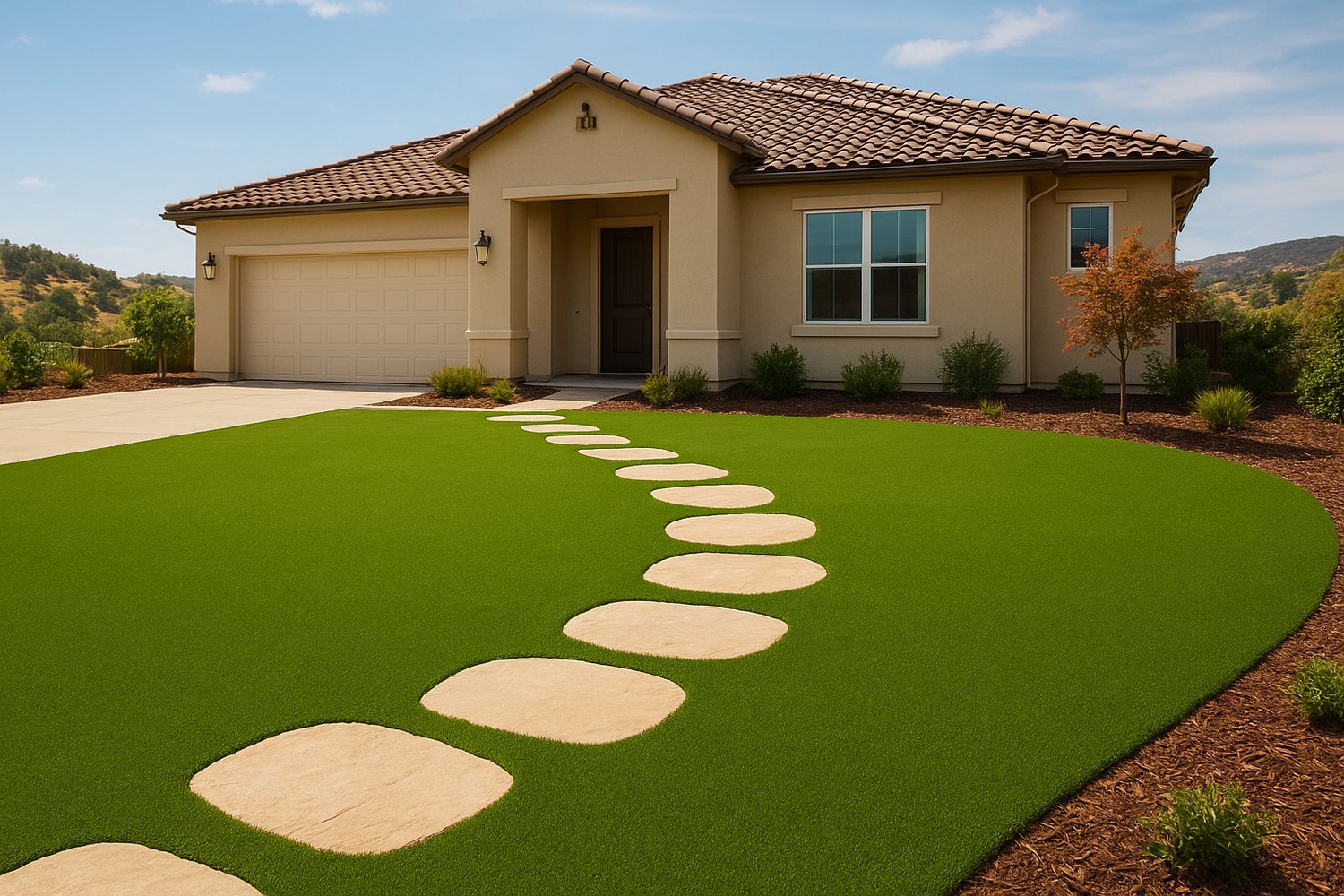
Designing with Turf Strips, Checkerboards, and Paver Stepping Stones
Learn smart ways to design with artificial turf strips, checkerboards, and paver stepping stone layouts for a drought-ready, elegant yard.
Pairing artificial turf with pavers or stepping stones brings fresh, low-maintenance design options for local yards. Explore regional choices that look great year-round.
Why Turf with Pavers Makes Sense Here
Pairing artificial turf with concrete, stone, or precast pavers is about more than curb appeal. In areas like Rocklin, Roseville, and Folsom, water conservation laws and long, dry summers often limit real lawn choices. Artificial turf strips between pavers deliver a vibrant look without irrigation troubles or muddy surfaces.
These designs offer easy drainage and reduced maintenance—no mowing, patching, or mud after storms. The right layout can accent pathways, soften the transition between hardscape and house, and avoid the heat buildup of a solid concrete patio.
Paver-turf combos also stay greener than natural grass through both hot stretches and chilly winter nights. For families with pets, artificial turf sidesteps yellowed patches or worn paths, while the pavers withstand heavy foot traffic or yard activities.
- Saves water every month
- Virtually mud-free all seasons
- Works on slopes and flat areas
See layout examples and guidance for pairingturf with pavers and stepping stonesin this focused article.
Classic Turf Strip Patterns
Turf strips—sometimes called ‘ribbons’—slotted between long pavers are a timeless central California look. They echo upscale courtyard walkways but work just as well up a driveway, along side yards, or as a patio accent. The scale can be tuned: narrow 2-inch strips suit sleek contemporary homes; wider 4–6-inch ribbons match traditional or spacious yards.
The reliability of concrete or porcelain pavers ensures crisp, weed-free lines over time. Where drainage is a concern, turf strips let rain flow between pavers instead of pooling. In high-use areas like pool decks, these patterns keep surfaces cooler underfoot and visually soften the scene.
Choosing the right artificial turf here matters—products that hold color in strong Placer, El Dorado, or Sacramento light outlast less robust varieties. Reliable edge restraint keeps strips tidy and prevents turf from shifting after years of use.
- Ideal for long walkways
- Warms up cold concrete layouts
- Prevents slippery surfaces
Checkerboard Turf: Bold, Playful Geometry
The checkerboard layout alternates square or rectangular pavers and artificial turf patches in a repeating grid pattern. This design creates a playful, eye-catching canvas, and fits well in smaller Rocklin and Roseville yards where maximizing usable space and visual punch is a priority.
Even a simple 2×2 pattern energizes a patio or entry. The alternating surfaces break up hot hardscape and add depth. Checkerboards often double as both outdoor seating areas and informal play zones—no muddy shoes or patchy grass.
For best results, use durable turf with a short, neat pile, and choose heavy pavers or set them on a reinforced base to avoid settling or shifting. Mind the pattern orientation to guide foot traffic toward doors, firepits, or shade.
- Breaks up monotonous patios
- Great for modern or playful styles
- Adapts to small or large footprints
| Layout | Best Uses | Visual Effect | Maintenance | Space Needed |
|---|---|---|---|---|
| Turf Strips | Long walkways, driveways | Clean, linear | Low | Flexible |
| Checkerboard | Patios, small yards | Bold, playful | Low | Flat, level spaces |
| Stepping Stones | Garden paths, slopes | Natural, organic | Low | Custom-fit |
Stepping Stone Paths Through Turf
Stepping stone layouts blend hardscape utility with a natural look, especially on slopes or winding routes. Choose large format pavers for wide “steps” through broader lawn or use irregular flagstone for a relaxed garden path. In regions like Auburn or Granite Bay, this keeps muddy shortcuts off real grass and creates structure where you want movement.
A key decision is spacing: closer stones guide fast walking or rolling carts, while wider gaps slow people down and make the route playful or meandering. Sand, gravel, or mulch borders can further blend the hardscape edges into the landscape.
Artificial turf between stepping stones gives a clean, always-green border. The result? Soft underfoot, puddle-resistant, and without edges that need edging or mowing every weekend.
- Custom-fit for any path shape
- Keeps shoes dry year-round
- Easy to update or expand later
Materials That Work in This Climate
Local summers get hot—choosing pavers and synthetic turf that don’t overheat is crucial. Light-colored concrete or porcelain pavers stay cooler underfoot and resist fading. Look for artificial turf that holds color and has UV protection rated for intense Sacramento Valley sunlight.
Talk to your contractor—or materials supplier—about turf infill options. Some infills reduce temperature, resist pet odors, or improve drainage. For pavers, slip-resistant textures are best for pool decks or shaded, often wet spaces.
All products should be rated for residential foot traffic and, where needed, wheeled access. In frost-prone areas (Auburn, higher hills), insist on base prep that resists shifting during winter freeze-thaw cycles.
- Use light, non-glare finishes
- Ask about UV and pet resistance
- Insist on reputable, proven brands
For a full overview, review all of ourArtificial Turf optionsavailable in your area.
Planning Your Layout: Techniques and Tips
Start with how you use your outdoor space. Need pathways between pool, grill, and firepit? Prioritize functional routes first, then design turf and paver layouts around them. In tight backyards, checkerboard or angled patterns sometimes make the area seem roomier.
Stepping stone and strip patterns can be laid “on grade” (flush with the soil) or “proud” (slightly raised above ground); flush is easier to mow around, proud can highlight feature areas. Consider how pavers meet concrete or decking—tight joints reduce tripping risks.
For best results, work with a contractor who knows regional soils and drainage issues. The right base preparation ensures your pavers and turf don’t shift during storms or seasons.
- Map furniture before finalizing layout
- Use color accents to match house or patio
- Design for future features like lighting
Comparing Turf & Paver Design Options
What’s the best mix for your space? Here’s a side-by-side summary. Side yards, patios, pool decks, and front entries all benefit from turf and paver patterns, but the right choice balances looks with daily needs.
Checkerboards maximize visual interest but require level ground and careful grid layout. Turf strips allow for longer runs and subtle style updates. Stepping stones suit casual routes and sloped or irregular yards best.
No single approach is right for everyone. Matching layout to site conditions gives you an outdoor area that’s stylish, durable, and a pleasure to use year-round.
What to Ask Your Contractor
Before installation, ask about base preparation for both turf and pavers. Regional soils vary: decomposed granite works in much of Placer County, but steeper slopes or clay-heavy lots may need extra reinforcement or drainage.
Confirm how edges will be finished—metal, plastic, or concrete edging keeps lines sharp. Also discuss paver thickness and installation methods to avoid settling, especially near pools, driveways, or play areas.
Ask which artificial turf product is used and why. Not all synthetic lawns are equal in local sun, traffic, or pet use. Get recommendations specific to your property’s needs and shade/sun exposure.
- Ask for references on turf brands
- Check that paver bases extend beyond edges
- Discuss any planned landscape lighting
Ready to talk?Request a consultationto discuss your outdoor living design goals.
Planning an artificial turf project?
Call or text 916-741-0633, or email sales@californiahardscapes.com with your address, a short description and a few photos, and we will arrange a consultation.