Fire and Water Features for Patios and Pools
Create a stunning outdoor focal point with custom fire and water features. Discover what it takes to do it right—safely, beautifully, and built to last.
The Ultimate Outdoor Statement: Living with Fire and Water
Best for: Best for homeowners wanting a dramatic gathering spot and premium upgrade near their pool, patio, or entry, who value high-quality work and long-term reliability.
Few outdoor upgrades capture attention like the combination of fire and water. Fire and water bowls, fire-on-water displays, and integrated pool-edge features offer both visual drama and all-season ambiance. Whether gas flames dancing above a glistening spillway, or sculptural elements anchoring your poolscape, these features can turn a simple patio into a destination.
California Hardscapes brings decades of practical, hands-on experience to each element: setting durable bowls, precise gas line routing, waterproofing, safety clearances, and code compliance. Our approach is always straightforward and honest about what the project demands—from soil to finish. We believe in quality that stands up to time and weather, installed by licensed, bonded, and insured crews.
Choosing a fire and water feature means making decisions on safety, design, maintenance, and cost. Combined features are bold, and not always right for every home or budget. Here’s everything you need to know—real facts, practical options, and honest trade-offs—to decide if this specialty project fits your goals. If you want a result worthy of your investment, our philosophy is simple: no corners cut; every project built as if it were our own home.

Fire and Water Feature Options: From Sculptural to Subtle
Copper or Concrete Fire-Water Bowls
Available in deep copper tones or robust concrete, these bowls combine elegant shapes with integrated spillways. Choose shades from natural patina to color-infused concrete. Sits on pilasters or custom columns to add height and visual separation. Each bowl is fitted for a certified gas burner system above the water.
Fire-on-Water Linear Troughs
A long, rectangular fire pan is installed directly above a water rill or pool ledge, creating the illusion of flames springing from the water’s surface. Clean-lined and contemporary, this design pairs especially well with modern geometric pools or infinity edges.
Ornamental Glass or Stone Media
Fire bowls or burners can be filled with colored fire glass, lava rock, or smooth river stones. Choose media that complements your patio color scheme or landscape style. Glass refracts flame and light, adding extra sparkle at night while stone gives a more natural effect.
Automated Ignition and Remote Controls
Upgrade with electronic ignition, wind sensors, or integration with pool automation systems. Enjoy the convenience of spark-on-demand, remote shutoff, and safer operation. Simpler match-lit options are available, but automation is ideal for larger features.
Integrated Spillways and Waterfalls
Spillways direct water into your pool or basin below, in styles from smooth sheet flow to more natural cascades. Both fire and water sound levels can be customized with different lip styles, spill heights, and flow rates. Choose materials that echo your existing hardscape.
Custom Pillars and Bases
Support fire and water bowls with masonry piers, stone-veneered columns, or textured concrete bases. Bases are sized to match adjacent seat walls, patios, or fencing, tying the feature to your overall outdoor living space. Hidden access panels allow for service and gas shutoff.
How We Build Fire and Water Features
A successful fire and water feature depends on solid planning, skilled installation, and strict attention to detail—especially where gas and water meet. Our process reflects decades of experience with concrete, plumbing, gas line safety, and finish work. Here’s the step-by-step approach a quality crew follows to build these striking features for your home.
- Subgrade preparation: Excavate and compact the footprint, adjusting for soil type (clay, DG, or fill), nearby roots, and correct elevation relative to patios and pools.
- Base installation: Lay a minimum 4-inch gravel or concrete pad to support piers or bowls. Correct drainage slope ensures water never ponds at the base.
- Formwork: Build forms for piers, columns, or raised pads. Check dimensions and layout; ensure enough clearance from structures, pool edges, and foot traffic for safety and code compliance.
- Reinforcement: Place rebar or reinforcement mesh inside concrete forms or base pads. Reinforce all load points, and install rebar dowels to connect the new feature to adjacent patios or walls if needed.
- Plumbing, Gas, and Electrical Rough-in: Run water lines for spills, gas lines for burners, drain conduits, and any electrical for remote ignition before pouring concrete. Confirm shutoff locations and pressure testing before covering.
- Concrete Placement and Finishing: Pour, vibrate, and finish the forms according to the desired texture and color. Bowl or burner support plates are set into wet concrete for perfect alignment.
- Final Assembly and Sealing: Mount fire and water bowls, connect all fixtures, test for leaks, and seal surfaces as needed. Calibrate burner and water flow rates, then review operation and safety procedures with the homeowner.

Trade-Offs: Real Pros and Cons
Strengths
- Unrivaled visual impact, especially at dusk or night, creating a resort-like feel.
- Flexible, works with pools, patios, entry areas, and garden walls in both modern and classic styles.
- Year-round use; fire extends patio season, water cools the vibe in summer.
- Adds value and anchors outdoor living spaces for gatherings and relaxation.
- Durable materials and expert installation minimize day-to-day hassles and repair risks.
Trade-offs
- Higher up-front cost than basic fire pits or fountains due to double utility hookups, controls, and sturdy bases.
- Requires regular cleaning, annual checkup of gas lines and burners, and occasional resealing of concrete or masonry.
- Strict safety codes and setback distances may limit placement near windows, pool edges, or under patio covers.
- Not the best fit for homes where budget, ongoing maintenance, or fuel access are major concerns.
What to Expect for Costs
Fire and water features are a premium addition, with costs driven by material quality, utility hookups, design complexity, and local site requirements. These aren’t starter projects—expect a skilled crew, multiple trades, and durable finishes. We don’t compete on the cheapest bid: our work is built to last, without shortcuts. Below are the main factors that affect your investment.
- Type and size of fire/water feature (bowls, troughs, custom masonry).
- Gas and water line routing: proximity to existing utilities and slab access.
- Automation and ignition upgrades (manual vs electronic control).
- Materials: copper, precast concrete, custom stone, color options, and decorative media.
- Site access and necessary drainage or subgrade corrections for soil stability.
- Complexity of base construction (columns, integrated seating, toe-kick lighting, raised walls).
Care and Maintenance: Protect Your Investment
Combined fire and water features demand consistent care. Burner media (glass, rock, or stone) needs periodic rinsing to reduce soot and mineral buildup from hard water. Check spillways and pump intakes monthly for scale and debris. Gas burner ports should be inspected and cleaned at least once per season. Always consult your installer or a licensed pro when relighting or troubleshooting ignition issues. Calibrate flame height and water flow to minimize splashing and wind interference.
Sealing schedules depend on concrete, stone, or copper finishes. For concrete or stone, resealing every 2–3 years is typical to prevent etching, staining, or freeze damage. Lifespan depends on water chemistry, local climate, and attention to small repairs like tightening fasteners or touching up caulk. A well-built feature will last decades with proper care, but skipped maintenance can lead to expensive repairs—especially where water and gas meet.
Compare other options

Reflecting pools and still water
Reflecting pools and still water Rocklin gardens can feature: design, build steps, pros, cons, cost factors and care.
Explore →
Pondless waterfalls
See if pondless waterfalls fit your Rocklin, Roseville, or Granite Bay home. Learn about hidden reservoirs, safety, upkeep, water savings & design types.
Explore →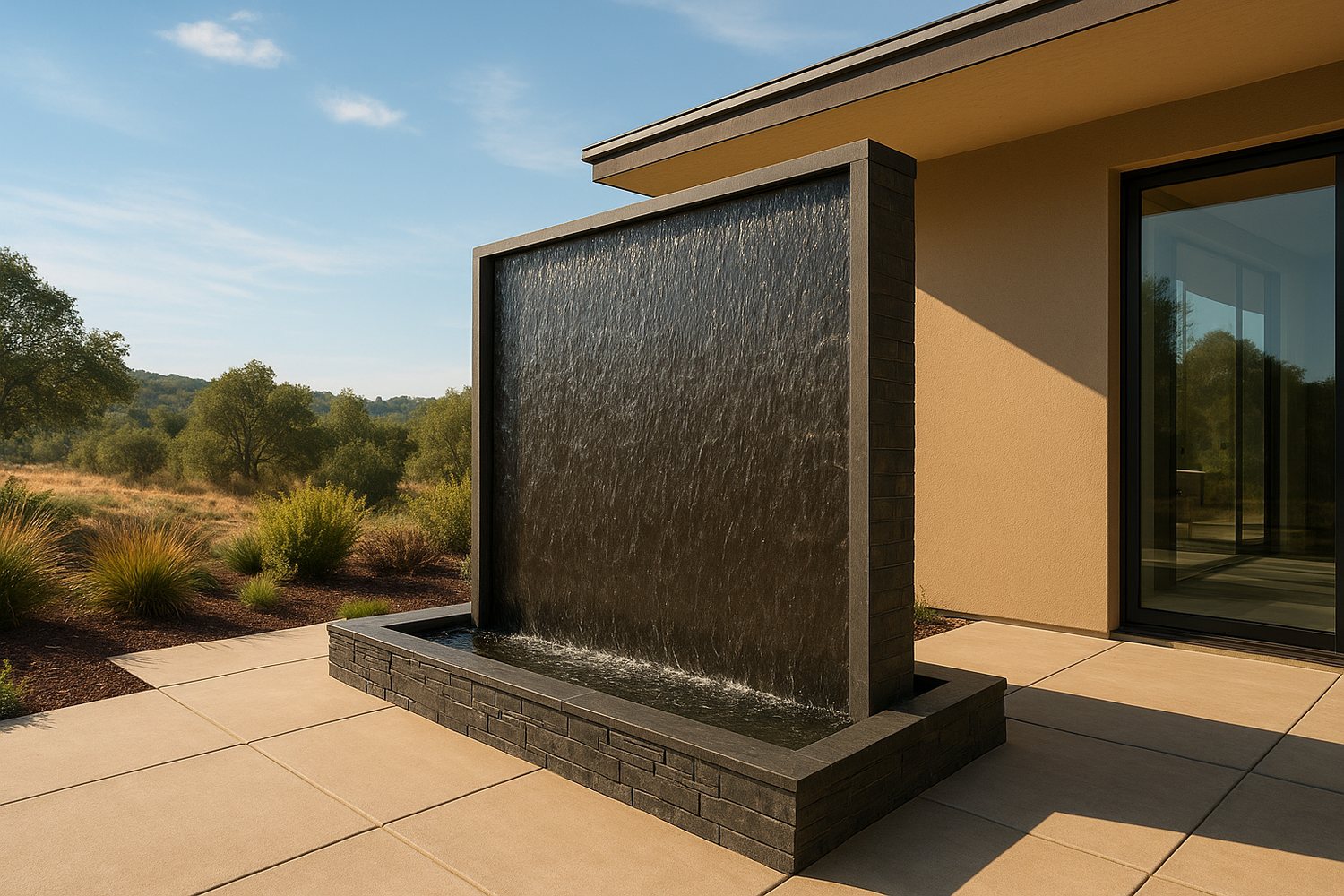
Modern water walls
Modern water walls Rocklin homes can feature: sheet-flow designs, privacy, sound, lighting and the trade-offs to plan for.
Explore →Fire and Water Features: Frequently Asked Questions
How close can a fire feature be to my house or pool?
Setback distances vary, but generally, gas fire features must be at least 5–10 feet from combustible structures like siding, fences, or patio roofs. For poolside bowls, local codes require enough clearance from the water edge and electrical equipment to ensure safety. We always follow current codes and manufacturer minimums for every project.
Can fire and water features be used during burn bans or poor air quality days?
Most natural gas or propane fire features are allowed during burn bans since they don’t produce embers or uncontrolled smoke. Always check your city’s current rules before use, especially if air quality advisories are posted. Wood-burning features are usually not permitted near pools or in new builds.
What’s the best way to keep water features free of scale and stains?
In our area’s hard water, scale can build quickly on spillways and bowls. Use a dedicated bowl cleaner and soft brush monthly. For deeper stains, a diluted vinegar wash may help, but for heavy buildup, professional descaling or resealing may be needed every few years. Regular care prevents most issues.
Are electronic ignitions worth the extra cost?
Electronic ignitions add convenience and safety—especially for multiple bowls, windy sites, or automation with pool systems. They allow remote or automated control and typically include flame sensors for automatic shutoff. For simple features, manual ignition works fine, but automation is best for busy homeowners or larger installations.
How do you prevent damage from tree roots, especially from oaks?
Before digging, we map and avoid major roots, aiming to route lines at least 18 inches deep and outside the drip line of mature oaks. If unavoidable, root barriers or pier footings can help. Keeping features clear of massive roots preserves both the tree and your installation for the long term.
Can these features be installed in an existing patio or pool area?
Retrofits are possible, but may require saw-cutting, coring, or trenching to reach existing utilities. Expect some disruption to old paving or decking. In many cases, it’s more cost-effective to add fire and water features during pool or patio renovations. We can assess your site and recommend the best approach for your goals.
Who connects the gas line, and what safety measures are needed?
Only licensed professionals connect and pressure-test gas lines in California. We coordinate with trusted, qualified contractors for all gas work, including shutoff valves, venting, and compliance checks. Safety clearances from windows and eaves are strictly followed. Homeowners should never attempt their own gas hookups.
Do I need HOA or city approval for these outdoor features?
Most planned communities and cities require pre-approval for new fire or water features—especially those involving new utility hookups, visible bowls, or raised masonry. We always recommend checking with your HOA and city or county office before scheduling the project. Approval times and requirements vary widely by address.
Ready to Explore Fire and Water Features?
Email sales@californiahardscapes.com with your address, a short description of your ideas, and a few photos of your space to start the conversation.