Front Yard Landscaping for Curb Appeal: Practical, Lasting Results
A well-designed front yard is the most visible upgrade you can make to your property. We build front yard landscapes that set a confident first impression, with honest guidance on what works best for your home, your neighborhood, and your lifestyle.
Why Front Yard Landscaping Matters
Best for: Homeowners seeking lasting curb appeal and function tailored to Placer, Sacramento, and El Dorado County neighborhoods.
A front yard is more than a patch of grass—it’s your home’s calling card and the first message you send to neighbors, guests, and potential buyers. Thoughtful landscaping increases curb appeal and can even raise property value, but it should also suit the way you live. The key is finding the right mix of hardscape, plantings, and features to tie your home’s architecture and site into a welcoming, practical space.
At California Hardscapes, our design process centers on understanding your vision while navigating local HOAs, water use restrictions, and site realities like hard soils or sloping grades. We draw on decades of regional construction experience, building every project as if it were our own home—no shortcuts, no cheap fixes, just the best results for the long term. From classic entry walks to drought-smart planting, every phase is built to perform and last.
Professional front yard landscaping also means less guesswork. Homeowners in Rocklin, Roseville, Granite Bay, Folsom, Auburn and nearby communities contend with hot summers, winter rain, and varied soil and root challenges. With a practical, technical approach, we help you make smart choices for beauty, upkeep, and long-term satisfaction. Curb appeal isn’t just about looks; it’s about creating an entry you’re proud of—without high-maintenance headaches.

Front Yard Landscaping: Design Options
Entry Walkways
A standout entry walk draws visitors to your front door and gives structure to the landscape. Choices include poured-in-place concrete, pavers, or decorative stone, each offering unique style, slip resistance, and maintenance profiles. Consider curved or straight lines to complement your home, and pick a finish that echoes your architecture.
Layered Planting Beds
Layered planting creates depth, softness, and visual interest. We often recommend a mix of low-maintenance shrubs, ornamental grasses, and seasonal color. Choosing heights, textures, and bloom times with care results in dynamic borders that look good year-round, attract pollinators, and reduce weeding and water needs.
Foundation Plantings
Foundational plantings help visually anchor the house to the yard, soften stark lines, and can even hide utility boxes or vents. Evergreens, compact natives, and slow-growing species are common choices, set far enough from the structure for airflow and easy maintenance.
Outdoor Lighting
Strategically placed low-voltage LED path lights, uplighting for specimen trees, and accent lighting on steps or columns vastly improve curb appeal after dark. They boost safety, add drama, and highlight architectural or planting features, all while being energy efficient and compatible with timers or smart controls.
Water-wise Lawns and Groundcovers
With California’s long dry season, water-wise lawn alternatives or reduced lawn areas are increasingly popular. Drought-tolerant groundcovers, decomposed granite, or synthetic turf are options for lush looks with a fraction of the irrigation and upkeep conventional sod demands.
Boulders, Mulch, and Accents
Strategically placed boulders, gravel mulch, decorative bark, or artful metal or wood accents lend a finished feel and discourage weeds. Properly installed, these elements require little upkeep and provide important texture and year-round structure—key for modern California curb appeal.
How a Quality Front Yard Landscape Is Built
Lasting, attractive front yard landscapes in our region demand more than a quick plant-and-mulch approach. Solid construction, correct materials, and careful details ensure your project stands up to seasons of weather, foot traffic, and neighborhood standards. Here’s the typical process our licensed, bonded and insured contractors follow, step by step:
- Subgrade Preparation: We begin by clearing and grading the yard to proper depth and slope, addressing drainage needs so water flows away from your foundation and doesn’t pool near walkways or planting beds.
- Base Layer: For walks or patios, we install a compacted class 2 road base or crushed rock base, using plate compactors to achieve a stable, even foundation that resists settling—even on clay or decomposed granite soils.
- Forming & Layout: Precise forms are set to define the edges of paths, planting beds, or hardscape elements. Lines and curves are carefully shaped to match the design, with elevations checked to tie into thresholds, driveways, and curb lines.
- Reinforcement: For concrete walkways or steps, rebar or wire mesh is set in place to control cracking and handle loads. In plant beds, soil amendments and root barriers may be installed as needed.
- Joints: Expansion and control joints are marked or installed in concrete and pavement to allow for thermal movement and prevent unsightly cracking, placed with future shrinkage and traffic in mind.
- Finishing & Planting: Concrete, pavers, or stone surfaces are finished for slip-resistance and appearance. After hardscape is complete, planting beds are mulched, plants installed according to plan, and irrigation components laid out for even coverage.
- Curing & Sealing: Where relevant, concrete walks are allowed to cure properly, then sealed for water repellency and color enhancement. Lighting and irrigation are tested, and final clean-up ensures a picture-ready entry.

Front Yard Landscaping Pros and Cons
Strengths
- Boosts curb appeal and property value with a tailored, professional look.
- Reduces water use and upkeep when drought-tolerant plantings and smart irrigation are used.
- Improves entry safety and usability, with slip-resistant walkways and lighting.
- Creates outdoor space you enjoy coming home to, tied to your home’s style and neighborhood.
- Can address site-specific issues like poor drainage, hard soils, and difficult slopes.
Trade-offs
- Initial costs are higher than DIY or quick-fix options, especially when using premium materials.
- Some elements, like concrete walks or lighting, are permanent and less adaptable to future changes.
- HOA or city plan review can add weeks to the schedule and may require design modifications.
- Even “low maintenance” landscapes need periodic care—pruning, mulching, and irrigation checks.
Costs and What Affects Them
Front yard landscaping can be a significant investment—but one that pays off in curb appeal, confidence, and longevity. Because every home and lot is different, and design choices range widely, we provide honest, line-by-line estimates based on site conditions and selections. Here are some of the main factors that drive cost:
- Yard size and existing site conditions: grading, removal, soil type or access issues.
- Choice and area of hardscape: concrete walks, paver paths, or specialty stone all have different price points.
- Complexity of planting beds: depth, soil amendment needs, and number or type of plants.
- Lighting: total fixtures, wiring runs, transformer size, and smart/timer features.
- Irrigation: whether you need new lines, upgrades, or water-wise retrofits.
- HOA or review requirements: plan sets, plant lists, and city or county approvals can add time and design costs.
Care, Maintenance, and Longevity
High-quality, well-installed front yard landscapes are designed to keep upkeep to a minimum: mow or trim lawn alternatives, inspect irrigation and lighting twice per season, and top up mulch every year or two. Periodic pruning, weeding, and deadheading maintain neatness. For hardscape surfaces, sweeping and an occasional hose-down keeps them looking sharp, and staining or moss can be managed proactively.
Concrete or paver walkways benefit from seals every few years—typically every three to five years for concrete and even longer for most pavers. Lifespan is determined by site prep, drainage, material choice, and care: in our climate, a properly built entry walk can last decades. Plants thrive with the right spacing, periodic fertilizing, and root barrier checks if near oaks or sidewalks. Smart irrigation and LED lighting are largely hands-off after setup but should be checked annually.
Compare other options

Backyard landscaping
Explore expert backyard landscaping in Rocklin. Detailed guide: planting, privacy, shade trees, play & garden areas, upkeep, honest pros & cons.
Explore →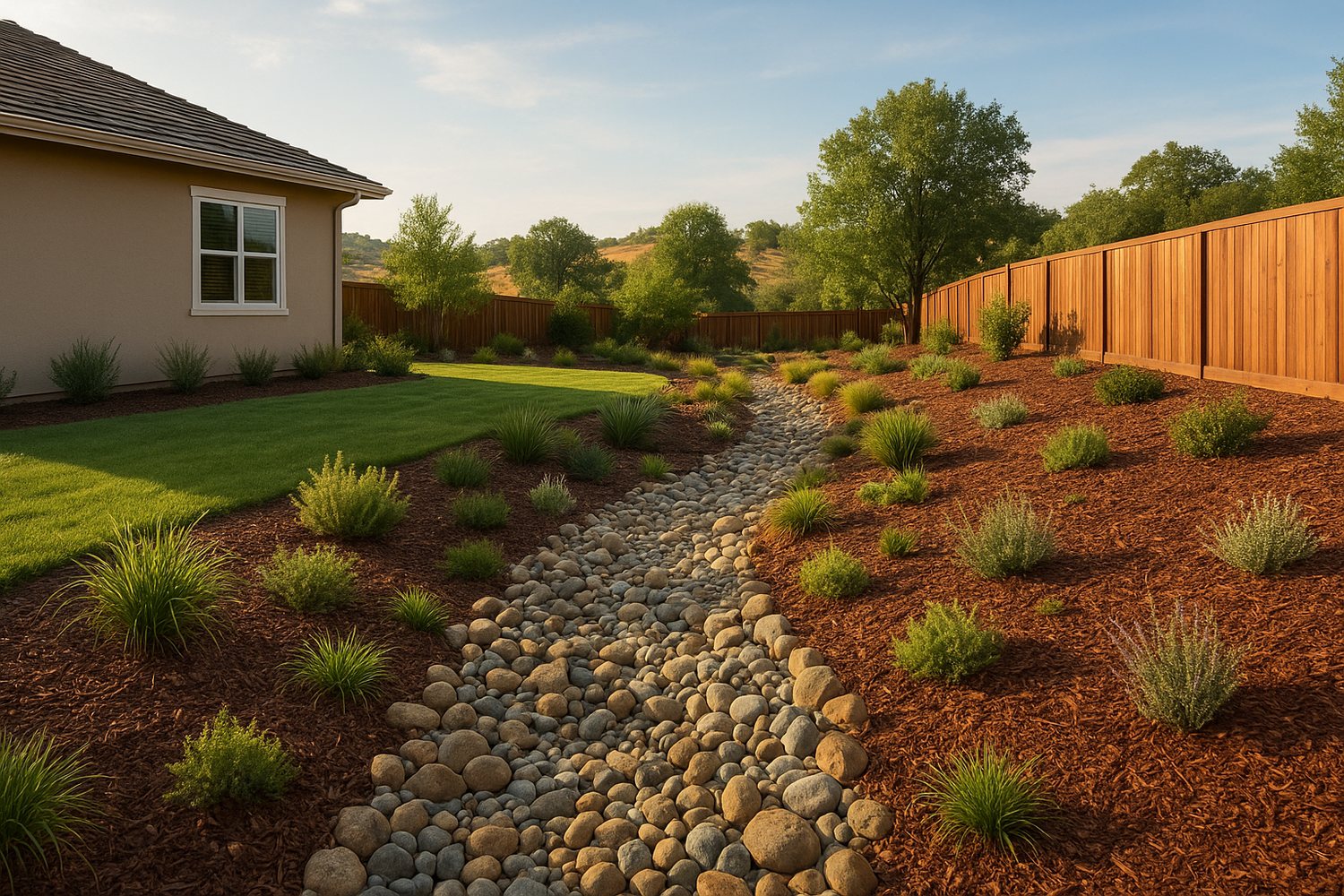
Landscape drainage solutions
Explore top landscape drainage solutions for Rocklin, CA & nearby areas. Grading, swales, French drains, dry wells & more. Reliable, honest advice here.
Explore →
Fire-wise landscaping
Explore premium fire-wise landscaping for Rocklin, Roseville & nearby foothill homes: defensible space, hardy plants, hardscape buffers, expert tips.
Explore →Front Yard Landscaping: Questions Answered
How long does a typical front yard landscaping project take?
Project timelines depend on size, complexity, and HOA or city review requirements. For most front yards, construction can range from one to three weeks after final plans and approvals. If significant hardscape or drainage work is required, schedules can extend. Smaller refreshes with minimal concrete or paver work may be faster, while HOA or city design review can add extra time upfront.
Will my new landscape need a lot of maintenance?
Low-maintenance designs are a specialty, but every landscape needs some periodic attention. Our approach emphasizes slow-growing plants, mulch for weed suppression, automatic irrigation, and hardscapes built to minimize cleaning. Expect to spend time on seasonal pruning and annual mulch top-ups, but not weekly mowing or spraying. Periodic checks of lighting and irrigation help prevent bigger issues.
Can you help me meet my HOA or city landscaping requirements?
We’re experienced with HOA and city expectations—from planting lists and hardscape colors to xeriscape mandates. While requirements vary by address, we help ensure your design meets common rules for plant height, setbacks, and appearance. We recommend checking your HOA guidelines early so we can incorporate any special needs from the start.
Are drought-tolerant landscapes less attractive or inviting?
Not at all—done correctly, drought-tolerant and water-wise landscapes can be vibrant and welcoming, featuring sweeping grasses, colorful blooms, and architectural foliage. Smart plant choices and layered design avoid the sparse, rocky look some people picture. A blend of textures and highlight features like boulders or art can make these yards even more inviting.
Will new walkways or planting beds damage my irrigation or utilities?
Before digging, we always mark and avoid existing underground water, electric, or gas lines. Careful trenching and hand digging near utilities help prevent surprises. If your existing irrigation is outdated or in the way, we can reroute or upgrade as part of construction. Advanced notice and maps from "call 811" reduce risk and keep your project on track.
Is artificial turf a good choice for front yards here?
Artificial turf can offer a vivid green look with minimal upkeep or water—appealing for many households. Its success depends on quality installation, correct base, and periodic cleaning for leaves or dust. Some HOAs may restrict or regulate its use. It’s often best paired with natural elements, like planting beds and trees, for a more convincing, welcoming design.
How can I prevent weeds and keep my landscaping looking fresh year-round?
A blend of thick, overlapping plantings, high-quality mulch, and proper irrigation discourages weeds. Installing weed barrier fabric under gravel or decorative mulch adds another layer of defense. Choosing slow-spreading, competitive groundcovers and seasonal cleanup keeps beds neat. Consistent upkeep once or twice a year is much more effective than waiting for problems to grow.
What’s the lifespan of walkways and hardscape features in our climate?
With thorough prep, correct base, and quality materials, concrete and paver walkways typically last decades. Decomposed granite paths or loose stone may require some replenishing or re-leveling after several years, depending on use and slope. Sealing pavers and concrete enhances durability. Plantings mature over three to eight years and, with care, maintain their structure and color for many seasons.
Let’s Talk About Your Front Yard
Email sales@californiahardscapes.com with your address, a short description of your goals, and a few current photos. We’ll offer straightforward guidance for your location and help you consider the best options for lasting curb appeal.