Modern & Geometric Pool Design and Construction
Explore the ins and outs of modern geometric pools: rectangles, lap lanes, L-shapes, and crisp detailing, with California Hardscapes.
Modern Geometric Pools: Clean Lines and Lasting Impact
Best for: Best for homeowners who value sharp lines, contemporary style, and effortless functionality in their outdoor space.
When you imagine a pool with magazine-worthy style, you’re probably picturing modern geometric pools: rectangles, L-shapes, defined lap lanes and an emphasis on clean, uninterrupted lines. These designs aren’t just a passing trend—they’re a conscious choice to highlight architectural simplicity, maximize usable space, and show off materials. For many newer homes in Rocklin, Roseville, Granite Bay, Folsom, Auburn and throughout the western Sierra foothills, a geometric pool integrates seamlessly with both the home and landscape.
At California Hardscapes, we find that geometric pools—long, narrow rectangles, elegant L-shapes, infinity and perimeter-overflow styles—suit contemporary and transitional homes where crispness and symmetry matter just as much as usability. Thoughtful use of materials is essential: modern coping (the stone or concrete edge around your pool), large-format pavers or porcelain decking, and carefully selected tile bring that luxurious, minimalist feel. It’s all about craftsmanship that doesn’t shout, but stands the test of time.
Is a modern or geometric pool right for every home? Honestly, no. They work best where the lot will allow those straight runs, where the home’s architecture won’t clash, and where homeowners are committed to maintaining the pristine look. This page explains your choices, technical factors, the trade-offs, and how our approach—quality, integrity, never cutting corners—turns plans into a pool you’ll enjoy for decades. We aim for results that exceed expectations, every time.

Design Options for Modern Geometric Pools
Rectangular and L-Shaped Pools
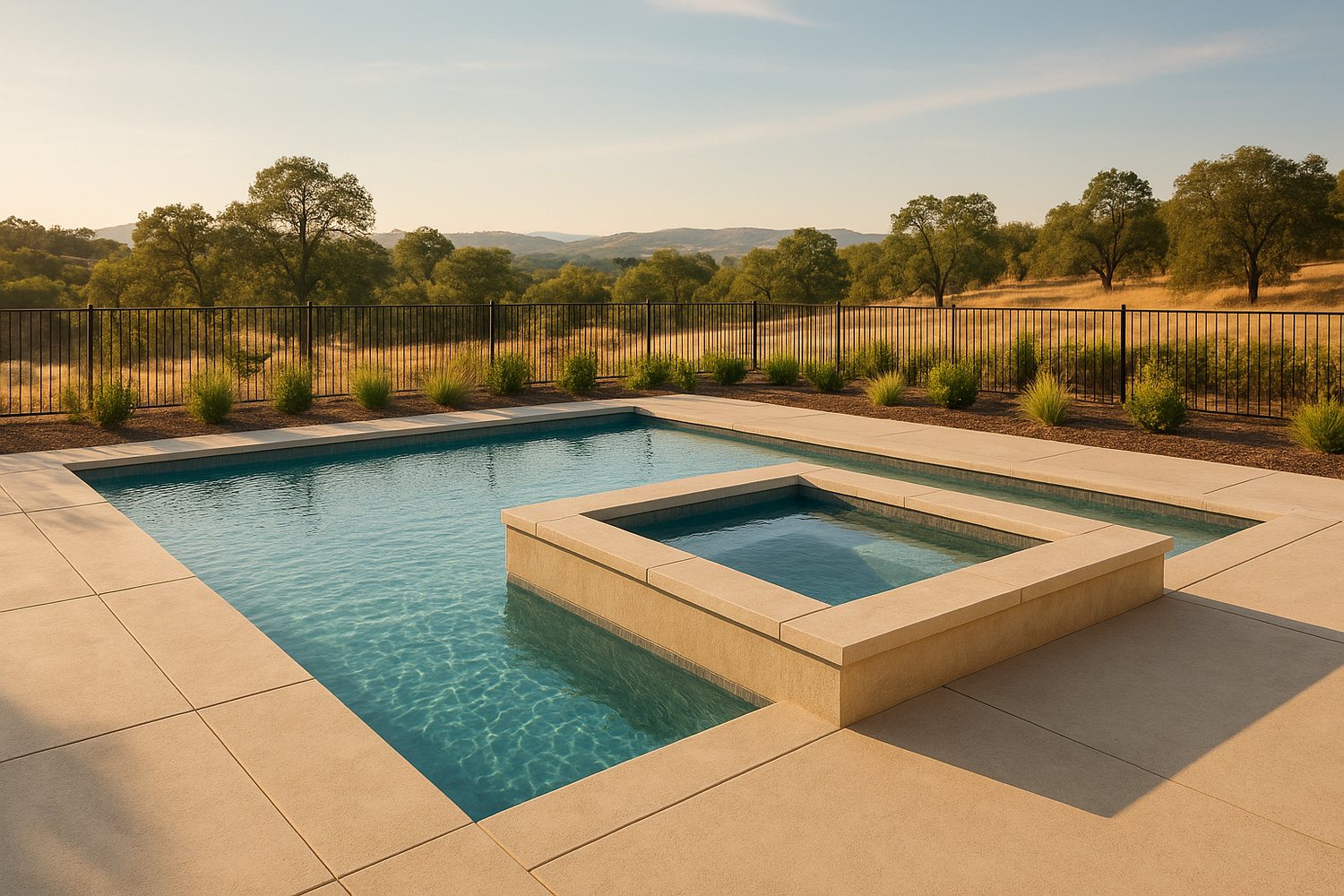
The classic geometric rectangle offers clear swim lanes, efficient use of space, and a timeless look that pairs with nearly any modern or transitional home. L-shaped designs can add visual interest, shape an outdoor room, or tie into a spa seamlessly. Both styles maximize usability and feel spacious even in moderate yards.
Lap Lanes and Swim Channels
For fitness-minded homeowners, dedicated lap lanes (typically 8’–10′ wide) or full-length swim channels integrate smoothly in a geometric design. These features bring serious function and make sense for those who want to swim workouts, with clean edges ensuring easy cover integration and simplified maintenance.
Contemporary Coping and Edges
Modern pools excel at sharp, narrow coping—often poured-in-place concrete, honed stone, or large-format porcelain. The coping line acts as the architectural frame, with options ranging from razor-thin 2–3 inch profiles to custom bullnose or square-edge stone. Clean, straight runs are essential for that minimalist impact.
Large Format Decking
Oversized pavers, porcelain tiles, or trowel-finished concrete extend visual lines from pool to patio, making outdoor living spaces feel coordinated and open. Fewer grout lines and large units emphasize scale and simplicity, but require expert base prep and joint detailing for stability and tree-root resistance.
Infinity and Perimeter-Overflow Edges
Where the site allows, negative-edge or perimeter overflow pools push geometric design to an art form—water appears to vanish or wrap seamlessly over edges. These features demand precise sitework, robust waterproofing and exacting masonry but deliver standout impact, best for homes with dramatic views or drops.
Contemporary Tile Choices
Glass, porcelain or architectural stone tiles bring brilliance and depth inside the pool and on raised features. Subtle, matte, or monochrome finishes reinforce a modern vibe. Mosaic glass tile at waterline or on feature walls makes cleaning easier and stands up well to hard water typical in Placer and Sacramento counties.
How a Quality Modern Pool Is Built
Every modern geometric pool is only as good as its foundation, detailing and finishing—especially in local soils and climates. We approach every step as if we’re building it for our own family, with well-managed crews, proper staging, and respect for the home and neighbors. Cutting corners at any stage leads to problems that are costly to fix later; done right, the structure should outlast trends.
- Subgrade: The site is surveyed, excavated and over-excavated where needed, with care to remove roots and organic matter. Compaction is verified to resist shifting—especially important in local clay and DG soils that swell with rain.
- Base: Crushed aggregate or engineered fill is installed and compacted for an even, stable sub-base. Drainage systems are considered up front, protecting from groundwater or future root intrusion.
- Forms: Laser-leveled forms define crisp pool and decking lines—critical for a geometric or infinity edge pool. Temporary forms are braced solidly and checked for square. All plumbing, skimmer, and light niches are pre-set before shell is placed.
- Reinforcement: Steel rebar is installed throughout the pool shell, basket-tied and set on chairs with extra attention to corners and cantilevered coping. Any raised bond beams, feature walls or negative edge troughs get extra steel and shotcrete depth.
- Joints: Expansion and control joints are precisely located in decking and coping to prevent random cracks. These must be sealed properly or matched with grout style, since joint visibility is higher with large format paving.
- Finishing: Shotcrete or gunite pool shell is shot in place, then hand-finished to grade and detail. After curing, surfaces are prepped for tile, plaster, and coping—these finishes define the pool’s look and durability.
- Curing and Sealing: Proper water cure time is allowed before plaster is applied, and deck or coping sealers are used as specified. Sealers help resist stains from hard water and organic debris, extending the life of every finish.
Modern Geometric Pools: Pros & Cons
Strengths
- Timeless, versatile aesthetic that coordinates with contemporary, transitional, and many traditional homes.
- Efficient use of space: geometric pools suit narrow yards and maximize usable swim and lounge area.
- Easy to automate: clean lines simplify fitment of automatic pool covers, robotic cleaners and swim jets.
- Crisp coping and tilework offer easier cleaning, reduce algae-prone nooks and persistent debris accumulation.
- Works well with optional features—spa spillways, tanning ledges, water features—without disrupting simple lines.
Trade-offs
- Can highlight imperfections: Geometric pools require highly precise layout, forming and finishing—any irregularity in coping lines or tile stands out.
- May not suit all home styles—ranch, cottage or traditionally styled homes may look out of place with stark rectangular pools.
- Higher upfront investment: Large-format decking, imported coping, and specialty edgework increase material and labor cost, especially for infinity or overflow designs.
- Requires strict maintenance: straight lines make stains, mineral buildup, or debris plainly visible if neglected.
Understanding the Cost of a Modern Geometric Pool
Modern geometric pools are an investment in both enjoyment and real estate value, but building one to the required precision comes with higher initial costs. Unlike freeform or kidney pools, every detail in a geometric pool—laser-straight lines, large format materials, specialty edges—demands skilled labor, careful engineering, and premium materials. At California Hardscapes, we don’t compete on being the cheapest; we compete on quality, integrity and results that exceed expectations, lasting for decades under real-world use.
- Size and shape: Longer lap lanes, larger rectangles or integrated L-shapes increase excavation, forming and material costs.
- Decking and coping materials: Custom-poured concrete, premium stone or large-format tile add expense versus basic broom-finish or small pavers.
- Specialty edges: Infinity or perimeter-overflow edges require added engineering, waterproofing, and finish trades.
- Site complexity: Grading, tree/root removal, slope stabilization or retaining walls push costs up, especially on difficult lots.
- Features and automation: Integrated spas, automatic covers, LED lighting, water features, and in-floor cleaning increase systems and finish cost.
- Soil conditions and drainage: Unstable, expansive soils demand deeper base, extra compaction, or engineered drainage to prevent future settlement.
Caring for a Modern Geometric Pool in Our Region
A modern pool’s clean look is meant to last, but that means committing to regular care. Weekly brushing (especially waterline tile and coping), monthly filter checks, and monitoring water chemistry are crucial for staving off mineral scale—an issue with local hard water. Avoid letting oak leaves and acorns accumulate; organic debris will stain even the best finishes. For pools with automatic covers, clear off standing rainwater and remove debris before retracting.
Large format decks, coping and tile benefit from professional resealing every 2–4 years, depending on usage, sun exposure, and local freeze events. Lifespan is often 20+ years for a well-built geometric shell, but waterline tile, grout, and deck joints may need touch-up or replacement in 10–15 years. Consistent maintenance not only keeps the pool looking sharp, but protects your investment from avoidable damage due to region-specific challenges.
Compare other options

Freeform and natural-style pools
Discover expert insight into freeform and natural-style pools in Rocklin. Learn design options, build process, honest pros & cons, costs, care, and more.
Explore →
Pool interior finishes and tile
Discover pool interior finishes: white plaster, quartz, pebble, glass bead, tile options, durability, water color, and replastering. Rocklin, CA homeowners.
Explore →
Pool equipment, heating and automation
Explore expert pool equipment, heating & automation options for your Rocklin area home. Honest guidance, key choices, and what matters for lasting results.
Explore →Geometric Pool FAQs: What Homeowners Ask Most
Is my yard the right fit for a geometric pool?
Geometric pools need enough space for straight runs and relatively square corners. A lot with good setback, level area, or space to grade can accommodate a rectangle or L-shape. Tight, irregular, or classic landscapes are sometimes better suited to freeform pools. Homes with a modern or transitional style—large windows, strong roof lines, or open patios—nearly always integrate well with a geometric pool.
Will a geometric pool stand out or clash with my home?
A sharp-edged pool works best with homes that have some contemporary elements: simple rooflines, clean window groupings, broad eaves, stucco, stone or horizontal siding. If your house is craftsman, cottage, or classic ranch, a geometric pool can feel out of place without careful site integration and landscape design.
How durable are modern pool finishes with local water and weather?
Quality modern finishes—glass or porcelain tile, honed coping, quartz or pebble plaster—are formulated to resist both hard water quartz scale and freeze-thaw cycles common in local winters. However, hard water will eventually create mineral scale and buildup on tile and coping if not scrubbed and sealed regularly. Resealing decks and cleaning tiles yearly helps finishes last decades.
What are the maintenance commitments with a modern pool?
All pools need weekly care, but the straight lines and large tile areas in geometric pools mean debris, scale and algae are more visible and tend to concentrate at the edges. Robotic cleaners and auto-covers can help, but regular brushing, vacuuming, and chemical balancing are required for lasting aesthetics and structure.
What makes modern geometric pools cost more than basic shapes?
It comes down to precision and materials. Every coping joint, tile line, and deck slab is visible with geometric designs, so layout and finishing require skilled crews, lasers, and specialty equipment. Materials—large-format coping, high-end tiles, specialty deck pavers—cost more and must be installed perfectly to look right. Engineering and labor for features like infinity or overflow edges add to the investment.
Do I need to worry about pool movement or cracks in local soils?
Our region’s clay and decomposed granite soils are prone to swelling and shrinking with rain and drought. That’s why a proper subgrade, engineered base and reinforced shell are vital, especially for geometric pools. Control joints and expansion joints are especially important for large-format decking. With correct construction, movement is managed and cracks are minimized.
What approvals or permits are needed to build a pool here?
Permitting and HOA approvals vary by address, city and county. Most projects will require engineered drawings, city (or county for unincorporated areas) permits, and sometimes HOA design committee review if applicable. Fencing, electrical, setbacks and drainage will be reviewed for safety and code. Permitting takes several weeks longer if special grading or retaining is required.
How soon after construction can I swim and use my new pool?
There’s a cure period after finishing the plaster interior—typically one to two weeks—when brushing, balancing and cleaning happen daily to ensure proper surface hardening. After this break-in, the pool and surrounding decking can be used for typical swimming, lounging and outdoor living, though heavy deck furniture is best kept off until the deck is fully cured and sealed.
Start the Conversation About Your Modern Pool
Email sales@californiahardscapes.com with your address, a brief description of your goals, and a few site photos to get started. Our team is happy to provide honest answers about site fit, options, and how to move forward.