Freeform and Natural-Style Pools: Design, Build, Answers
Bring the relaxed curves of nature home with a freeform or natural-style pool, designed for the unique yards and climates of our region. We explain the choices, technical details, and trade-offs—so you can decide with confidence.
What Sets Freeform & Natural-Style Pools Apart
Best for: Homeowners who want a pool that feels seamlessly integrated with their landscape, especially on irregular or sloped lots.
Freeform and natural-style pools depart from the straight lines of traditional designs for a look that blends with nature. These pools curve and meander like a stream or pond, fitting irregular yards and creating a sense of relaxed luxury. When crafted well, they create private backyard oases that invite you to linger and explore.
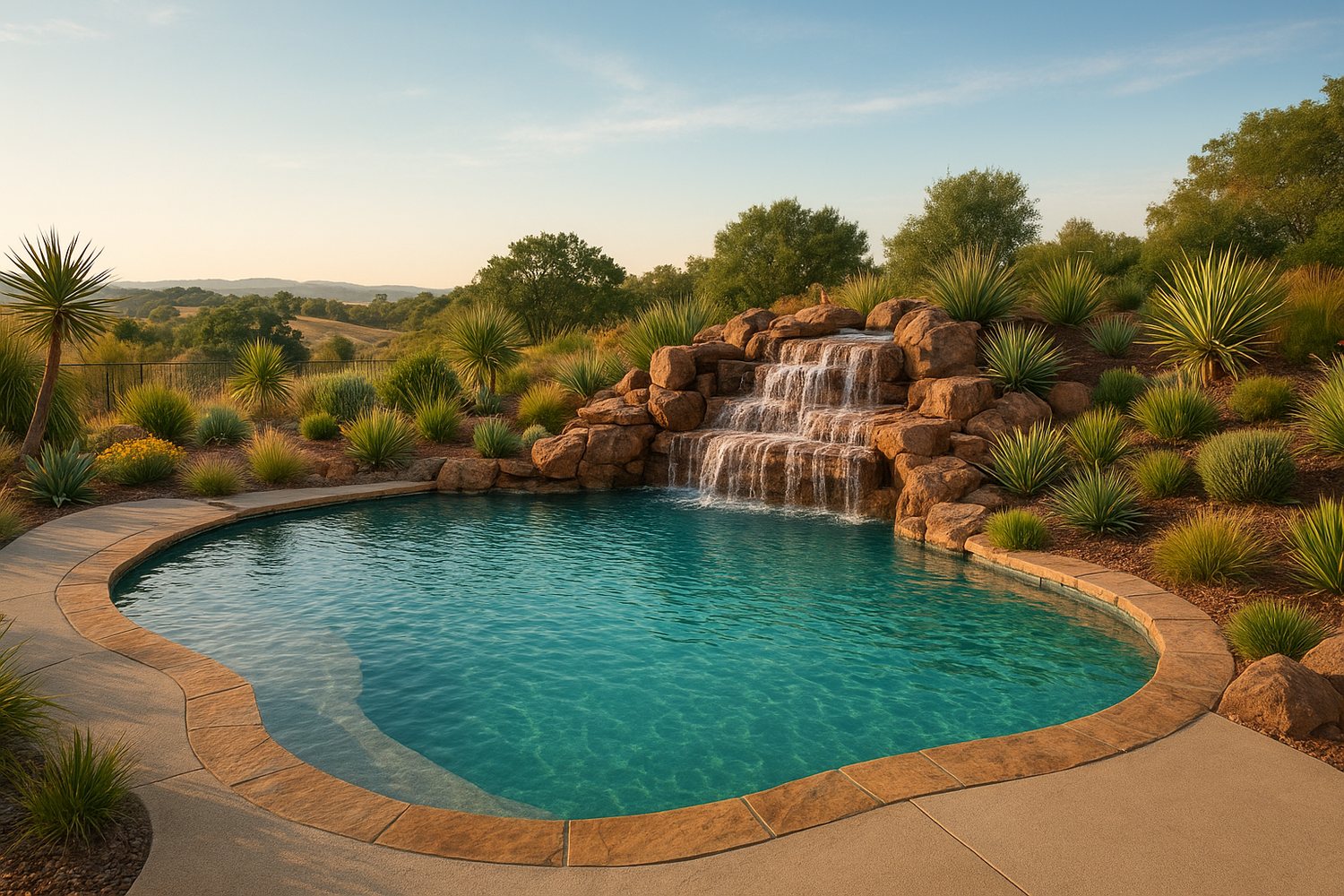
The hallmark of a freeform or natural-style pool is its organic shape—no two are ever quite alike. Instead of formal edges, you’ll see gently flowing borders, boulders, waterfalls, and planting that hugs the waterline. Pools can be finished in deeper, richer colors with exposed pebble or darker plaster to channel the look of a woodland lagoon or mountain creek.
Choosing a naturalistic pool also means thinking through construction, materials, care, and the realities of this style in our climate. At California Hardscapes, we bring decades of experience creating durable, low-maintenance pools that suit each yard’s unique conditions—never cutting corners, always building as if it were our own home.

Design Options for Natural-Style and Freeform Pools
Curved and Organic Shapes
Freeform pools avoid rigid symmetry. Layouts may follow property lines, tuck into existing trees, or fan out around patios with gentle arcs. This flexibility lets the pool fit comfortably in yards with odd angles or varying elevations, making the most of your space.
Boulder and Stone Edges
Large, natural boulders or realistic artificial rocks edge the pool, serving both form and function. They break up the boundary between deck and water, soften hardscaping, and can be shaped to invite sitting, climbing, or shade-loving plants. Placement is strategic: safe, stable, and visually balanced.
Rock Waterfalls and Features
Water elements elevate the natural effect. Cascading rock waterfalls, bubbling grottos, or narrow stream runnels add soothing sound and visual movement. These features can double as jump-in spots, shallow coves, or hideaway seating, shaped from real or sculpted stone.
Lagoon-Style Interior Finishes
Darker interior finishes—like deep pebble or charcoal plaster—give water a blue-green hue, evoking hidden lagoons. These materials resist staining and algae, and mask minor debris better than white. Custom blend options let you fine-tune the finished water tone for a truly natural look.
Planting Close to Water
Thoughtfully chosen plantings grow just inches from the pool, breaking up hard edges. Drought-tolerant grasses, rushes, or hardy perennials fit our region’s heat and require less water, but must be non-shedding and pool-chemical tolerant for long-term harmony between landscape and water.
Integrated Seating and Swim Zones
Benches, sun shelves and shallow play ledges are shaped right into the pool’s curves. These give swimmers a choice of experiences—quiet lounging, safe spots for kids, or deeper plunges—all within the fluid outline. Design balances function with the natural aesthetic.
How a Natural Pool Is Built—Step by Step
Freeform and natural-style pools demand an expert approach from the soil up. Each phase blends technical know-how with artistry—shaping, grading, and finishing to ensure the pool sits solidly, looks right, and endures for decades. Here’s how a quality crew builds one from start to finish.
- Subgrade: Excavate the pool area, shaping it to the design’s curves and depths. Special care is taken in local soils—clays, decomposed granite, or mixed fill—to reach stable, undisturbed ground. Subsurface drainage may be installed to prevent water movement under the shell.
- Base: Compact and level the pool floor, often adding a layer of crushed stone or sand for stabilization and drainage. This prevents settling and provides a firm bed for shotcrete or gunite application.
- Forms: Flexible wood, metal, or composite forms are set in place around the planned perimeter, supported by stakes or bracing to match the pool’s custom curves. Specialty forms may be created for boulders, benches, or steps.
- Reinforcement: Steel rebar is shaped and tied to reinforce the shell, following every twist of the pool outline. In our region’s swelling clay soils, careful rebar layout is essential for strength and crack resistance.
- Joints: Expansion and control joints are embedded, especially near transitions between pool and decking or at design features (waterfalls, benches). These allow for small movements with temperature change, reducing surface cracking.
- Finishing: The concrete shell is shot, troweled, and prepared for the chosen interior material—plaster, pebble, or specialty finish—or for artificial rock integration. Boulder placement, if included, is done while concrete is still green for secure bonding.
- Curing, Sealing, and Start-Up: Concrete or finish is cured slow and even, often under tarps in summer heat. Once cured, the pool is filled, chemistry is balanced, and surface sealing is applied as needed for material longevity. Landscaping and lighting are installed at the end.
Pros and Cons of Freeform Natural-Style Pools
Strengths
- Adapts beautifully to irregular or sloped yards; makes challenging sites usable.
- Creates a tranquil, resort-like feel that fits with natural landscaping and drought-tolerant plants.
- Flexible design integrates seamlessly with existing features (trees, rocks, views).
- Darker finishes and organic shapes disguise debris, stains, and surface wear better than standard pools.
- Can increase property value by enhancing curb appeal and outdoor living options.
Trade-offs
- Generally costs more than a basic geometric pool—organic shapes, custom materials, and features require more labor and skill.
- Non-standard shapes may require higher skill in layout, forming, and finishing for long-term durability.
- Water chemistry and circulation can be more complex, especially around boulders, recessed areas, or planting close to the water.
- Adding elaborate features like rock waterfalls or boulderwork increases both up-front cost and future maintenance.
Understanding Costs and Choices
Building a freeform, natural-style pool is a significant investment—typically higher than a straightforward rectangular pool because of design complexity, materials, and specialized labor. Costs vary depending on your site, finish choices, landscaping, and features. As a company, our philosophy is simple: we don’t compete on being the cheapest. We compete on quality, integrity, and results that exceed expectations.
- Pool Size and Shape Complexity: The more curves, benches, swim-outs, or transitions, the more time and expertise required.
- Soil Conditions: Highly expansive clays, boulders, backfill, or unstable ground in your yard can require extra excavation or engineering.
- Materials: Premium finishes (pebble, quartz, or dark plaster), real or synthetic boulders, and stone accents elevate both cost and durability.
- Features: Rock waterfalls, integrated lighting, tanning shelves, or large hardscape areas will increase the final price.
- Access and Layout: Limited access, narrow side yards, or complex grading require more labor and specialized equipment.
- Permitting and Design Review: Costs depend on HOA, city, and county plan review and inspection requirements.
Caring for a Natural-Style Pool in Our Region
Day-to-day, maintaining a natural-style pool isn’t wildly different from other inground pools: brush, net debris, check water chemistry, and run the pump as directed. Curved walls and features like boulders or waterfalls can, however, create spots where dirt, algae, or leaves collect, so they need regular attention. Automatic cleaners and robotic vacuums can help manage these areas. Most dark finishes require slightly more vigilant water chemistry to keep their color and surface texture looking best.
Typical pebble or darker plaster finishes should be professionally acid-washed or resealed every 5 to 7 years, depending on usage, fill water, and sun exposure. Naturalistic pools last decades when built right, but lifespan is affected by water chemistry, strong roots nearby, and winter freeze patterns. Plan on periodic checkups if you have planting right up to the waterline—healthy roots and debris control are vital for longevity.
Compare other options

Pool and spa combinations
Explore premium pool and spa combinations in Rocklin and Placer County. Learn about design, features, heating, placement, pros, cons, costs, and care.
Explore →
Tanning ledges and Baja shelves
Honest, in-depth practical advice on tanning ledges & Baja shelves for pools in Rocklin & Placer County. Options, build steps, pros/cons, care, cost and more.
Explore →
Pool safety features and fencing
Learn must-have pool safety features and fencing options for new and existing pools in Rocklin, Roseville, and nearby. Honest advice for local homeowners.
Explore →Frequently Asked Questions about Freeform & Natural-Style Pools
Will a natural-style pool work with my sloped or small yard?
Yes, freeform pools are uniquely adaptable to irregular, sloped, or tight spaces. Their flexible, organic shapes can be designed to fit and make the most of areas where a rectangular pool would be awkward or impossible. On slopes, retaining walls or terraced hardscaping may be integrated to create usable, visually interesting spaces. Always have your site evaluated by an experienced builder for the best results.
Are boulder and rock features difficult to maintain?
Natural boulders and rock waterfalls add character but can require extra care—more crevices for leaves, algae, and debris to collect. Occasional brushing or a pressure wash will keep them clean. Artificial rock is often easier to maintain than real stone, as it resists surface algae and stays more consistent in color. Whichever you choose, proper placement and integration into the pool shell make a difference in both look and maintenance.
How safe are natural pools for children and pets?
Designed with safety in mind, natural-style pools can include gradual entries, tanning ledges, and wide steps for easy access. Boulder edges should be chosen and installed with stability, height, and grip in mind to prevent slips. As with any pool, installation of code-compliant fencing and constant adult supervision are essential for safety with kids and animals.
Does planting near the pool cause extra mess or maintenance?
Planting close to the water creates a lush, inviting look, but can add to seasonal debris and pool cleaning if not chosen carefully. We recommend low-maintenance, non-shedding, drought-tolerant varieties well suited to our region. Irrigation should be planned to avoid washing soil or fertilizers into the pool. Good landscape design is critical to minimize leaf drop and root impact over time.
Can I convert my existing rectangular pool to a freeform natural look?
In some cases, yes—remodeling a straight-edged pool with new coping, boulderwork, water features, and interior finishes can create a more natural look. However, significant changes to shape or elevation are usually limited by the original structure. A professional evaluation can clarify what’s possible and whether new construction is a better investment.
How do natural-style pools hold up to our region’s weather extremes?
With careful construction—proper compaction, reinforcement, curing, and attention to drainage—these pools hold up well to the area’s heat, drought, and freezing nights. High-quality finishes and regular care help prevent cracking and surface wear. Extra protection is built in where winter freeze or hard water may impact longevity.
What permits or approvals do I need for a pool project?
Every city, county, and homeowner’s association has different requirements for pool construction, setbacks, fences, and inspection. Local codes vary, and you may need plan reviews or neighbor sign-offs depending on your address. A responsible contractor will help guide you through the necessary steps, but always check with your HOA and local building department early in planning.
How long does it typically take to build a custom natural pool?
A quality freeform or natural-style pool can take several weeks to several months, depending on site prep, weather, permitting, material selection, and complexity of features like waterfalls, hardscaping, or landscaping. Unexpected weather (rain, heat waves, cold snaps) or permit delays may stretch the timeline. Good planning and clear communication are essential for a smooth project.
Ready to Explore Your Options?
Email sales@californiahardscapes.com with your address, a short description of your vision and photos of your yard. Our experienced team will respond quickly with insight for your specific site and goals.