Wall and Facade Lighting: Bring Texture, Safety and Beauty Home
Done right, wall and facade lighting turns ordinary structures into features that stand out, stay safe, and feel inviting after dark.
Transform Your Walls with Light That Does More
Best for: Homeowners who want to showcase architecture or hardscape, boost nighttime safety, and elevate curb appeal with professional-grade lighting.
Wall and facade lighting is more than just a way to brighten up your yard after sunset. Integrated correctly, it becomes part of your home’s architecture, working with the shape, color, and texture of every surface. The result is a property that looks cared-for and welcoming, with enhanced safety for family and guests as they walk at night. At California Hardscapes, we believe the right lighting plan is as important as quality stone or concrete work — it’s all about the total experience of your outdoor environment.
There’s a reason wall and facade lighting is one of the most requested upgrades across Rocklin, Roseville, Granite Bay, Folsom, Auburn and nearby neighborhoods. It provides a dramatic boost to curb appeal, transforming plain concrete or masonry into focal points by highlighting textures and edges. It also adds critical visibility for steps, patios, pathways, and entertainment spaces, helping folks of all ages move confidently after dark. No two properties are exactly alike, so every lighting system is uniquely tailored to your home’s layout, use patterns and even your favorite outdoor features.
We don’t just aim for the minimum: our philosophy is clear — we don’t compete on being the cheapest. We compete on quality, integrity, and results that exceed expectations. Every lighting plan is designed to avoid harsh glare, hot spots, and uneven shadows. Instead, we focus on an expertly balanced effect—subtle, elegant, dependable—using only products we’d be comfortable installing in our own homes. The effect should make your hardscapes and facade stand out at night, not the light fixtures themselves.

Wall & Facade Lighting Options for Every Space
Wall Washing Fixtures
Wall washing uses wide-beam fixtures placed a short distance from a wall to cast diffuse, uniform light across the surface. This effect softens and enlarges a space, downplaying flaws while highlighting color and subtle surface movement. Ideal for large, flat facades or stucco walls where evenness is a priority, not dramatic texture.
Wall Grazing Fixtures
Grazing involves placing narrow-beam lights close to a wall’s base or top, directing light sharply along the surface. This technique accentuates rugged or dimensional materials like stone veneer, brick, or split-face block. It draws out shadows and contrast, revealing architectural depth and stone pattern in ways that daytime sunlight rarely can.
Architectural Sconces
Sconces are mounted light fixtures that often flank doors, gates, or garage facades. They provide both functional and decorative lighting. From clean-lined contemporary to classic cast aluminum, wisely selected sconces guide visitors while adding character and scale. Opt for shielded, downward-facing sconces to avoid light bleed and minimize glare.
Retaining Wall Step and Cap Lights
These fixtures are installed right into retaining walls, seat walls, or steps, casting subtle pools of light across adjacent patios and walkways. Properly integrated wall lights improve safety, especially around elevation changes, and lend a welcoming mood to nighttime gatherings. LEDs with built-in glare shields produce long-lasting, low-maintenance results.
Accent and Niche Lighting
Accent lights are used to highlight particular wall elements—like water features, art, or entry alcoves. Slim LED strips and mini spotlights can be recessed into wall niches or architectural reveals to create focal points. These require careful planning to avoid distracting hot spots or exposed wiring. Used best in moderation.
Color-Tunable and Smart Lighting
Advanced LED systems offer color tuning and smart controls, allowing you to adjust the tone and intensity for different occasions or seasons. While more expensive up-front, these can set your space apart for entertaining or holidays, and allow remote adjustment to suit parties, quiet evenings, or security needs.
How Premium Wall & Facade Lighting Is Designed and Built
A successful wall or facade lighting installation is as much about technique as product. Attention to detail at each stage protects your investment against shorts, water intrusion, poor coverage, or premature failure. Our experience in concrete and masonry construction is matched by a thorough, systematic process when it comes to lighting. Here’s how a conscientious crew, led by a pro like Marty, approaches an outdoor wall lighting job from start to finish.
- Begin by inspecting soil, grade, wall stability, and any planting or irrigation adjacent to the lighting zone. Confirm drainage and locate underground utilities before any trenching or surface mounting takes place.
- Excavate and install a compacted gravel or sand base where new wall lights or conduit will be set, ensuring proper drainage and a stable foundation for any surface-mounted fixtures or wall penetrations.
- Lay out templates, masking, or minor forms for exact fixture placement. Mark control box and transformer locations out of sight but accessible for maintenance. Confirm line-of-sight and glare-free positions.
- Install low-voltage wire runs with approved conduit where required, using UV-resistant and water-resistant cabling. For new walls, place conduits within the structure; for retrofits, routes often follow expansion joints or base transitions.
- Where walls or capstones are cut for fixture mounting, reinforce the area as needed to accommodate additional load or to prevent moisture ingress. Seal penetrations with exterior-grade caulk or gaskets.
- Secure all fixtures, double-checking alignment and aiming angles. Connect to the transformer; check voltage at each point. Program automatic timers or smart controls, then test after dark to fine-tune brightness and aiming.
- Bury and compact all trenches, tidy the area, clean surfaces, and touch up any mortar or wall finish disturbed during install. Educate the homeowner on operation, maintenance, and safety cutoffs as the final step.

The Pros and Cons of Wall & Facade Lighting
Strengths
- Highlights natural stone and textured concrete, creating dramatic nighttime beauty.
- Enhances safety and security by illuminating dark walkways, steps, and entries.
- Boosts curb appeal and property value by showcasing home features after sundown.
- Discreet, integrated fixtures protect against vandalism, damage, and lawn equipment.
- Low-voltage, quality systems are energy efficient and require little routine attention.
Trade-offs
- High-quality fixtures and professional installation cost more than DIY or basic floodlights.
- Improper placement can cause glare, uneven lighting, or unsightly hot spots.
- Retrofitting into finished masonry may involve some dust, cutting, or paint touch-up.
- Design must balance accent with subtlety—over-lighting looks harsh and wastes energy.
What to Expect When Budgeting for Wall and Facade Lighting
Wall and facade lighting projects aren’t one-size-fits-all, so there’s no way to give a precise cost without seeing your site and goals. Our philosophy is to compete on quality—using products, planning and craftsmanship that provide long-term value rather than a quick fix. Factors include the size and complexity of the area, the number of fixtures, and whether installation is part of a new build or retrofit. Expect a cost structure that reflects careful labor, proven materials, and problem-solving unique to your home.
- Scope and layout of the lighting area—longer or more complex walls require more planning and materials.
- Selection and quality of fixtures—LED, specialty models and smart-enabled products affect overall project investment.
- Retrofit versus new construction—adding lights to existing masonry or concrete surfaces involves extra steps and care.
- Accessibility and need for trenching or conduit runs—hard-to-reach zones or tight site access can impact installation effort.
- Integration with landscape or pool lighting—coordinating with other systems can provide efficiency but may require additional controls.
- Control system features—basic timers cost less upfront than advanced smart-home ready dimmers or color tuning technology.
Caring For Your Lighting: Upkeep, Lifespan, and Performance
Top-notch wall and facade lighting systems are designed to be low maintenance, but a little attention pays off. Use a soft cloth to wipe down lens covers and fixtures a few times a year, especially after storms or heavy pollen. Trim shrubs and grasses to prevent shading or moisture buildup. Inspect wiring and seals annually for visible damage. For most systems, lamp replacement is rare thanks to long-lasting LEDs; expect 10–15 years before component upgrades are needed when professionally installed fixtures are used.
Professional sealing around penetrations, conduits, and fixture bases is critical for long-term moisture resistance, especially in walls exposed to heavy irrigation or winter rain. While the fixtures themselves rarely require resealing, masonry or stucco touch-ups may be needed every few years. Quality fixtures in our regional climate can last decades, but extended life depends on keeping hard water stains, dirt buildup, and shifting walls or caps in check. Always ensure drainage flows away from lighted walls for best performance and lifespan.
Compare other options

Lighting repair, upgrades and maintenance
Expert outdoor lighting repair, upgrades & maintenance for Rocklin and nearby by California Hardscapes.
Explore →
Patio and pergola lighting
Patio and pergola lighting Rocklin homeowners love for dining and entertaining: options, installation, costs and care.
Explore →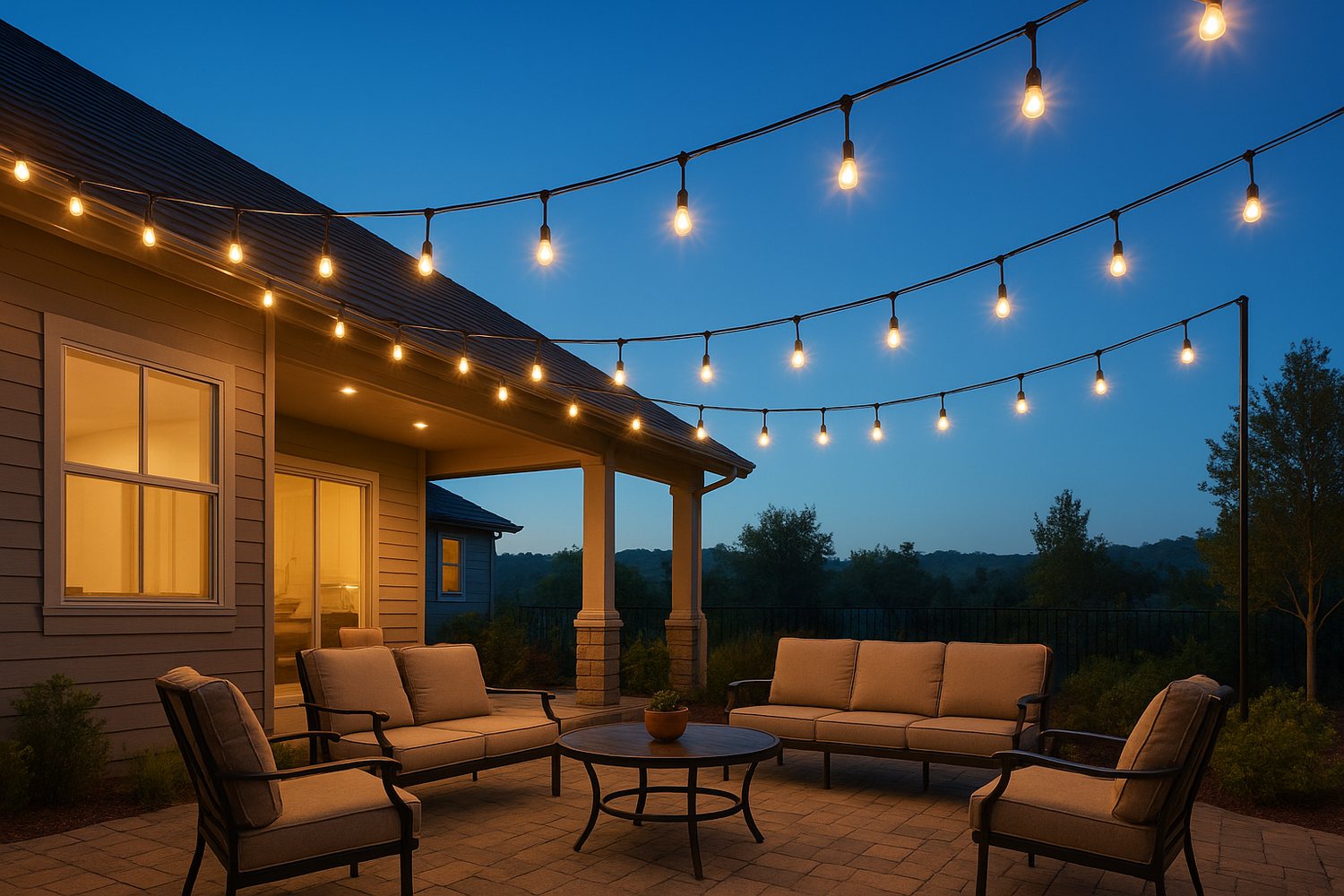
String and cafe lights
Learn everything about high-quality string and cafe lights in Rocklin: installation methods, options, pros, trade-offs, cost factors and care tips.
Explore →Frequently Asked Questions About Wall & Facade Lighting
How do I avoid hot spots or glare in wall lighting?
Hot spots and glare are usually caused by using the wrong type of fixture, aiming the beam incorrectly, or spacing lights too close together. Professional design starts with a lighting plan that matches fixture optics to the wall texture and size. We use shielded fixtures and test at night to make sure the effect is even, soft, and not blinding for guests or neighbors.
Do I need to replace or reseal the wall when adding lights?
If you’re adding lights to an existing concrete or masonry wall, small cuts or holes may be needed for recessed fixtures or conduit. These are sealed with weatherproof caulk and, if necessary, patched with matching mortar or finish coat. Proper installation avoids weakening the wall. For new walls, fixtures and conduit are integrated from the outset. Every effort is made to maintain both structure and appearance.
How long do wall and facade lighting systems last?
With quality fixtures and installation, LED wall and facade lighting can perform reliably for a decade or more. The biggest threats are poor sealing, damage from yard equipment, or shifting masonry. Regular cleaning and inspection extend the lifespan. Most clients see 10–15 years before needing to consider major upgrades or component replacement.
Are permits or HOA approvals required for wall lighting?
Permit and approval requirements vary by city, county, and homeowners association. Some areas require submittals, particularly if electrical work or exterior changes are visible from the street. It’s wise to check with your local HOA or city planning department ahead of time. Professional installers help ensure work is up to local standards.
Can I add wall lighting to landscape walls or older masonry?
Yes, wall and cap lights can be retrofitted into most existing landscape walls and some older masonry. The planning is more involved to avoid damaging finish materials, and wiring may follow new routes to reach the fixtures unobtrusively. Sometimes a surface-mount fixture is the better option if cutting isn’t appropriate for the wall type.
Will outdoor wall lights attract insects?
Warm-colored LED fixtures attract fewer bugs than older incandescent or cool-white bulbs. Choosing fixtures with shields and directing light downward or along walls further reduces their visibility to insects. While a few bugs are inevitable with any outdoor light, a professionally designed system minimizes nuisance without sacrificing effect.
Can lighting be controlled remotely or programmed for events?
Modern outdoor lighting systems offer a range of smart features, from programmable timers to remote access with your smartphone. This allows you to set schedules for regular use or create custom scenes for parties, holidays, or increased security. Advanced controls can be integrated with other outdoor or security lighting for seamless operation.
What maintenance does my lighting need year-to-year?
Annual maintenance usually includes cleaning fixture lenses, trimming plants that might block light, and checking all weather seals or mounting points for wear. Quality LED fixtures need little attention otherwise, but it’s smart to walk your property at night a couple of times a year to ensure even light and spot any developing issues before they become problems.
Ready for a Custom Wall Lighting Plan?
Email sales@californiahardscapes.com with your address, a brief description of your project and a few photos. We will follow up to walk your site, answer your questions, and offer honest recommendations for your needs.