Landscape Boulders: Granite & Fieldstone for a Lasting Impact
Landscape boulders—especially granite and fieldstone—transform yards into artful, enduring outdoor spaces. Here’s how to select, place, and maintain boulders for natural beauty and true longevity.
A Closer Look at Landscape Boulders
Best for: Homeowners seeking natural, low-maintenance visual impact and durable functional accents for yards and gardens.
Few additions deliver the visual anchor, subtle permanence and sense of scale that well-placed landscape boulders can bring to your garden. Granite and fieldstone boulders—sourced from local or regional quarries—fit seamlessly into the central and foothill California landscape. These stones create natural focal points, integrate gardens into their surroundings, and help solve challenging grade or functional issues.
Choosing boulders isn’t just about picking pretty rocks. Their sizes, types and positioning shape your space, offer impromptu seating, slow runoff, or break up vast lawns and planting beds. Boulder placement, especially when some are artfully buried, softens hard lines and mimics natural outcrops. Done thoughtfully—never rushed—boulders can look as if the home was built around them, not vice versa.
The logistics of moving, setting, and securing boulders are often underestimated. Many weigh hundreds (or thousands) of pounds, requiring special equipment and thorough planning for safety and aesthetics. At California Hardscapes, we don’t compete on being the cheapest. We compete on quality, integrity, and results that exceed expectations—every project built as if it were our own home. If you’re considering landscape boulders, here’s what to know before getting started.

Design Choices with Landscape Boulders
Granite Boulders
Granite is the classic choice for boulders in this region: dense, durable, and offering a range of colors from light gray to faded gold and pink. Its coarse, sparkling mineral surfaces reflect sunlight and withstand heat, hard water, and foot traffic. Granite’s weight also holds placement well on slopes or in retaining applications.
Fieldstone Boulders
Fieldstone is naturally weathered, rounded, and textured from centuries of exposure, often featuring moss or lichen for an aged look. Colors vary by source but generally lean earthward: browns, tans, grays, and soft reds. Fieldstone adds organic softness to hardscapes and blends beautifully with native grasses, oaks, and planting beds.
Sizes and Approximate Weights
Landscape boulders range from manageable 12–18" accents (60–200 lbs) to multi-ton features over 3 feet across. A common landscape size is 18–36", typically weighing 400–2,000 lbs. Weight influences placement logistics and determines suitability for grouping or seating.
Boulder Placement & Burying
Naturalistic appearance is achieved by burying 10–30% of a boulder’s volume, mimicking how rocks weather into the ground. Boulders can be set upright, tilted, or flat for different looks. Embedded stones resist shifting, support soil around them, and avoid the “dropped on top” effect often seen in rushed installs.
Accent Groupings
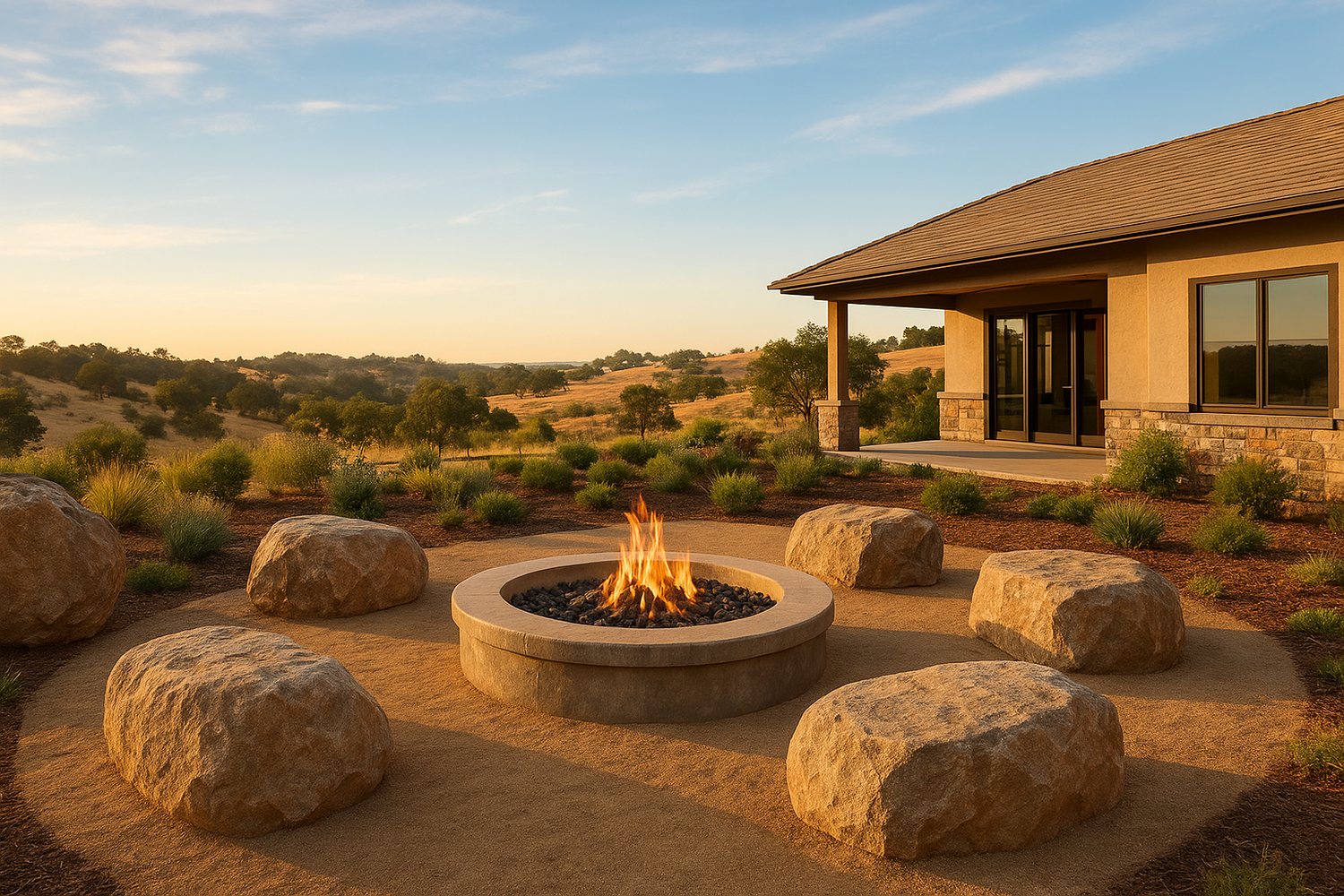
Clusters of three or more boulders, differing in size and spacing, create focal interest and echo the randomness found in nature. Groupings can frame entryways, anchor bed edges, or break up large stretches of lawn. Spacing, negative space, and partial burying are key to avoid a forced look.
Seating Boulders
Larger, flat-topped boulders (18–24" high) are ideal for informal seating around fire pits, play areas, or patios. Smooth, stable surfaces are preferable; some fieldstone or granite pieces can be specially chosen or even lightly shaped to enhance comfort without sacrificing a natural look.
How We Place Landscape Boulders for the Best Results
Properly installed boulders require a process that balances aesthetics, structural stability, and site safety. Every step—selection, site prep, base preparation, lifting, and final positioning—demands care and the right equipment. At California Hardscapes, we build as if it were our own home: no shortcuts, no guesswork, only skilled hands and eyes.
- Site Layout & Marking: The team lays out boulder locations with paint or flags, referencing planting beds, paths, slopes, and design plans. Natural spacing, buried depths, and focal points are all double-checked before equipment ever arrives.
- Excavation & Subgrade Prep: Excavation begins for each boulder footprint, digging deeper on the side toward slopes or anticipated runoff. The subgrade is shaped to cradle the boulder, generally 8–18" below finished grade, depending on size and style.
- Base Material: Crushed rock or compacted native soil is used at the bottom of the hole to provide a stable base. Good drainage is critical to avoid settling or rocking over time, especially in clay or gopher-prone areas.
- Boulder Delivery & Lifting: Boulders are delivered and placed with loaders, mini-excavators, or specialty boulder grapples. Rigging, spotters and slow, controlled movements keep the team safe and minimize site disruption.
- Setting & Final Placement: Each stone is gently rotated into position—tilt, face, and angle are fine-tuned for natural integration. Multiple boulders in a group are reset and adjusted in relation to each other until the arrangement feels right.
- Backfilling & Compaction: Soil or planting mix is backfilled and tamped around the embedded boulder, carefully shaped to hide cut lines and funnel water away. In sensitive grading projects, erosion mat or jute netting may be added.
- Cleanup & Inspection: The final step includes rinsing off dust, removing tamp marks, and walking the site to confirm stability and visual harmony. Any altered irrigation or lighting is checked before the job is considered complete.
The Advantages and Disadvantages of Landscape Boulders
Strengths
- Instant, natural visual impact—no maturing or waiting required.
- Virtually zero maintenance: no rot, fading, or mechanical wear.
- Durable even in extreme sun, summer heat, hard water, or freeze-thaw cycles.
- Can solve grade changes, manage runoff, or act as functional seating.
- Blend with both modern and traditional landscape styles for long-term relevance.
Trade-offs
- High weight means professional equipment and skill are essential for placement and safety.
- Initial purchase, transport, and installation cost is higher than smaller edging stone or mulch.
- Difficult to relocate once set; changing your mind later involves significant expense.
- Insufficiently buried or thoughtful boulder placement looks unnatural and can cause drainage issues.
What Affects the Cost of Landscape Boulders?
The price of landscape boulders includes much more than just the rock itself. Shipping, site accessibility, equipment needs, and installation all have a meaningful impact. High-quality workmanship—setting boulders to look timeless and feel stable for decades—is what separates a premium result from a temporary fix. Here’s what impacts your budget:
- Boulder type, size, and finish: Granite and imported fieldstone are heavier and sometimes pricier than locally available stones.
- Quantity and grouping: Single accent boulders cost less to install than group arrangements or large seating sets.
- Site access: Tight backyards, slopes, or limited driveways might require smaller machinery, increasing labor time.
- Excavation depth and base prep: Deeper, well-drained bases prevent shifting but require more digging and backfill.
- Complexity of placement: Artistic arrangements with multiple boulders require more time for adjustment and visual alignment.
- Distance from supplier and delivery logistics: Longer hauls and tricky unloads affect the delivered price.
Landscape Boulder Care and Maintenance
Once placed, boulders need very little upkeep. An occasional rinse with a hose removes organic debris and keeps lichen or moss looking fresh. For granite and quality fieldstone, sealing is not usually required, but some owners prefer to seal boulders in certain locations to minimize staining from hard water or droppings. If sealed, expect to refresh every 2–5 years depending on sun and water exposure, though most boulders are left natural for decades.
The lifespan of boulders in the landscape is essentially indefinite—granite and fieldstone are among the most enduring materials on earth. Problems only arise from improper placement: poor drainage may lead to soil washout or unwanted shifting. In these cases, correction is more involved than with smaller landscape features. Routine inspection of soft soils or irrigation after heavy winter rains helps proactively spot issues before they develop.
Compare other options

River rock and cobble
Explore river rock and cobble sizes, colors, and uses for dry creeks, drainage, or borders in Placer & Sacramento. Tips for selection, care, and installation.
Explore →
Topsoil and soil amendments
Learn how premium topsoil, planting mix, and soil amendments improve landscape health and value in Rocklin, Roseville, Folsom, and nearby communities.
Explore →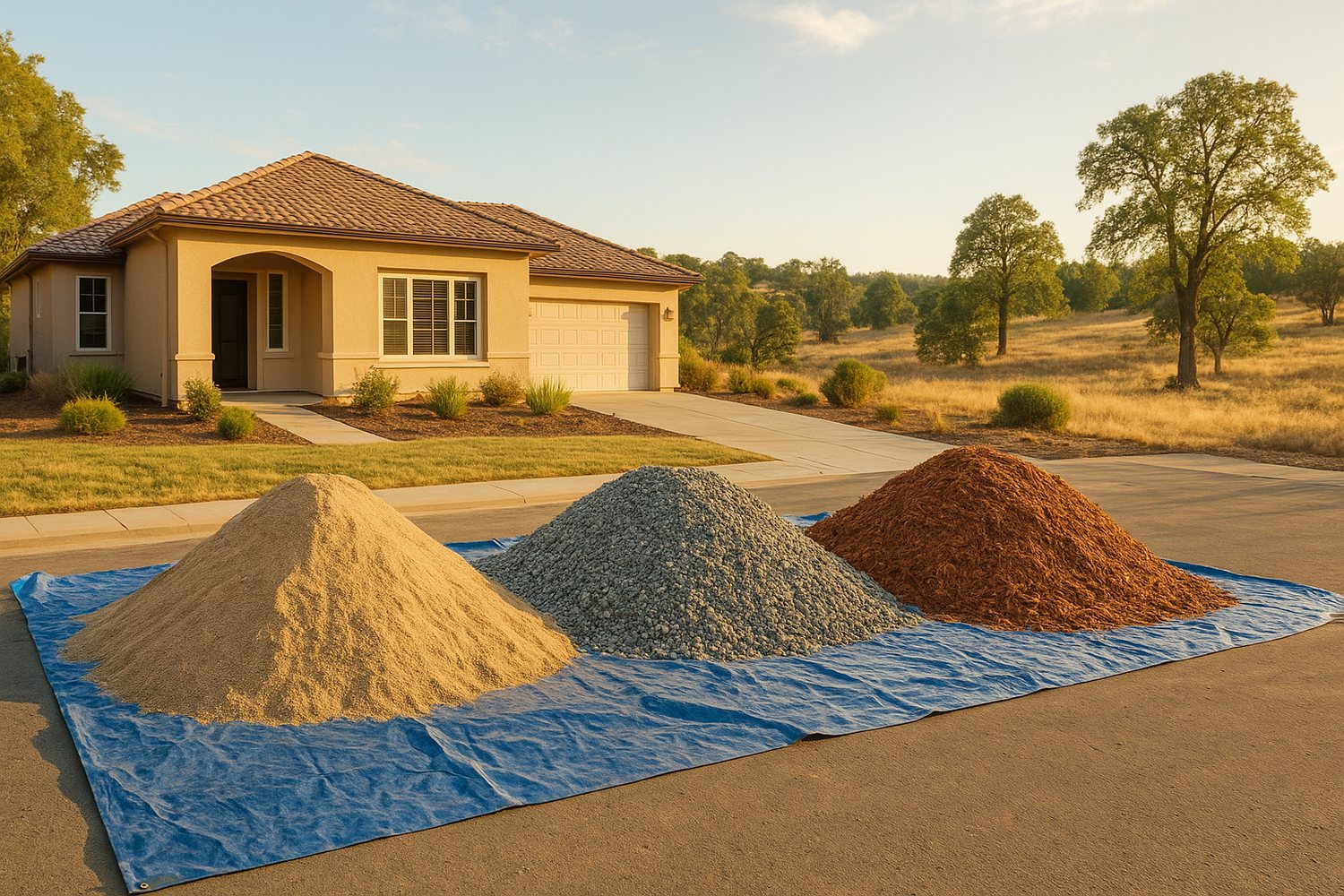
Estimating material quantities
Estimating material quantities Rocklin homeowners need: cubic yards, tons and square feet for gravel, DG, mulch, sand and base.
Explore →Frequently Asked Questions: Boulder Placement & Care
How do I choose between granite and fieldstone boulders?
Granite boulders are denser, more angular, and come in lighter, speckled tones that work well with modern or formal gardens. Fieldstone is naturally smoother, often with weathered textures and earthier colors, making it ideal for rustic or woodland landscapes. The best choice comes down to the desired look, style of your home, and the plant palette you prefer.
How are boulders delivered and put in place?
Landscape boulders are too heavy for manual lifting; they arrive on flatbeds or dump trucks. Placement on site depends on machinery access—a loader, mini-excavator, or crane may be used. Skilled crews use slings, grapples, and spotters to ensure each boulder is set securely and precisely as designed.
Will boulders damage my irrigation, utilities, or tree roots?
Proper planning avoids these problems. Before digging, it’s essential to call 811 to mark underground lines. Boulder locations should be spaced away from active tree root zones, especially protected oaks, and should not disrupt existing irrigation. Careful backfilling and coordination with utility maps mitigate most risks.
How much boulder should be buried for a natural look?
Generally, burying 10–30% of a boulder’s total height produces the most organic appearance. Smaller accent stones may be set slightly higher, while large outcrop-style boulders can be buried deeper for realism and stability. The exact percentage depends on stone shape, slope, and desired aesthetic.
Can boulders be used for functional seating?
Absolutely. Flat-topped or gently rounded boulders in the 18–24" height range are commonly used as informal seating around fire pits, patios, or play areas. Stones can be selected or subtly shaped for seating comfort, though most homeowners appreciate the natural ruggedness as-is.
Will boulders stay stable on a slope or in clay soil?
With proper subgrade preparation and base compaction—even in heavy clay—boulders remain stable for decades. On steeper slopes, they are set deeper and may require drainage material or reinforcement. Good drainage and burying a portion of the stone prevent shifting during winter rains or irrigation cycles.
Do I need to seal granite or fieldstone boulders?
Sealing is not mandatory and generally not recommended for granite or fieldstone in landscape use. Some owners prefer sealing by patios or pools to help with cleaning or minimize staining, but most boulders perform best and look most authentic left uncoated. Sealer, if chosen, must be compatible and UV-resistant.
Can I move or change a boulder location later?
Relocating boulders after installation is possible but costly and disruptive. Heavy equipment and new excavation will be required, especially if the stone was deeply buried for realism. Careful initial planning pays off—think long-term before settling on boulder groupings or focal points.
Start Your Landscape Boulder Project with Expert Advice
Ready to explore your options? Email sales@californiahardscapes.com with your address, a brief project description, and a few photos. We’ll review your site and help you select boulders that look natural and fit your vision.