Topsoil and Soil Amendments for California Landscapes
Get lasting results from your garden, lawn, or landscape. California Hardscapes builds every project with care and science—starting from the ground up.
Why Soil Health Matters in Residential Landscaping
Best for: Best for homeowners who want dependable, thriving landscapes, gardens, or turf that stand up to regional challenges and stay healthy for years.
Choosing the right soil and amendments is the foundation of every beautiful, resilient landscape. In the foothills and valley communities of Placer and Sacramento Counties, the natural soils often present hurdles—heavy clay, stubborn decomposed granite, and nutrient-depleted patches are common. Transforming these obstacles into vibrant outdoor spaces starts with understanding what your landscape needs beneath the surface.
Topsoil, planting mixes, and soil amendments go far beyond just filling a planter or covering a lawn area. The right blends improve drainage, support healthy root growth, boost plant immunity, and reduce your maintenance burden over time. Compost and custom raised bed mixes can make even the most challenging soils productive and easy to care for, whether you’re starting a new lawn, rejuvenating established beds, or filling tall planters.
At California Hardscapes, our philosophy is simple: we don’t compete on being the cheapest. We compete on quality, integrity, and results that exceed expectations. Working with premium materials and proven practices, we approach every landscape as if it were our own home—nothing rushed, nothing overlooked. Soil work done right up front delivers beauty and savings, season after season.
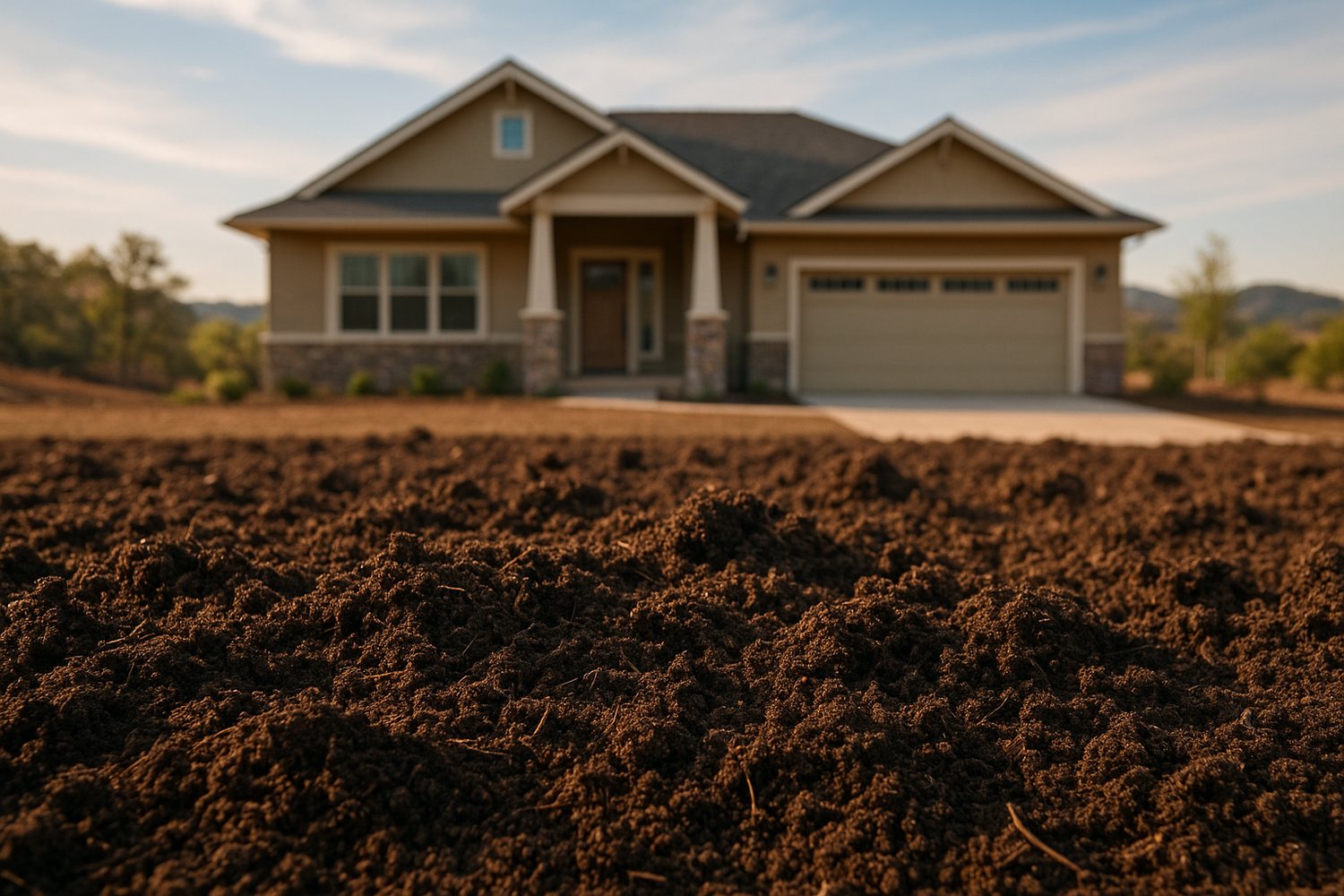
Mixes and Amendments: Options for Every Site
Premium Topsoil
Screened for rock and debris, premium topsoil is sourced for optimal structure and organic matter. It forms the foundational layer for lawns, planting beds, and tree areas. Carefully selected topsoil ensures good drainage and retains enough moisture for consistent, deep rooting.
Custom Planting Mixes
Custom planting mixes blend screened loam, compost, sand, and aged bark. These mixes improve aeration, foster root development, and accommodate water-sensitive ornamentals or flowering perennials. Their fine texture and balanced nutrients prime new beds or garden refreshes for success.
Soil Amendments for Clay
In clay-heavy regions, amendments such as compost, gypsum, and sand are mixed in to open up the soil, speeding water movement and reducing compaction. This makes growth possible for drought-tolerant natives and lawns that would otherwise struggle in tight, airless soils.
Raised Bed Mixes
Raised beds need fast-draining, nutrient-dense soil that doesn’t compact. Custom blends combine topsoil, compost, fine bark, and coarse sand to create an ideal environment for vegetables and herbs. This provides reliable yields and easy maintenance, even during hot, dry spells.
Decomposed Granite (DG) Soil Solutions
Decomposed granite soils need organic matter and sometimes clay or loam to hold water and support plants. Amendments are blended in and tilled deep, allowing formerly barren DG plots to produce lush, lasting plantings from xeriscapes to cool-season lawns.
Compost and Mulch Integration
Adding organic compost or mulch returns nutrients to the soil, helping sandy or rocky sites retain moisture and clay sites breathe. Compost encourages beneficial soil life and slowly releases nutrients, providing a long-term boost with fewer chemical inputs.
How a Quality Crew Builds Your Planting Base
Every landscape starts with preparation—and soil work is one of the most demanding steps to do right. Whether prepping for lawns, beds, or raised gardens, a careful approach pays off for years to come. California Hardscapes follows a process that ensures results: proper grading, accurate soil testing, and amendments tailored to your specific conditions.
- Remove existing sod, debris, and rocks from the site, carefully grading to promote surface drainage away from structures. Heavy equipment is used only where needed to avoid compaction.
- Test existing soil for texture, drainage, pH, and major nutrients. Results guide amendment choice and mixing rates to address problems like excess clay, poor fertility, or compaction.
- Spread chosen amendments (such as compost, sand, gypsum, or bark fines) over subgrade in precise ratios based on soil test recommendations.
- Till or incorporate amendments uniformly to at least 6–12 inches deep, using rotary tillers or excavation equipment for even blending.
- Rake and fine-grade the site, setting a gentle slope for drainage and ensuring consistent depth for planting or sod areas.
- Install or refresh irrigation systems as needed before adding final topsoil or planting mix. Check for even coverage and fix leaks up front.
- Add the selected topsoil, planting mix, or raised bed blend to finished grade, ready for planting, sodding, or another finish as required.

Pros and Cons of Soil Improvements
Strengths
- Transforms poor native soils (clay, DG, or rocky ground) into productive, easy-to-work planting areas.
- Boosts plant root health and resilience, reducing disease and water stress.
- Reduces ongoing maintenance—less need for fertilizer, aeration, and replanting.
- Improves drainage, preventing rot and standing water near structures.
- Enhances long-term property value with healthier, more attractive landscaping.
Trade-offs
- Upfront investment can be substantial with quality soil and labor-intensive mixing.
- Requires accurate soil testing and amendment choices—wrong materials may worsen issues.
- Ongoing care still matters; neglected beds may compact over time or lose fertility.
- Not all native issues (such as salts or hardpan layers) can be resolved without deeper intervention.
What Affects the Cost of Topsoil and Soil Amendments?
Pricing for soil improvements depends on much more than just the volume of topsoil ordered. Factors like access, depth, native soil issues, and the need for custom blends can all change your project’s scope and final cost. We emphasize accurate soil testing and honest assessment, so you get lasting value and no wasted effort. While costs can vary, here’s what goes into a quality soil improvement estimate:
- Size of the area to be improved (square footage and project depth)
- Type and amount of amendments or custom soil blends needed
- Access for delivery, excavation, and mixing equipment
- Existing soil testing and any recommended pre-treatments
- Grading or slope correction required to assure drainage
- Labor for blending, grading, and installation—especially for tight or complex spaces
Maintaining Healthy Soil for the Long Haul
Well-improved soils need far less maintenance than poor ones, but a little periodic care pays off. Add a thin layer of compost or organic mulch every 1–2 years to maintain structure and nutrients. Watch for compaction from foot traffic or heavy garden use; aerate if digging becomes difficult or water pools after rain.
Plan to re-test soil every five years or before making major changes, especially in vegetable or flower beds. With proper installation and care, soil life and fertility can last for decades. Raised bed mixes may require topping up after several years, as some settling is natural. Avoid over-fertilizing, and water deeply but infrequently for best root development. Well-built soil outlasts individual plantings and supports a healthy landscape for the long term.
Compare other options

Flagstone and natural stone guide
Learn how to choose flagstone and natural stone—sandstone, slate, quartzite—for patios, steps, caps & walls. Expert local advice from California Hardscapes.
Explore →
Decorative gravel and rock
Explore practical, in-depth advice on decorative gravel and rock for Rocklin-area homes.
Explore →
Base rock and drain rock
Base rock & drain rock basics for patios, driveways, walls. Practical info for Rocklin, Roseville & nearby.
Explore →FAQs About Topsoil, Planting Mix, and Soil Amendments
How do I know if I need to amend my soil or just add new topsoil?
A soil test is the best starting point. It shows if your native soil has adequate drainage, fertility, and structure. In many cases, particularly with heavy clay or decomposed granite, simply adding topsoil will not solve root, drainage, or compaction problems. Amendments are blended in to permanently improve the layers where roots grow. If your existing soil is healthy and loose, a thinner layer of new topsoil may be all you need.
How does compost improve local soils in this region?
Compost adds organic matter, which improves water retention in DG soils and aeration in dense clays. It stimulates beneficial soil microbes, gradually silences pH swings, and provides a slow-release source of nutrients. For lawns, shrubs, and edibles, compost encourages strong, healthy growth. In the dry hot summers of Rocklin and nearby areas, compost also improves the soil’s ability to store moisture, reducing drought stress.
What’s special about a raised bed mix?
Raised beds have unique needs—good drainage, yet high water-holding capacity, and a loose, friable texture that allows roots and microbes to thrive. Standard soil is often too dense or patchy. Custom blends mix premium topsoil, compost, and drainage aids like sand or fine bark, delivering healthier plants, fewer weeds, and less compaction (especially important for vegetables and herbs).
Do I need gypsum to fix clay soils?
Gypsum is a common amendment for clay, but it only helps certain types of clay with high sodium content. If your soil test shows sodium is not an issue, plenty of organic matter (compost, mulch) and corrected grading will usually yield better results. Each site is different, so recommendations should be tailored based on real test data, not just local wisdom.
How much topsoil should be added for new lawns or garden beds?
For lawns, 4–6 inches of quality topsoil over improved subgrade is typical for lasting results. Garden beds often require roughly 8–12 inches, especially for flowers or vegetables. The final depth depends on the plants and your native soil’s condition—shallow layers are prone to drying out and compaction. Always blend with amendments as needed for best results.
Does new soil or compost attract weeds?
Premium, well-screened soils and finished compost carry little weed seed compared to untested bulk material. However, no material is ever 100% weed-free, especially if exposed before planting. Prompt planting, mulching, and initial weeding make a huge difference. Ongoing mulch and healthy plant cover suppress most invaders over time.
Is it possible to improve existing landscape beds without removing all the old soil?
Yes, surface application of amendments and deep forking or tilling can substantially upgrade most beds, especially where complete removal isn’t practical. Results are better when amendments are thoroughly mixed into the root zone. In some cases, forking in compost and gypsum can break up compaction without removing established plants. However, very poor soils may need removal and replacement for best performance.
How can I be sure my soil improvements will last?
Lasting results start with proper materials, deep mixing, and solid initial grading for drainage. Ongoing care—like periodic mulch, mindful irrigation, and avoiding compaction—extends the benefits for many years. Soil structure and fertility naturally change over time, so an occasional test and touch-up ensure your investment continues to pay off. Work with crews who focus on quality and transparent results rather than cutting corners.
Ready to Get the Right Start? Let’s Talk Soil.
Email sales@californiahardscapes.com with your address, a short project description, and clear photos of your yard or garden. We’ll help you determine the best options for your needs.