Laser-Cut Metal Privacy Panels: Privacy Meets Artful Outdoor Design
Laser-cut metal privacy panels transform fences and gates into bold, functional statements. Get practical guidance on making the right choice for your property.
Patterned Privacy for Outdoor Living Spaces
Best for: Homeowners seeking a blend of privacy, artful design, and durability in their fence lines and gates.
Laser-cut metal privacy panels are more than a modern take on fencing—they’re a way to carve out quiet, secluded spaces without sacrificing style. For homeowners in Rocklin, Roseville, Granite Bay, Folsom, Auburn and the surrounding foothills, these panels offer a chance to define property lines, screen patios or pools, or add privacy where it matters most—all while elevating the look of your home. Each panel is custom-fitted, with patterns and layouts adjusted for the site and needs of the family.
Design, privacy, and function are all on the table with laser-cut metal panels. Some homeowners prioritize near-total seclusion from neighbors, while others want dappled light and a hint of openness. Choosing the right panel comes down to understanding how pattern density, orientation, and even the time of day affect the final look and feel of a space. At California Hardscapes, every project starts by considering privacy needs first, followed closely by layout and integration with landscape features.
Durability is a given, but the day-to-day experience of laser-cut metal privacy panels stands out: shifting light, patterns of shadow, and possibilities for layering with plants. We don’t compete on being the cheapest. We compete on quality, integrity, and results that exceed expectations. Fencing and gates, done right with no corners cut, add value for decades—every project built as if it were our own home. This page answers questions, weighs the trade-offs, and helps you decide if this approach is right for your property.

Design and Layout Choices for Your Privacy Panels
Pattern Density and Privacy Level
The density of the pattern you select—how much of the panel is solid metal versus open cutouts—has the biggest impact on privacy. Dense patterns offer stronger screening from roads or neighbors, while more open designs let in light and views. No pattern is fully opaque; privacy is always partial, but well-chosen density protects outdoor living areas while allowing space to feel open, not closed in.
Light and Shadow Effects
Laser-cut panels aren’t just barriers—they create lively patterns of light and shadow that change by hour and season. Finer cutouts scatter dappled light, giving shade with movement, while bolder motifs cast dramatic, shifting shadows. Placement relative to the sun matters: east- or west-facing panels create different light effects, so walk the site and imagine morning or afternoon hours when choosing layout.
Panel Height and Width
Custom laser-cut metal panels are sized for the project: from modest accent screens to full-height backyard fences and driveway gates. Consider whether you need privacy at standing or seated eye level. Taller panels give more screening; wider panels can create a seamless or feature-wall look. Multiple panels are joined with posts, so panel sizing decisions also affect overall layout.
Posts and Framework
Every laser-cut metal panel relies on a strong, properly set framework. Posts—steel, concrete, or sometimes classic wood—anchor the panels and transfer wind loads to the ground. Framework design is visually subtle but technically crucial: proper engineering prevents panel flex, sway, or warping and ensures your fence still looks precise after seasons of summer heat and winter storms.
Edge Treatment and Orientation
Panel edges matter for safety and looks. Options include smooth framed edges, concealed fasteners, or small reveals to highlight the metalwork. Orientation—whether panels are set vertically, horizontally, or at angles—alters the viewing experience and can tune privacy to block specific sightlines. These details are best reviewed on-site; mockups help visualize finished results.
Pairing with Planting
Laser-cut panels pair beautifully with strategic planting—either to soften lines, filter additional privacy, or visually blend with the landscape. Choose vertical grasses, narrow evergreens, or flowering vines to fill minor panel gaps or add seasonal interest. Most living material grows well near metal panels, but consider root space and sunlight for greenery to thrive in this climate.
How Quality Laser-Cut Metal Privacy Panels Are Built
A successful privacy panel installation is a blend of precision, solid preparation, and site-specific problem-solving. At California Hardscapes, projects are always built with licensed, bonded and insured contractors, following steps designed to ensure the fence or gate lasts for decades, no matter the ground or grade. Here’s what that process generally looks like:
- Subgrade: The area is carefully measured, marked, and any necessary demolition or clearing is done to ensure a straight, stable line for fence posts. Soil conditions are checked for drainage and shifting risks.
- Base: Post footings are excavated to the proper depth—deep enough to account for local clay/shifting soils and freeze/thaw cycles. Gravel or crushed rock may be added for drainage.
- Forms: Forms or temporary supports are set as needed to hold posts and keep lines straight during concrete pour or base assembly. Anchoring accuracy here determines the final panel alignment.
- Reinforcement: Steel posts are often reinforced internally or anchored with additional concrete, depending on expected wind loads and fence height. Structural support is non-negotiable for long-term stability.
- Joints: Precise layout for panel joining points, including brackets and fasteners, ensures each panel is accurately spaced, level, and secure. Attention is paid to expansion joint gaps for material movement.
- Finishing: Panels are installed in their framework, any finishing trims or edge treatments completed, and all joints checked for both visual alignment and fastener tension. Protective measures are taken to avoid scratches during installation.
- Sealing: Where finishes call for it, any exposed hardware or metalwork are sealed or finished onsite for extra weather protection. Area is cleaned, and final fit and operation of gates or moving panels is tested before signing off.

Benefits and Realities of Laser-Cut Metal Privacy Panels
Strengths
- High durability with minimal warping, rot, or weathering compared to most wood fencing in our region’s climate.
- A wide range of design flexibility—custom patterns, sizes, and orientations to match home style or landscape architecture.
- Low ongoing maintenance, seldom needing more than occasional rinsing or inspection to stay attractive and secure.
- Creates visual privacy while providing unique, ever-changing shadow and light effects that animate outdoor living spaces.
- Works well in both sleek modern landscapes and classic, plant-rich yards—panels can be a feature or blend quietly with greenery.
Trade-offs
- Panel privacy is never 100% solid—shadow gaps and angled sightlines can let some views through, depending on pattern and light direction.
- Metal panels tend to conduct heat, which can make them hot to the touch and alter the microclimate around plantings in summer.
- Steel posts and engineered supports are essential, which can make installation less DIY-friendly and require design review, especially on slopes.
- Any custom solution requires a thoughtful consultation—common off-the-shelf sizes and immediate installation are rare, and design decisions may take several meetings.
Understanding Costs for Laser-Cut Metal Privacy Panel Fences
Custom laser-cut metal privacy panels represent a premium option compared to wood, composite, or chain-link fencing, reflecting the investment in design, materials, and professional installation. At California Hardscapes, prices, metal thicknesses, finishes, and lead times are reviewed during your consultation so solutions are tailored to your needs—no corners cut. There’s a range to every project, influenced by both personal choices and site conditions.
- Pattern complexity and overall panel design—the more intricate or denser the cuts, the more materials and work involved.
- Panel height, width, and total linear footage—including the number of panels, gates, and the length of fencing required.
- Post and frame requirements—steel and concrete posts add structural integrity, especially for taller panels or sloped yards.
- Site preparation needs, such as slope adjustment, demo of old fences, or addressing drainage for clay or decomposed granite soils.
- Access constraints—tight spaces, limited equipment entry, or proximity to mature trees and roots can affect installation time and approach.
- Integration with planting, lighting, or hardscape features, which may add work stages or require coordination across trades.
Caring for Your Laser-Cut Metal Privacy Panels
Maintenance is refreshingly straightforward. Panels typically need only occasional rinsing with a hose to remove dust, pollen, or hard water scaling, especially after summer wind or winter rain. Inspect joints and framing annually to check for signs of movement, minor surface rust at connections, or accidental scrapes—addressing these quickly keeps panels performing and looking great.
Typical resealing intervals vary depending on exposure, finish type, and panel location—salt spray, hard irrigation water and direct sun can all accelerate weathering. With proper site preparation and occasional resealing where specified, lifespan easily reaches decades. Protect panel bases from standing water and avoid stacking soil, mulch, or planters directly against metal surfaces to prevent moisture-related issues.
Compare other options

Metal driveway gates
Metal driveway gates Rocklin homeowners choose: swing vs slide, pros and cons, and getting a gate ready for an operator.
Explore →
Metal fences on retaining walls
Metal fence panels mounted on top of retaining walls and seat walls.
Explore →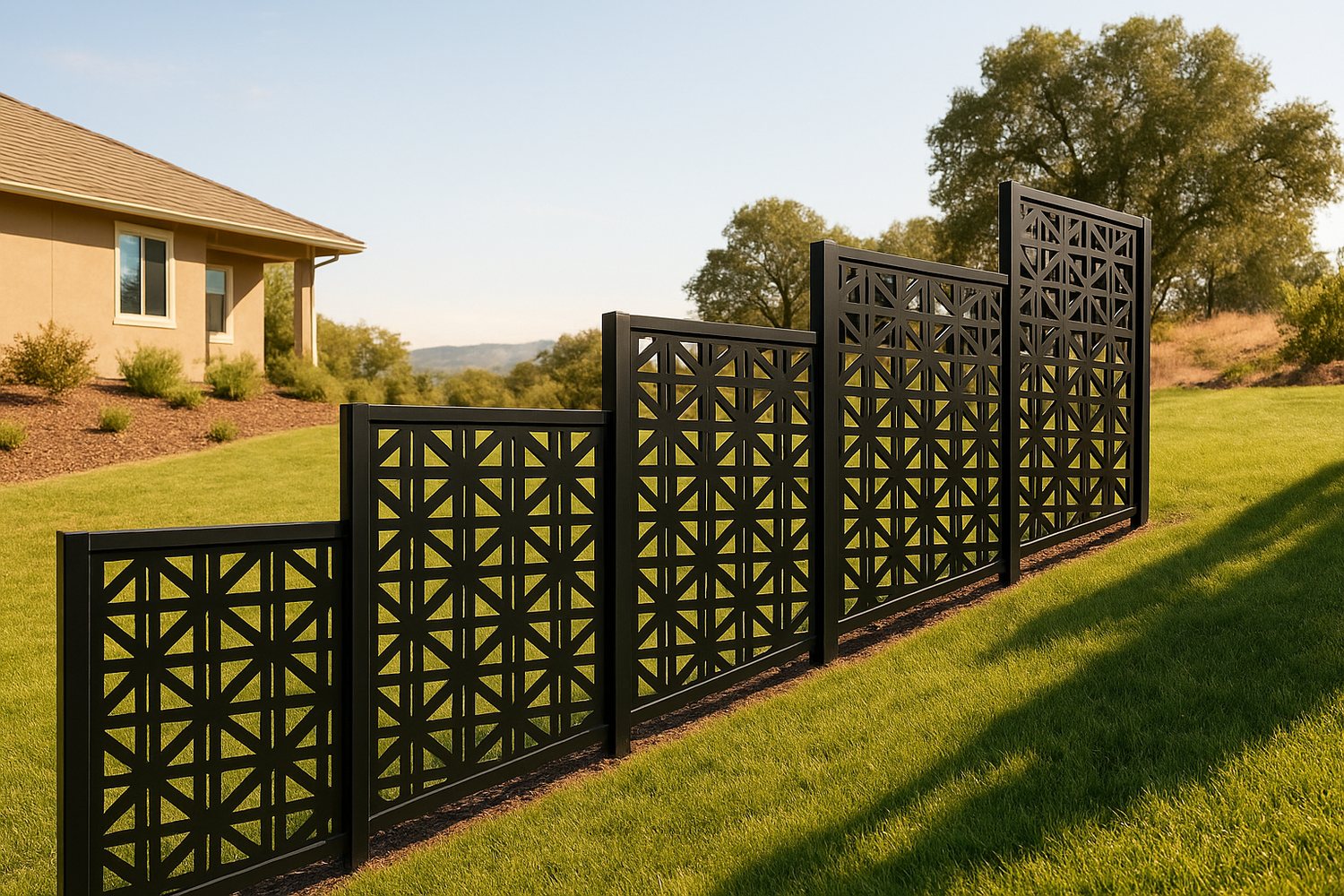
Metal fencing for sloped yards
Get practical answers about metal fencing for sloped yards in Rocklin, Roseville & nearby. Learn about stepped & raked fences, grading, gaps & more.
Explore →Frequently Asked Questions about Laser-Cut Metal Privacy Panels
How much privacy do laser-cut metal panels actually provide?
No laser-cut panel is entirely opaque—privacy depends strongly on the pattern chosen. Dense patterns can screen standing and seated sightlines for patios, pool enclosures, or backyard retreats, reducing outside views to colored shapes and shadows. More open patterns provide a sense of division without complete blocking. Sun angle and adjacent lighting also change what’s visible through the cutouts; a consultation can help select the right balance of privacy and light.
Will laser-cut metal panels get too hot for children or pets?
Metal panels do heat up when exposed to direct summer sun—especially darker finishes or panels facing south or west. Surface heat peak is usually mid-afternoon on days above 100°F, which is typical for many Rocklin and foothill summers. Panels near patios or living areas should be sited where possible to allow airflow, or softened with shade planting to reduce direct touch and create a cooler microclimate.
How do laser-cut panels hold up against wind and seasonal storms?
Properly installed with engineered steel or concrete posts, custom metal panels stand up well to local wind events and winter rain. Panel size, wind exposure, and post spacing must all be carefully calculated. Open or perforated patterns naturally reduce wind load compared to solid walls. Always verify panel anchoring and support, especially if the fence runs along open slopes or exposed hilltops.
Can I install these panels myself?
While possible for skilled DIYers, custom metal privacy panel systems generally require precise measurement, concrete post footings, and specialized equipment for leveling and anchoring. California Hardscapes projects are always installed by licensed, bonded and insured contractors, reflecting the technical demands and need for a lasting, professional result. A consultation will outline site-specific build details and discuss any concerns about access or logistics.
Are these panels allowed under city or HOA rules?
Fencing and screen panels are often subject to local zoning, setback, and height regulations. HOAs can also specify design, color, and visibility rules. Because requirements differ from block to block, it’s critical to review your city, county, or HOA guidelines before finalizing size, pattern, or layout. A consultation covers these concerns to help avoid costly changes later.
How do you clean and maintain a laser-cut metal privacy panel?
Most panels just need light rinsing to clear dust, pollen, or mineral deposits. Avoid harsh scrubbing or chemicals that may mar the finish. Check each year for surface scratches or hardware loosening—touch up or adjust as needed. For properties with hard irrigation water or wind-drifted debris, semi-annual cleaning is practical to keep panels looking sharp.
Will planting near the panels cause rust or damage?
Planting close by usually causes no problems. However, ensure soil and mulch are not banked directly against panel bases as constant moisture can accelerate corrosion at edges, especially where finish is disturbed. Space plants for air circulation, and select species that won’t send strong roots toward foundations or trap irrigation overspray on the panels for extended periods.
Can you pair metal privacy panels with lighting?
Many homeowners add landscape lighting or low-voltage sconces to highlight the patterns and create dramatic nighttime effects. Concealed LED strips or ground spots can accentuate shadows and boost evening usability. Plan lighting before final install so wiring and fixtures are concealed and protected from weather and irrigation. Lighting choices, like panel design, are reviewed in design consultations.
Ready to Explore Metal Privacy Panels?
Questions, ideas, or ready to take the next step? Email sales@californiahardscapes.com with your address, a short project description, and any photos or sketches that help explain your vision.