Metal Driveway Gates: Expert Choices for Form and Function
Metal driveway gates are the entry statement that protects your home and sets the first impression. California Hardscapes offers refined, durable custom metal gates designed for security, curb appeal, and enduring performance.
What to Know Before Choosing a Metal Driveway Gate
Best for: Homeowners seeking a secure, visually impactful driveway entry that seamlessly integrates with their landscape and lifestyle.
A high-quality metal driveway gate does more than secure your property—it defines your entrance and gives every arrival a sense of occasion. At California Hardscapes, each gate is thoughtfully designed to complement both home architecture and landscape, ensuring that your investment stands out for all the right reasons. We take an uncompromising approach: every gate is built to the highest standards by licensed, bonded, and insured contractors as if it were being installed at our own homes.
There are many technical and practical choices to make when planning a driveway gate, from the type of gate motion (swing versus slide), through to clearances, post and pillar requirements, and how the gate will interact with fences and landscape. Driveway gates must handle the rigors of daily use, potential vehicle strikes, and local soil shifts—so details like base preparation, reinforcement, and operator readiness are crucial. Done right, a metal driveway gate functions seamlessly while projecting lasting curb appeal.
We don’t compete on being the cheapest. We compete on quality, integrity, and results that exceed expectations. If you’ve thought about securing your entry or elevating your curb appeal with a metal gate, this guide walks through design options, technical decisions, and the realities of a project built to last for decades in Northern California’s climate. No corners cut—just decades of experience and a commitment to getting the fundamentals right.
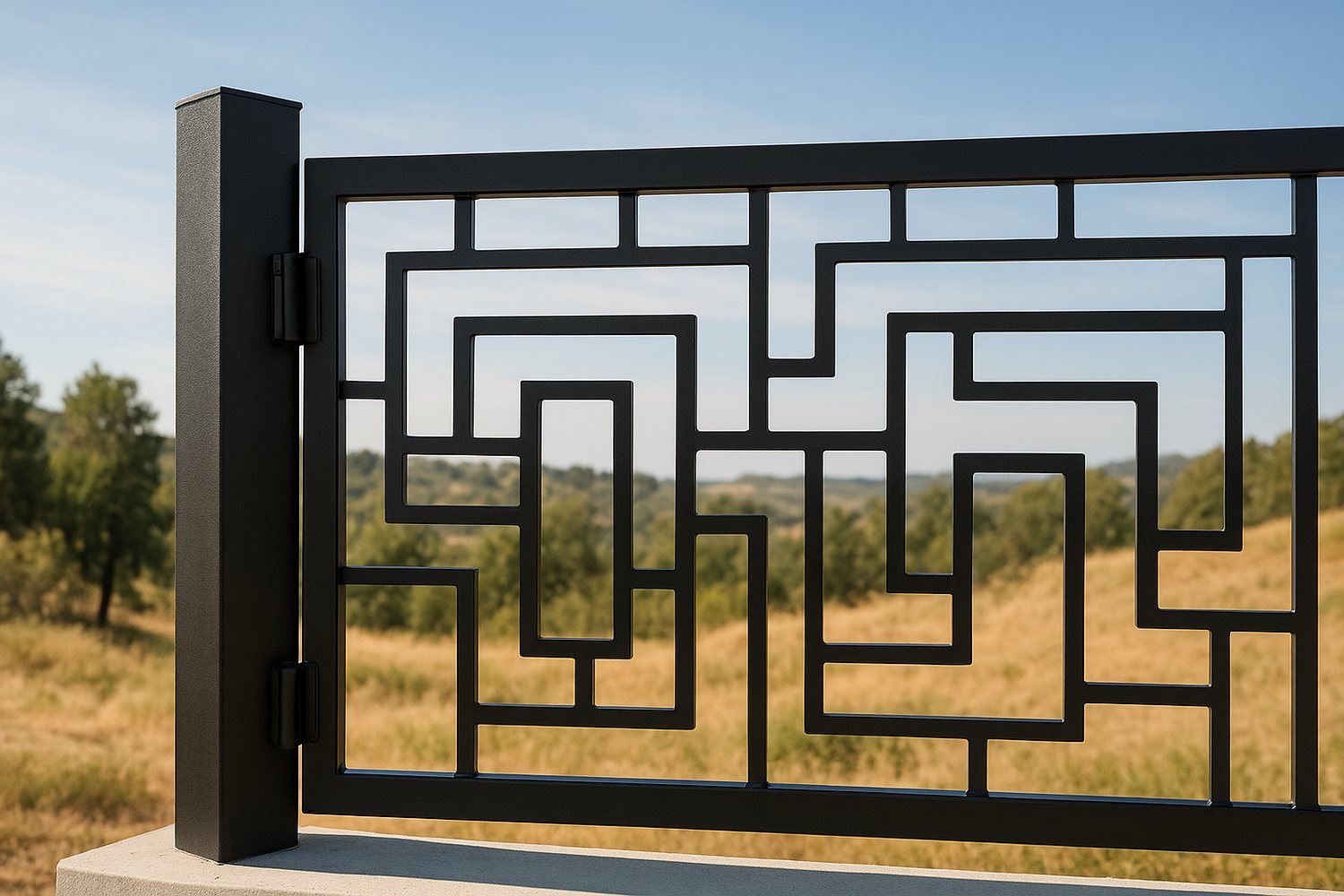
Design Choices for Metal Driveway Gates
Swing Gates vs. Slide Gates
Swing gates open inward or outward on hinge posts, ideal for level driveways with sufficient space to allow their arcs. Slide gates move sideways along the fence line, better suited for properties with limited depth or steep slopes where swinging isn’t practical. Each type has unique installation requirements, clearances, and mechanical needs, which we address from the first design conversation.
Gate Width and Vehicle Clearance
Driveway gates must accommodate your widest vehicles, including delivery or service trucks, while considering any landscaping or fencing that might restrict the path. Standard residential gates typically range from 10 to 16 feet wide, but exact dimensions are tailored to your drive and site lines. Adequate side clearance prevents scrapes and ensures operator arms or tracks function without obstructions.
Pillars and Heavy-Duty Posts
Gate stability starts with robust support. Metal gates are installed on engineered posts—either standalone or integrated with stone or masonry pillars. Posts or pillars must be set deep enough to handle the gate’s weight and operating forces, especially in expansive clay or DG soils, and sized to support either swinging motion or the cantilever of a sliding gate.
Pairing with Fence Panels
A driveway gate achieves its full effect when it integrates seamlessly with adjacent metal fence panels or privacy screens. Panel and gate styles are matched for pattern, height and finish, creating a consistent design language from entry to fence line. During design, transitions are planned to avoid gaps that could compromise security or appearance.
Gate Operator & Automation Readiness
Metal driveway gates are often future-proofed or built ready for automated openers—whether for motorized arms (swing) or sliding track systems. We ensure the gate has required mounting plates, reinforce posts for operator motors, and advise on location of electrical or low-voltage conduit. Control access (keypads, remotes) options are considered alongside security and power needs.
Custom Patterns and Laser-Cut Designs
Every California Hardscapes metal gate is custom-designed, with size, silhouette, and decorative panel patterns chosen in consultation. Options range from geometric, modern lines to intricate, privacy-minded motifs—all precision-cut for each project. The right pattern balances curb appeal, privacy, light transmission, and complements the home’s character.
How a Quality Metal Driveway Gate Is Built
A premium driveway gate is only as reliable as the steps and craftsmanship that go into installation. At California Hardscapes, the process emphasizes strength and longevity at every phase—accounting for soil, weight, gate function, and curb presentation. Each build is managed by licensed, bonded, and insured contractors, with technical details shaped by local site conditions and homeowner priorities.
- Subgrade: Site is surveyed and excavated to the required depth for each hinge post, pillar, or gate track. Unstable material is removed, and soils are assessed for drainage and compaction needs to prevent future movement.
- Base: Structural posts or pillars are set in deep concrete footings, designed to resist frost heave, soil expansion, and the torque of repeated gate motion. Sliding gate tracks (if needed) are installed level and true.
- Forms: Temporary forms or supports hold posts and pillars plumb and square while concrete is placed, ensuring exact locations for smooth gate swing or track travel.
- Reinforcement: Rebar, mesh, or steel cages are used to reinforce footing and pillar concrete, preventing cracks and allowing the base to carry the gate’s dynamic and static loads.
- Joints: For adjacent hardscapes or driveway flares, control joints are planned to manage potential cracking from vehicle weight, root pressure, or seasonal temperature swings.
- Finishing: Pillars or concrete bases are finished to design specs—whether exposed or clad later in masonry or architectural material. Gate panels and hardware are precision-mounted for correct gaps and smooth operation.
- Curing and Sealing: All concrete is cured per standards for long-term strength. Gate posts or pillars may be sealed to resist water intrusion. Gates and hardware are checked, adjusted, and made ready for automation if specified.

Is a Metal Driveway Gate Right for Your Home? Pros and Cons
Strengths
- Exceptional security: Robust metal gates offer a true physical barrier and can be paired with access controls for peace of mind.
- Durable construction: Custom-fit metal gates resist weathering, sagging, pests, and most impact damage for decades with proper upkeep.
- Curb appeal: A well-designed metal gate can become the architectural focal point of the property, boosting perceived value and setting a welcoming tone.
- Adaptable to automation: Modern metal gates are easily fitted with gate operators and smart controls for hands-free entry and increased convenience.
- Design flexibility: Laser-cut panels and custom patterns let homeowners personalize their entry or match architectural features with their own creative vision.
Trade-offs
- Upfront cost is higher than basic wood or chain-link gates due to materials, engineering, and installation requirements.
- Gate operators and automation (if desired) add complexity—requiring electrical setup, access planning, and periodic maintenance.
- Sliding gates need ample side space along the fence or wall for the gate to open fully; tight lots or landscaping may limit feasibility.
- Metal gate finishes, while durable, require periodic inspection and resealing or touch-ups to prevent corrosion or cosmetic wear.
Understanding the Cost Factors
The investment in a metal driveway gate reflects its materials, custom design, engineering, and site-specific requirements—not just a gate panel. At California Hardscapes, price is never the focus; performance and results are. Each project’s cost is tailored during the design consultation and shaped by the genuine needs of your home, soil, and access. Several practical variables influence both the budget and expected longevity.
- Width and height of the gate opening, including any side flares or entrance features.
- Choice of swing or sliding mechanism, each requiring different base work and hardware.
- Complexity of pillars or integrated masonry, including material, size, and any decorative finishes.
- Custom pattern, silhouette, or design features selected for the gate panel (more intricate laser-cut work generally raises cost).
- Preparation or inclusion of automation, including motor-ready mounts and conduit for future upgrades.
- Site conditions: soil type, grade, driveway slope, drainage needs, and ease of access for installation equipment.
Caring for Your Metal Driveway Gate
Routine care for metal driveway gates includes periodic washing to remove dirt, dust, pollen, and road grime—especially important in pollen-heavy spring or after construction nearby. Inspect hinges, bolts, and latches every few months, tightening hardware as needed. Check gate alignment and swing or slide function, lubricate moving components, and watch for any rubbing or misalignment. Visually check for scratches or chips in the finish where touch-up is needed to deter rust.
The typical resealing or refinishing interval can range from every two to five years, depending on sun exposure, irrigation overspray, and local microclimate. Gates exposed to sprinkler systems, hard water, or foothill road dust may need more frequent attention. Factors that extend lifespan include keeping the gate clean, trimming plants back, and addressing finish wear early. A well-built, well-maintained metal gate in Northern California often provides two to three decades of service, with hardware or automation components serviced or upgraded as needed.
Compare other options

Side-yard and walk gates
Side-yard and walk gates Rocklin homes can feature: privacy or open styles, hardware and matching your fence.
Explore →
Decorative fence patterns
Explore decorative laser-cut fence patterns for privacy and style. California Hardscapes offers custom geometric, nature, and modern designs in Rocklin, CA.
Explore →
Screens for equipment, AC and trash cans
Metal screens for pool equipment, AC units, trash and recycling bins, and utility areas.
Explore →Frequently Asked Questions About Metal Driveway Gates
What’s the difference between a swing and a sliding metal driveway gate?
A swing gate opens inward or outward on hinges, typically requiring a flat driveway and enough clear space for its swing arc. A sliding gate moves horizontally along the fence, riding on a ground track or cantilevered system, which is better for sloped driveways or properties with limited depth behind the gate. Site constraints and personal preference both help determine the best type for each project.
How wide should my driveway gate be?
Gate width is usually tailored during the design process to fit your driveway and expected vehicle traffic. Residential gates generally range from 10 to 16 feet, but larger or smaller may be appropriate depending on the drive approach, turning radius, and if delivery or service vehicles need to enter. Side clearances and gate swing or slide path must also be considered to ensure safe, reliable operation.
Do I need pillars, or can metal posts support the gate?
Both options are viable, depending on the gate’s size, weight, and design. Heavier or architecturally prominent gates may be paired with masonry pillars for added stability and curb appeal. For many installations, heavy-duty metal posts are sufficient and can be finished or integrated to match the adjacent fencing. The footing and installation method are critical either way, especially on expansive or shifting soils.
Can my metal driveway gate be automated later?
Yes—gates can be designed operator-ready even if you’re not installing automation right away. This includes reinforced posts, pre-installed mounting plates, and space for track or motor placement. Conduit for future power and controls should be included during installation. Planning for automation up front makes upgrades smoother and avoids disruptive or costly changes later.
How should my driveway gate be maintained?
Routine washing, inspection, and occasional hardware lubrication are key for keeping a metal driveway gate functioning and looking its best. Look for any scratches or chips in the finish, as exposed spots can develop rust over time if left unaddressed. A professional inspection every few years—especially of posts, hinges, and automation—can correct minor issues before they become major repair needs.
What if my driveway slopes? Can I still have a metal gate?
Both swing and sliding gates can be adapted for gentle slopes, but pronounced grades can limit options. Sliding gates generally handle cross-slopes better, as the gate stays level while traveling horizontally. Design solutions, such as custom hinge placement or arching the gate frame, can sometimes allow swing gates where clearance is limited. Each site is carefully evaluated to recommend the best fit.
Will my metal gate rust or fade with the local weather?
Metal gates in the Rocklin, Roseville, and foothill region are engineered with appropriate finishes to withstand sun, heat, and rain. Over time, sunlight and hard water exposure may cause some fading or spotting, which can be managed with scheduled cleaning and periodic touch-up or resealing. Gates exposed to irrigation water or dense shade may need a bit more attention but will provide decades of service with simple, regular care.
Do I need HOA or city approval for installing a driveway gate?
Many neighborhoods require pre-approval from HOAs or compliance with city or county standards for driveway gates—especially where designs affect sight lines, fire department access, or setbacks. Requirements vary based on address and governing body, so it’s important to check with local authorities or HOA boards before finalizing designs or starting work.
Ready to Explore a Custom Metal Driveway Gate?
Email sales@californiahardscapes.com with your address, a short description of your entry, and photos of your site to start your consultation.