Lawn-to-Turf Conversion: Water Savings, Rebates & Smart Choices
Switching from a natural lawn to artificial turf can dramatically cut water use and maintenance. Here’s what every homeowner should know before making the change.
Why Consider Lawn-to-Turf Conversion?
Best for: Best for homeowners seeking to reduce water bills, save on upkeep, and upgrade curb appeal with a sustainable, low-maintenance yard.
As drought and water restrictions continue to impact California, more homeowners are questioning whether keeping a traditional lawn makes sense. Natural grass can require between 30,000 and 50,000 gallons of water per year for every 1,000 square feet. With rising costs and public pressure to conserve, synthetic turf has emerged as one of the most effective ways to make a meaningful reduction in household water use—especially here in Placer, Sacramento, and El Dorado Counties.
Turf installations today aren’t the coarse, plastic-looking carpets of decades past. Materials have advanced to closely mimic real grass in both appearance and feel. Paired with thoughtful design—including water-wise plantings and practical changes to irrigation—artificial turf can create a welcoming, beautiful yard with upkeep measured in minutes rather than weekends.
However, turf isn’t right for every home or situation. Proper removal of existing lawn, careful base preparation (especially where drainage or tree roots pose challenges), and real-world knowledge of how local soil, sun, and family use will impact longevity are critical. California Hardscapes approaches every turf project with the same philosophy we bring to our signature hardscape and landscape builds: we don’t compete on being the cheapest—we compete on quality, integrity, and results that exceed expectations.

Design and Turf Conversion Options
Classic Lawn-Only Installations
A straightforward conversion keeps the yard’s footprint the same but swaps all grass for premium synthetic turf. This is the fastest way to maximize water savings and replicate a traditional lawn look, ideal for play areas, pets, or open gathering spaces.
Mixed Turf & Water-Wise Planting Beds
Blend turf areas with perimeter or island planting beds filled with California natives, succulents, or ornamental grasses. This approach provides visual variety, improves habitat for pollinators, and can unlock higher rebate tiers by reducing overall turf coverage.
Custom Borders, Edges & Shape Variations
Define organic curves, crisp geometric borders, or functional edges where turf meets patios, concrete, or mulched beds. Durable metal or plastic edging ensures the turf and plant areas stay distinct and finished while preventing migration of base materials or mulch.
Smart Irrigation Modifications
Replacing the lawn means full or partial irrigation system capping. Existing zones serving turf can be converted to serve new drip or low-volume systems for surrounding plantings, or capped entirely to eliminate leaks and overspray—key for both savings and most rebate programs.
High-Performance Turf Materials
Choose from products with varying blade shapes, colors, pile heights, and infill options. Pet residents, heavy foot traffic, or shaded areas may call for different backing, drainage rates, or padding. We recommend premium turf backed by proven installation methods for optimal appearance and performance.
Play & Feature Zones
Consider integrating impact-resistant pads under turf for play spaces, sports, or putting greens, or defining high-wear walkways using complementary hardscape materials. Proper base compaction and surface choice help avoid wear patterns and surface deformation over time.
How a Quality Lawn-to-Turf Conversion is Built
Installing artificial turf professionally is a multi-step process that demands careful planning, proper materials, and a focus on long-term performance. Each phase is crucial for ensuring a finished product that looks real, drains well, and stands up to years of use. Our method reflects decades of experience building high-performance landscapes throughout Rocklin, Roseville, Granite Bay, Folsom, Auburn, and beyond.
- Site Evaluation and Planning: Map out the conversion area, assess access, identify any utilities, tree roots, drainage issues, and mark irrigation lines for future capping or conversion. Every project starts with a thorough walk-through and discussion of goals.
- Sod and Soil Removal: Strip away all grass, roots, and several inches of topsoil to create a clean canvas and remove weed/seed bank. For water rebates, maintain documentation of the existing lawn and the removal process, as required by most rebate programs.
- Subgrade Preparation and Grading: Grade the exposed soil to create a gentle slope away from structures and prevent water pooling. Clay and DG soils may require tilling and amendment to ensure proper drainage. Compact the subbase thoroughly.
- Base Installation: Spread and compact 3–4 inches of crushed rock or decomposed granite base. In clay-heavy soils, additional drainage layers or geotextile fabric may be recommended to reduce future settling or weed growth.
- Edge and Form Installation: Install rigid edging, such as steel or heavy-duty plastic, to anchor the turf’s perimeter and maintain defined transitions to planting beds or hardscapes. Edges also prevent infill and base material migration.
- Turf Placement and Securing: Roll out and trim the synthetic turf, making sure blade direction matches across seams. Secure the turf with nails or staples at recommended spacing, and apply high-quality infill for weight and a natural look.
- Irrigation Capping and Review: Cap or modify any former lawn spray or rotor irrigation. Convert nearby beds to drip where needed. Double-check all fittings for leaks, update controller schedules, and document the capped heads for rebate compliance.

Weighing the Pros and Cons
Strengths
- Drastic reduction in water use and bills compared to natural grass—potentially tens of thousands of gallons saved yearly.
- Eliminates weekly mowing, fertilizing, edging, and re-sodding—cutting maintenance commitments to seasonal cleaning.
- Consistent curb appeal regardless of drought, water restrictions, or winter/summer color swings—remains green year-round.
- Reduces pesticide, herbicide, and gas-powered equipment emissions, contributing to healthier local environments.
- Eligible for local water agency rebates, with many cities and utilities now offering incentives for turf conversion projects.
Trade-offs
- Turf can heat up more than real grass in direct sun, especially during triple-digit summer days—shaded or lighter-color infill can help.
- Synthetic turf absorbs and holds less rainwater than living grass, so careful grading and base prep are required to avoid runoff.
- Requires a substantial up-front investment; water bill savings and rebates help, but costs are higher than reseeding or fertilizing a lawn.
- Doesn’t provide the natural feel, scent, or ecological benefits of real grass for some uses, like barefoot play or as wildlife habitat.
Understanding Turf Conversion Costs
Lawn-to-turf conversion is a premium upgrade, but one that pays dividends in water savings, less maintenance, and a yard that looks great year-round. Costs are influenced by the quality of prep, drainage solutions, materials, and the complexity of the site. We do not cut corners to deliver a low sticker price—instead, every project is quoted and executed as if it was being built for our own home.
- Total conversion area and access to the site: Larger or hard-to-reach yards require more materials and labor.
- Thickness and compaction of base beneath the turf: Properly prepared bases prevent future settling, especially on clay soils.
- Complexity of lawn removal (roots, slopes, rocks, or old irrigation zones) and disposal of removed material.
- Choice of premium turf, specialty infill, shock pads, or sub-grade drainage systems as needed based on project goals.
- Integration with planting beds, edging details, or transitions to existing patios and walkways.
- Extent of irrigation modifications: number of heads to be capped, drip line addition, and controller programming.
Artificial Turf Care and Long-Term Considerations
Routine turf maintenance is straightforward: regularly blow or sweep to remove leaves, dust, and debris. For pet areas, rinse as needed with a hose and use turf-safe enzymatic cleaners to control odor. Weed germination is minimal with a properly built base and edge, but any volunteers can be spot-treated or pulled by hand. No mowing, fertilizing, or seasonal dethatching is necessary.
Turf lifespan depends on product quality, UV exposure, foot traffic, and care. Most quality installations last 10–20 years before replacement of the turf layer may be needed. High-traffic or shaded sections may show wear earlier. While artificial turf doesn’t require resealing like concrete, occasional infill top-up and brushing will help keep the blades upright and looking their best.
Compare other options

Backyard artificial turf
Explore backyard artificial turf in Rocklin and nearby areas. Learn options, installation, costs, care, and trade-offs from California Hardscapes experts.
Explore →
Play area and playground turf
Premium artificial turf for kids’ play areas and playgrounds in Rocklin. Safer fall zones, cool surfaces, proper drainage—built as if it were our own home.
Explore →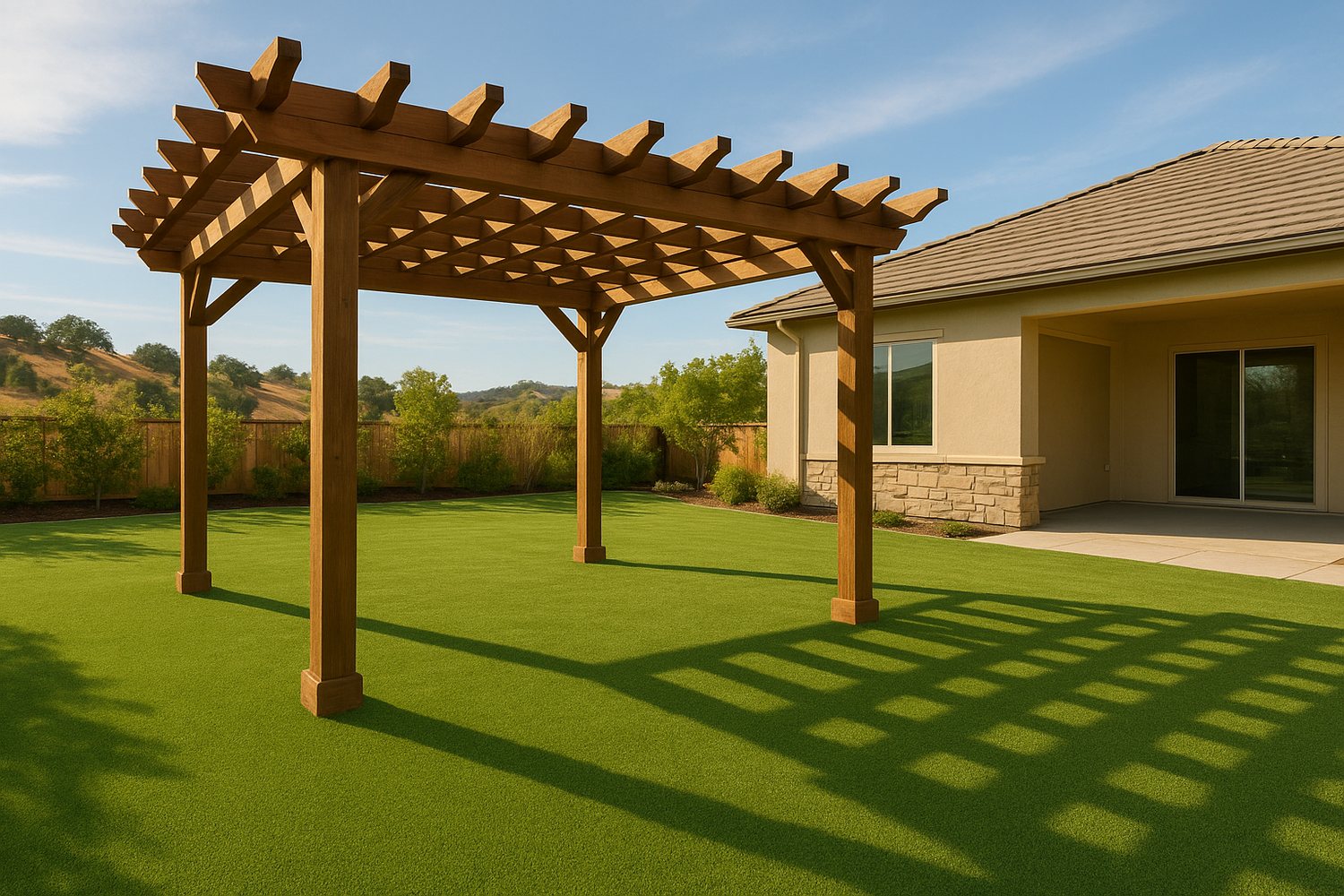
Turf infill and heat control
Learn the best infill options for artificial turf and how to reduce summer heat. Find honest advice on quality, cooling, pet use & maintenance in Rocklin.
Explore →Frequently Asked Questions About Lawn-to-Turf Conversion
How much water will artificial turf actually save compared to a natural lawn?
The savings are substantial. Natural grass can require 30,000–50,000 gallons per 1,000 square feet yearly, while artificial turf needs only occasional rinsing. Depending on how much lawn you convert and your previous watering habits, most homeowners see a dramatic drop in their monthly water bills.
What needs to happen to my irrigation system during a turf conversion?
Traditional sprinkler heads feeding your old lawn are capped to prevent leaks and overspray. Where gardens or beds remain, irrigation is usually reconfigured to a drip system to target only those plants efficiently. This not only prevents unintended watering of the turf (which is unnecessary), but can simplify your long-term maintenance.
Are there water agency rebates for removing my lawn and installing turf?
Most local water providers and some cities offer turf conversion rebate programs, especially during drought seasons. These may cover a portion of the cost per square foot if you replace real grass with artificial turf or water-wise plantings. Terms, eligible materials, and application windows change frequently—always confirm the latest details with your specific provider before scheduling removal or installation, as photos and documentation are almost always required.
Can artificial turf be mixed with real plants or trees?
Absolutely. Many of our favorite installations include a blend of turf for main use areas, accented with mulched beds containing water-wise trees, shrubs, or succulents. Correctly installed edging ensures living plants and turf stay clearly separated, and irrigation can be set up to serve only garden areas, maximizing water savings and creating a more interesting, habitat-friendly landscape.
What are the steps to properly remove my old sod?
The process starts with flagging utilities and marking irrigation lines. We use a sod cutter to remove the grass and several inches of topsoil/roots, ensuring the weed and seed bank is completely addressed. All material is then disposed of at a green waste facility. Proper removal is crucial for long-term performance and may be a requirement for rebate eligibility. Documentation (before, during, and after photos) should be kept for your records.
Will synthetic turf get too hot in our hot summers?
On sunny days over 100°F, turf can feel warmer than natural grass—sometimes significantly so. Turf color, infill material, and shade patterns affect surface temperature. While the heat is rarely dangerous, light footwear or shaded design features can help if the area will be heavily used during peak afternoon hours.
How should I clean and maintain my artificial turf?
Maintenance is minimal. Regularly use a leaf blower or stiff broom to remove debris. For pet areas, rinse with water and use an enzyme-based cleaner as needed. Occasional brushing upright the blades. If you see weeds along seams or edges, spot treat or pull as needed. Avoid harsh chemicals, and promptly address any low spots or seam separation for the longest lifespan.
How long does artificial turf last, and what can shorten its lifespan?
Quality installations typically last 10–20 years. Direct UV exposure, heavy pet use, and very high foot traffic (such as sports or play zones) can accelerate wear. Using premium products, proper infill, and correct base prep will all extend life. Shaded areas may require different materials to stay looking their best over time.
Start Your Lawn-to-Turf Conversation
Ready to see if turf conversion is right for your yard? Email sales@californiahardscapes.com with your address, a short description, and a few photos to receive expert feedback and next steps—no obligation.