Creating Superior Metal Fire Pits for Patios That Last
Metal fire pits are the heart of a patio gathering space—provided they’re installed right. Here’s what every homeowner should know before adding one to pavers, concrete or gravel.
Understanding Metal Fire Pits on Patios
Best for: Homeowners who want lasting, low-fuss outdoor gatherings with maximum fire safety and a premium look.
A metal fire pit set on a well-built patio instantly upgrades any outdoor living area. Fire naturally draws people together, setting the scene for relaxed evenings, family laughs and memorable celebrations. Choosing metal over masonry means flexibility in design, easier cleaning and years of durable performance when built properly.
But fire pits generate high temperatures that directly affect any surface beneath and around them. Whether your patio is pavers, concrete or even a custom gravel pad, it’s critical to consider protection measures. Without the right planning—such as thermal barriers, clearance and fire-safe layouts—you risk cracking, discoloration or even safety hazards.
At California Hardscapes, we approach every metal fire pit project as if it were our own home. That means focusing on site-specific factors—like surface material, drainage, local soils and how the patio gets used—so your fire pit not only looks stunning but lasts through many seasons. We don’t cut corners or compete on the lowest price; we deliver safe, high-integrity results built for the California climate.
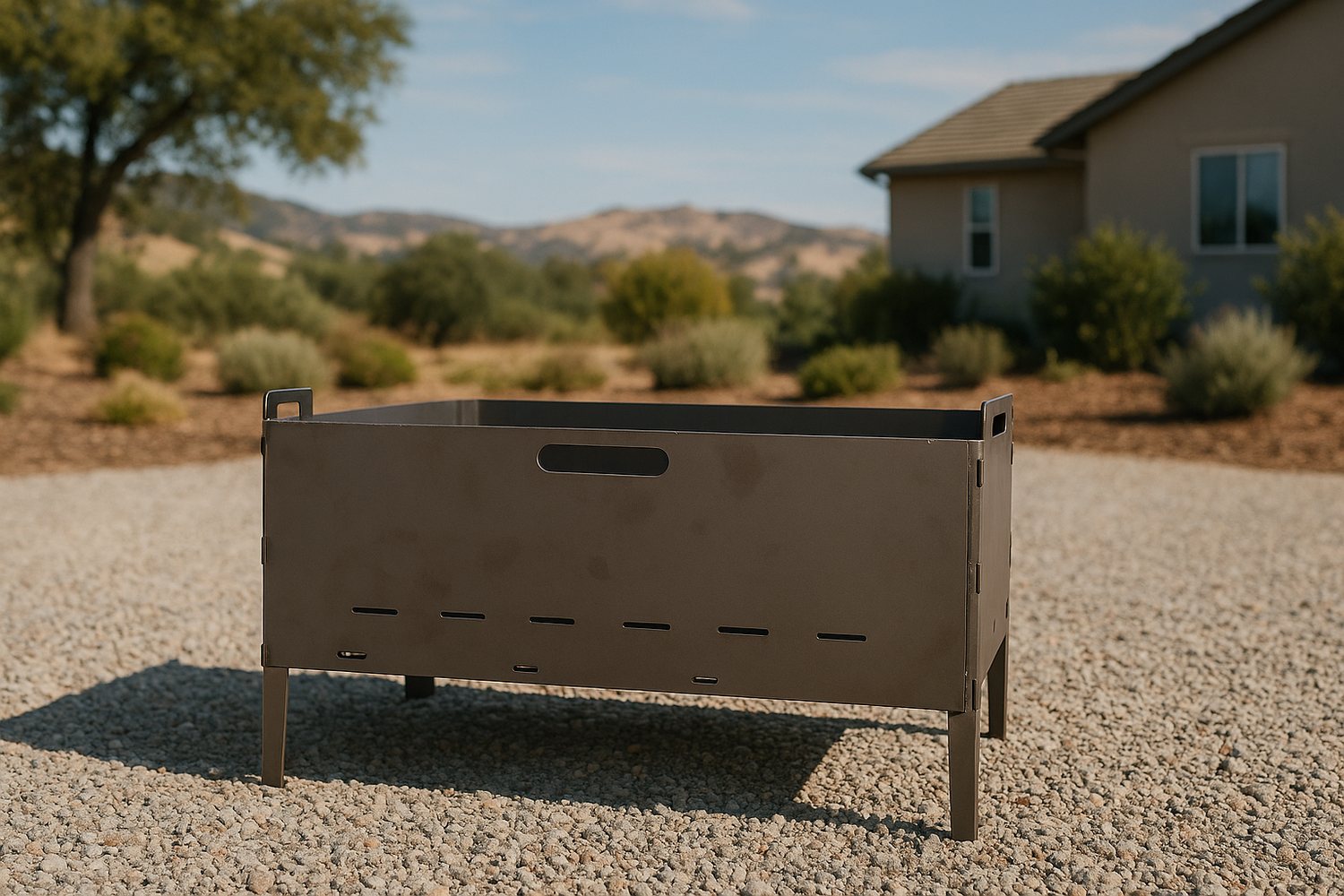
Design Options and Custom Choices
Custom Patterns
California Hardscapes offers metal fire pits with personalized patterns, including geometric cutouts, nature-inspired motifs, or family initials. Every design is decided together during the consultation to ensure it fits your outdoor aesthetic and privacy preferences.
Size and Shape
Metal fire pits can be round, square, or rectangular, and are available in a range of diameters and heights. Your choice depends on entertaining needs, patio size, and sight-lines. We guide you to dimensions that keep gatherings comfortable and safe.
Edge Treatments
Edges can be left crisp and modern or gently radiused for a classic look and safer touch. In consultation, we’ll discuss how you use your patio to recommend finishes that work for children, pets and seating arrangements.
Surface Texture and Finish
Options include smooth, brushed or pattern-textured surfaces. These finishes affect not just visual style but also reflectivity of light and resistance to dust and fingerprints. Finish details are matched to the setting and your maintenance preferences in the planning process.
Integrated Bases and Pads
Choose between a completely free-standing fire pit, one with integrated feet or an elevated base, and add a custom heat-resistant pad beneath for extra protection. The base style is matched to the patio type—concrete, pavers, or specially prepared gravel.
Ventilation and Ash Management
Proper ventilation is built into each design to encourage safe airflow and steady burning, while strategic openings allow for easier ash removal and cleaning, keeping maintenance straightforward.
Building a Fire Pit Patio Correctly—Our Approach
Every metal fire pit project with California Hardscapes is designed from the ground up for safety, beauty and longevity. Even the best metal pit can’t perform if the patio beneath isn’t built right, or if spacing and thermal protection are overlooked. Here’s how licensed, bonded and insured contractors typically construct functional, robust patios ready for a metal fire pit:
- Subgrade: Evaluate and compact the natural soil, addressing local clays, decomposed granite or roots as needed for a stable base that resists settling or shifting.
- Base: Bring in a layer of class 2 road base or similar material, compacted in lifts. This step levels the foundation and improves drainage, especially important in our region’s wet winters and oak root zones.
- Forms: Install perimeter forms to define the patio’s shape, taking into account slopes for proper drainage away from structures and sensitive plants.
- Reinforcement: Place steel rebar or mesh in concrete patios for crack resistance, or edge restraints for pavers to keep the finished surface tight over time.
- Joints: Plan control and expansion joints to minimize cracking from heat (including from the fire pit) and from our region’s occasional freeze-thaw cycles.
- Finishing: Pour and finish concrete or set pavers, ensuring a smooth but slip-resistant surface. Gravel bases are raked and compacted, ready for the fire pit and seating.
- Curing and Sealing: Allow surfaces to cure properly before sealing concrete or pavers as recommended. This maximizes durability and provides stain resistance against ash and soot.
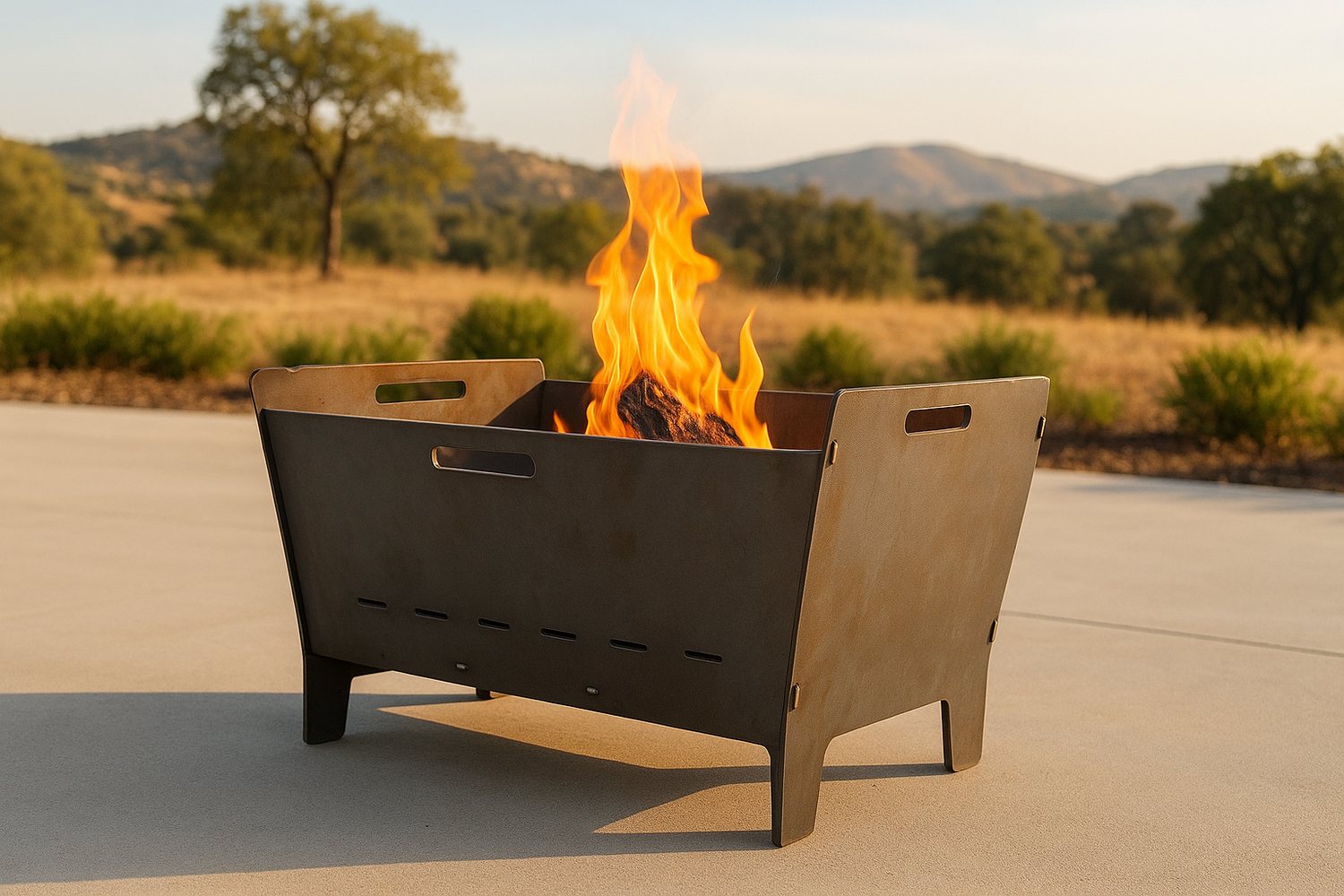
Pros and Cons: Metal Fire Pits on Patios
Strengths
- Fast warm-up and impressive visual impact: Metal radiates heat efficiently, instantly setting a focal point for gatherings.
- Minimal permanent footprint: Unlike built-in masonry pits, metal fire pits can be removed or repositioned if you want to reconfigure your patio down the road.
- Easier cleaning and maintenance: Ash removal and seasonal cleaning are straightforward, with no grout or stone joints to trap debris.
- Flexible design: Patterns, shapes and sizes can be matched to your outdoor décor, privacy, and functional needs without waiting on custom masonry work.
- Long lifespan with proper care: A well-installed pad and routine maintenance mean a metal fire pit can endure California’s seasons for many years.
Trade-offs
- Surface heat risk: Without a proper thermal barrier or heat pad, fire pit bases can discolor or damage pavers and concrete over time.
- Requires spacing vigilance: Wood-burning fire pits must be placed away from combustible materials, overhangs, and sometimes need additional spark guards.
- Rust and weathering: Even premium metals develop patina or surface rust, especially in spots where water can sit or hard water deposits form.
- Not always HOA or city approved: Some neighborhoods restrict wood-burning fire pits, require setbacks, or have seasonal bans; always check before installation.
Cost Considerations for Metal Fire Pits on Patios
Metal fire pits offer an appealing cost-to-impact ratio, but installation costs vary widely depending on patio surface, preparation needs, and your choice of design details. Pricing is always discussed in a private consultation, never published online, because every project is truly site-specific. The philosophy at California Hardscapes: We don’t compete on being the cheapest; we compete on quality, integrity, and results that exceed expectations. Expect to invest in a product and patio that lasts, not a disposable centerpiece.
- Patio surface type: New vs. existing, pavers, concrete or gravel each have different base prep, reinforcement and fire pad costs.
- Site preparation: Levels of grading, compaction, and root or debris removal add to total project needs, especially for sloped or clay-heavy soils.
- Custom pattern and design complexity: More intricate laser-cut patterns and personalized motifs require extra design time and materials.
- Fire pit size and shape: Larger or non-standard footprints increase materials, shipping and installation steps.
- Integration features: Special bases, heat barrier pads, or anchoring systems for windy areas result in optional but important upgrades.
- Project access and logistics: Tight side yards, long hauls to the backyard, or limited working space influence final installation timelines and costs.
Caring for Your Metal Fire Pit and Patio
Metal fire pits need little seasonal care beyond ash removal and occasional brushing to keep air vents clear. Depending on local rain and hard water, surface rust or patina may develop—most owners embrace this as character, but occasional cleaning with a soft brush and mild detergent can remove residue. Covering the pit or storing it during long wet spells helps extend lifespan.
Surfaces below the fire pit—especially concrete or pavers—should be checked annually for signs of discoloration or heat stress. A quality sealer on concrete or pavers slows staining and water absorption; resealing every 2–4 years is typical, but high-use patios or those exposed to hard water may require more frequent touch-ups. With these simple routines, both fire pit and patio will stay beautiful and functional for many seasons.
Compare other options

Custom cut-out fire pit designs
Discover custom cut-out fire pit designs in Rocklin. Names, initials, nature patterns glow with fire. Learn about design proofs, benefits, and trade-offs.
Explore →
Fire pit placement and safety
Explore expert tips for safe metal fire pit placement in Rocklin, Placer, and Sacramento County. Learn about distance, surfaces, wind, and local rules.
Explore →
Portable metal fire pits
Discover portable metal fire pits for patios, cabins, and camps. Flexible, durable designs by California Hardscapes.
Explore →Fire Pit Patio FAQs – Metal on Pavers, Concrete, Gravel
Will a metal fire pit damage my patio surface?
A wood-burning steel fire pit generates significant radiant heat, which can discolor or crack concrete, pavers and even some types of gravel over time if not handled correctly. California Hardscapes always recommends a heat-resistant pad or spacer beneath any metal fire pit, matched to the specifics of your patio surface. Preventing heat damage is a core design criteria.
Can I use a metal fire pit on an existing paver or concrete patio?
Yes, metal fire pits can be added to both new and existing patios. For existing surfaces, the main challenge is verifying level, drainage and ensuring proper thermal protection underneath. We often recommend adding a custom heat barrier—even for seasoned patios—to maximize both fire safety and surface longevity.
How far should a metal fire pit be from seating and structures?
As a rule of thumb, seat edges should be at least 3 feet from the outside of the fire pit, and the pit must be 10-15 feet from any combustible structure, roof overhang, fence or tree canopy. Local codes and HOA rules may require even larger setbacks. In consultation, California Hardscapes helps lay out spaces for both comfort and code compliance.
How do you protect a concrete or paver patio from ash staining and soot?
Apply a high-quality, penetrating sealer to the patio surface and use a custom-fit pad or tray below the fire pit to catch falling embers and ash. Prompt cleaning of ash and stains with soap, water and soft-bristle brushes keeps surfaces looking their best. For stubborn spots, avoid harsh wire brushes or chemical strippers that can damage sealers.
Is a gravel base suitable for a metal fire pit?
Gravel pads can be an excellent choice for metal fire pits when done right: they drain water rapidly, and the stones stay cool to the touch. The gravel should be deep, compacted, and free from roots or organics that could smolder. Some fire pit bases perform best with a non-combustible paver or steel platform on top of the gravel for maximum fire safety.
What about seasonal restrictions or local fire bans?
Some California communities issue seasonal burn bans or restrict wood-burning fire pits—especially during peak summer fire danger periods. HOA and city/county rules vary; always check with your local authority before using any open-flame feature. California Hardscapes will alert you to typical rules in the area, but the homeowner is responsible for ongoing compliance.
Do metal fire pits rust or change color over time?
Steel fire pits naturally develop a patina or surface rust as they age, especially with exposure to rain or hard water from sprinklers. Many owners welcome this transformation as part of the fire pit’s character, but consistent cleaning and occasional covering during wet weather can slow the effect. Consult with us if a specific look is important to your landscape.
What is the expected lifespan of a metal fire pit on a patio?
With occasional maintenance, a well-built steel fire pit and properly protected patio will last for many years—often outlasting less protected, less substantial store-bought alternatives. Lifespan depends on exposure to moisture, frequency of use, quality of patio base, and routine cleaning. The investment in premium materials and site-specific installation pays off through years of use.
Ready to Explore a Custom Metal Fire Pit?
Email sales@californiahardscapes.com with your address, a short description of your project, and photos of the patio or space for your new fire pit.