Metal Fencing Around Pools: Safety, Beauty & Local Expertise
Explore the real-world decisions and trade-offs of metal fencing and gates around pools. Quality comes first, with every detail addressed for enduring results.
What Sets Metal Pool Fencing Apart?
Best for: Homeowners looking for a durable, design-forward pool barrier that meets code while emphasizing safety, long-term performance, and neighborhood character.
Metal fencing around pools strikes a careful balance: a strong, secure barrier while keeping the water and landscape in view. For many homeowners in Rocklin, Roseville, Granite Bay, Folsom, Auburn, and nearby, the clean lines and durability of metal fencing make it a leading choice for ensuring pool safety. Custom patterns and tailored gate options allow each installation to fit the home’s personality, deck materials, and outdoor living spaces.
Choosing the right metal pool fence means considering more than just style. Local requirements, gate placement, latch choices, and integration with decks all shape the finished product. A well-built metal fence must withstand sun, rain, winter conditions, and years of active use—without sagging, rattling, or losing its finish.
California Hardscapes builds every pool fencing project with licensed, bonded, and insured contractors, using methods honed through decades of outdoor construction experience. Every fence and gate is treated as if it were for our own homes. Quality, integrity, and results that exceed expectations—never shortcuts, never the lowest bidder. It’s about craftsmanship that matches your investment in your pool and outdoor spaces.

Design Options for Metal Pool Fencing & Gates
Open Pattern Designs for Safety & Sightlines
Open pattern metal fencing—such as horizontal or vertical bars with approved spacing—maintains clear lines of sight to the pool area. This boosts safety by letting adults watch swimmers from across the yard. During the design consultation, pattern options are discussed to ensure both code compliance and curb appeal.
Custom Gate Placement for Everyday Use
Gate location is influenced by both safety and convenience. Placement should allow quick access from the house yet deter direct pathways for unsupervised children. Gates can be integrated at logical entry points from patios, pool decks, or side yards, always taking flow and supervision into account.
Self-Closing & Self-Latching Gate Hardware
Codes require pool gates to be self-closing and self-latching. California Hardscapes provides a range of heavy-duty hardware options, discussed during the consultation. Latch heights, swing direction, and reliable closure all factor into finished safety and ease of use, especially for families with young kids.
Pairing Metal Fences with Pool Deck Materials
Metal fences can be integrated directly into concrete, paver, or natural stone pool decks. The base details are tailored to your deck surface, ensuring stable anchoring and clean transitions. Compatibility with coping materials and existing deck edges is reviewed before installation.
Custom Height & Panel Sizing
Panel heights and lengths can be tailored to match pool code requirements and homeowner preferences. Adjustments can accommodate slopes or grading changes. Panel sizing is finalized in the design consultation to avoid gaps and address site specifics.
Decorative Laser-Cut Patterns
Beyond traditional pickets, California Hardscapes can incorporate custom, laser-cut designs for accent panels or entire sections. These patterns add character without compromising safety and can echo house detail, landscape themes, or favorite motifs.
How a Metal Pool Fence Is Built: The Right Way
A quality metal pool fence requires more than securing panels to the ground. Site preparation, base integration, and methodical installation are key to long-lasting results in our regional climate. California Hardscapes projects are constructed with licensed, bonded and insured contractors to ensure every fence and gate functions seamlessly for years.
- Subgrade: The site is cleared, and the soil is leveled where posts and panels will be installed. Any obstacles, roots, or old materials are removed for a clean starting point.
- Base: Post holes are dug to appropriate depths for the specific soil, and a gravel layer may be added for drainage. Concrete footings are set where needed to anchor posts securely against movement.
- Forms: Alignments are checked, with each post set plumb and at the exact layout required. Temporary bracing may be used to ensure positions remain accurate as the concrete cures.
- Reinforcement: Where code or site conditions dictate, reinforcements or steel inserts are added within posts or base sleeves for strength, especially on longer runs or sloped terrain.
- Joints: Panel connections and gate hinges are positioned with approved clearances to reduce pinch points and allow for thermal expansion. Latch and hinge locations are confirmed.
- Finishing: Panels and gates are attached, edges are checked for smoothness, and all hardware is adjusted for proper operation. Touch-ups to finish or protective coatings are completed as needed.
- Curing, Sealing: Post footings and anchors are allowed to cure fully before load is applied. In some cases, perimeter sealants are applied to minimize water infiltration at base connections.

Advantages & Trade-Offs of Metal Pool Fencing
Strengths
- Long-term durability in our hot, wet, and variable climate.
- Unobstructed views for swimmer supervision and landscape enjoyment.
- Custom design flexibility—both functional and decorative—for any home.
- Meets or exceeds most pool safety code requirements when designed properly.
- Minimal maintenance compared to wood or mesh pool fences.
Trade-offs
- Initial cost is typically higher than wood or mesh alternatives.
- May transmit heat to the touch in direct summer sun.
- Permanent installation makes later modifications more involved.
- Some HOAs or neighborhoods may restrict patterns or heights—always check local requirements.
Understanding Cost: What Drives the Investment?
Metal pool fencing is a premium upgrade and reflects an investment in long-term safety, style, and durability. Upfront expense is influenced by site-specific details, code requirements, and custom design choices. California Hardscapes reviews each project in consultation so that design and cost considerations are fully transparent—no rush, no pressure, and never sacrificing construction quality to lower the price.
- Yard layout: slopes, curves, retaining walls or other obstacles.
- Total linear footage and height of fencing required by local code and site layout.
- Complexity of custom patterns or decorative laser-cut sections.
- Number, type, and width of gates, including extra safety hardware.
- Anchoring requirements for different deck or soil conditions.
- Site preparation: removal of old fencing, landscaping, or addressing drainage issues.
Care & Maintenance of Metal Pool Fences
Routine maintenance for metal pool fences is straightforward: periodic rinsing to remove dust, pool chemicals, or hard water spots, and checking hinges and latches to ensure smooth operation. In most climates, regular maintenance checks once or twice a year are typically enough, though high-splash pool environments may need more frequent cleaning around hardware.
Sealing or finish touch-ups depend on fence exposure and proximity to landscaping irrigation, lawn chemicals, or oak trees. Most homeowners in our area choose to inspect the fence for wear or corrosion every 3–5 years and schedule resealing or refinishing if required. A metal fence built and maintained properly can easily deliver decades of service before major overhaul is even considered.
Compare other options

Metal fences on retaining walls
Metal fence panels mounted on top of retaining walls and seat walls.
Explore →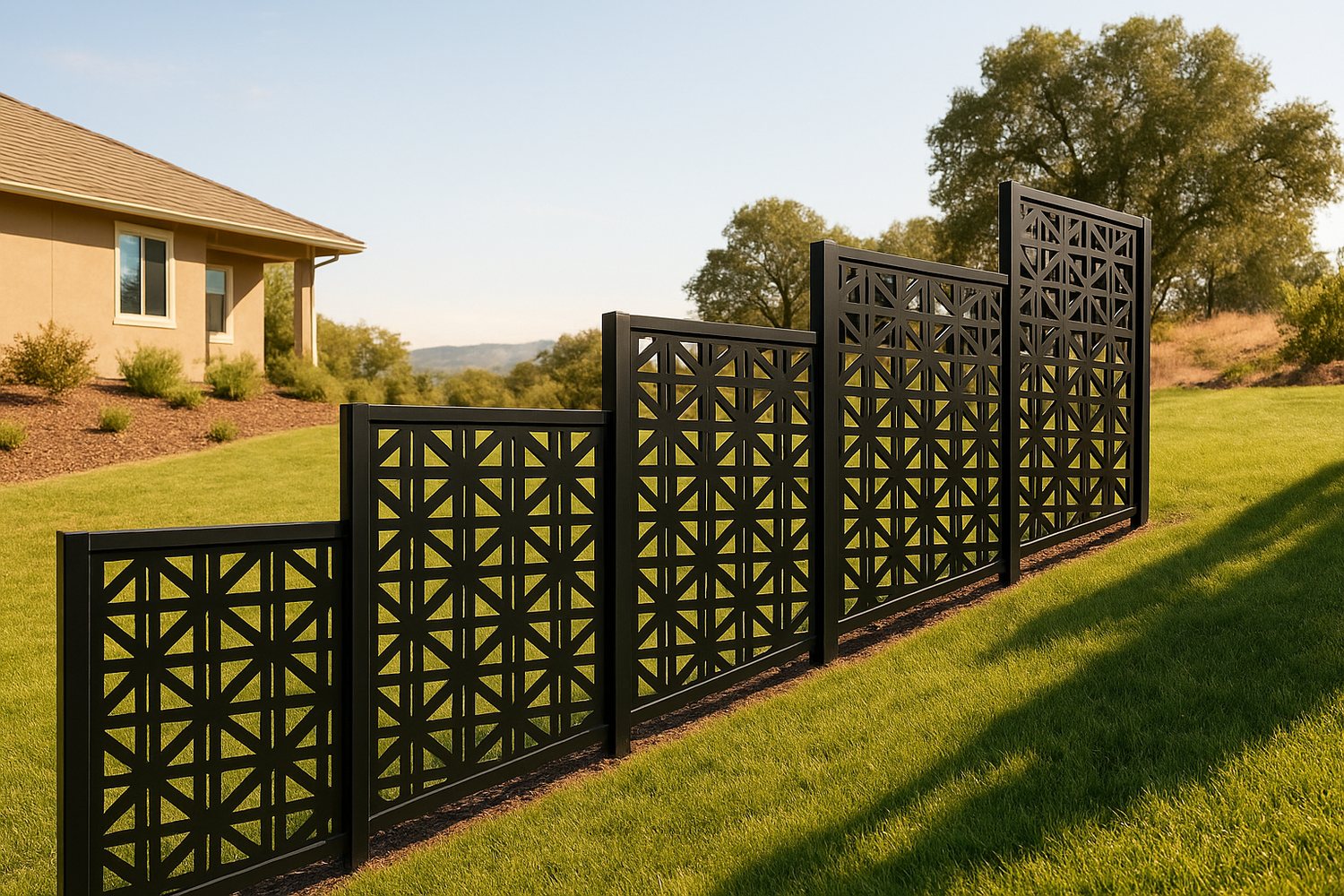
Metal fencing for sloped yards
Get practical answers about metal fencing for sloped yards in Rocklin, Roseville & nearby. Learn about stepped & raked fences, grading, gaps & more.
Explore →
Metal driveway gates
Metal driveway gates Rocklin homeowners choose: swing vs slide, pros and cons, and getting a gate ready for an operator.
Explore →Frequently Asked Questions About Metal Pool Fencing
What are the main pool barrier code requirements in this area?
Local pool barrier rules vary by city, county, and sometimes HOA. Generally, pool fences must meet a minimum height, have gaps that prevent a small child from passing through, and include self-closing, self-latching gates. California Hardscapes always reviews the relevant requirements for your address during consultation, so your fence is designed to comply from the beginning.
Are metal pool fences safe with young children or pets?
When correctly designed and installed, metal fencing provides one of the most secure pool barriers available for families. Gates are equipped with safety latches placed out of small children’s reach, and open picket patterns meet required spacing limits to prevent climbing or squeezing through. If you have concerns about pets or specific behaviors, these should be discussed during design.
Can metal pool fencing be installed on a sloped yard or retaining wall?
Yes. Metal fencing can step up or slope to match changes in grade. Posts are set individually to follow landscape contours or attach to retaining walls when appropriate. Custom sizing and panel layout accommodate nearly any yard, but slopes and extra transitions can affect design complexity and cost.
How do metal fences hold up to summer heat or pool chemicals?
High-quality metal fences, properly finished, resist UV fading and withstand sun exposure much better than wood or vinyl. While occasional heat can make the metal feel warm to the touch, durability is not compromised. Regular rinsing is recommended to remove pool chemical spray, which helps preserve the finish.
Do I need to worry about rust or corrosion?
Metal pool fences built by California Hardscapes use quality base materials and finishes suited for outdoor conditions, including exposure to water and summer irrigation. Occasional surface rust at cuts or scratches is possible, especially where hard water is present, but can often be managed with touch-ups. Regular inspections and maintenance go a long way toward long-term durability.
How long does a metal pool fence typically last?
With regular care and occasional refinishing as needed, many metal pool fences can last several decades—far outlasting most wood or mesh barriers. The actual lifespan varies based on exposure, maintenance, and physical impacts over the years. Signs your fence may need refurbishment include sticking gates, wobbling posts, or significant finish wear.
Can I include a custom decorative pattern in my pool fence?
Yes, custom decorative laser-cut panels are possible and can be integrated with standard open pattern fencing. Patterns and placement are discussed in detail during your consultation to ensure both safety and code compliance. These customizations allow you to express personal style while meeting legal requirements.
Will installing a metal fence damage my pool deck or landscaping?
Professional installation purposefully minimizes disruption to existing patios, pool decks, and landscaping. Fence bases are carefully set to avoid cracking concrete or disturbing established features. If roots, irrigation, or other obstacles are present, solutions are addressed during design planning to prevent long-term issues.
Ready to Discuss Your Pool Fence?
Email sales@californiahardscapes.com with your address, a short description of your pool area, and a few photos to set up a design consultation.