Replace and Upgrade Your Railings with Lasting Metal Solutions
Tired of loose, splintered wood railings? See how switching to metal railings gives your deck, stair or balcony lasting safety and appeal.
Replacing Old Railings: Confidence, Safety, and Style
Best for: Homeowners wanting to update or replace tired, unsafe or dated railings with durable, low-maintenance metal railings tailored to their space.
Old wooden railings often show their age years before the rest of your deck, entry, stair, or balcony. Worn, loose or rotting rails can be a real hazard—not just an eyesore. Replacing them with new custom metal railings is a practical upgrade that fortifies safety, dramatically improves curb appeal, and reduces future maintenance. This process keeps your deck, staircase, or slab intact while fully renewing the railing itself.
Switching to a metal railing system calls for careful planning. Before removal, it’s essential to check the condition of existing posts, anchors, and the structure below. Sometimes, wood posts can be kept if structurally sound and integrated with metal infill; other times, full post and anchor replacement is best. In every case, making sure the new metal railing is anchored into stable framing or concrete—not just surface-mounted on questionable wood—ensures both safety and a long life.
California Hardscapes designs each metal railing for its specific site, whether modern, traditional, or something more custom. Homeowners across Rocklin, Roseville, Granite Bay, Folsom, Auburn, and nearby communities turn to metal railings for a blend of resilience, security, and fresh style. Our philosophy is simple: we don’t compete on being the cheapest; we compete on quality, integrity, and results that exceed expectations. Every metal railing project is built as if it were our own home—done right, without shortcuts.
Design & Upgrade Options for Metal Railings
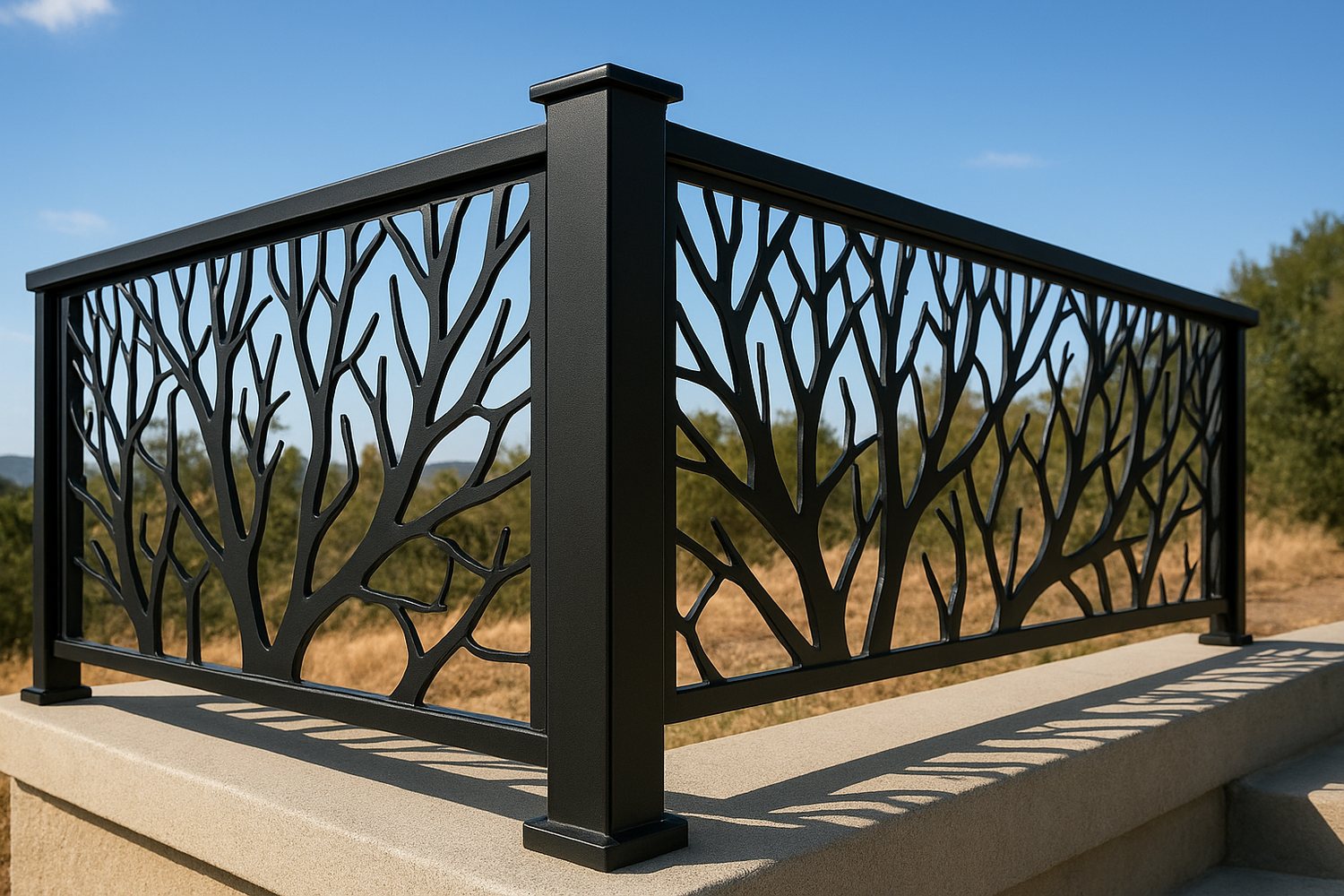
Custom Patterned Panels
Choose from standard or fully custom laser-cut patterns. Patterns range from simple geometric shapes to intricate, one-of-a-kind motifs for privacy, shade, or decorative flair. The design, pattern, and size are finalized in a consultation built around your home’s unique style and needs.
Straight or Curved Lines
Railings can be designed with classic straight lines for a minimalist look, or include sweeping curved rails and panels for a softer, more contemporary appearance. Ideal for either rectilinear terraces or winding stairways, each installation is tailored for alignment, sightlines and harmony with your home’s architecture.
Post & Cap Profiles
Select from various post shapes—square, rectangular, or round—and decorative end caps for a completed look. The profile and cap style can match existing features or introduce a new accent, from clean and modern to subtly ornate.
Handrail Shapes
Options include flat bar, rounded, or molded handrails for comfort and code compliance. Handrail height and size are customized to maximize grip, while suiting the character of the space—deck, stair, or balcony.
Color and Sheen Choices
Railings can be finished in a range of colors and sheens to complement your home’s palette. Whatever the choice—subtle, bold, or somewhere between—finish details are decided together in a design consultation, focusing on both longevity and appearance.
Privacy and Guardrail Combinations
Mix and match privacy panels with open guardrails or balusters. This approach allows stairways or decks overlooking a street to enjoy both openness and screened views. Each project balances protection, code safety, and your privacy needs.
How Metal Railing Replacements Are Built
Upgrading to metal railings involves both removal and renewal. The right sequence and workmanship protect your investment—no corners cut. Projects are completed with licensed, bonded, and insured contractors drawing on decades of practical experience, adapted to each home and site. Here’s what goes into a quality installation.
- Assessment and Removal: Carefully inspect the existing railing, posts, deck or stair framing, and concrete footings for rot, movement, or hidden structural weakness. Remove old rails and posts as needed, taking care not to damage the deck, stairs, or surrounding surfaces.
- Substructure Evaluation: Confirm that remaining deck or stair framing is solid and up to the task. Replace or reinforce any questionable blocking, rim joists, or stair stringers to create a secure base for new metal anchors and posts.
- Anchor and Post Installation: Mark out locations and securely install new metal posts or brackets. Where required, drill and set anchors into concrete or solid framing, using hardware sized for load and code compliance.
- Panel or Infill Attachment: Mount horizontal or vertical metal panels, balusters, or privacy inserts between posts with tamper-resistant fasteners. All infill is custom-fit for each opening’s width, slope, and angle.
- Handrail Installation and Alignment: Attach and align the handrail with precision at the correct height and projection. Double-check for consistent reveal, grip size, and smooth transitions at corners and landings.
- Finishing Touches: Install decorative caps, cover plates, and hardware with attention to detail. Clean welds and corners for appearance and safety; touch-up finish as needed to ensure a seamless look.
- Site Clean-Up and Final Inspection: Remove construction debris, perform a full walk-around, and confirm alignment, stability, and code compliance. Review care requirements and use recommendations with the homeowner.

Trade-Offs: Benefits and Considerations of Metal Railing Replacement
Strengths
- Substantially longer lifespan than wood—no rot, splinters, or termite issues.
- Low maintenance: occasional cleaning and, in time, easy refinishing.
- Stronger, more secure connection to deck or stair framing; improves safety.
- Custom design and pattern options add value and boost curb appeal.
- Resists warping, fading, and damage from local weather extremes.
Trade-offs
- Higher upfront cost than standard wood railings; quality work is an investment.
- Attaching to old or damaged framing may require structural reinforcement.
- Finish can show scratches or hard water marks in exposed locations.
- Some HOAs or historic districts may limit design or color choices.
What Affects the Cost of Metal Railing Upgrades?
Metal railing replacements are tailored for each home, with costs driven by choices and site conditions—not just size. While metal is a bigger investment than basic wood, it’s valued for permanence, safety, and design flexibility. The final price reflects the installation’s complexity, the number of posts and curves, and the details that ensure your railing is built right from the ground up.
- Length, height, and number of stairs or deck edges to be secured.
- Need for post or anchor replacement versus reusing old supports.
- Slope, access, and ease of reach—especially on multi-level decks or steep stairs.
- Level of customization: unique patterns, privacy panels, or mixed infills.
- Surface repairs required to correct deck rot, cracked concrete, or loose framing.
- Choice of color, finish gloss, and cap profile, discussed during design consultation.
Care, Maintenance, and Lifespan
Metal railings are easy to maintain: simply wash occasionally with soap and water to remove dust, pollen, hard water spots, and fingerprints. Inspect annually for loose fasteners or finish blemishes. Touch-up any chips or scratches promptly to prevent surface corrosion. Depending on exposure to sun, sprinkler overspray, and tree debris, rails may benefit from periodic finish refreshing—this interval varies based on care and product selected in your consultation.
Typical resealing or finish refreshing ranges from several to many years, depending on local exposure and color selection. Railings that don’t sit under eaves or are exposed to full sun, hard water or wind-driven rain may need touch-ups sooner. Lifespan is mainly affected by finish condition and occasional fastener retightening. With periodic care, custom metal railings can easily outlast the underlying decking or steps.
Compare other options

Metal vs wood and cable railings
Weigh the pros and cons of metal vs wood and cable railings for decks, stairs, and balconies in Rocklin.
Explore →
Metal balcony railings
Explore honest pros, cons, and expert design advice for metal balcony railings in Rocklin and nearby areas. Find answers about privacy, style, wind & care.
Explore →
Railings on terraces and walls
Metal railings on terraces, raised patios and retaining walls.
Explore →Frequently Asked Questions: Metal Railing Replacement
Can I keep my existing wood posts and just replace the top rail and balusters?
Sometimes. If your existing posts are structurally sound, properly anchored, and in excellent condition, they may be used with new metal infill panels or rails. However, if there is rot, movement, insect damage, or they’re undersized for new code requirements, it’s safer and longer-lasting to replace them with metal posts designed for the new rail system.
Will metal railings get too hot to touch during our hot summers?
Metal can warm up when exposed to direct sunlight, but in most residential applications, handrails are designed with comfort in mind. The color and profile you choose, along with surface texture, affect how much heat is absorbed and felt. Shaded or north-facing rails tend to stay much cooler. It’s uncommon for residential deck railings to become dangerously hot to the touch, even in triple-digit heat.
Will a new metal railing damage my existing deck or stairs?
Installed correctly, metal railings shouldn’t damage a sound deck or stairs. Old mounting holes are patched or reinforced as needed, and new posts are anchored in line with safe load requirements. However, if removal of old railings reveals wood rot or loose framing, repairs may be necessary to ensure safe anchoring and prevent future problems.
Can I match my new railing to my entry gate, fence, or other outdoor metalwork?
Yes. Metal railings can be coordinated with gates, fences, privacy panels, and other outdoor metal features for a consistent, high-end look. Design, pattern, and color choices are customized in a consultation to harmonize with both your existing hardscapes and your home’s design cues.
How long does it take to replace a wood railing with a new metal one?
Every project timeline depends on design complexity, site access, and possible repairs discovered during removal. Simple straight rail replacements go faster than curved stairs or projects with structural repairs. Lead times, final pattern, and material choices are finalized in your consultation, and exact timing is shared before work begins.
Are metal railings more secure than wood?
Generally, yes. Metal railings offer superior strength and are far less susceptible to rot, insect damage, or warping. Properly anchored, they preserve alignment and bearing under years of use. Fasteners and connections used in metal systems also resist loosening or wiggle much better than wood screws and nails.
Do metal railings require more maintenance than wood?
No. Metal railings are lower-maintenance than traditional wood. There’s no staining, painting or sealing required as often. Occasional cleaning and quick attention to scratched or chipped finish are all that’s needed to keep them looking and functioning their best for years.
Can your metal railings meet city or HOA safety and design codes?
Yes—railings are specifically designed to meet common safety and spacing requirements, such as height, opening size, and load. Some jurisdictions or HOAs have unique guidelines on style and color, so consult your association or local authority early. Requirements and reviews can differ by address.
Ready to Explore a Safer, Stunning Railing Upgrade?
Email sales@californiahardscapes.com with your address, a short description of your project, and photos of your current railing and deck or stairs. We’ll follow up to discuss your vision and next steps.