How to Mount Metal Signs on Walls, Fences, and Gates
Precision mounting determines whether a custom metal sign enhances your property for decades or struggles with fit and durability. Here’s how California Hardscapes does it right.
Why Proper Metal Sign Mounting Matters
Best for: Best for homeowners who want a permanent, clean and lasting way to display address numbers, statements or custom art with crisp, quality impact.
A well-mounted metal sign is more than just a detail—it’s an investment in your home’s first impression as well as its function. Whether displaying address numbers, a family name, or welcoming guests, proper mounting ensures your sign is visually commanding, securely anchored, and able to withstand the demands of California’s climate. Poorly mounted signs can rattle in the wind, accumulate water damage, or lose their alignment, but attention to mounting transforms custom design into lasting curb appeal.
Quality mounting options adapt to the surface: stucco, stone, wood, steel gates or wrought iron fences each require different skills and anchor systems. At California Hardscapes, each sign’s installation is built for its actual conditions—no shortcuts, no ‘universal’ hardware that risks rust or wobbles. California soils, walls and fences are not all the same: the best approach for your home is always discussed and selected together in a personal consultation.
We’re confident that mounting signs to last—without corners cut—is worth every bit of focus. Cheap methods are easy to spot in a couple of years, when signs stain the wall, hardware dulls, or edges suffer in expanding heat and winter moisture. Our philosophy is simple: we don’t compete on being the cheapest. We compete on quality, integrity, and results that exceed expectations. That means each mounting project is delivered as if it were at our own address, with an eye toward longevity, security and appearance.

Mounting Methods & Surface Choices
Stand-off Spacers
Stand-off spacers are cylindrical or disc-shaped mounts that hold the metal sign off the wall by half an inch or more, creating a dramatic shadow effect and space for water and debris to escape. Ideal for smooth stucco, block, stone or concrete surfaces, they’re anchored with lag bolts and masonry anchors for a crisp ‘floating’ appearance. Care is taken to properly seal the penetration to prevent water intrusion.
Flush Wall Mounting
Flush mounting places the sign directly against the mounting surface, with no visible space behind. On smooth walls (stucco, siding, stone veneer), small architectural screws in matching finishes can be used to minimize hardware appearance. This method puts sign and surface in visual sync—best for a tightly integrated look—while still ensuring solid hardware anchoring and weather-resistance.
Fence and Gate Bracket Mounts
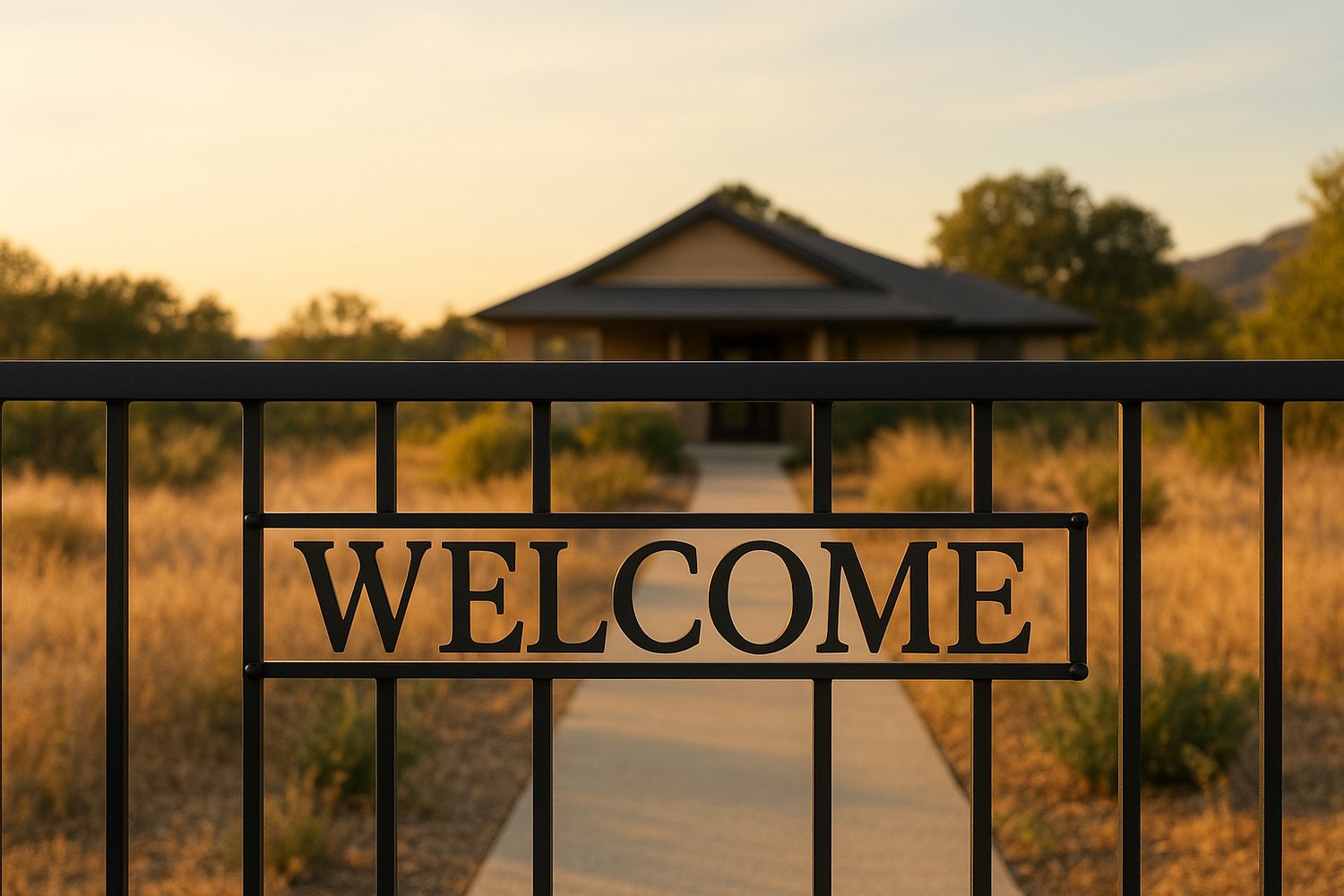
Signs mounted on metal fences, gates or railings use custom-fit clamps, U-bolts, or welded tabs that wrap or bolt directly onto structural elements. Bracket mounting is best for surfaces that can’t take through-bolts, avoiding damage to the finish of the sign. The goal is secure signage with no rattle, even as gates swing or fences flex in the wind.
Post and Pillar Mounting
Some signs are free-standing, mounted between dedicated posts or atop stone or masonry pillars. Post-mounting allows almost any size sign, with ground anchors or drilled caps ensuring upright stability. This option is ideal for entrances set back from the house (like ranch drives or shared lanes) and delivers prominence even when walls aren’t available.
Stucco, Stone and Concrete Surfaces
Every masonry material handles mounting differently. On stucco, specialty anchors and sealants are needed to prevent cracking and water intrusion. Flagstone, natural stone, or concrete block require hammer-drilled anchor holes and spacers that preserve the sign’s distance and prevent uneven mounting. Experience matters to avoid damaging these robust but sensitive materials.
Wood Fences or Structures
Metal signs can be mounted directly to wood fences, gates, or decorative headers using exterior-rated lag screws and backer washers. Pre-piloting holes in wood avoids splits, while careful hardware choice prevents corrosion or visible stains. For older or weathered wood, additional bracing may be recommended to maintain integrity over years of expansion and contraction.
How Quality Sign Mounting Is Done
Mounting a metal sign correctly doesn’t just depend on the sign—it starts with evaluating the specific wall, fence or gate, and ends with detailed finishing so your sign endures with style. California Hardscapes handles every step with licensed, bonded and insured contractors. The process may adapt depending on your property, but the steps below form the foundation for lasting, professional results.
- Survey and mark the mounting location, checking for utilities, studs or rebar, and assessing surface flatness and accessibility before any holes are drilled.
- Prepare the mounting area: clean off dust, debris, and old paint, and for masonry or stone, check for stability or loose veneer that could compromise anchoring.
- Test-fit the sign and any hardware, mark anchor points precisely, and—if using stand-off spacers or brackets—check all alignments before drills touch the surface.
- Drill pilot holes for anchors: masonry bits for stone, concrete, or stucco; wood bits for fences and wood structures, always pre-drilling for structural integrity.
- Anchor each mount securely: use lag bolts, sleeve anchors, or specialized fasteners as required for the surface, double-checking against pull-out and corrosion risks.
- Install the sign and spacers or brackets, ensuring levelness and proper standoff, then double-check fastener heads for snug fit without overtightening or damaging finishes.
- Seal all penetrations against moisture (especially on stucco and stone), clean away debris, and perform a final inspection for stability and appearance.
Pros and Cons of Metal Sign Mounting Methods
Strengths
- Exceptional durability—even exposed signs can last decades with the right mounting method and surface preparation.
- Precision-mounted signs withstand weather, wind, gate movement, and expansion without rattles, sags or premature loosening.
- Custom mounting solutions mean signage fits any style, surface or code requirement without compromising the design.
- Quality hardware and techniques prevent water intrusion, surface staining, or corrosion at anchor points.
- Well-executed mounting offers crisp visual separation, making the sign readable and an architectural highlight even from a distance.
Trade-offs
- Improper mounting—even minor shortcuts—can lead to sign movement, misalignment, or permanent damage to walls or fences.
- Certain surfaces, like stone or old stucco, may require additional preparation or reinforcement to avoid cracking or anchor pull-out.
- Mounting through finished surfaces always carries a risk of water intrusion if not perfectly sealed every time.
- Repositioning or removal later will often leave visible holes or minor damage, especially in masonry or wood.
Understanding Costs and What Affects Them
Every sign mounting project is unique—the true cost depends on the site’s actual conditions, complexity of the mounting method, surface material and the amount of preparation needed. California Hardscapes does not provide pricing, metal thickness, finish types or lead times on the web; instead, design and mounting are discussed in detail during your consultation.
- Surface type: mounting to stucco, stone, solid concrete or wood involves different levels of preparation and specialty hardware.
- Sign size and weight: heavier signs or large formats may need deeper anchors, more bracing, or even custom backer plates.
- Access and installation height: mounting over tall gates, entry pillars, or above landscaping requires different tools and more time.
- Type and number of mounting points: stand-off spacers or elaborately shaped signs require more precise anchor locations and alignment checks.
- Pre-existing conditions: repairing loose stone veneer, stabilizing weathered wood, or correcting for sloped mounting areas adds complexity.
- Finish work and sealing: more challenging surfaces may require extra caulking, surface touch-up or post-installation cleaning.
Caring For Metal Signs and Mounting Hardware
Routine maintenance is modest: gently rinse your sign and hardware with a hose every few months to remove pollen, dust and hard water buildup. Clear debris away from brackets or posts after heavy wind or rain, and avoid harsh cleansers that might dull the finish. For hinges or swing gates, check fastener tightness once or twice a year, retightening if necessary.
Resealing around wall anchors is typically needed every five to seven years in most homes, sooner if you notice signs of moisture intrusion or hairline gaps around hardware. Lifespan depends on exposure: signs in full sun or frequent irrigation spray see the most wear. With quality installation, most signs easily last 20–30 years or more, needing only occasional hardware checks and resealing to maintain their original look.
Compare other options

Metal sign design and layout
Expert guide to metal sign design and layout for Rocklin area homes. How to choose lettering, borders, layout, proofs, and more for standout results.
Explore →
Metal address signs
Discover premium metal address and house number signs in Rocklin and nearby areas.
Explore →
Business logo signs
Metal business logo signs for storefronts, offices and shops.
Explore →Frequently Asked Questions About Sign Mounting
What’s the most secure way to mount a metal sign on stucco?
The most secure approach is to use masonry anchors set into the wall’s structure (not just the surface layer), along with silicone or elastomeric sealant within each penetration. Stand-off spacers can help keep the sign off the wall, aiding drainage and reducing risk of moisture intrusion. Each sign and wall should be evaluated for anchor compatibility to avoid cracking and leaking.
Can signs be mounted to wood fences or older gates?
Yes, but extra care is needed. For wood fences or aging gates, it’s best to pre-drill and use corrosion-resistant lag bolts or exterior screws, sometimes with washers to spread the load. If the underlying wood is weathered or warped, it may require reinforcement or replacement to ensure the sign stays level and secure over time.
Do I need special brackets for signs mounted on metal gates?
Most gate mounts require custom-fit brackets, U-bolts or welded tabs to avoid damaging the finish. These brackets distribute weight and minimize movement from swinging, and can be painted to blend in with the gate for a seamless look. Each gate design typically gets its own mounting solution for the best fit and security.
Will drilling into stone or masonry pillars weaken them?
Drilling can weaken stone veneers or unsupported masonry if not done correctly. The keys are using proper masonry anchors, pre-drilling with care, and sealing holes to prevent water ingress. If pillars are hollow or have thin veneer, additional reinforcement or different mounting strategies may be recommended during your consultation.
Are California Hardscapes’ sign mounting methods HOA and city code friendly?
Yes, all sign mounting is designed with an eye toward local code and HOA requirements. However, rules can vary between neighborhoods—size, color, location, and even mounting height may be restricted. Final compliance is the homeowner’s responsibility, and reviews or approvals should be completed before work is scheduled.
How do I maintain wall-mounted metal signs?
Rinse signs with clean water as needed to remove dust or hard water buildup. Inspect mounting points every few years; reseal if you see gaps or signs of water intrusion. Avoid pressure washers or hard abrasives that can scratch finishes or hardware. Regular maintenance helps prolong the sign’s appearance and prevents avoidable wall damage.
Does mounting a sign through the wall cause water issues?
Any time a screw or anchor penetrates a wall, there’s potential for water intrusion if it’s not properly sealed. Silicone or elastomeric sealants are used for every penetration and checked annually. In most cases, a properly sealed sign mount won’t cause problems, but regular inspection is always good practice, especially after heavy rains.
Can a sign be moved or repositioned later?
Signs can be removed and relocated, but there may be visible holes or minor damage where the original anchors were mounted—especially on stucco, stone, or finished wood. Patching and repainting may be needed. If you anticipate needing to move the sign in the future, discuss this during your consultation so mounting can be planned accordingly.
Ready to Explore Metal Sign Mounting?
For tailored recommendations or to schedule a consultation, email sales@californiahardscapes.com with your address, a short description, and photos of your mounting area.