Mulch & Bark: Build Healthier, Safer, Low-Maintenance Landscapes
A quality mulch layer brings out the best in your garden beds—protecting, improving, and beautifying your landscape all year long.
Mulch and Bark: Outlasting Looks and Smarter Performance
Best for: Best for homeowners seeking lower watering needs, weed reduction, neat curb appeal and healthier soil structure.
Mulch and bark aren’t just a finishing touch—they’re a crucial investment for anyone serious about a healthy, resilient outdoor environment. Proper mulch keeps soil temperatures stable, reduces water evaporation, and blocks weeds, all while giving beds and borders a tidy, refined look. With so many options, from traditional shredded bark to modern rock mulches, choosing wisely means you’ll reap long-lasting benefits tailored to the microclimate and challenges of Northern California.
In the greater Rocklin, Roseville, Granite Bay, and Folsom area, mulching isn’t one-size-fits-all. Our soils—ranging from heavy clay to sandy pockets and decomposed granite—plus long hot summers, occasional frost, and regional fire risks make product selection and expert installation critical. The right mulch not only elevates curb appeal, but also guards your home’s landscape and foundation from the elements. And in well-designed outdoor living settings, quality mulching delivers year-after-year performance with minimal fuss.
At California Hardscapes, we don’t compete on being the cheapest. We compete on quality, integrity, and results that exceed expectations. Every mulch or bark installation is approached as if it were our own home—no shortcuts, no need for rework. Our decades of construction and material expertise translate into honest advice, technical precision, and projects that stand the test of time. This guide covers your options, the real-world pros and cons, what to expect, and the details that turn a mulch job from ordinary to exceptional.

Design Choices: Mulch and Bark Materials That Work
Shredded Bark Mulch
Shredded bark offers excellent coverage and locks together better than chunky products, making it less likely to blow or wash away. Sourced mainly from fir, redwood, or cedar, this mulch decomposes steadily into the soil, improving structure and fertility. It’s a smart choice for beds that need regular moisture retention and where a tidy, textured look matters most.
Bark Nuggets
Bark nuggets, usually pine or fir, provide a chunky, slower-degrading mulch ideal for larger shrub beds or under mature trees. Their size makes them more resistant to wind but they can migrate on slopes or under heavy rainfall. Nuggets offer a classic, durable accent but can be harder to rake or keep neat compared to shredded mulches.
Wood Chip Mulch
Wood chips—typically made from chipped tree trimmings or lumber offcuts—are more rustic, irregular, and readily available. They break down more quickly than bark, adding organic matter faster but requiring more frequent top-ups. Un-dyed chips are preferred near edibles and in gardens focused on soil health over formal appearance.
Rock Mulch
Rock mulch (gravel, river rock, or decomposed granite) doesn’t break down, making it an attractive, fire-wise choice around patios, walkways, or up against structures. Rock helps reduce evaporation and suppress weeds but doesn’t improve soil or insulate roots as organic mulches do. Consider compatibility with your plant palette and long-term look.
Decorative Mulch Colors
Mulches and barks come in a range of natural and enhanced colors—reds, browns, blacks—so you can accent or blend with your home’s exterior or landscape. While color-dyed mulches are visually striking, the dyes can fade with heavy sun or water, so expect a touch-up layer sooner in high-visibility beds.
Mulching for Fire-Wise Landscapes
In wildfire-prone areas, avoid thick bark or chip mulch within five feet of any structure. Opt for thinner rock mulches, decomposed granite, or bare soil directly around the foundation, building depth outward. If using wood-based mulch, keep an irrigated green buffer and observe defensible zone recommendations for peace of mind.
Our Approach: How a Proper Mulch or Bark Layer Is Installed
The difference between a lasting mulch application and a forgettable patch-up comes down to preparation, product selection, and careful workmanship. Here’s how our team, led by decades of experience, delivers clean, functional, and long-term mulch results every time:
- Site and subgrade prep: Remove weeds, grass, debris, and old mulch. Grade soil for drainage and confirm any needed weed barrier is appropriate for the plants and specific mulch type.
- Base and edge control: In high-maintenance areas, a breathable weed fabric may be installed and steel, concrete, or stone edging placed to hold mulch in place and define borders.
- Material delivery and staging: Product is delivered and staged close to beds, minimizing tracking over finished surfaces. Mulch is assessed for moisture and cleaned of any contaminants.
- Depth and spreading: Mulch is applied evenly to proper specs—typically 2–4 inches for organic mulches, 1–2 inches for rock—and carefully kept 2–6 inches away from plant bases, stems, and trunks.
- Detailing and clean-up: Mulch is hand-pulled and shaped around plants, irrigation heads, and hardscape edges to avoid smothering and ensure a crisp, finished look. Loose debris is removed.
- Water-in and settling: Where needed, beds are irrigated to help mulch settle and begin integrating with the soil. Any thin spots after settling are promptly topped off.
- Final walkthrough and care briefing: The project lead checks for even coverage, proper clearance from stems, and addresses settling, fire safety zones, and seasonal care tips with the homeowner.

The Upsides and Trade-Offs of Mulch and Bark
Strengths
- Significantly cuts down on weeds and watering needs, especially in summer heat.
- Improves soil health over time by moderating temperature swings and increasing organic matter.
- Protects new plantings, roots, and soil microbes from extreme sun, compaction, and erosion.
- Visual polish: neatens up garden beds and paths, tying hardscape and softscape elements together.
- Certain types (rock, decomposed granite) act as part of a fire-wise landscaping strategy near homes or structures.
Trade-offs
- All organic mulches require top-up or refreshing every 1–3 years, depending on type and exposure.
- Bark nuggets and chips can wash or blow away on slopes or without effective edging—especially after major storms.
- Wood mulches can harbor mold, fungus, or termites if applied too thick in shady, wet, or poorly drained areas.
- Rock mulches can increase reflected heat, which might stress some plants, and don’t feed the soil or break down naturally.
What Impacts the Cost of a Mulch or Bark Project?
Pricing for a professionally installed mulch layer depends on more than just the product. Labor, access, prep, and long-term performance details all factor in. At California Hardscapes, we believe in exact estimates—not ballpark guesses—and break down costs so you understand where your investment is going. Here are the main price variables:
- Type and quality of mulch or bark: Premium, long-lasting products cost more than bulk or recycled options.
- Depth and total square footage: Deeper or more extensive coverage uses more material and time.
- Site prep needs: Removal of old mulch, weed pressure, or grading issues add labor and disposal costs.
- Edge treatments and bedding: Installing steel, stone, or concrete edging solidifies the look and prevents migration but adds to upfront costs.
- Site access: Tight side yards, slopes, or distances from street to project area affect labor and staging requirements.
- Fire-wise and drainage enhancements: Special material placement, gaps, and grading to meet safety or code recommendations may require extra steps.
Maintaining Your Investment: Mulch and Bark Care Guide
Plan to check mulch and bark beds each spring and fall. Rake or fluff to break up crusty layers and re-establish even coverage. Pull mulch away from plant crowns and trunks to avoid rot, especially after wind or rain events. Organic mulches typically need topping off every 12–36 months, with shaded or irrigated beds breaking down faster than dry, sun-exposed areas. Spot treat or hand-pull weeds as needed—early action prevents spread.
For inorganic mulches like rock or decomposed granite, a periodic leaf-blower pass, raking, and weed spot removal is usually sufficient. Edge drift or migration should be addressed promptly, especially along slopes or high-traffic garden borders. Typical lifespans range from one to three years for most bark or chip products, and five years or more for stone. Keep irrigation and drainage clear, and avoid over-mulching or burying stems and low branches. When in doubt, a quick call or message for a professional assessment is always prudent.
Compare other options

Topsoil and soil amendments
Learn how premium topsoil, planting mix, and soil amendments improve landscape health and value in Rocklin, Roseville, Folsom, and nearby communities.
Explore →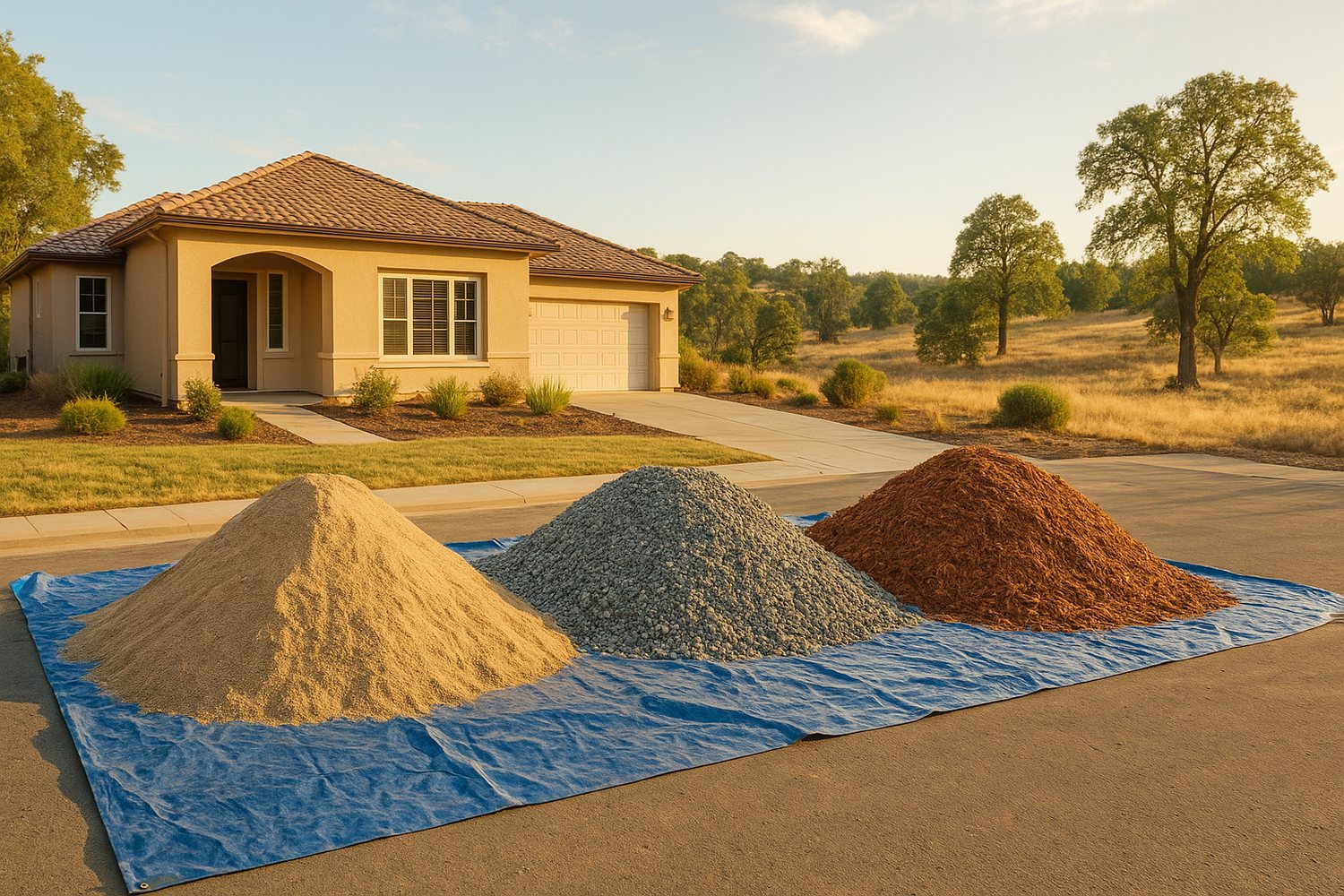
Estimating material quantities
Estimating material quantities Rocklin homeowners need: cubic yards, tons and square feet for gravel, DG, mulch, sand and base.
Explore →
River rock and cobble
Explore river rock and cobble sizes, colors, and uses for dry creeks, drainage, or borders in Placer & Sacramento. Tips for selection, care, and installation.
Explore →Frequently Asked Mulch and Bark Questions
How deep should mulch or bark be applied around my plants?
A general rule is 2–4 inches for wood-based mulches and about 1–2 inches for rock mulches. Too thin, and weeds break through and water evaporates quickly. Too thick, and roots or crowns can suffocate or stay soggy, increasing disease risk. Keep mulch a few inches clear of stems and tree trunks. In problem-prone spots or near slopes, adjust accordingly—denser coverage can blow or wash downslope.
Is mulch safe near my house in fire-prone areas?
In California’s fire zones, it’s smart to avoid thick bark or chip mulch right up against structures. Current guidance recommends using rock, DG, or bare soil in the zero-to-five-foot zone around your home and gradually increasing mulch depth further out. Well-watered, low-resin mulches (like composted bark or hardwood) are better than light, dry chips. Always check local requirements and keep an irrigated, managed buffer for added safety.
How often does mulch or bark need to be refreshed?
Shredded bark and chips typically need topping off every one to three years. Sun, irrigation, and foot traffic all impact breakdown rates—beds with direct sun or sprinklers will see color fade and material decompose faster, while shaded or dry beds can last a bit longer. Rock and DG mulches usually require only spot filling or raking over five years or more, barring heavy runoff or leaf litter.
Will mulch attract termites or pests?
When properly installed, mulch is not a major termite risk. The key is to avoid piling it against wooden foundations or burying plant crowns. Keep mulch two to six inches away from house siding and trunks. Coarse barks are less attractive to termites than fresh wood chips, which break down faster. If you’re concerned, consult a pest specialist and choose a mulch suited for your situation.
What’s the difference between shredded bark, nuggets, and wood chips?
Shredded bark is fibrous and forms a tight mat, ideal for slopes or windy areas. Nuggets are chunkier, last longer, and look good in large beds but can migrate on slopes or wash away. Wood chips (from limbs or lumber) decompose faster and feed the soil, but break down more quickly—best in utility or soil-building zones. Your best bet depends on goals: neatness, longevity, organic matter, or specific plant types.
Can mulch help with weed control?
Absolutely. A continuous, 2–4 inch layer of quality mulch effectively blocks most annual weeds. It also makes hand-pulling or spot spraying easier when weeds do take root, as they can’t establish deep systems in covered beds. For major weed issues, consider prepping with manual removal or landscape fabric before mulching for max control—especially in problem areas.
How do I keep mulch from blowing or washing away?
Product selection and edging are key. Shredded bark resists wind best, while nuggets and chips do better with well-set steel, stone, or concrete edging. On slopes, always apply mulch after heavy rains and avoid deep layers. If washout is common, switching to heavier materials like rock or DG, adding check-dams, or terracing slopes can help keep things tidy and stable.
Do I need weed barrier fabric under mulch?
It depends. For bark and chips, weed fabric helps in high-maintenance beds but can interfere with water flow and soil health if misused. It’s less critical in woody perennial or native beds where soil improvement and microbe action are needed. Under rock mulch, a high-quality commercial fabric is often beneficial. Every site is different—ask for tailored input based on your plants, site prep, and long-term goals.
Ready to Refresh Your Landscape Beds with Quality Mulch?
Email sales@californiahardscapes.com with your address, a brief description of your project and a few photos. We’ll respond promptly and help you plan the best material and install approach for your landscape.