Your Guide to Pavers and Wall Block in Northern California
A practical, technically clear page for homeowners deciding if concrete pavers and wall block are right for their yard or project.
Choosing Pavers and Wall Block: What You Need to Know
Best for: Best for homeowners wanting a durable, customizable, and attractive outdoor surface or wall that stands the test of time.
When it comes to patios, walkways, driveways, and sturdy landscape walls, concrete pavers and matching wall block are top choices for many Rocklin, Roseville, and nearby homeowners. Not only do they offer visual impact, but if chosen and installed wisely, they can outlast most alternatives. The upfront process of sorting through thickness, texture, finishes, color blends, and quality isn’t quick, but it’s well worth it.
Good hardscape materials blend looks with resilience. The best paver and wall block projects work as a system: shape, thickness, and surface all matter, but so do permeable options, color integration, and matching caps. Because California Hardscapes won’t cut corners, we focus on proven installation methods and premium suppliers, ensuring that both the material and the site prep stand up to years of use and changing weather.
We believe in building every project as if it were our own home. If you’re weighing concrete paver or wall block options, use this guide as your toolkit for making the most informed choice—no sales pitch, just facts from decades of experience in concrete, wall, and outdoor construction throughout Placer, Sacramento, and El Dorado counties.

Six Key Decisions: Design and Material Choices
Paver and Wall Block Thickness
Patio and walkway pavers are typically 2–3 inches thick. For driveways or where vehicles may cross, select at least 3 1/8-inch pavers. Wall block varies more: gravity walls under 3 feet often use standard 6–8 inch-wide blocks, while larger retaining walls require engineered units. Thicker materials resist flexing and shifting, especially in our region’s clay soils.
Surface Finishes: Smooth, Tumbled, Textured
Finishes affect both looks and slip resistance. Smooth pavers offer a modern vibe but are slick when wet. Tumbled (distressed) finishes feel timeless and camouflage scuffs. Textured or embossed surfaces give grip and hide grime or lime stains best—a smart pick for foot traffic or around pools.
Color Choices and Blends
Pavers and wall block come in everything from uniform grays and tans to variegated blends designed to mimic natural stone. Mixes with multiple pigment loads often disguise future stains and weathering. Our region’s top sellers often blend tans, grays, and subtle reds to pair well with stucco and trim.
Permeable and Eco-Friendly Options
Permeable paver options use special shapes and wide aggregate-filled joints to filter rainfall into the soil and reduce storm runoff—important in areas with strict drainage requirements. While slightly higher in material and installation labor, these options often get approval from local agencies and help solve drainage challenges.
Matching Pavers, Wall Block and Caps
A cohesive look comes from coordinating textures, shapes and capstones between pavements and walls. Many manufacturers offer families of products designed to integrate—walls, pavers and caps in matching or complementary colors. For custom projects, focus on repeating one or two main colors and carrying details from hardscape to walls and steps.
Quality Differences: Premium vs. Value Brands
Not all concrete pavers and blocks are equal. Premium brands use denser, stronger mixes and higher-quality pigments that stay true over time. Cheaper products sometimes show premature surface wear and color fading, especially after a few hot, dry summers and winter rains. It’s a classic case of getting what you pay for.
How Professional Construction Ensures Longevity
The quality of a paver or wall block installation depends as much on what’s below the surface as the blocks you see on top. Whether you’re choosing a builder or doing it yourself, following the right sequence is essential, especially for long-lasting performance in local soils and weather. California Hardscapes approaches every detail with a focus on durability and proven results—because shortcuts show themselves sooner than you think.
- 1. Subgrade Prep: Begin by excavating and shaping the subgrade to remove roots, soft spots, and organic material. Compaction is crucial—especially in clay or fill soils common in much of Placer and Sacramento counties—to prevent future settling or shifting.
- 2. Aggregate Base: Install a crushed rock base (usually 4–8 inches, deeper for driveways or poor soils) and compact in layers. This step sets the foundation for drainage and freeze-thaw protection, creating a stable, permeable platform beneath pavers or wall blocks.
- 3. Edge Restraints and Forms: Set forms and heavy-duty edge restraints before laying pavers or block. Edges prevent lateral movement and are especially critical for driveways or patios exposed to oak roots or slope washouts.
- 4. Bedding and Leveling: Spread a bedding layer—typically sand for pavers or manufactured wall gravel for blocks—and screed it smooth. This ensures even support and helps fine-tune elevations, critical when matching patios to steps, walls, and caps.
- 5. Laying and Reinforcement: Lay pavers in the chosen pattern, or stack and interlock wall blocks as specified. Driveways sometimes require geotextile reinforcement for stability. Stagger wall joints and integrate drainage pipe behind taller retaining walls as needed.
- 6. Joint Sand and Finishing: Sweep polymeric sand or joint aggregate into paver joints, locking the pattern together and reducing weed growth. Set wall block caps with construction adhesive or mortar as recommended for local freeze-thaw cycles.
- 7. Compaction, Sealing, and Final Cleanup: Run a plate compactor over paver surfaces to set them. Apply a penetrating or film-forming sealer if desired—sealing can help with stain resistance and color life, but is optional. Final cleanup removes stray sand or dust, readying your site for use.

Weighing the Pros and Cons: Is This the Right Choice?
Strengths
- Highly customizable for style and layout—virtually limitless patterns, colors, textures, and edge options.
- Proven durability in regional weather extremes, outlasting poured concrete or asphalt when installed properly.
- Non-slip, safe surface choices available for walkways, pool decks, and sloped entries.
- If repairs are needed, individual pavers or blocks can be replaced—not the whole project.
- Choices include permeable, eco-friendly options that improve drainage or help in challenging landscapes.
Trade-offs
- Premium quality—and proper installation—costs more upfront than plain concrete or wood alternatives.
- Poor soil prep or base work leads directly to settling, weeds, or shifting, especially with heavy clay or hillside sites.
- Lower-cost pavers and wall products fade or wear faster in sun and rain, increasing long-term maintenance or replacement.
- Resealing, joint repairs, and sweeping are periodic tasks—even top-quality installations need occasional care.
Understanding Costs and What Drives Them
Paver and wall block projects are an investment built to last, but the range of options and project scales mean costs can vary widely. We don’t compete on being the cheapest—we compete on proven experience, quality materials, and meticulous site prep. Rather than rushing to the lowest bid, consider what factors can truly make or break the long-term value and beauty of your hardscape.
- Thickness and grade of paver or wall block selected: driveway or structural areas require thicker, costlier products.
- Extent of site preparation needed: clay, roots, grading, and compacting requirements directly impact labor and base costs.
- Pattern complexity, borders, and design features: curves, inlays, steps, transition zones add time and material.
- Access for equipment and material delivery: tight backyards or slopes often cost more to reach and grade.
- Permeable or specialty pavers, or engineered wall requirements, raise materials and installation time.
- Quality of manufacturer: reputable suppliers cost more but yield denser, stronger and longer-lasting results.
Maintenance, Lifespan and Keeping Your Investment Beautiful
Routine care means sweeping or blowing off leaves, keeping joints topped up with sand, and watching for weeds in seams. Hosing off stains early prevents lasting marks—especially from leaves, acorns, and BBQ spills. Most pavers don’t require sealing, but in shaded, wet, or high-traffic areas, a high-quality penetrating or film-forming sealer can help with stain resistance, reduce moss, and protect color vibrancy. Expect to reseal top-tier projects every 2–5 years in our climate, or as needed based on sun and traffic exposure.
Lifespan depends on prep and product. With correct base and drainage, dense pavers and wall block should last 25 years or more without major repairs. Key factors shortening lifespan include skipped compaction, big tree roots (like oak), ongoing slope erosion, using ultra-cheap or faded products, and persistent high water from irrigation overspray or hard water. Annual care is generally modest, and spot repairs are straightforward compared with poured slabs—one reason so many area HOAs and city planners recommend pavers.
Compare other options
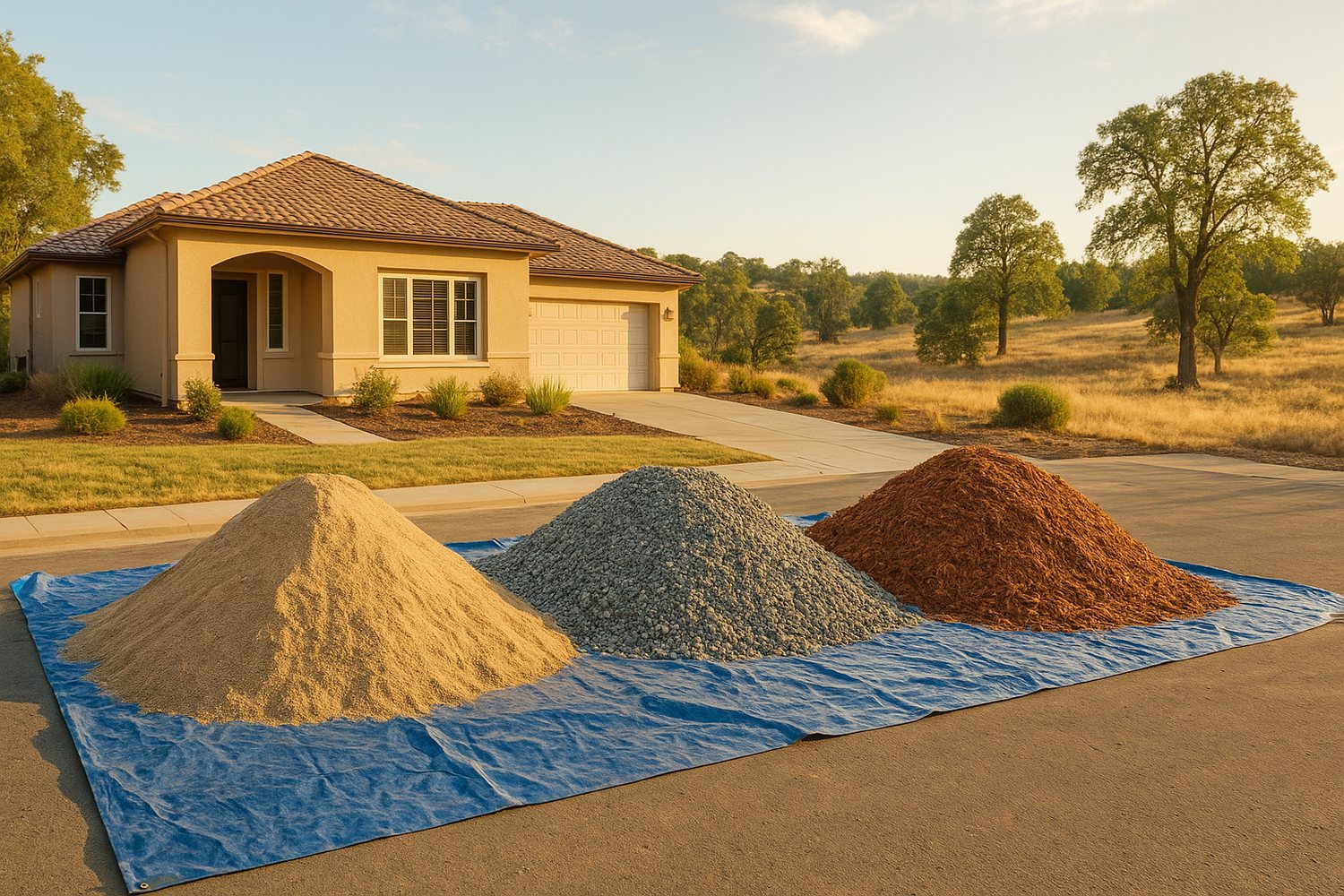
Estimating material quantities
Estimating material quantities Rocklin homeowners need: cubic yards, tons and square feet for gravel, DG, mulch, sand and base.
Explore →
River rock and cobble
Explore river rock and cobble sizes, colors, and uses for dry creeks, drainage, or borders in Placer & Sacramento. Tips for selection, care, and installation.
Explore →
Topsoil and soil amendments
Learn how premium topsoil, planting mix, and soil amendments improve landscape health and value in Rocklin, Roseville, Folsom, and nearby communities.
Explore →Frequently Asked Questions: Concrete Pavers and Wall Block
How will I know what thickness of paver I need?
Pick based on use: 2–2.5 inch pavers handle typical patios, paths, and walkways; 3+ inch pavers are best for driveways or areas with vehicle traffic. Wall block thickness and size depend on the wall height and whether it’s holding back soil. We help you match the right product to your project’s demands, not just appearance.
Do I need to seal my pavers or wall block?
Sealing is optional for most installations, but can help in locations with high shade, irrigation spray, or lots of foot traffic. Sealers reduce staining, slow moss growth, and can enhance color. Plan on resealing every few years if you want a wet-look or extra stain protection. Many homeowners skip sealing, especially for lightly used patios.
What’s the difference between premium and economy pavers?
Premium pavers use denser, stronger concrete and higher-quality color pigments. They resist fading, chipping, and surface wear far longer—standing up to repeated cleaning, heat, and rain. Economy lines may be cheaper upfront, but often lose color and don’t wear as well. It’s the same difference you notice between paint-grade and finish-grade woodwork.
Why should I consider permeable pavers?
Permeable or open-joint pavers let rain filter into the ground rather than running off, which can ease drainage problems and sometimes help you meet local building or HOA requirements. They cost a bit more and need careful base prep, but they can solve water ponding and help reduce flooding risk or stormwater fees in some neighborhoods.
How do you prevent weeds or moss between pavers?
Properly installed pavers use joint sand or polymeric joint compound to fill gaps. While nothing is 100% maintenance-free, regular sweeping and occasional touch-ups of joint material prevent most seed germination and moss. Good drainage and lots of sunlight also make a big difference—shaded, wet areas will always need a bit more attention.
Can I match new pavers to an existing wall or patio?
Most times, yes, but exact matches can be tough if the old material is discontinued or badly faded. Start by finding out the brand, color, and size of what’s there. Sometimes switching to a complementary or blended color scheme works even better than trying to match old concrete exactly. Manufacturers often offer color families that transition well.
What causes paver or wall block projects to fail?
Most issues trace back to site prep: poor compaction, thin or missing base, inadequate drainage, or skipped edge restraints. Tree roots—like from local oaks—can also heave poorly installed work. Quality products, installed correctly, last decades even through summer heat and foothill frosts. We treat prep as seriously as finish details.
Will I need permits or HOA approval for my install?
Requirements vary. Driveways and retaining walls over certain heights or slopes often require city or county approval, as do visible projects in many HOAs. Short landscape walls and patios usually have fewer hurdles, but always check local rules before work starts. We can advise what’s typical in each Placer, Sacramento, or El Dorado community.
Ready to Plan Your Hardscape?
Email sales@californiahardscapes.com with your address, a brief project description, and a few photos to get a thoughtful, expert opinion on what’s right for your yard.