Everything Homeowners Need to Know About Saltwater Pools
Curious if a saltwater pool is right for your backyard? Get clear, practical guidance on how saltwater systems work, their real-world trade-offs, and the best choices for finishes, care, and long-term satisfaction.
What Is a Saltwater Pool, and How Does It Work?
Best for: Saltwater pools are excellent for homeowners seeking gentler, lower-maintenance water with fewer added chemicals, while understanding the system’s care needs.
A saltwater pool uses a salt chlorine generator to sanitize pool water, replacing the need to dose with liquid or tablet chlorine. The technology isn’t just about comfort—it changes how you experience your pool. Instead of harsh chemical smells and eye irritation, saltwater pools deliver a softer, milder swim that many homeowners prefer.
At the heart of every saltwater pool is a generator cell that uses a low-voltage electrical process called electrolysis. Common pool salt is added to the water to achieve a mild salinity, typically 3,000–4,000 parts per million—less than a tear drop, and far below ocean water. As your pool system circulates, water passes through the generator, which splits the salt molecule, producing chlorine gas that instantly dissolves to sanitize the water.
There are trade-offs. Saltwater systems require periodic cleaning and replacement of the generator cell—vital to keep up sanitation. The mild salinity can impact certain decking materials and metal components if not planned for from the start. But for many Placer County homeowners, the improved feel outweighs the extra care. At California Hardscapes, our philosophy is simple: We don’t compete on being the cheapest. We compete on quality, integrity, and results that exceed expectations. Saltwater pools done right are a long-term upgrade—never a shortcut.
Design Choices for Your Saltwater Pool Project
Pool Finishes
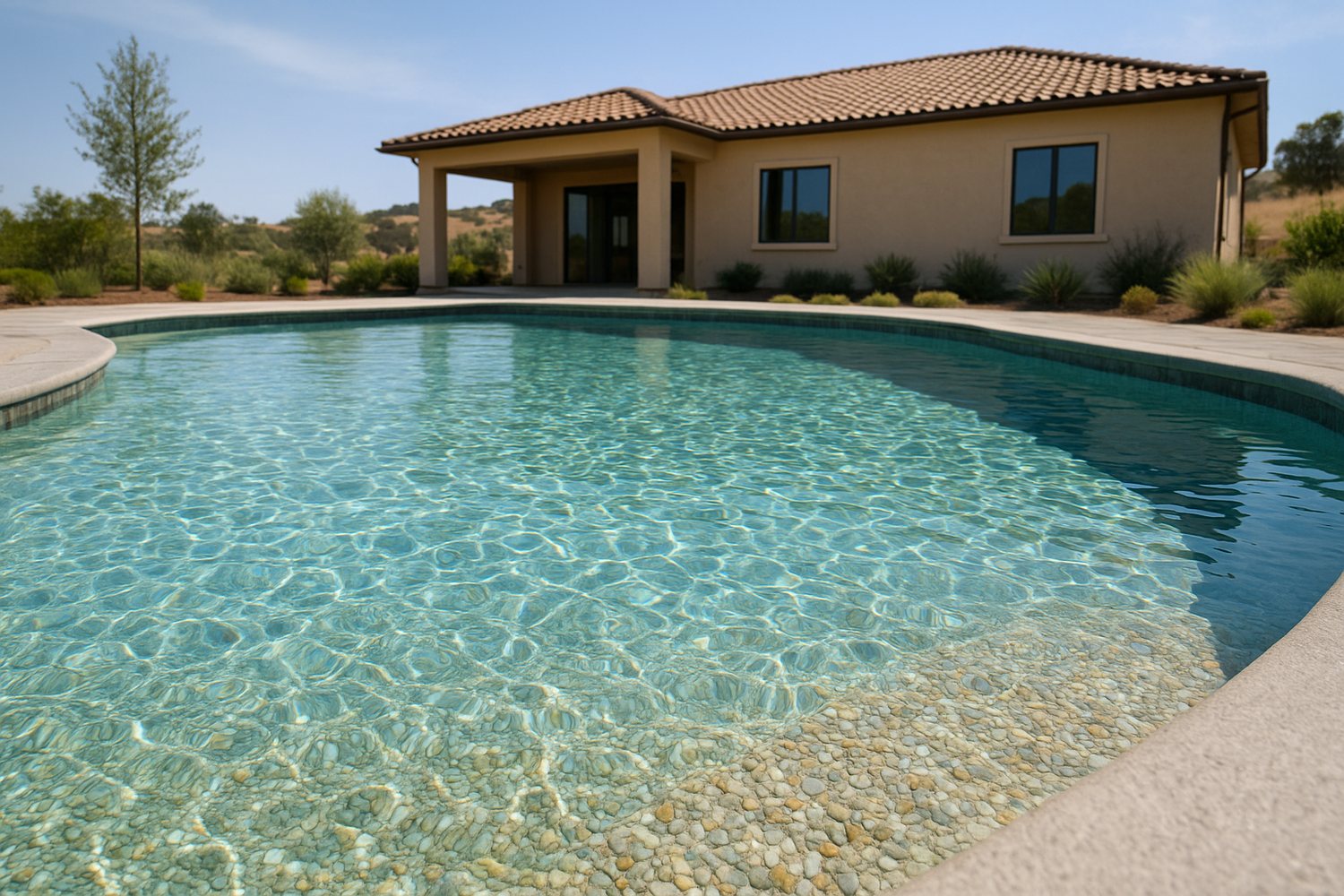
Smooth quartz, pebble, and polished aggregate (exposed pebble or glass bead) finishes work well with saltwater, as they resist etching and salt scaling. Avoid soft or porous plasters and delicate tiles near the waterline, which can pit or discolor over time. We guide you to durable, locally proven finishes that handle the unique chemistry of saltwater pools.
Decking and Coping Materials
Poured concrete, high-quality pavers, and specialized sealed stone are viable choices for saltwater pool decks. Natural stone (like travertine or limestone) can be damaged by salt if not correctly sealed and maintained. Modern porcelains and quality concrete overlays are also great options for a slip-resistant, low-maintenance surround.
Chlorine Generator Models
There are single-body units and advanced variable-output systems, sized to match your pool’s volume and bather load. Some units integrate with smart controls for direct management from mobile devices, while others are simple, manual units. We help you pick a unit for reliability and easy servicing—always with growth room if you plan future upgrades.
Water Features
Sheer descents, bubblers, and spillways look stunning in saltwater environments but need careful attention to metal selection. 304 or 316 stainless steel and sealed copper features resist corrosion best; others may pit without upkeep. We discuss water chemistry and material compatibility during design to keep every feature looking intentional for years.
Lighting Integration
Underwater lighting must have corrosion-resistant housings—composite, PVC, or marine-grade stainless—due to salt exposure. LED systems are preferred for energy efficiency and lifespan. We work with tried-and-true lighting products that tolerate both high summer temperatures and occasional cold snaps common in the foothills.
Converting an Existing Pool
Most traditional chlorine pools can be upgraded to saltwater by adding a generator and making targeted upgrades to piping, joints, and some finishes. It’s crucial to inspect and address any vulnerable metals, older pool heaters, or soft stones that might suffer from the increased salinity. Our process ensures a seamless, long-lasting conversion.
How a Quality Saltwater Pool Project Comes Together
Saltwater pools demand the same attention to detail as any premium outdoor construction project. To deliver results that exceed expectations, licensed, bonded and insured contractors follow a proven sequence—never cutting corners and always selecting materials that stand the test of time in our local climate and soils.
- Subgrade Preparation: Clear and excavate the pool area, checking for tree roots, clay pockets, and drainage concerns. Laser-level and compact the soil, amending as needed for our regional clay/decomposed granite to provide a solid structural base.
- Base Installation: Install crushed gravel or structural base material, compacting in layers. This step delivers proper drainage and supports pool shell integrity, critical for soils with shifting moisture like those in Placer and El Dorado counties.
- Form Placement: Build precise wooden or steel forms for the pool shell and deck. Secure all layout points, ensuring the pool shape, steps, and coping lines align to the designer’s plans—even small errors show in water’s reflection.
- Reinforcement: Position rebar or mesh in strict adherence to engineering requirements for shell strength and deck stability. Add extra steel at stress points and key transitions. Ensuring robust reinforcement prevents long-term cracking in shifting soils.
- Joints: Plan and install joint systems in the deck to control where expansion and contraction cause movement. Proper joint placement prevents unsightly cracks or lifting, especially important with large-format concrete decking.
- Finishing: Shotcrete or gunite the shell, trowel surfaces, and install finish materials—pebble, tile, or quartz—suited for saltwater chemistry. Decks are poured, pavers are laid, and coping installed with close tolerance, maintaining crisp, clean lines.
- Curing and Sealing: Allow concrete and finishes to cure fully before installing the salt system. Apply appropriate sealers to natural stone, coping, and deck surfaces where necessary. Water is balanced gradually before introducing salt and starting up the generator—for a gentle, controlled transition.

Saltwater Pool Pros and Cons: What to Really Expect
Strengths
- Gentler on skin and eyes—mild salinity eliminates harsh chlorine odor, irritation, and chemical taste.
- Lower chemical handling—no need to stock, transport, or store buckets of chlorine, making pool care simpler and safer.
- Consistent, stable sanitizer level—automated generation reduces spikes and dips, helping maintain clear, inviting water.
- Soft, luxurious water feel—swimming in a saltwater pool is often compared to a high-end resort spa experience.
- Reduced corrosion risk (when properly designed)—the right selections for metals and stone mean longer-lasting beauty and performance.
Trade-offs
- Generator cells require cleaning and periodic replacement (typically every 3–7 years); neglect can cause water quality issues.
- Saltwater may accelerate damage to unsuitable natural stone, soft metals, and older equipment without proper planning or sealing.
- Initial setup and equipment costs are higher than for basic chlorine pools and conversions require careful inspection of existing components.
- Scaling and salt residue can form on tile and at waterline if water chemistry and maintenance are neglected, detracting from appearance.
Understanding the Real Costs of Saltwater Pools
When planning a saltwater pool, factor in up-front investment, ongoing care, and the right material choices for lasting value. While the initial costs are higher than for basic chlorine systems, many homeowners find the comfort, chemical savings, and simplified upkeep are well worth it. At California Hardscapes, we focus on building every project to the highest standards—not on chasing the lowest price. Done right, a saltwater pool is an investment that pays dividends in years of enjoyment.
- Size and complexity of the pool design—including depth, shape, integrated spas, and custom features like tanning ledges or water features.
- Finish materials—choice of interior surface (pebble, quartz), coping type, and decking all impact initial build and long-term durability.
- Chlorine generator size and model—higher-capacity or more advanced systems with smart controls have higher equipment costs but offer longevity and user-friendly automation.
- Site conditions—grading needs, local soil type, drainage solutions, and access for trucks/equipment can add time and complexity.
- Retrofitting an existing pool—costs vary greatly depending on piping condition, finish compatibility, need for new heaters or lights, and existing deck material.
- Local regulations and reviews—some communities or HOAs require design submittals, material approvals, or additional inspections that add to both cost and timeline.
Saltwater Pool Maintenance: What Owners Should Know
Saltwater pool systems eliminate much of the weekly chemical juggling but still require steady oversight. The generator cell should be checked every 3–6 months for calcium buildup (more often with hard water), which can be removed with a gentle acid soak. Regularly test salinity, pH, and stabilizer; minor chemical additions may still be needed to balance water and prevent scaling. The pool shell, surrounding deck, and equipment should be visually inspected for signs of wear or salt accumulation, especially after heavy use or storms.
A well-chosen finish—like pebble or quartz—handled with care can easily last 12–20 years. Decks and exposed stone should be power washed and resealed every 2–4 years, more often if subject to salt splash-out or intense sun. Lifespan is greatly affected by material quality, water chemistry management, and routine cell maintenance. We recommend keeping a simple log for cell inspections and water tests to catch trends early and keep your saltwater pool sparkling in our challenging Central Valley climate.
Compare other options

Pool interior finishes and tile
Discover pool interior finishes: white plaster, quartz, pebble, glass bead, tile options, durability, water color, and replastering. Rocklin, CA homeowners.
Explore →
Pool equipment, heating and automation
Explore expert pool equipment, heating & automation options for your Rocklin area home. Honest guidance, key choices, and what matters for lasting results.
Explore →
Freeform and natural-style pools
Discover expert insight into freeform and natural-style pools in Rocklin. Learn design options, build process, honest pros & cons, costs, care, and more.
Explore →Saltwater Pool FAQs for Northern California Homeowners
How does a saltwater chlorine generator work, exactly?
A salt chlorine generator uses electrolysis to convert dissolved salt in your pool water into chlorine gas, which sanitizes the pool as it flows through the cell. The process is continuous while the pump runs, keeping chlorine levels steady—without the need to manually add chlorine products. The water always remains much less salty than seawater, and the system gradually cycles salt through without significant loss (except for backwashing or splash-out).
Will a saltwater pool feel or taste salty?
Saltwater pools are only about one-tenth as salty as the ocean—most people barely notice any salt taste. The main difference is a softer, silkier water feel: there’s much less stinging in the eyes, fewer skin irritations, and no lingering chemical odor. Bathers often compare it to swimming in bottled mineral water rather than in a traditional pool.
How often does the generator cell need cleaning or replacement?
Plan to inspect and clean the generator cell 2–4 times per year, more frequently if your home has hard water that causes rapid calcium buildup. Most cells last 3–7 years before needing replacement, depending on water chemistry, usage patterns, and maintenance diligence. Proactive care can extend the lifespan and keep chlorine levels reliable; neglect leads to reduced performance and possible damage.
Is a saltwater system safe for my metal pool equipment and stonework?
Saltwater is mildly more corrosive than freshwater but typically causes no issues when paired with compatible metals (like 316 stainless) and sealed or dense stone. Exposed metals (handrails, lights, water features) and soft natural stones should be specified, sealed, and maintained with salt in mind. Older or unprotected parts may show premature aging or scaling unless proactively upgraded.
What finishes or decks are best with saltwater pools?
Pebble, quartz, or glass-bead finishes are the most durable and least prone to salt etching. For decks and coping, we recommend quality poured concrete, durable pavers, or salt-resistant porcelains over highly porous stones like travertine, unless sealed and maintained carefully. Our designs always account for such compatibility—appearance and performance go hand in hand.
Can I convert my existing chlorine pool to saltwater?
Most traditional chlorine pools can be converted by adding a salt chlorine generator and making strategic upgrades. That could mean swapping out incompatible metals or resealing natural stone, and checking heater and light fixtures for corrosion resistance. Each pool is different: we evaluate all components before converting to keep your investment protected for the long haul.
Does saltwater save money in the long run?
While the upfront equipment cost is higher for a saltwater pool, many owners find ongoing chemical expenses are lower and maintenance time is reduced. However, cell replacement and the need to address minor scaling or salt damage must be factored into lifetime costs. For those seeking comfort and chemical simplicity, the benefits often outweigh the trade-offs.
Are there special considerations for saltwater pools in this part of California?
Absolutely. Our region’s hard water, clay and DG soils, high summer temperatures, and seasonal storms mean pool design must consider expansion/contraction, efficient drainage, and easier cleaning of scale. Choosing finishes and equipment that tolerate both chemical and environmental extremes—and maintaining proper balance—is key. Every California Hardscapes pool is built to meet the demands of our diverse Central Valley and foothill microclimates.
Ready to Explore a Saltwater Pool for Your Home?
Email sales@californiahardscapes.com with your address, a short description of your project, and photos of your yard, and our team will reach out to talk through your options.