Security and Motion Lighting: Outdoor Safety, Done Right
Give your home’s outdoor spaces peace of mind—without sacrificing warmth or curb appeal—with professionally designed security and motion-activated lighting.
Why Prioritize Security and Motion Lighting Outdoors?
Best for: Homeowners who want reliable outdoor safety after dark, especially where privacy fencing or landscaping creates darker exterior areas.
Strong outdoor security lighting lets you enjoy every inch of your property with confidence, no matter the hour. Whether you’re checking a side gate, walking to the trash bins, or just resting easy at night, purposeful lighting acts as both a deterrent and a comfort. Security and motion lighting isn’t about turning your backyard into Fort Knox—done right, it simply makes dark corners brighter and routines safer.
The Placer and Sacramento region’s mix of quiet cul-de-sacs, active side yards, and open property lines means homeowners face unique lighting needs. Standard porch lights or a basic floodlight rarely do enough to protect pathways, side gates, or unlit backyard corners. Professionally designed security lighting adapts to your home’s layout, landscaping, and areas of concern, using a thoughtful mix of technologies and control systems.
Not every light needs to be blindingly bright or on all night. True-quality outdoor security lighting is invisible until you need it—invisible in the sense that it blends into your hardscape and landscape by day, and warmly brightens only where, when, and how you need after dark. At California Hardscapes, we approach every project with honest guidance and precision construction, because your family’s safety and comfort are never a place to cut corners.
Key Security and Motion Lighting Choices
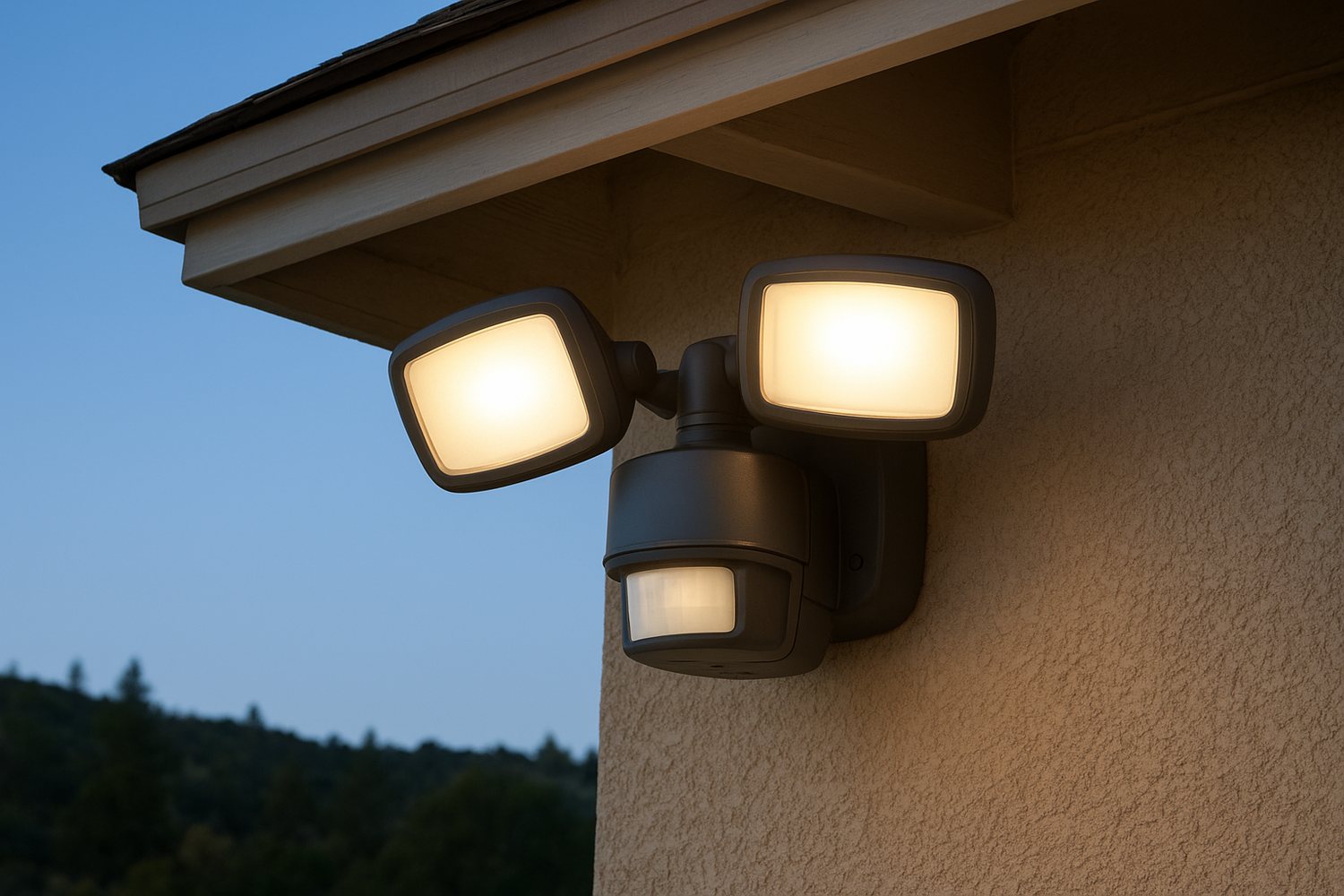
Motion-Activated Floodlights
These lights deliver a wide, high-lumen wash of light when they detect movement. Ideal for driveways, garages, and backyards, they are a powerful visual deterrent and make it easy to spot activity at night. The right floodlight choice lets you control the brightness, detection zone, and duration to keep the effect purposeful, not overpowering.
Layered Pathway and Step Lighting
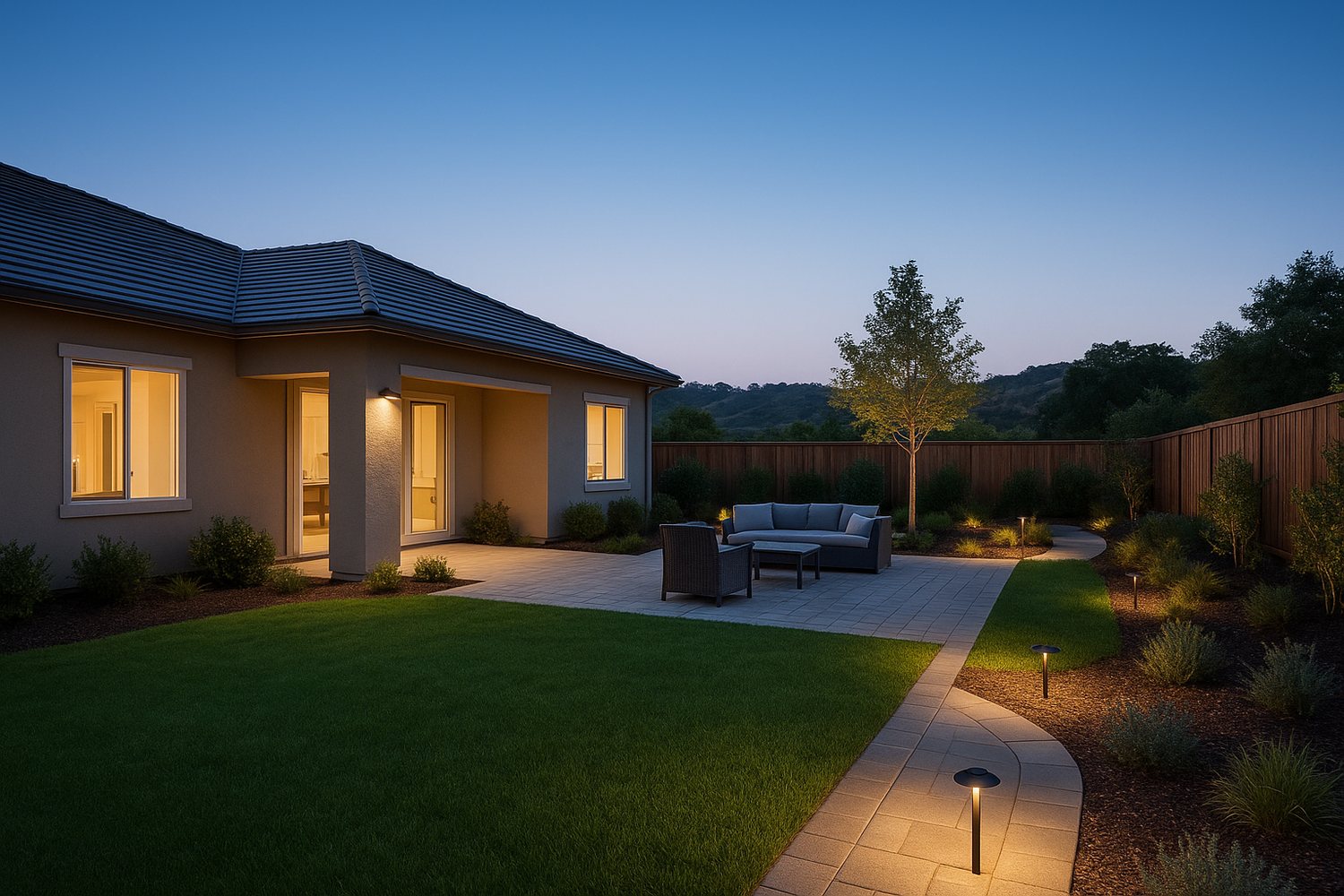
Small, weatherproof fixtures placed along walkways, side yards, or steps help eliminate deep shadows and trip hazards. When combined with higher-output floodlights, these softer lights make access points safe without harsh glare, helping your outdoor spaces feel welcoming rather than institutional.
Accent and Uplighting with Timers
Subtle uplights or accent lights focused onto trees, architectural features, or fence lines gently illuminate blind spots and perimeter areas. Set on timers or photocell sensors, these fixtures give a reliable low-level glow—helpful for security cameras and general awareness—even while keeping energy costs low.
Strategic Coverage of Dark Corners
Every property has awkward side yards, storage zones, or gate areas where intruders could hide. A good security lighting plan maps these out first. Compact, directionally-shielded fixtures can keep these zones visible without lighting up the whole block or disturbing neighbors.
Integrated Smart Controls & Zones
Smart switches and app-connected controls allow fine-tuning by zone: set bright coverage for entryways, gentle illumination along fences, and instant-on for only the areas you specify. Zoning also ensures you’re not wasting light (or money) in areas nobody uses after dark.
Discreet, Durable Fixtures
Quality security lighting blends into your home’s architecture and landscape during the day. Aluminum, stainless, or powder-coated fixtures resist corrosion and that tired ‘contractor special’ look. The best designs never prioritize function at the expense of a home’s appearance.
How True-Quality Outdoor Security Lighting Gets Built
A top-tier outdoor security lighting setup must do more than just place a few lights around your yard. It’s about precise planning, robust installation, and respecting your property at every step. Here’s how California Hardscapes approaches every project, with methods honed by decades in concrete and outdoor construction.
- Assess and map the property, marking client-identified dark zones, potential paths of intrusion, and specific safety hazards. Develop a lighting plan that balances security, utility, aesthetics, and neighbor-friendly coverage.
- Prep the installation zone by excavating as needed and ensuring stable subgrade for fixture mounts, wire runs, or bases—especially important for areas with clay or decomposed granite.
- Lay a tamped, clean gravel or sand base where posts, bollards, or heavier mounts are set. Ensure good drainage and isolated wire routes to prevent water intrusion or settling.
- Install solid, form-fitted fixtures and mounting brackets at planned locations. Use PVC conduit where wires run underground, with gaskets for weather-sealing at all entry points.
- Route and pull fixture wiring, using sunlight- and moisture-resistant cables rated for direct burial or exterior conduit. Position control boxes and switches in easy-to-access, protected locations.
- Fine-tune fixture direction, coverage angles, and sensitivity on motion sensors. Test for light spillage, glare, and accidental triggers. Adjust until each area is properly illuminated without excessive overlap or hot spots.
- Set control timers, photocells, or smart schedules. Confirm all lighting zones and sensors perform reliably at night and in different weather, then seal connections and finalize site cleanup.
The Honest Pros and Cons
Strengths
- Effective deterrence against unwanted visitors and wildlife—lighting is proven to reduce break-ins and vandalism.
- Safer nighttime navigation across patios, walkways, driveways, and side yards, reducing trip hazards and accidents.
- Flexible control over when and how each area is lit: customize to your routines, privacy needs, or energy use targets.
- Enhances security-camera visibility and image capture quality, making recorded footage more useful.
- Well-designed systems are attractive as well as functional, elevating curb appeal versus ‘one-size-fits-all’ solutions.
Trade-offs
- Initial investment is higher than off-the-shelf fixtures or DIY setups—especially with smart controls and professional installation.
- Improperly placed lights can disturb neighbors, create unnecessary glare, or even reduce your own sense of privacy if not planned carefully.
- Requires occasional maintenance: bulbs, sensors, and exposed components may need cleaning or adjusting, especially after storms or landscaping work.
- Battery or solar-powered fixtures often won’t match hardwired systems in reliability or brightness, limiting options for some desired locations.
Understanding Security Lighting Costs
Outdoor security lighting is an investment in peace of mind and property value. A professionally planned and installed system comes at a premium compared to store-bought kits, but it delivers better reliability, performance, and durability over years of use. There’s no one-size-fits-all pricing: true cost depends on layout, technology, fixtures, and the unique conditions of your property.
- Number and type of lighting fixtures required: motion lights, floodlights, accent or pathway lights all vary by wattage, design, and coverage.
- Extent and complexity of wiring: larger properties or those with obstacles, hardscape features, or multiple coverage zones may need longer wire runs and specialty conduit.
- Fixture material quality: heavy-duty aluminum, powder-coated steel, and corrosion-resistant designs cost more up front, but typically last far longer.
- Control technology: basic switches and timers are more affordable than smart home panels, app control, or integrated security camera tie-ins.
- Site preparation and soil conditions: sloped ground, heavy clay, decomposed granite, or mature root zones can add time and difficulty to installation.
- Accessibility for installation: working around existing landscaping, patios, or in tight/elevated spaces can influence labor and equipment needs.
Care, Upkeep, and Long-Term Maintenance
Quality outdoor lighting systems require routine checkups. At least twice a year, walk your property after dark: clean fixture lenses, brush debris from motion sensors, and wipe down housings. Confirm timers and controls are still working as set, and look for wire exposure where rodents or shifting earth may have compromised conduits. Rapid attention to small issues, like a flickering light, prevents bigger failures. If a fixture is at risk of hard water buildup from irrigation, a vinegar wipe every so often will help.
Most premium fixtures have hard-anodized or powder-coated finishes, resisting corrosion in local weather. Motion sensors and electronics typically last 5–10 years with minimal trouble if installed away from gutter run-off or direct spray. Expect to replace LED bulbs every 7–15 years, depending on daily run time. For any areas where security is critical, resealing electrical junctions every 3–5 years helps prevent failures from moisture or freeze/thaw expansion. Overall system longevity is best with a professionally installed, hardwired design.
Compare other options
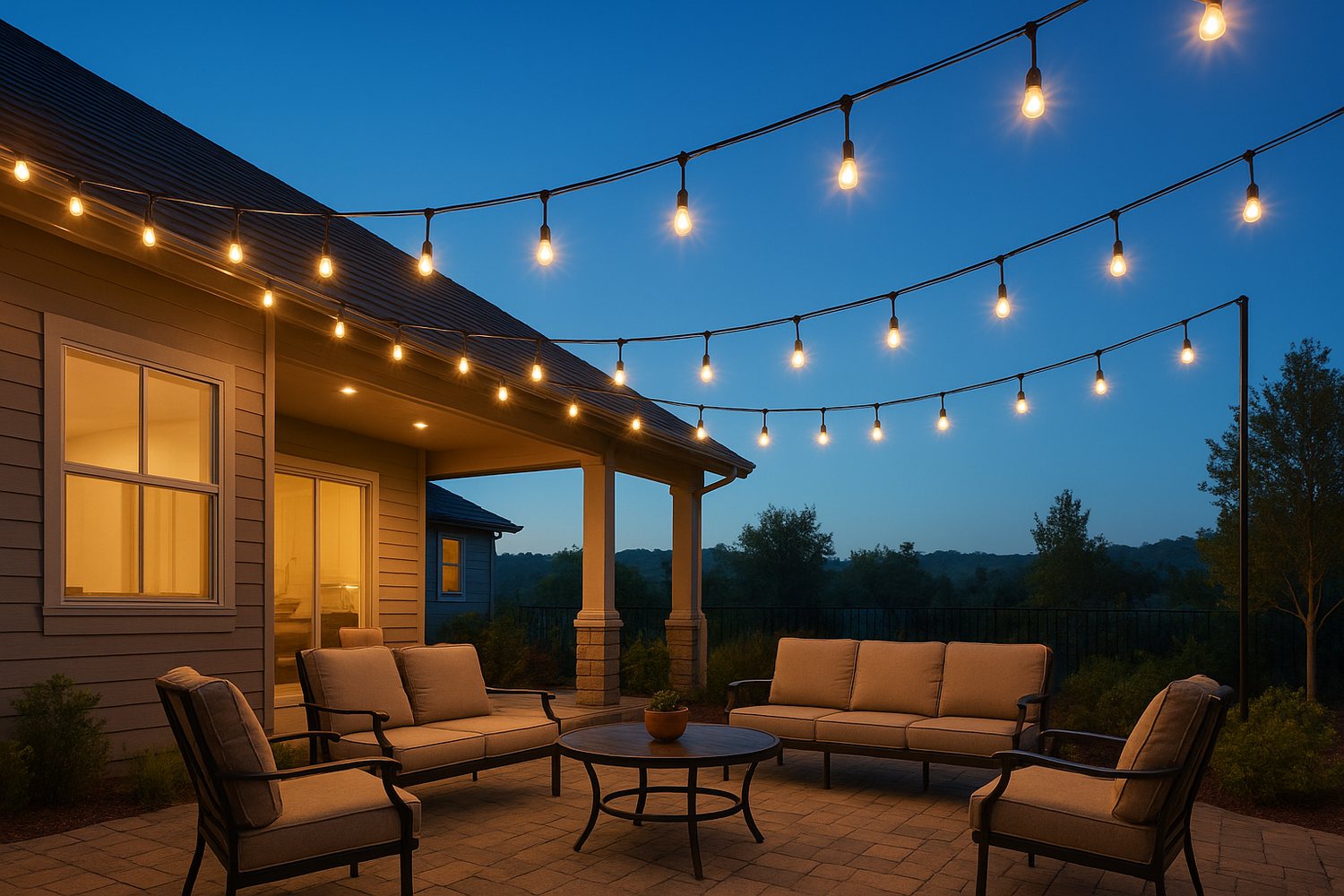
String and cafe lights
Learn everything about high-quality string and cafe lights in Rocklin: installation methods, options, pros, trade-offs, cost factors and care tips.
Explore →
Lighting repair, upgrades and maintenance
Expert outdoor lighting repair, upgrades & maintenance for Rocklin and nearby by California Hardscapes.
Explore →
Patio and pergola lighting
Patio and pergola lighting Rocklin homeowners love for dining and entertaining: options, installation, costs and care.
Explore →Security and Motion Lighting FAQs—Straight Answers
Where should I install motion or security lights for best effect?
Focus on all main entry points (front and garage doors), side and back gates, dark side yards, and any area out of direct street view. It’s also smart to include footpaths, outdoor living zones, and corners screened by landscaping. The key is to eliminate deep shadows near doors and windows without flooding open spaces with too much light.
How can I prevent my motion lights from bothering my neighbors?
Choose fixtures with adjustable beams and shielding to control spill light. Professional planning ensures that motion sensors aim away from streets or adjoining homes, and that brightness levels match privacy needs. Soft-edged layered lighting zones often blend better in neighborhoods than single, high-output floodlights.
Do I need permits for outdoor security lighting in this area?
Requirements vary by city, county, and HOA. Some areas require permitting for new hardwired electrical circuits, but not for simple fixture replacements or solar lights. It’s wise to check with your local planning or building office before starting. Professional installers can advise what’s needed for your address.
How do timers, motion sensors, and photocells work together?
Timers set your preferred on/off schedule. Motion sensors activate lights briefly when movement is detected, providing instant visibility. Photocells scan outdoor light levels, turning fixtures on at dusk and off at dawn. Combining all three offers layered coverage: some light always on for safety, more when activity is present, and full shutoff for quiet hours or energy savings.
Will professional, hardwired lighting systems work during power outages?
Hardwired systems powered by the home’s main service lose function during an outage unless you have a generator or battery backup system. Some critical security zones can be designed with hybrid, solar, or battery fixtures for temporary coverage, but these are less consistent in brightness or reliability than grid-tied systems.
Is there a way to integrate landscape accent lighting with motion or security lights?
Yes—layering is a core design principle. Path, accent, and uplights can offer a welcoming base level of illumination, with brighter flood or spotlights triggered by motion in targeted areas. This approach balances safety with visual warmth and helps avoid that fortress-like feel.
What maintenance is most important for motion and security lighting?
Keep fixture lenses, motion sensors, and enclosures clean to avoid reduced performance. Check that sensors haven’t been shifted by wind, pets, or garden work. Inspect wiring and connections for weather exposure. Promptly replace bulbs or batteries when needed, and revisit timer/sensor settings seasonally to keep night coverage matched to your routines.
How long does a professionally installed security lighting system typically last?
With high-quality fixtures, weather-sealed connections, and occasional maintenance, a hardwired system often performs reliably for 10–20 years. Timers, sensors, and LEDs may need individual replacement sooner. System lifespan is shortened by flood, freeze/thaw, or neglect, but most failures relate to exposed wiring or low-cost fixtures rather than proper installation.
Ready to See Where Security Lighting Fits Your Property?
Email sales@californiahardscapes.com with your address, a brief description of your concerns, and a few daytime and nighttime photos. We’ll review and guide you on smart security lighting solutions, with honest answers and no shortcuts—just results we’d want at our own home.