Shade Trees and Structure Planting for Foothill Yards
A shade tree in just the right spot transforms your landscape—offering comfort, structure, and long-term value. Here’s what California foothill homeowners need to know about planting for shade and structure.
Why Plant Shade Trees? Comfort, Structure, and Long-Term Value
Best for: Homeowners seeking natural shade, cooler patios, energy savings, and mature character in their landscape.
Adding trees for shade is one of the most effective ways to improve both the comfort and value of your outdoor space. In our region—Rocklin, Roseville, Folsom, Auburn, Granite Bay, and nearby—the right trees offer respite from relentless foothill sun, make patios more usable, and naturally cool the home’s south and west sides. From long views and curb appeal to hands-on enjoyment with family and friends, few landscaping decisions match the practical and aesthetic impact of thoughtful tree planting.
But choosing, placing, and planting shade trees in foothill communities comes with real decisions and trade-offs. With soils ranging from hard clay to decomposed granite, hillsides and flat lots, existing oaks, and microclimates, it’s not as simple as picking any big, fast-growing tree. California Hardscapes approaches every tree project as an investment: done right, it should enhance your yard for generations with minimal future headaches.
Our philosophy is simple: we don’t compete just to be the cheapest. We compete on quality, integrity, and results that truly last. That means no shortcuts in planting method, honest advice if a tree or location isn’t suitable, and careful attention to everything from root space to future irrigation. Let us help you weigh your options—for shade, structure, and a landscape that outlives trends.
Shade Planting Approaches: Six Key Choices
Heat-Tolerant Tree Selection
Not every tree is built for foothill heat. Favor tough, drought-tolerant species like valley oak, Chinese pistache, cedar elm, and ginkgo. Avoid thirsty, shallow-rooted trees (like silver maple) that struggle through summer and threaten hardscapes. Our team can help weigh trade-offs for growth rate versus long-term health.
Placement: House, Patio, and Utility Lines
Where you plant determines how effective your future shade will be—and how much hassle you’ll face. Shade the west and south sides for cooling, plant at least 10–15 feet from patios or foundations, and always check for overhead power lines or buried utilities before digging.
Root Space & Soil Volume
Tree roots need broad, deep soil to thrive. In constricted planters or near walls, root growth is stunted—reducing shade, stability, and lifespan. Whenever possible, favor open lawn or landscape islands at least 6 feet wide and away from constantly wet irrigation zones.
Oaks and Protecting Existing Trees
Native oaks are icons of the foothill landscape. If you have a mature oak, it’s often better to protect it than start over. Avoid planting beneath existing oak canopies, don’t disturb roots, and never alter drainage or soil grade near oaks. We give honest advice if an area is better left natural.
Establishing Young Trees
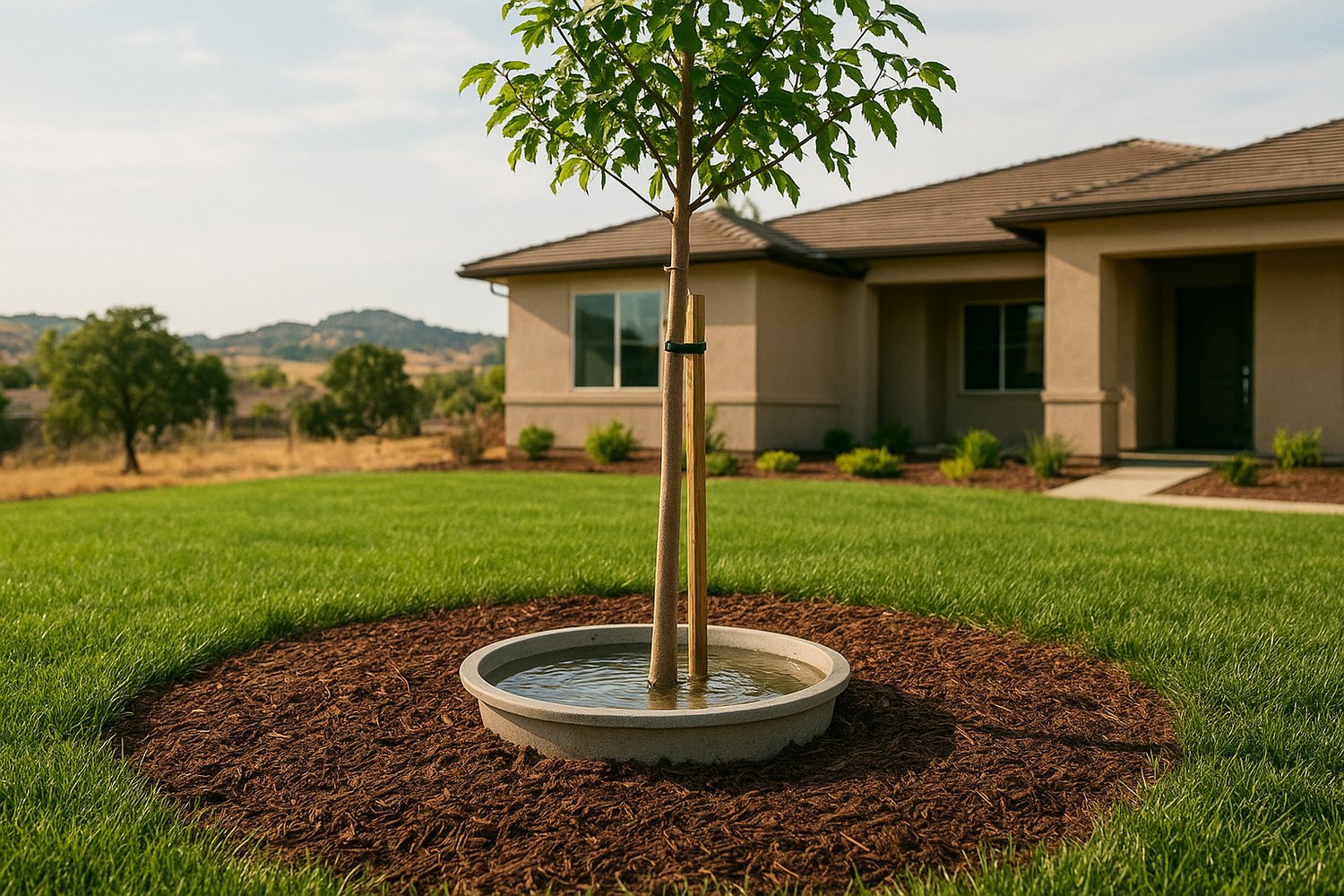
Newly-planted shade trees demand extra care for the first three seasons—deep watering, mulch rings, and protection from trimmers or pets. Choose nursery-grown trees with strong leader branches, and stake only as needed. Proper planting depth and basin shaping matter more than most realize.
Evergreen vs. Deciduous
Deciduous trees drop leaves in winter, allowing sun into patios and windows, while evergreens provide year-round shade and privacy. There’s no one-size-fits-all choice: consider how summer shade and winter warmth affect your daily routines.
How We Expertly Plant Shade Trees
Tree planting is both craft and science. Licensed, bonded and insured contractors follow proven best practices, starting from soil prep and thoughtful placement through careful backfilling and aftercare. Each step ensures your shade tree thrives—not just this summer, but for decades to come. Here’s how a well-trained team does the job right:
- Site Assessment & Marking: Identify buried utilities (call 811), evaluate soil structure, drainage, sun exposure, root conflict, spacing, and final shade goals.
- Soil Preparation & Digging: Dig a wide, shallow hole (2-3x wider than the root ball, but not deeper), breaking up hardpan or compacted clay. Amend soil only as needed for drainage.
- Tree Placement: Gently position the tree at the correct depth—root flare at or slightly above grade—and orient for best structure and sun exposure. Remove all wire, burlap, or containers.
- Backfill & Basin Formation: Backfill with native soil, water in to settle, and shape a shallow watering basin around the root zone without creating standing water near the trunk.
- Staking & Protection: Stake as needed (generally not for oaks) to prevent wind rock, using soft ties. Install mulch rings 3–4" deep, keeping mulch clear of the trunk.
- Initial Watering & Deep Soak: Deeply water to eliminate air pockets and settle soil, checking for drainage issues. Use slow, thorough irrigation to promote deep rooting.
- Maintenance Plan & Follow-Up: Provide written water schedule, demonstrate basin watering, and review care for your specific soil, tree type, and microclimate. Remove stakes after one year unless needed longer.

Trade-Offs: Pros and Cons of Planting Shade Trees
Strengths
- Natural, beautiful shade that cools patios, play spaces, and interiors.
- Adds long-term property value and curb appeal, especially with mature trees.
- Reduces landscape water demand compared to turf, once established.
- Frames and softens hardscape features for a more inviting outdoor setting.
- Supports habitat and biodiversity, attracting birds and pollinators.
Trade-offs
- All trees shed leaves, pollen, or fruit—some species more than others, needing occasional cleanup.
- Large shade trees need space: too close to patios, walls, or pools can cause root or debris issues.
- Slow-growing, long-lived species provide the best results but require patience; fast-growers often have weak wood or root problems.
- Initial establishment takes real effort: deep watering and watching for signs of stress, especially in the first three years.
Tree Planting: What Affects the Cost?
The cost of professionally planting shade trees depends on a number of practical factors. Trees can be a bargain compared to large hardscape features, but real value comes from doing it right: quality nursery stock, proper soil work, and experienced installation. Cutting corners on prep or aftercare can lead to much greater costs in the long run—whether through tree loss or avoidable repairs. Here’s what drives the price of a quality shade planting project:
- Size and species of tree (larger-caliper trees cost more to purchase, move, and establish).
- Quantity of trees and accessibility (tight or steep sites take more labor and time).
- Site conditions: existing soil prep, root barriers near hardscapes, and drainage modification.
- Irrigation needs: new zones may be needed for tree basins vs. lawn or shrubs.
- Mulching and staking materials, and whether multiple visits are needed for establishment.
- Special protections for existing oaks or working near utilities add complexity and care requirements.
Caring for Your New Shade Trees
Newly planted trees require attention, particularly through their first three summers. A deep watering basin, kept away from the trunk, is essential—aim for slow, thorough soaks that reach deep roots. Maintain a 3–4" mulch ring to conserve moisture and suppress weeds, and check that irrigation doesn’t leave the soil waterlogged. Avoid using string trimmers near the trunk, and protect from pets or mowers. Inspect regularly for leaf scorch, pests, or poor drainage—acting quickly if issues arise.
Most foothill shade trees do not require annual pruning early on. Instead, focus on strong branching structure and remove any damaged growth. Over time, mature shade trees may need occasional professional thinning or safety checks, particularly near patios or homes. Lifespan depends on the species, soil, irrigation, drought, and storm damage; well-chosen trees, expertly planted and cared for, can thrive for decades or even generations.
Compare other options

Fire-wise landscaping
Explore premium fire-wise landscaping for Rocklin, Roseville & nearby foothill homes: defensible space, hardy plants, hardscape buffers, expert tips.
Explore →
Backyard landscaping
Explore expert backyard landscaping in Rocklin. Detailed guide: planting, privacy, shade trees, play & garden areas, upkeep, honest pros & cons.
Explore →
Landscape drainage solutions
Explore top landscape drainage solutions for Rocklin, CA & nearby areas. Grading, swales, French drains, dry wells & more. Reliable, honest advice here.
Explore →Tree and Shade Planting: Frequently Asked Questions
What are the best shade trees for the Rocklin and foothill area?
Top choices include valley oak, interior live oak, Chinese pistache, ginkgo, and cedar elm. All are well adapted to our hot, dry summers and occasional winter freezes. For patios, select trees with strong branch structure and deep roots. Avoid fast-growing imports with brittle wood or invasive roots when planting near paving, pools, or foundations.
How close can I plant a tree to my patio, driveway, or house?
It’s safest to plant medium or large shade trees at least 10 to 15 feet from pavement, patios, or foundations. This allows mature roots room to grow without heaving concrete or damaging pipes. Smaller accent trees (like crape myrtle) may be planted a bit closer, but always plan for the tree’s mature canopy and root spread—not just its current size.
How long does it take for a new shade tree to provide meaningful shade?
With proper care, most locally suitable shade trees begin casting significant shade in 3 to 7 years, depending on species and starting tree size. Fast growers like Chinese pistache offer quick cover but slower oaks provide the strongest, longest-lasting shade in the long term. The first three years are critical for root establishment—this is when your attention makes the biggest difference.
Do I need to water my trees separately from my lawn or shrubs?
Ideally, yes. Grass and shallow-rooted shrubs often receive frequent, shallow irrigation—to the detriment of most trees. A dedicated deep-watering basin or irrigation zone supports healthier, deeper root development. For young trees, deep soaks every 7–14 days during dry spells will set them up for decades of health and drought resilience.
Can I plant under or near my existing oak?
It’s best not to plant irrigated or high-water plants beneath established native oaks, as this can lead to root rot and tree decline. Mulch, rocks, or compatible shade-tolerant natives are safer. If you value your existing oak, avoid changes to soil level, drainage, or irrigation in its root zone, and consult an expert before making any significant landscape alterations nearby.
What about tree roots lifting patios or sidewalks?
Certain species—notably shallow-rooted maples and poplars—are notorious for lifting hardscapes over time. Tree selection and placement are your best tools for prevention. Where space is limited, root barriers can help, but their effectiveness is mixed. The most reliable approach is to provide enough root space and choose slower-growing, deep-rooted trees like oaks or pistache.
Do I need permission to plant or remove a tree in this area?
Some cities, neighborhoods, and HOAs have rules or permit requirements affecting tree removal or even certain new plantings—especially for street trees, oaks, or heritage specimens. Regulations vary widely even within the same community. It’s wise to check local guidelines or contact your HOA before starting. Soil marking (call 811) is always required before digging.
How do I protect new trees from deer, rabbits, or other wildlife?
While deer and rabbits mostly prefer tender ornamentals or fruit trees, even hardy shade trees can be nibbled as saplings. Protective mesh, wire enclosures, or temporary fencing around young trunks help for the first year or two. Once established, most native shade trees outgrow browsing pressure, but the first seasons are critical for survival in areas with active wildlife.
Curious if shade planting is right for you?
Email sales@californiahardscapes.com with your address, a short description of your goals and site, and photos—our team will respond promptly.