Wall Fountains & Scuppers for California Gardens
Transform your landscape with the subtle beauty and relaxation of a custom wall fountain or scupper. We guide you through the options, real trade-offs, and quality construction process.
Why Consider a Wall Fountain for Your Patio or Garden?
Best for: Wall fountains and scuppers are best for homeowners seeking a sophisticated, low-profile water feature that brings movement, elegant sound, and unique character to patios or courtyard walls.
Wall fountains and scuppers do more than add water to a space—they set a tone. Mounted to a garden or courtyard wall, they create a quiet, inviting sound and a focal point that fits seamlessly into the architecture. Many Rocklin, Roseville, Granite Bay and Folsom homeowners choose these features to bring ambiance without the commitment or splash of a free-standing fountain or pond.
The interplay of materials—natural stone, carved lion heads, copper scuppers, tile insets—means wall fountains can be as formal or rustic as you choose. Water is typically re-circulated from a basin set at the wall’s base, with plumbing run inside the wall for a clean look. Properly built, these features are easy to live with: no splash zones or standing-water concerns, just the gentle murmur of water against stone or stucco.
But these are substantial, permanent investments. Achieving a true ‘built-in’ look, clean lines, and reliable silence takes detailed planning, skilled trades, and attentive execution. It’s not a place for shortcuts. At California Hardscapes, our philosophy is simple: We don’t compete on being the cheapest. We compete on quality, integrity, and results that exceed expectations. Every project is built as if it were our own home.

Wall Fountain Design Choices
Stone vs. Stucco Walls
Stone garden walls lend an earthy, timeless appeal—ideal for rustic or Mediterranean landscapes. Stucco offers a crisp, modern or Spanish-style look, perfectly matched to contemporary homes or those with smooth wall finishes. Both can incorporate decorative caps or mosaic tile accent bands for added detail.
Scuppers, Spouts, and Decorative Heads
Your water’s appearance and sound come from the outlet—classical lion heads, modern copper scuppers, crisp cast-bronze spouts, or hand-thrown pottery. Lion heads add old-world charm, while scuppers give wide, sheet-like flows and restrained sound. Spouts concentrate flow in a gentle arc, perfect for subtle effects.
Basins: Shapes and Materials
Basins can be custom-poured concrete, natural stone troughs, or precast forms. Rectangle, half-round, and oval basins each offer distinct looks. Durable finishes and integral drain systems make cleaning and care straightforward while maintaining an ‘integrated’ aesthetic at the wall’s base.
Water Sound Profile
Most wall fountains are designed for low splash and gentle noise, an excellent fit for small patios or close seating. Scuppers give a sheet effect, quieter than free-falling drops. The sound can be modulated with basin depth and drop height—important to discuss based on your preferences for background ambiance.
Plumbing Placement
Plumbing and pump lines are typically routed inside the wall for an uncluttered look. In some cases, access panels are hidden in adjacent planters or seat walls for maintenance. Proper waterproofing and drainage guard against leaks—key with our region’s clay soils and hard water.
Accent Tile and Lighting
Add personality and nighttime drama with hand-painted tile, glass mosaics, or soft LED uplighting. Lighting can be set within the basin or at the spillway for subtle shimmer after dark. Tiles also protect spill zones from hard water staining and add a custom touch.
How Wall Fountains Are Built: Our Process
A well-executed wall fountain requires precision at every stage. At California Hardscapes, every feature is planned and built by skilled trades, managed start to finish by Marty. From base prep to final sealing, each step is completed with no shortcuts—ensuring beauty, durability, and peace of mind for years.
- Subgrade: We excavate and compact the area for the basin and wall, checking for drainage and root conflicts. Utilities are located (call 811) in advance, as is required for responsible digging in our region.
- Base: A reinforced concrete pad is poured for the basin and wall foundation, sized to local soils (typically decomposed granite or clay) and planned wall loads.
- Forms: Quality wood or prefabricated forms are installed for cast basins/walls or subwalls for stone/stucco finishes, ensuring precise depth and alignment. Conduit and plumbing sleeves are set now—future access planned.
- Reinforcement: Rebar and mesh are placed carefully to prevent cracking and manage movement from seasonal soil moisture swings. Properly tied and inspected before concrete is placed.
- Joints: Expansion and control joints are incorporated to handle movement without visible cracking, especially for larger walls or basins exposed to Folsom’s summer heat and occasional winter frost.
- Finishing: The basin and wall are finished with chosen stucco, stone veneer, or tile. Scuppers or spouts are mounted and plumbing is trimmed out—access covers camouflaged. Edges are eased, and decorative bands or accents set.
- Curing and Sealing: Concrete and stucco are allowed ample cure time. Sealing of the basin and exposed stone/tile protects against hard water staining and increases the lifespan.

Pros and Cons of Wall Fountains
Strengths
- Beautiful, integrated focal point that elevates any patio or courtyard.
- Customizable sound, from barely audible trickles to soft white noise.
- Small footprint—ideal where space is limited or freestanding features are impractical.
- Low splash and less maintenance compared to stand-alone fountains or ponds.
- Hidden plumbing and recirculating pumps mean cleaner lines and easier care.
Trade-offs
- Permanent installation—requires detailed upfront planning and skilled trades.
- Higher upfront cost than pre-made ‘plug-and-play’ water features.
- Periodic maintenance and resealing needed to prevent hard water staining and leaks.
- Challenging to adjust sound after construction—requires careful design of basin and spillway.
Cost Considerations for Wall Fountains
Wall fountains are custom projects, and costs are shaped by design, materials, and site conditions. They typically require more site prep, mason/finisher skill, and plumbing expertise than off-the-shelf fountains. Upfront investment is higher, but long-term durability, style integration, and easy care add value. We don’t compete on low bids; we compete on lasting quality and results that match your vision.
- Type of wall (new vs. existing, stone vs. stucco, wall height and length).
- Complexity and number of fountain outlets (single scupper or spout, or multiple).
- Basin size, shape, and finish detail (precast vs. custom concrete vs. natural stone).
- Site prep needs (soil type, tree roots, slope, drainage, and potential removal/replacement of hardscape or landscaping).
- Plumbing and electrical requirements (access to water, pump location, hidden power).
- Decorative features (tile, mosaics, specialty spouts, landscape integration, lighting options).
Maintaining Wall Fountains in Northern California
Wall fountains are straightforward to maintain if designed right. Clear debris from the basin weekly and clean pump filters monthly during spring and summer. Our hard water means mineral deposits will develop on spouts and tiles; regular gentle scrubbing and annual or bi-annual descaling keep surfaces beautiful. Turn off and drain systems before hard freezes, though those are rare.
Resealing schedules vary: exposed stone and tile typically need resealing every 1–3 years, depending on sun, splash, and cleaning frequency. Stucco and concrete basins may go longer but still benefit from regular inspection for cracks. The lifespan of a well-constructed wall fountain is several decades, especially when cared for consistently. Pumps may need replacement every 3–8 years, depending on use.
Compare other options
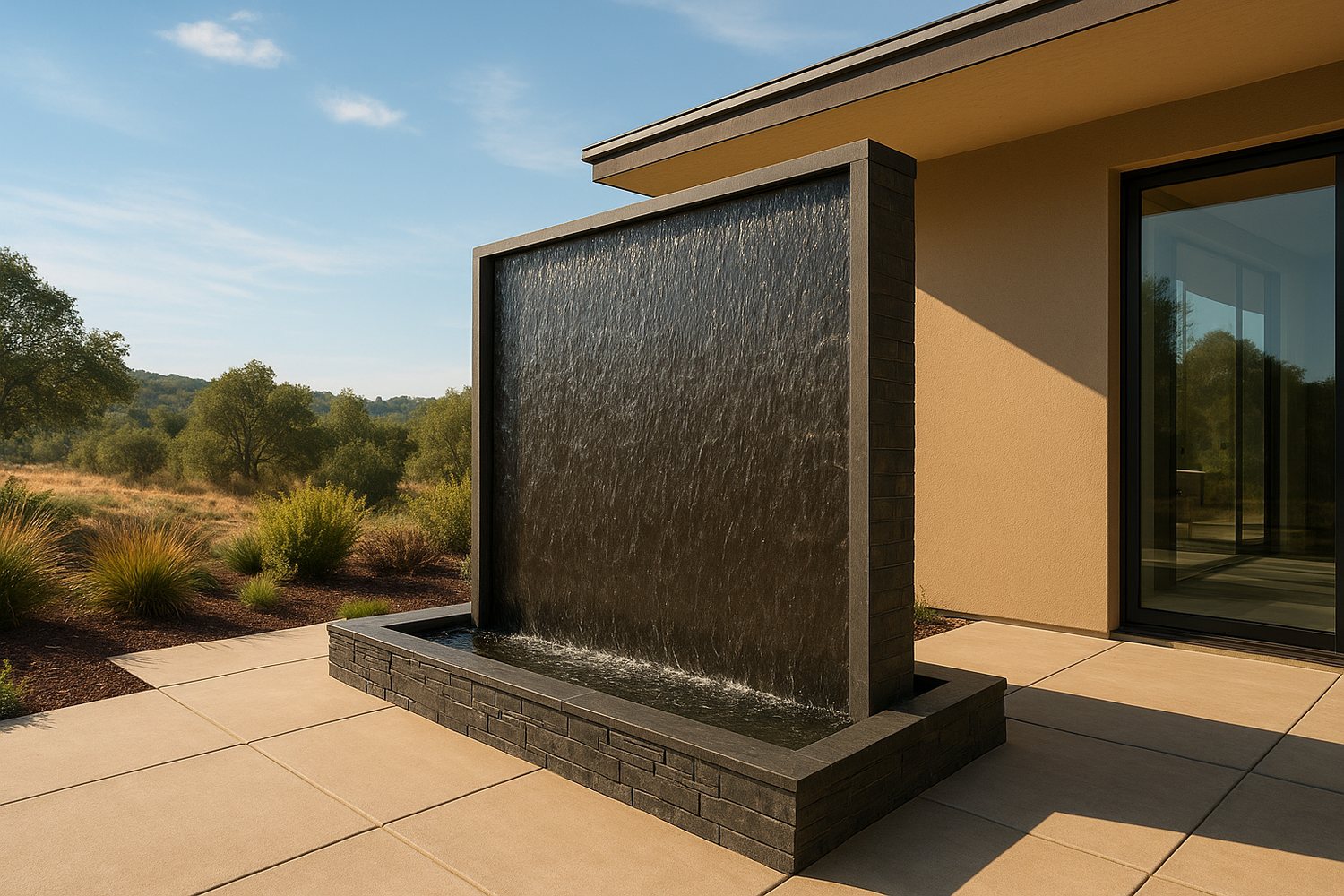
Modern water walls
Modern water walls Rocklin homes can feature: sheet-flow designs, privacy, sound, lighting and the trade-offs to plan for.
Explore →
Reflecting pools and still water
Reflecting pools and still water Rocklin gardens can feature: design, build steps, pros, cons, cost factors and care.
Explore →
Pondless waterfalls
See if pondless waterfalls fit your Rocklin, Roseville, or Granite Bay home. Learn about hidden reservoirs, safety, upkeep, water savings & design types.
Explore →Wall Fountains: Common Questions Answered
What exactly is a wall fountain, and how does it differ from other water features?
A wall fountain is a water feature mounted to, or integrated into, a vertical wall—usually in stone or stucco. Water pours from a spout, scupper, or decorative head into a basin below and is recirculated with a hidden pump. Compared to free-standing fountains or ponds, wall fountains have a smaller footprint, hidden plumbing, and are easier to keep splash-free, making them ideal for patios and tight courtyards.
What kind of maintenance does a wall fountain require?
A well-built wall fountain typically needs occasional basin cleaning and routine debris removal. In Northern California’s hard water areas, expect to gently clean mineral deposits 2-3 times per season and descale the pump as needed. Most basins and stone/tile should be resealed every one to three years. Inspect for leaks after big storms or freeze events, and consider shutting down systems during extended cold snaps.
Will I need to run plumbing and electrical to the wall?
Yes, most wall fountains require access to a water source (for initial filling and topping off in summer) and a dedicated GFCI-protected electrical outlet for the recirculating pump. We plan and route plumbing and conduit through or behind the wall, keeping lines clean and out of sight. In existing patio or garden walls, this may require selective demolition and repair for a seamless finish.
How loud will the fountain be? Can it be adjusted after installation?
The sound level is dependent on spillway design, water drop height, and basin depth. Most wall fountains are designed for gentle, soothing noise—much quieter than freestanding bowls or waterfalls. Adjustments after construction are limited; that’s why planning the sound you want is so important. We help simulate and discuss options during design so surprises are rare.
Are wall fountains safe for families with young children or pets?
Wall fountains typically have shallower basins and much less open water than ponds or large bowls, which makes them safer for most families. However, enthusiastic toddlers or pets will still be drawn to moving water, so supervision is advised. Basin grates and shallower designs can further limit risk while preserving the visual effect.
What impacts the life expectancy of a wall fountain?
Quality of construction, frequency of regular cleaning, and timely resealing are the main lifespan factors. Hard water minerals can shorten pump life and stain finishes if left untreated. Well-made basins and walls on a compacted base should last decades with attentive care—even with our harsh summers and the occasional winter cold snap.
Do I need HOA or city approval for a wall fountain?
It depends on your location. In many communities, especially for new walls, adding electrical, or changing backyard hardscape, HOA or city/county review may be required. We guide you on what to ask about, but requirements and review times vary by neighborhood and project scope. Start the conversation early to avoid surprises.
How do I prevent hard water stains and algae?
Hard water stains are best managed by regular wiping and using recommended sealers on stone or tile. Some products resist buildup better than others—ask us about finishes that perform well locally. Algae is rarely an issue in shaded wall fountains with moving water, but occasional light scrubbing and limiting soil splash (with gravel around the basin base) helps keep things fresh.
Ready to Discuss a Custom Wall Fountain?
We invite you to email sales@californiahardscapes.com with your address, a short description of your vision, and a few photos of your yard. We’ll connect and help you explore what’s possible—no pressure, just practical guidance from people who know the materials and the region.