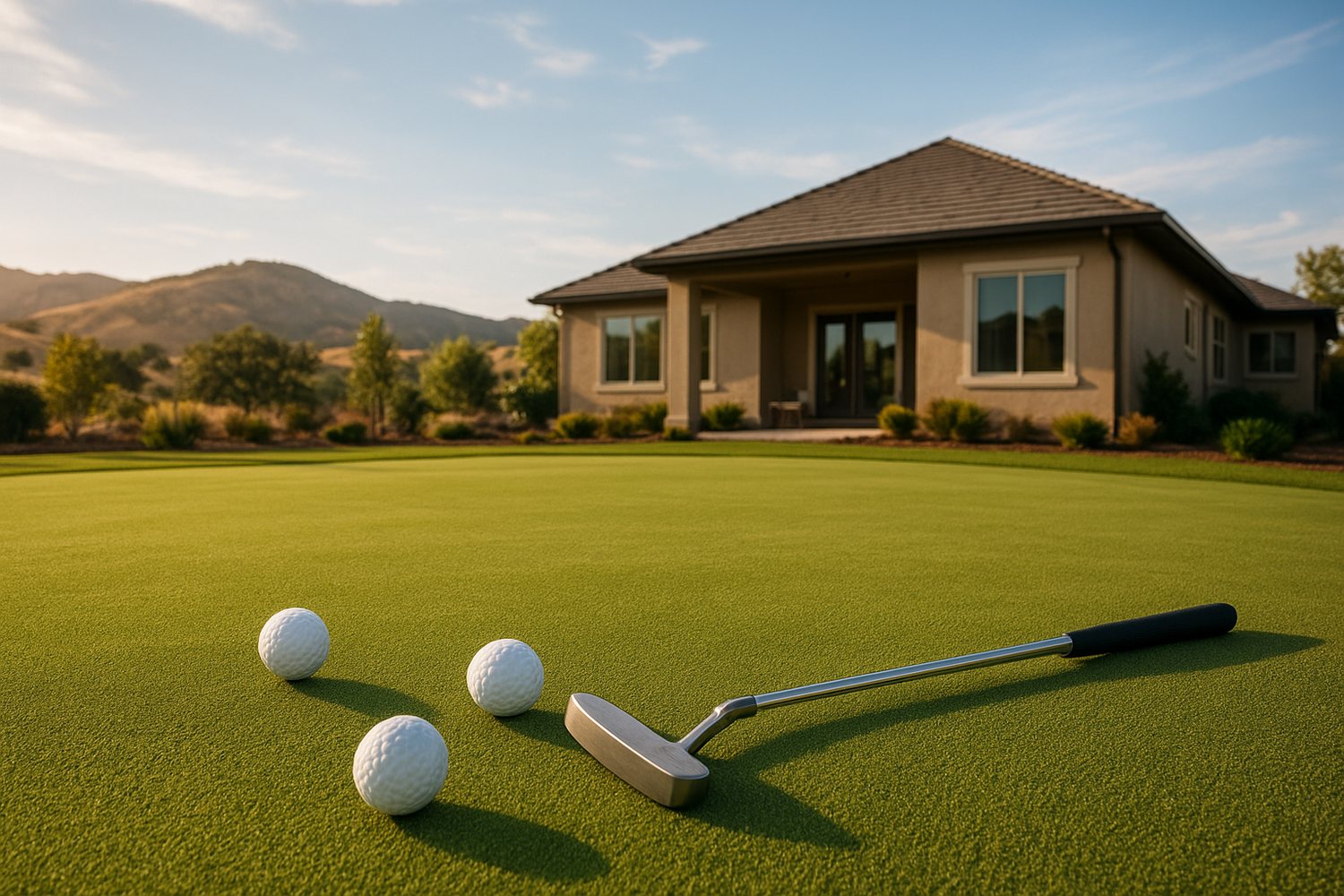
Designing Backyard Putting Greens: Contours, Cups & Fringe Ideas
Explore how thoughtful contours, cup placement and fringe design make backyard putting greens fun and practical for Placer, Sacramento and El Dorado County homes.
The joy of practice is in the details. With the right design, backyard putting greens can challenge, entertain, and blend with the landscape.
Contours: Bringing Natural Flow to Your Green
The shape and slopes (contours) of your putting green set the playability and realism. Smooth rises, dips, and valleys mimic true golf course greens. The key is balance—too much slope and putts feel unnatural, but too flat and your green lacks challenge. In Rocklin, Granite Bay, and the surrounding region, greens typically perform best with moderate contour to suit most skill levels.
Smart contouring takes into account your yard’s natural grades as a starting point. A professional can design mild undulations that encourage a range of putts—breaking left, right, or straight. This keeps the practice engaging, especially for kids and guests with different abilities.
Carefully planned contours turn a patch of turf into a true short game destination. Think about which directions you prefer to putt from, and how the sunlight moves throughout the day. These details help shape the green to both play well and look great from your home and patio.
- Even gentle slopes create interest
- Avoid severe drops for realistic play
- Contour with yard drainage in mind
For more detail about installation and design features, visit ourBackyard putting greenspage.
Cup Placement: Make Every Putt Interesting
Cup placement is about more than dropping a few holes at random. Strategic locations encourage different putt distances, angles, and breaks. When done right, your backyard green feels fresh and challenging with every round.
For the best experience, place three to four cups at different points on the green. Mix up placement—one in the center, a tucked-away edge, and another at the crest of a subtle mound. This lets you practice both straightforward putts and trickier breaks.
Also consider the size and accessibility of the green. Leave enough room around each cup for comfortable play, especially if multiple people will use the space. Clustering cups can be fun for putting contests, while spreading them out adds variety to solo practice.
- Vary distances and angles from each cup
- Use cups to practice short and long putts
- Plan for easy cup changes if you want future variety
Fringe and Collar: Essential for Play and Looks
Fringe—the cut of artificial turf around the putting surface—gives your green a finished, natural look and defines the play zone. Fringes can be designed to mimic the closely mown edge found at real courses, usually with a slightly longer blade than the putting surface itself.
Functionally, the fringe acts as a buffer that transitions from the green to the rest of your yard. It helps slow errant balls, and allows you to chip or pitch when practicing your short game. Good edge planning also keeps your green tidy over time and prevents wear near high-traffic spots.
In local yards where space meets landscaping, a tailored fringe blends with plant beds, walkways, and patios. Consider how you’ll move around the green, and how the fringe material matches with adjacent lawn or hardscape surfaces.
- Choose a fringe turf height distinct from the green
- Plan for chipping/pitching zones with wider fringe
- Edge with pavers or clean borders for easy maintenance
| Green Component | Primary Function | Material Choice | Pro Tip |
|---|---|---|---|
| Contour | Creates challenge & realism | Base shaping, turf cuts | Match to yard’s natural grade |
| Cup | Targets for putting | Plastic or metal sleeve | Plan multiple locations |
| Fringe | Transition, chipping zone | Longer artificial turf | Wider for short game practice |
| Edge | Defines shape, controls wear | Paver, concrete, steel border | Provides clean maintenance |
Choosing Turf Materials for Our Region
Not all artificial turf is created equal—especially in warm, sunny areas like Placer, El Dorado, and Sacramento counties. UV resistance keeps colors strong through our hot summers. Quality infills and backing ensure durability even with frequent use and after heavy rain.
Selecting a putting turf made for golf is crucial. These products offer smoother, tighter blades to replicate the pace and roll of real greens. For the fringe, pick a turf that feels plush and supports chipping but won’t mat down quickly.
Consider how the materials complement your outdoor space. The right combination should look good with existing landscape, feel comfortable underfoot, and provide realistic roll and ball response for years to come.
Blending the Green Into Your Yard
A backyard putting green should fit naturally within your landscape, not dominate it. Aim for a design that follows existing lines—patios, pool decks, planting beds—so the green feels like a thoughtful extension.
Customizing shapes (kidney or freeform rather than perfect circles) softens edges. Match the turf color closely to adjacent grass or contrast it for visual interest. Adding stone or concrete borders helps define the space and integrates with other hardscape elements.
Planting around a green is also important. Low-growing groundcovers, decorative rocks, and accent lighting can elevate the look while keeping maintenance simple. In sloped yards, use retaining walls or boulders for both utility and curb appeal.
- Shape the green for flow, not just size
- Mulch or stone borders reduce mud and maintenance
- Use lighting for evening play and aesthetics
See more choices for your yard on ourArtificial Turfoverview.
Drainage and Site Preparation: Laying the Groundwork
Proper drainage is essential for both durability and usability of your putting green. Standing water not only shortens turf life, but also impacts play—making putts slow and unpredictable. Grading and base prep are the unsung heroes of a quality install in our region.
Installers need to shape a compacted base (often decomposed granite or class II road base), sloped gently to shed water but support the planned contours. In areas like Folsom or Auburn, soils can be heavy clay, which holds moisture—so extra attention to base depth and drainage fabrics may be needed.
Before any turf is laid, confirm that irrigation systems and landscape lighting will not be disrupted. Planning for these details early on avoids headaches and ensures your green and yard both function at their best.
- Always use a properly compacted base
- Add perimeter drains if needed in wet spots
- Check for underground utilities before digging
Maintenance: Keeping Your Green Fast and True
Artificial turf putting greens are low maintenance compared to natural grass, but still need periodic care. Regular brushing keeps fibers upright for smooth roll, while blowing or raking removes leaves and debris. A clean, well-kept green is safer and plays faster.
Inspect the surface for any seam separation or loose infill, especially after heavy use or a storm. Keeping sand or infill levels topped up helps maintain speed and prevents matting. It’s a simple task that makes a big difference in play quality.
As seasons change, clear away encroaching plant debris and routinely rinsing the green with a garden hose will keep dust and pollen levels down. Occasional spot disinfection maintains hygiene without harming the turf or fringe materials.
- Brush fibers monthly for best play
- Remove leaves before they accumulate
- Check edges and infill twice a year
Custom Touches for Year-Round Enjoyment
The best backyard putting greens reflect the lifestyle of their owners. Personalize yours with features like boulder obstacles, multiple fringe heights, or decorative flagsticks that make practice inviting for all ages.
Integrate low-voltage lighting for sunset putting or family games. Add nearby patio seating or a fire pit to make the green the heart of your backyard gatherings. For multi-use spaces, consider removable cups or a green that doubles as a play space when not practicing.
With a thoughtful approach, your green can do more than improve your short game—it becomes a signature part of the landscape, welcoming year-round use. Simple upgrades keep things fresh, inviting you outside more often, no matter the season.
- Go beyond golf: add space for games or relaxing
- Use rugged materials to withstand kids and pets
- Update cups or zones for new challenges
Ready to discuss your vision? Contact us torequest a consultation.
Planning an artificial turf project?
Call or text 916-741-0633, or email sales@californiahardscapes.com with your address, a short description and a few photos, and we will arrange a consultation.