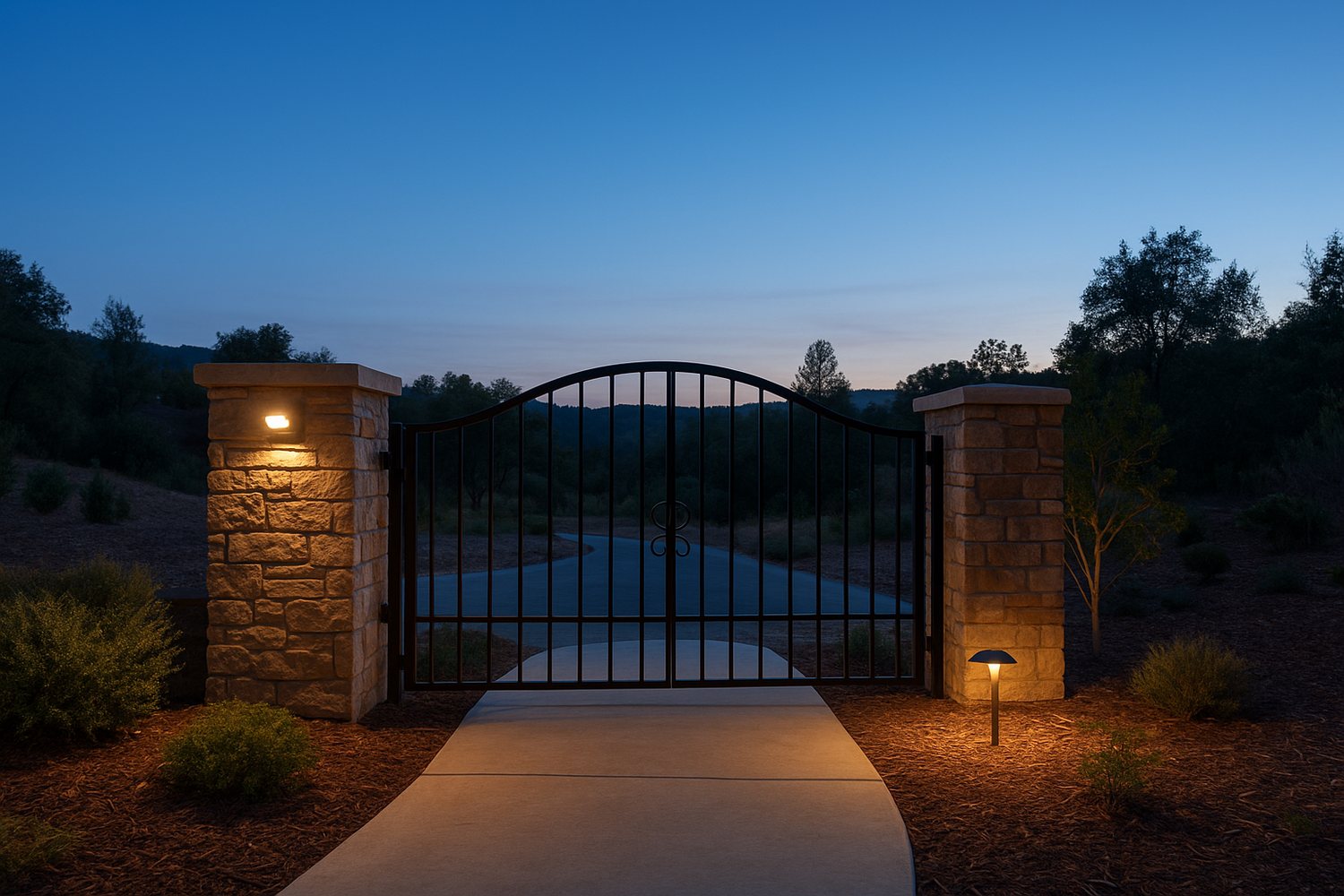
Planning Security and Motion Lighting for Side Yards and Gates
Learn essential planning steps for security and motion lighting around side yards and gates. Solid practical advice for homeowners in our Northern California neighborhoods.
Outdoor security and motion lighting plays a critical role in making your home safer. With the right plan, lighting can protect vulnerable areas like side yards and gates.
Why Security Lighting Matters for Side Areas
Side yards and gates are often some of the least-visible spots around the home, making them common entry points for unwanted visitors—both two- and four-legged. Neglecting these spaces in your lighting layout can create blind spots that compromise your home’s overall security, even if your front and back areas are well lit.
Security and motion lighting in these overlooked spots gives you peace of mind after dark. The right lighting discourages prowlers, guides guests, and prevents accidents around walkways and outdoor equipment. If you have kids or pets, it protects their paths as they move between front and back yards.
In our local neighborhoods—from Rocklin to Folsom—a carefully lit side yard is especially important. Many homes have narrow access points between houses or close proximity to fences and shared property lines, making targeted lighting a regional best practice rather than an upgrade.
For details about choices and installation, see theSecurity and motion lightingpage.
Understanding Today’s Outdoor Lighting Options
Homeowners now have a range of lighting forms to work with. Traditional wired floodlights remain popular, but new LED options are energy efficient and durable, letting you cover longer runs like side yard fences without frequent maintenance. Solar-powered motion lights can work in areas where wiring is tough, as long as there’s enough direct sunlight during the day.
Wired and wireless fixtures both have their place. For frequent-use gates or areas that see a lot of foot traffic, hardwired options deliver reliability. Where hardwiring is challenging or budget is a concern, solar and battery-powered lights can still provide effective illumination as long as you select quality models.
Look for products designed for outdoor use in Northern California’s wet and dry seasons. Choose fixtures with weatherproof ratings and a solid history for holding up in our region’s heat, rain, and wind to reduce long-term issues.
- LED floodlights: long-lasting, energy efficient
- Solar-powered lights: wireless, easy install
- Battery-powered spots: quick setup for remote corners
- Wired fixtures: reliability in high-traffic areas
Key Areas: Identifying Vulnerable Spots
Walk around your property at dusk to see which areas stay dark or are hidden from view. Pay close attention to pathways between the house and the side gate, fence lines, storage sheds, and transitions from driveway to back yard. This firsthand look helps highlight where security lighting will bring the most benefit.
Entrances at side gates often deserve their own dedicated light source, activated either by motion or set timers. Walkways in these areas should be illuminated for both safety and deterrence. If a side yard is used for storing bins, tools, or recreational gear, those spots need extra protection.
In Placer, Sacramento, and El Dorado counties, yard landscapes can create pockets of shadow along hedges, fences, or retaining walls. Layer light sources to minimize these shadows and reduce hiding places. Planning now means fewer regrets later—especially when the rainy season arrives or daylight ends early.
- Side gates and entrances
- Long, narrow pathways
- Utility and storage areas
- Gaps along fences and retaining walls
| Lighting Type | Best for | Pros | Cons |
|---|---|---|---|
| Motion Sensor | Side gates, walkways | Energy-saving, alerts to activity | Can miss slow movement |
| Dusk-to-Dawn | Fence lines, general areas | Consistent coverage | Higher energy use |
| Solar-powered | Remote or hard-to-wire spots | Easy install, wireless | Needs sunlight, less control |
| Hardwired | High-traffic, critical safety areas | Reliable, fully programmable | Higher upfront cost |
Motion Sensors Versus Dusk-to-Dawn Lighting
Choosing between motion-activated sensors and dusk-to-dawn lighting comes down to how you use each area and your comfort level with nighttime activity. Motion sensors turn lights on only when movement is detected, alerting you to activity and saving energy. Dusk-to-dawn lights maintain consistent illumination from sundown to sunup, deterring potential intruders all night.
Motion-activated fixtures work best at gates or tight passageways with limited foot traffic. They have the added benefit of catching your attention right away if something unexpected occurs. Dusk-to-dawn fixtures serve well in spots that need steady coverage, like along fence lines or in broad access corridors.
In many home designs, using both styles gives balanced protection. Place motion-sensing lights at gates and storage spots, and pair them with steady dusk-to-dawn fixtures for general lighting along paths and perimeters.
Simple Techniques for Effective Lighting Design
Blend practicality with aesthetics for security lighting that feels intentional, not intrusive. Start with low-profile fixtures that mount to walls or fence posts. Try to position lights so they shine downward or across walkways rather than directly at windows or neighboring homes.
Set overlapping pools of light to avoid dark gaps. In narrow side yards, space fixtures every 10 to 15 feet for even coverage; use shields or directional heads to control spillover. Consider using warmer light temperatures (2700–3000K) for a welcoming look that also enhances visibility.
Always account for landscaping, trellises, and outdoor furniture in your plans. Tree branches or tall shrubs can cast shadows right where you want clear visibility. Test and adjust before settling on final fixture positions, especially if family or pets use these paths regularly.
- Aim lights away from windows
- Adjust light direction to avoid glare
- Consider neighbor privacy when positioning fixtures
Explore options for accent, path, and landscape fixtures on ourOutdoor Lightingresources page.
Selecting Fixtures for Our Northern California Climate
Outdoor lighting here needs to withstand our hot summers and damp winters. Look for products with solid weatherproof ratings, like IP65 or better, so they won’t fail after heavy rain or dust from autumn winds. Aluminum or stainless steel housings offer a good mix of longevity and appearance.
For side yards, pick fixtures with UV-resistant lenses and seals. This ensures plastics won’t yellow or crack after months in the sun, and wiring stays safe from splash, sprinkler spray, or the occasional pressure wash. Maintain your system with routine checks each season.
The combination of durable materials, secure mounting, and protected electrical connections makes a difference in performance. Investing in quality now avoids the hassle and cost of replacing corroded or water-damaged fixtures later.
- IP65+ weatherproof rating recommended
- Aluminum or stainless steel housings for longevity
- UV-stable lenses fight sun damage
Professional Installation vs. DIY
For many homeowners, installing a few solar-powered or plug-in motion lights is a manageable weekend project. Instructions are straightforward and most modern fixtures come with the hardware you’ll need. This approach usually works for simple layouts and accessible areas.
However, if you need wiring, new circuits, or plan to run lights through multiple outdoor zones, a professional installer feels well worth it. Licensed contractors understand local codes, how to bury wiring safely, and can customize controls for multi-fixture systems.
Other benefits of working with professionals include help designing an efficient layout, troubleshooting existing electrical issues, and securing long-term peace of mind. Homeowners in our area often blend both approaches—DIY in easy spots, pro help when it gets complex.
- DIY suits plug-in, solar, or battery fixtures
- Pro installation needed for wired systems
- Local code knowledge matters for safety
Planning for the Long Term
Your side yard lighting should adapt as your landscape matures or needs change. Plan for growth by selecting fixtures with adjustable heads or replaceable bulbs. Leave extra junction boxes or conduit runs where possible so you can add more lights as you update your outdoor living space.
When installing, note switch locations and any outdoor power outlets for easy future upgrades. Keep diagrams of wiring paths and take photos before covering up trenches or walls. This record simplifies troubleshooting and future improvements.
Think beyond just today’s needs. A bit of thoughtful planning now—in both lighting selection and installation—can save you time and money as your family, landscaping, and technology evolve.
- Choose adjustable or upgradable fixtures
- Document wiring and layout for reference
- Plan for future outdoor use or landscaping changes
If you’d like input or a hands-on plan for your property,request a consultationtoday.
Planning an outdoor lighting project?
Call or text 916-741-0633, or email sales@californiahardscapes.com with your address, a short description and a few photos, and we will arrange a consultation.