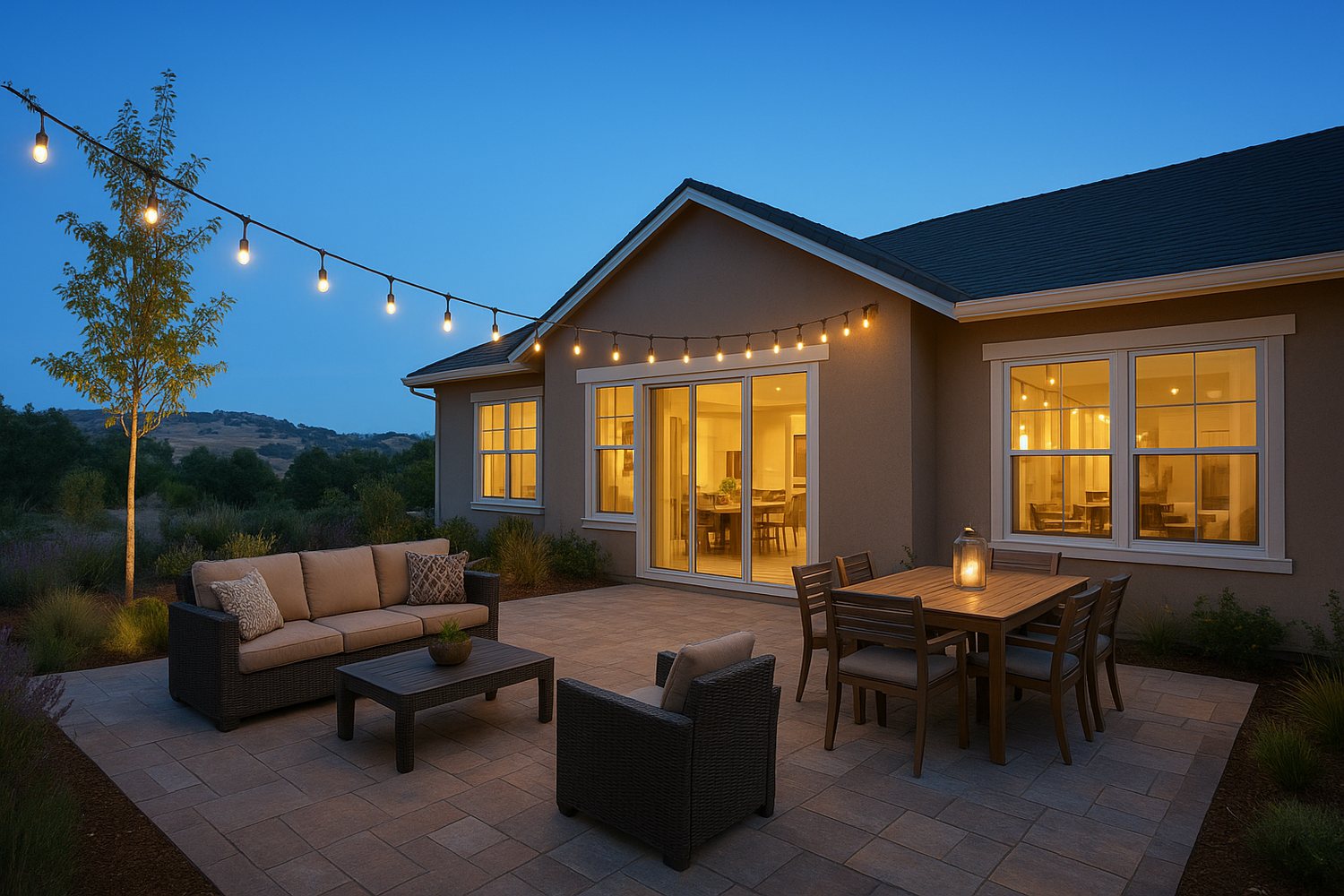
Smart Lighting Controls vs Timers: Choosing Outdoor Lighting That Fits
Smart lighting controls and simple timers each have their place in outdoor lighting. Understand the key differences to make the best choice for your home.
Outdoor lighting delivers safety and curb appeal, but controls matter as much as fixtures. Here’s a practical look at smart controls versus traditional timers for local homeowners.
Why Outdoor Lighting Controls Matter
Outdoor lighting adds visibility, security, and ambiance, but how those lights are managed affects your experience every night. In regions like Rocklin, Roseville, and Granite Bay, changing daylight hours and seasonal weather make reliable controls especially important. The right setup means never fumbling for switches or wasting energy.
Homeowners want their spaces to feel safe for family and inviting for guests. This starts with lights that stay on when needed—without effort or hassle. Too often, people settle for the default timer, missing out on features that could improve comfort and convenience.
With custom hardscapes and lush gardens, the control system you choose also protects your investment in the landscape. Properly timed or smartly controlled lighting highlights your home’s best features, discourages trespassers, and reduces energy waste. The choice between simple timers and smart controls isn’t just technical—it impacts day-to-day living.
See more about the advantages and features on ourSmart lighting controlspage if you want to go deeper.
Simple Timers: Reliability with Limitations
Mechanical and digital timers are widely used for their straightforward setup and dependability. These units switch lights on and off based on fixed schedules. Once dialed in, timers can run unattended for years if settings are left alone—an appealing feature for many.
However, timers come with tradeoffs. Daylight changes constantly in this region, so a timer set for June won’t fit December without manual adjustment. Power outages or daylight saving time shifts require resetting. Inflexibility can result in lights left on for too long, or not on long enough.
Some digital timers offer more options, but the core limitation remains: they follow the clock, not your habits or local conditions. For entry-level landscape lighting, timers provide a start, but they rarely match the flexibility of newer technology.
- Simple, well-priced, and familiar
- Need occasional adjustment
- Not responsive to weather or activity
Smart Lighting Controls: Adaptability and Features
Smart lighting controls bring another level of efficiency. These systems connect lights to phone apps, home networks, or even voice assistants. They can adjust schedules with sunrise and sunset, respond to motion, or let you turn lights on from anywhere—a practical update for busy households.
Custom scenes and zones are readily programmed. For instance, front walkway lights might stay on later than patio uplights, or your landscape bed may dim after midnight to reduce light pollution. The possibilities suit all types of outdoor spaces, from cozy patios to estate-sized yards.
Weather and lifestyle matter in this region. With smart controls, you can handle late arrivals, garden parties, or sudden storms remotely—without touching a dial or running outside. These features give you energy savings and a level of daily convenience that older timers simply can’t provide.
- Schedule with sunrise/sunset or by occupancy
- Control from phones, tablets, or voice
- Easily adjust for seasons, guests, or events
| Feature | Simple Timers | Smart Controls | Best Use |
|---|---|---|---|
| Setup | Manual, Easy | Tech setup, App-based | Timers: small/simple jobs, Smart: larger/flexible needs |
| Scheduling | Fixed times | Sunrise/sunset, events, motion | Smart is more adaptive |
| Updates | Manual changes needed | Remote or auto adjusts | Smart for changing schedules |
| Energy Use | Reduces but not optimal | Optimized for use/cost | Smart reduces waste best |
| Top Benefit | Simple reliability | Max convenience and options | Timers for simplicity, smart for customization |
Installation and Usability: What to Expect
Timer-based lighting systems are generally simple to install alongside your outdoor electrical setup. For those comfortable with basic home projects, a timer is about as complex as a basic outlet. They work reliably—until you want to make changes or face an unexpected schedule shift.
Smart controls often use existing wiring, but initial setup may require Wi-Fi access, system programming, and pairing devices. After installation, most adjustments are made via your phone or a connected home hub, rather than with manual dials. It’s a bigger up-front learning curve but easier over time.
Maintenance is another point of difference. Timers need hands-on rescheduling, while smart systems are easily updated in-app. If connectivity is lost in our regional power bumps, most smart systems return to their settings once power or Wi-Fi is restored.
- Timers: straightforward, manual updates
- Smart: tech setup, but flexible from anywhere
- Both: work with expert installation
Energy Use and Environmental Impact
Managing outdoor lights wisely helps reduce energy waste, important for both costs and California building codes. Timers can cut down on lights left burning all night, but still require occasional owner attention to stay optimal for the season.
Smart lighting has a clear advantage here: it enables dimming, adaptive schedules, and occupancy-based lighting. You can integrate with smart home routines for maximum efficiency—like turning lights off after midnight if no motion is detected, or using only what’s needed for safety as you walk outside.
For California’s drought-impacted and energy-conscious homeowners, smarter controls support sustainability. The ability to fine-tune lighting by weather or event can add up to significant energy savings every year.
- Less waste: dimming, motion, adaptive timing
- Timers reduce but don’t eliminate excess use
- Smart controls fit with eco-friendly goals
You can explore the full scope ofOutdoor Lighting optionsto see what fits your property and lifestyle.
Security, Safety, and Curb Appeal
Outdoor lighting serves more than decoration. Well-lit entryways, driveways, and yards deter intruders and help families move around safely after dark. In fast-growing communities like Roseville and Folsom, lighting is as much about security as it is aesthetics.
Timers deliver basic deterrence by keeping lights on a predictable schedule. Savvy observers, however, can catch on to static patterns. Smart controls introduce randomization, scene changes, and remote activation, making it less obvious when the house is empty and giving you control from afar.
Both systems will highlight hardscapes, plantings, and water features effectively, but only smart controls can match lighting to an event, holiday, or season at the click of a phone button. The extra wow factor is simple, subtle, and secure.
Choosing What Works in Rocklin and Surrounding Communities
Every home is different, and so are the needs of each homeowner. Some prefer the set-it-and-forget-it approach of a timer, especially for smaller gardens or side pathways. Others want the adaptability and convenience offered by modern smart systems, especially when managing larger spaces or hosting gatherings.
The region’s weather, including hot summers and winter storms, makes reliability a must. Timers offer simplicity and are almost maintenance free, but smart controls stand out for those looking to adjust everything from lighting color to run-time without going outside.
When you weigh upgrades, consider the time you spend making adjustments, how often your schedule changes, energy savings, and personal comfort with technology. California Hardscapes can discuss the pros and cons that fit your lifestyle and property.
- Timers: good for routine needs
- Smart controls: better for flexibility
- Both can boost curb appeal and safety
Getting Advice and Next Steps
Ultimately, the choice between a simple timer and a smart control system depends on your habits, property layout, and how much convenience you value. If you like technology and want maximum flexibility, a smart system is worth exploring; if you want a basic, reliable schedule, timers still work well.
It’s smart to think about lighting control before starting landscaping, hardscape, or patio projects, so wiring or conduit can be planned for future upgrades. A professional can help identify the best locations for fixtures and controls, avoiding do-overs and headaches down the road.
If you’re ready to talk options, California Hardscapes can review your site, answer questions, and connect you with licensed local pros for installation. The right plan keeps your lights working for you—season after season.
If you’d like tailored help, reach out andrequest a consultationwith our team.
Planning an outdoor lighting project?
Call or text 916-741-0633, or email sales@californiahardscapes.com with your address, a short description and a few photos, and we will arrange a consultation.