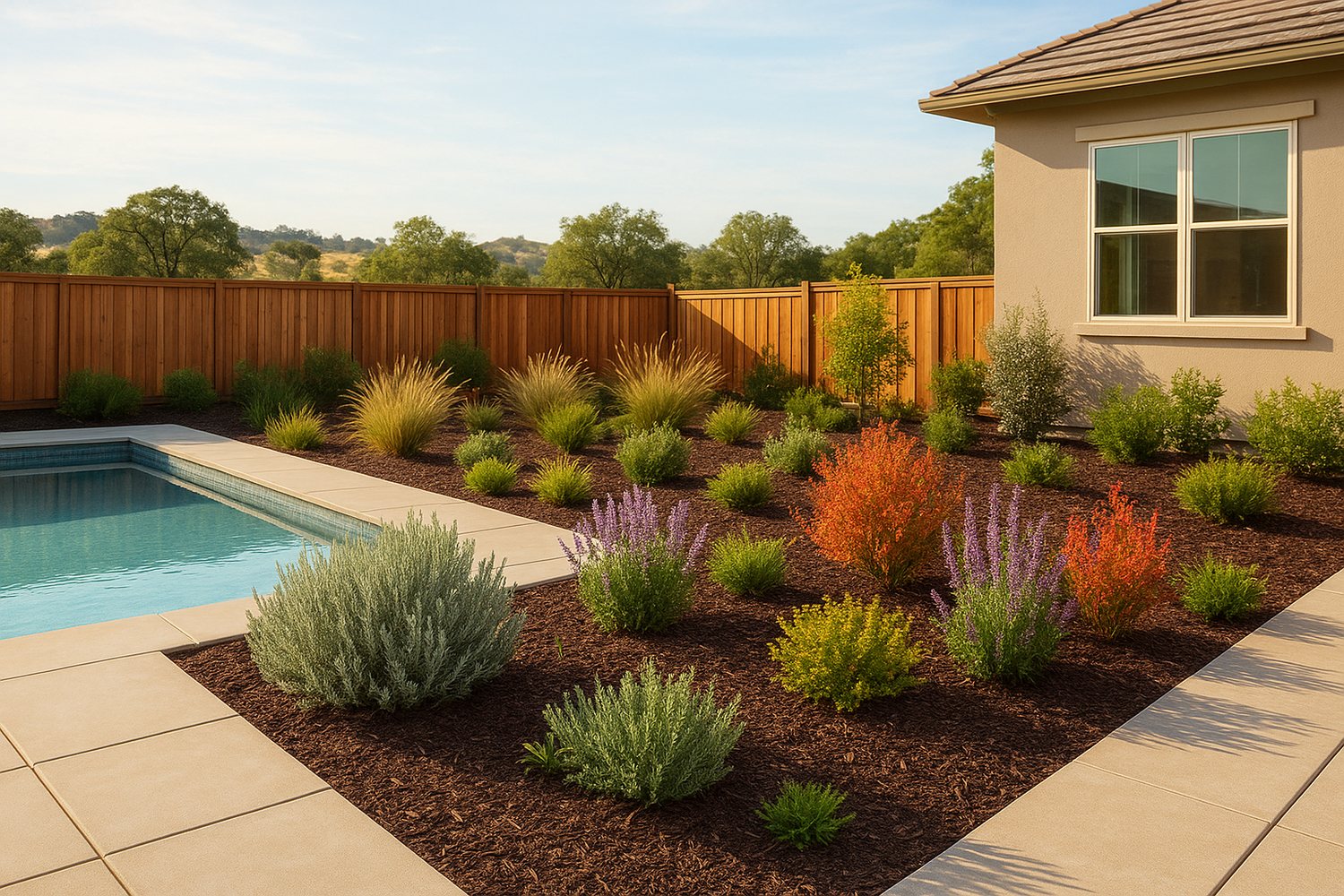
Smart Planting Strategies for Patios and Pools
A practical guide to planting around patios and pools in Northern California. Learn how to choose, place, and care for plants that thrive in our region.
Designing a backyard retreat means blending hardscape and softscape for a space that’s beautiful and easy to maintain. Let’s focus on smart planting around patios and pools for Northern California homes.
Start With Your Microclimate
Understanding the microclimate of your backyard is the first step to a thriving landscape. Rocklin, Roseville, Granite Bay, Folsom, and nearby communities all experience hot, dry summers and occasional winter frosts, but your yard’s orientation, shade, and reflected heat can vary widely. Study where sunlight lingers, how wind moves through your space, and which areas stay cool or scorch during summer afternoons.
Hardscapes like patios, pool decks, and stone walls absorb and radiate heat, which can change local temperatures and soil moisture. If your poolside area faces south or west, expect many plants to need extra water or heat tolerance. Conversely, shaded corners behind fences or structures can trap cool air and frost. Matching plant choices to these zones helps reduce maintenance and water use.
Walk the space during morning, midday, and late afternoon. Make note of any areas that feel particularly warm, breezy, or protected from weather. This practical step will give you a map for which plants will thrive where, and where you may want to add shade or wind screening.
- Notice where the afternoon sun hits hardest
- Identify protected spots for frost-sensitive plants
- Observe wind patterns near patios or pools
For more design inspiration and planting strategies, check out ourBackyard landscapingpage.
Choose Plants for Poolside Success
Around pools and patios, plant choice is about balancing beauty with practicality. For pools, avoid messy deciduous trees or spiny plants that shed into the water. Opt instead for evergreen shrubs, palms, ornamental grasses, and tough perennials that handle pool splash and reflected heat.
Native and Mediterranean plants like Agapanthus, Salvia, and Lomandra are well-suited to our climate, providing bold foliage and seasonal blooms without high water needs. Look for varieties that resist insects and disease, and won’t crowd walkways or patios as they mature. Container plantings add flexibility and seasonal color for high-traffic spots.
Minimize maintenance by grouping similar water-need plants together (hydrozoning), and leave at least 3 feet between plantings and pool edges to limit debris. Give thought to height—layer taller background plants behind lower accents for depth, privacy, and easy access around seating.
- Favor non-shedding, evergreen choices
- Group plants by sun and water needs
- Keep low-maintenance varieties near pools
Planting for Shade, Privacy, and Structure
Well-placed planting brings comfort and flow to a backyard, especially around hardscapes. Trees and large shrubs are excellent for casting shade across patios, but choose species with roots that won’t disrupt concrete or pavers, like crape myrtle or olive (fruitless variety). Vines such as star jasmine or trumpet vine can soften fences or pergolas, giving vertical interest without taking up ground space.
For privacy, mix evergreen screens—such as Pittosporum or Italian cypress—with layered plant borders. Clustering plants of varying heights and textures along property lines helps reduce noise and creates a relaxed, inviting setting. Ornamental grasses and bamboo add movement, all within a tidy footprint if you select clumping, non-invasive types.
Think about how your space will look in winter as well as summer. Reliable green structure—hedges, tall shrubs, and architectural plants—keeps the backyard attractive year-round, so consider them your landscape’s backbone. Add pops of seasonal color with flowering perennials or pots near gathering spots.
- Select root-friendly trees for patios
- Use layered evergreens for privacy
- Vary height and texture for interest
| Plant Type | Sun/Heat Tolerance | Maintenance Level | Pool Friendly |
|---|---|---|---|
| Agapanthus | High | Low | Excellent |
| Star Jasmine | Moderate | Low | Good |
| Lomandra | High | Low | Excellent |
| Crape Myrtle (fruitless) | High | Moderate | Good |
| Rosemary | High | Low | Excellent |
Managing Water Wisely
Water efficiency is critical in our Northern California climate. Drought-tolerant plant selections reduce stress on local resources and create landscapes that stay healthy with less irrigation. Combine these choices with smart watering techniques for a sustainable yard.
Install drip irrigation to deliver moisture directly to plant roots and avoid overspray on patios or pool decking. Mulch beds with bark or gravel for water retention and a polished look. For lawns or accent beds, select drought-tolerant blends and minimize their footprint in favor of larger planted borders.
Monitor and adjust irrigation with the seasons. Schedule deeper, less frequent watering for established plants, and pay extra attention to exposed areas near concrete that dry out faster. Taking these steps helps your landscape thrive, keeps utility costs down, and supports local water conservation efforts.
- Use drip irrigation for targeted watering
- Mulch to retain moisture and control weeds
- Reduce lawn size in favor of low-water beds
Designing Safe Pathways and Gathering Areas
Designing a landscape around patios and pools isn’t just about looks; safety and comfort are top priorities. Select slip-resistant materials for walkways and pool decks, like textured concrete, pavers, or natural stone. Keep pathways wide enough for easy movement and strollers or outdoor furniture, especially where planting areas are close.
Plants bordering walkways or gathering areas should remain compact and tidy. Favor non-thorny, non-allergenic varieties, and steer clear of plants that drop fruit or sticky blossoms. Lighting is another key aspect—low-voltage, strategically placed fixtures enhance safety and extend your enjoyment into the evening hours.
Where slopes exist, use wide, terraced beds or retaining walls to separate planting from walking zones. Integrating sturdy edges, level transitions, and consistent surfaces ensures every guest can move confidently through your outdoor space.
- Choose non-slip walkway materials
- Keep sightlines open and paths clear of branches
- Add path and patio lighting for safety
Explore all our options for outdoor living and creative landscapes in theLandscapingoverview.
Mixing Hardscape and Softscape for Balance
Successfully blending planted areas with patios, retaining walls, and built-in seating creates a harmonious backyard that’s both functional and inviting. Hardscape features should anchor your design, while softscape—plants, lawn, groundcover—brings life and softness.
Plan transitions between patio and planting zones with wide beds, stepped edges, or built-in planters. These soften hard lines and help unify the space. For large patios or pool decks, use clusters of potted plants for visual breaks and seasonal flexibility. Consider grasses, sedges, or trailing succulents along edges for a lush effect.
Remember: less often means more. Give each area a clear purpose, avoid overfilling with plants or decor, and allow negative space for movement and restful views. The goal is a cohesive, comfortable environment tailored to your needs.
- Integrate built-in planters with hardscapes
- Vary plant size for natural transitions
- Leave open space for flexibility
Solving Common Pool and Patio Planting Challenges
Some regional challenges crop up again and again: glare from white walls or concrete, rapid soil drying, or debris blowing into your pool. Combat glare by choosing plants with gray, blue, or deep green foliage. These tones absorb rather than reflect harsh sunlight and keep the area visually cool.
For hot, exposed corners, stick to plants proven in our region—such as lavender, rosemary, or fortnight lily. In wind-prone spots, try hedging or sturdy ornamental grasses that bend without breaking. For poolside planters, ensure pots have good drainage and a consistent watering routine.
Keep maintenance manageable by scheduling regular cleanups, especially during leaf drop or flowering cycles. The more thoughtfully you pair plantings with site conditions, the easier it is to keep your outdoor living space beautiful and functional year-round.
- Pick foliage that reduces glare
- Favor tough, flexible plants in windy spots
- Use well-drained pots near water features
Choosing Local Expertise for a Premium Result
Planning and installing backyard landscaping around patios and pools requires both creativity and technical know-how. Working with licensed, experienced contractors gives you peace of mind that your outdoor spaces are built to last.
California Hardscapes is based in Rocklin and provides full-service outdoor construction, including custom pools, patios, concrete work, outdoor living features, lighting, and landscaping. Managed by Marty, whose decades of industry experience span concrete construction, materials, and project management, every project is overseen with attention to detail.
Fully licensed, bonded, and insured contractors ensure quality and compliance at every turn. Whether you’re imagining a modern entertainment yard or a tranquil retreat, knowledgeable design and skilled installation will help your vision come to life.
- Look for local industry experience
- Work with licensed, insured professionals
- Value design consultation in your planning process
Ready to plan your backyard? Request a consultation and let’s talk through ideas—justcontact us.
Planning a landscaping project?
Call or text 916-741-0633, or email sales@californiahardscapes.com with your address, a short description and a few photos, and we will arrange a consultation.