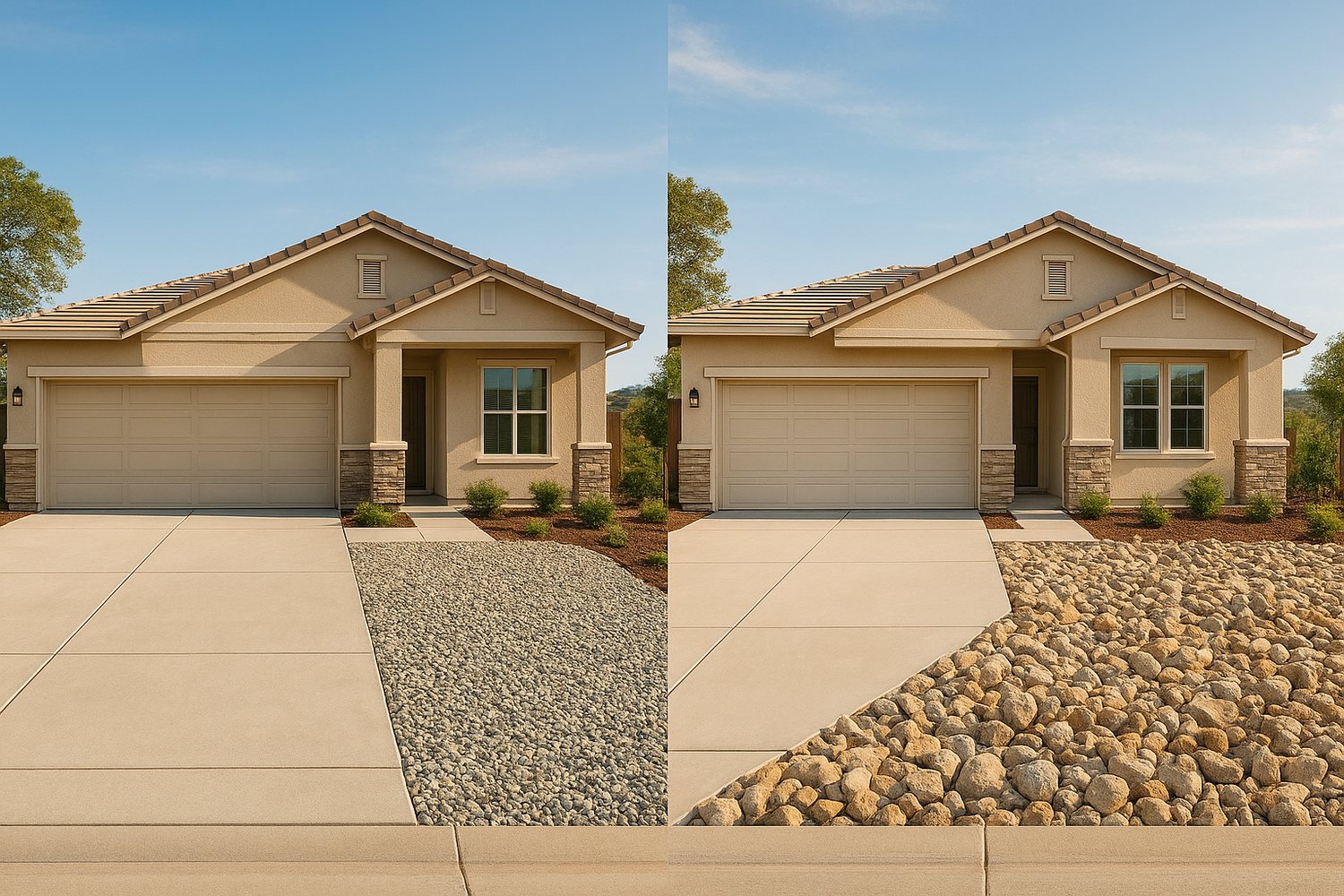
Planning Your Patio or Driveway: Base Rock and Drain Rock Depths
Smart planning for base rock and drain rock means lasting patios, walks, and driveways. Learn the regionally specific details before your next project starts.
A properly built patio or driveway starts long before the concrete or pavers arrive. In our region, base rock and drain rock choices—and, just as important, their depths—can make or break your investment.
Why Base Rock Depth Really Matters
Base rock isn’t just a filler under your patio, walk, or driveway—it’s the foundation that keeps everything stable for decades. Throughout Placer, Sacramento, and El Dorado Counties, heavy clay soils, seasonal rains, and daily temperature swings mean your outdoor surfaces face unique challenges. The correct base depth prevents shifting, cracks, and puddling over time.
An insufficient base might look fine initially but can lead to sunken spots or premature cracking, especially during our wet winters. With proper planning, you’ll spend less on future repairs and enjoy safer, more attractive spaces. A professional approach always starts with assessing your site conditions and traffic loads.
Thinking about hosting gatherings or parking vehicles? The loads your hardscapes will carry are critical. Patios for lounge furniture need much less base than a driveway where trucks or SUVs park. Getting this step right isn’t optional—it’s essential to real value and low headaches later.
• Prevents costly surface damage
Learn more about materials on ourBase rock and Drain rockpage.
Understanding Your Soil: The Local Factor
Most of our region rests on clay-heavy soils, interspersed with decomposed granite closer to the Sierra foothills. These clays swell and contract with moisture, which can cause movement under hardscaped surfaces. Before setting base rock or drain rock depths, it’s vital to know what soil you’re starting with.
If your property is in Roseville or Rocklin, you’re likely dealing with denser clays, while areas nearer Auburn and Folsom may have sandier, better-draining profiles. Each needs base depths tailored to prevent shifting or erosion issues. Soil tests or at least a careful dig can set the course for a longer-lasting installation.
Ignoring soil characteristics is a shortcut you can’t afford. Even two neighbors might require different approaches based on compaction, drainage, or underlying rock. Investing some time to get it right pays back many times over in reduced maintenance.
Recommended Base Depths for Common Projects
When planning a new hardscape in our area, these are practical starting points: patios and walkways typically need 3–4 inches of compacted base rock. Drivetraffic? Plan for 6–8 inches, sometimes even more for heavy use. The base must be compacted in layers, not dumped all at once.
Drain rock isn’t always needed under every patio, but it’s essential where drainage is a concern or the hardscape sits against the house. Using 2–4 inches of drain rock below or alongside your compacted base rock helps redirect water away from surfaces and structures.
Remember: these are general guidelines. The exact depth for your property should factor in soil type, drainage, slope, and type of use. A tailored plan from an expert will never steer you wrong in the long run.
• 3–4 inches for patios and walks
| Project Type | Base Rock Depth | Drain Rock Needed? | Compaction Required | Notes |
|---|---|---|---|---|
| Patio | 3–4 inches | Usually not (except poor drainage) | Yes | Typical for lounge areas |
| Walkway | 3–4 inches | Seldom | Yes | Light to moderate use |
| Driveway | 6–8 inches | Sometimes (if water issues) | Yes | Supports vehicles |
| Retaining Wall | Varies—often 6–12 inches | Often behind wall | Yes | Engineered for load |
| Pool Deck | 4–6 inches | Occasionally | Yes | Extra care near house |
Base Rock vs. Drain Rock: What’s the Difference?
Base rock is a crushed aggregate with fines, compacting into a stable, dense surface. It’s perfect for patios, walkways, and driveways, delivering the strength your hardscape needs. Drain rock, by contrast, is cleaned of fines—its rounder shape and uniform size means it doesn’t compact but allows water to flow right through.
For most patios and driveways, the base rock provides the required structural support. When water management is crucial—like near retaining walls, home foundations, or in areas of poor drainage—drain rock gets installed beneath or beside the base. This prevents pooling and increases stability.
Picking the right material isn’t about guessing. Every property will have its distinct needs, depending on soil, slope, exposure, and whether the area will see foot or vehicle traffic. The right call balances safety, longevity, and your budget.
Compaction: The Secret to a Solid Build
Even the best base rock won’t do its job if it’s not compacted correctly. In this region, our cycles of rain and sun test hardscapes constantly. Compaction pushes out air, knits the rock together, and ensures a surface that won’t settle or shift.
Layering is the key—each lift of base rock should be compacted before adding the next. For walkways and patios, hand tampers may work, but larger patios and driveways call for a plate compactor for best results. Don’t overlook edges; weak borders are often the first place movement starts.
Think of compaction as an insurance step: it minimizes costly callbacks and repairs, making sure your investment holds up beautifully for years in local conditions.
Explore the full list of outdoorMaterials optionsfor your project.
Drainage Considerations Unique to Our Region
Southern Placer and Sacramento Counties often deal with flash downpours, especially from late fall through spring. Without proper drain rock and grading, hardscapes can channel water toward the house—or create persistent soggy spots.
Site grading should encourage water away from your home’s foundation. Integrating drain rock along the perimeter or beneath low spots can make a major difference, especially for homes at lower elevations or on slopes. This simple step preserves both your hardscape and your property’s structure.
Always double-check downspout termination and existing drainage features before setting a base plan. Done right, every hardscape becomes an asset—not a nuisance—no matter how wet or dry the season.
Common Mistakes—and How to Avoid Them
One frequent pitfall in our area is skimping on base thickness, or failing to address underlying clay soils and poor drainage. Another? Not compacting the base rock in proper lifts. Each can compromise your hardscape’s longevity.
Some homeowners use drain rock as a base where compaction is needed. Though great for water flow, drain rock lacks the strength for traffic-bearing areas. Mixing up material types, or skipping professional guidance, invites problems down the road.
To avoid these traps: Always clarify your site’s soil profile, use the right material for each application, and insist on careful compaction. Whether doing-it-yourself or hiring professionals, these steps can make or break the project.
When to Consult an Expert
DIY is tempting, but if you’re unsure about your soils, slope, or whether you need drain rock, there’s no substitute for experienced eyes. Properties in Granite Bay, Rocklin, Auburn, and their neighbors have quirks best addressed with local expertise.
Getting professional input matters most for larger driveways, patios close to living structures, or any spot where drainage carries consequences. A custom plan tailored to your lot will always outperform any generic advice found online or in stores.
California Hardscapes is available to help clarify site conditions and design a base that fits both your vision and this region’s soil and weather realities.
To discuss your specific property and get a tailored quote,request a consultation.
Planning a materials project?
Call or text 916-741-0633, or email sales@californiahardscapes.com with your address, a short description and a few photos, and we will arrange a consultation.