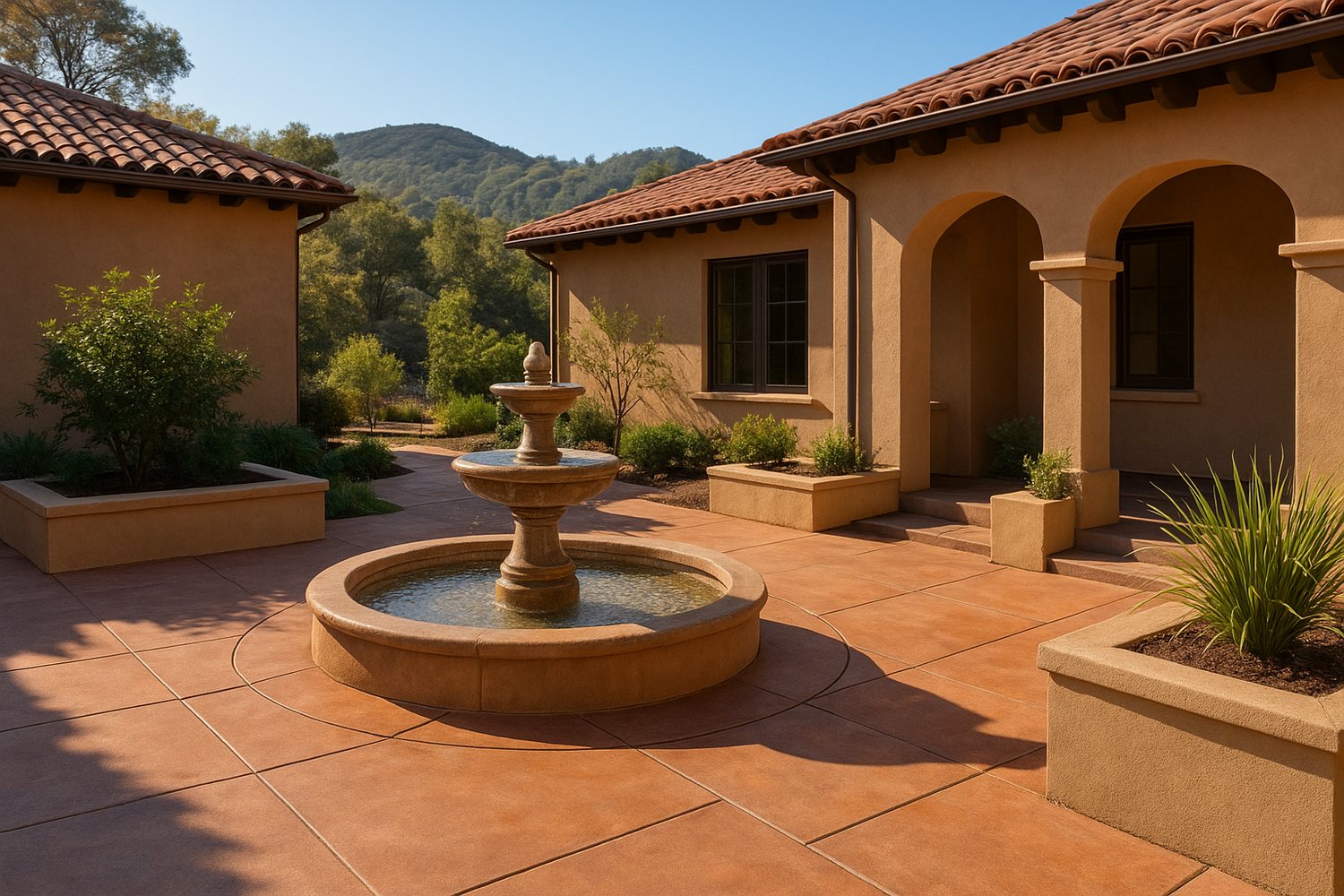
Choosing the Right Concrete Color Solution for Your Outdoor Space
Not sure whether to choose integral color, a color hardener, or a stain for your concrete? Here’s what Placer, Sacramento, and El Dorado County homeowners should know.
Coloring concrete isn’t just about looks – it’s about lasting value. The right choice for your driveway, patio, or pool deck comes down to how you use your space and the finish you want to see.
What Is Integral Color Concrete?
Integral color concrete means the pigment is blended into the concrete mix before it’s poured. This produces a uniform color all the way through the slab. It’s the most seamless way to color concrete and doesn’t flake or wear off as the surface ages, making it reliable for high-use areas.
Available in a broad spectrum, including the earthy tan, subtle gray, and soft pastel tones that blend perfectly with local landscaping, integral color is a favorite for patios and walkways. In the intense summer sun and with seasonal weather swings in Rocklin and surrounding communities, it keeps its color longer than surface treatments.
A big advantage is low maintenance—chips or minor cracks don’t reveal a gray base. However, the color is typically more muted than the bold, dense colors possible with hardeners and stains. It’s a strong, understated look for most residential projects.
- Consistent color all through the slab
- Low maintenance, hides minor wear
- Not as vibrant as other color options
Want more details about concrete pigments? Visit ourColored (integral color) concretepage for an in-depth look at local options.
Understanding Color Hardeners
Color hardeners are powder pigments broadcast onto freshly poured concrete, then worked in by trowel — right before finishing. They provide an intense, durable surface color that resists wear and stains, making them ideal for heavy activity areas like driveways and pool decks.
This method lets you achieve a broader range of vibrant hues and sharper contrasts (think deep charcoals, terracottas, and vibrant taupes). It can also increase surface strength, which is a plus for resisting abrasion. Traditional color hardeners are a go-to for stamped concrete, where a richer, more dramatic color palette makes textures pop.
But color hardeners only affect the top layer (about 1/8 inch). Deep chips or cracks can reveal the plain concrete beneath, which can matter on slabs that might flex or see lots of shifting. Maintenance and occasional touch-ups are more likely in our area’s temperature fluctuations.
- Best for vibrant, dramatic color
- Adds surface hardness and stain resistance
- Surface-only; not through-and-through
When to Choose Chemical Stains
Stains react chemically with concrete to create translucent color that mimics natural stone or leather. Acid or water-based stains are often used as accents or to rejuvenate existing concrete surfaces — including patios, entries, or pool surrounds.
Chemical stains deliver unique, variegated looks you can’t get with other coloring methods. They’re ideal where you want character; every slab takes stain a little differently due to local concrete mix differences and weathering (something to consider for color expectations).
Stains do best on well-prepped surfaces and require a protective sealer, especially to handle the heat, dust, and heavy use common in Folsom or Granite Bay. They aren’t designed to mask flaws or old repairs, and deep restoration work may still reveal visual inconsistencies.
- Great for custom, organic looks
- Can revive existing plain concrete
- Needs resealing and good prep
| Feature | Integral Color | Color Hardener | Stain |
|---|---|---|---|
| Color Location | All through slab | Surface only | Surface only |
| Color Range | Subtle, earthy tones | Bold, vibrant | Variegated/translucent |
| Durability | High (even if chipped) | Very good, chips show gray | Good, fades if unsealed |
| Maintenance | Low | Moderate | Regular sealing |
| Best For | Patios, walkways, broad slabs | Driveways, stamped textures | Aged/concrete accents |
Key Differences at a Glance
Comparing these coloring options side by side can help clarify the right pick for your space. Here’s how they stack up in durability, look, and care requirements.
Not every project needs the most intense color or the lowest maintenance—sometimes it’s about matching existing stonework, or ensuring mid-yard walkways look good despite pets or weather. A table makes it easy to weigh those priorities.
Use the table below to sort out which method fits your vision and the real demands of your home.
- Match color depth to use
- Consider maintenance for each option
How Site Conditions Shape Your Choice
In our region, hot summers and winter rains mean surface durability and colorfastness are especially important. Driveways in Auburn or pool decks in Granite Bay take beating from both UV rays and winter runoff.
Integral color stands out where weather extremes might crack or chip the surface: the color is inside, so repairs are less visible. Hardener is great for heavy-use slabs, but may require spot touch-ups if chipped. Stains can fade if not resealed, especially in fully exposed areas.
For shaded patios or lower-traffic garden paths, stains or softer-toned integral color can create warmth without the maintenance of touch-ups. Always consider both foot traffic and sun exposure before making your call.
- Match color method to sunlight and use
- Weather extremes can cause wear
- Repairs show less with integral color
If you’re curious about every concrete finish we offer, check out ourConcretehub to see what suits your project best.
Cost, Maintenance, and Longevity
Integral color adds the least to concrete maintenance; sweeping and the occasional wash is usually it, and chips or minor cracks remain less obvious. Stains demand reapplication of sealer to hold color, especially on decking and patios.
Color hardener may require touch-ups for chips or deeper cracks, but offers stronger resistance to stains from BBQ grease or pool chemicals—a plus for outdoor cooking or splash zones. Choose based on where you want less maintenance down the road.
Factor in both initial costs and long-term care. Sometimes the simpler solution can mean bigger savings on upkeep, especially in outdoor living spaces exposed to Rocklin’s sun and wind.
- Integral: very low maintenance
- Hardener: durable but can chip
- Stain: needs regular resealing
True-to-Life Color Choices for California Homes
Homeowners in the Sacramento area often want hardscape colors that blend with natural soil, stone, and landscaping. Warm grays, taupes, and adobe tones create inviting outdoor rooms and striking curb appeal.
Integral color tends to offer those softer, sand-inspired grays and browns found in Placer County yards. Color hardeners add punch where bold contrast is needed — ideal for stamped medallions or feature steps. Stains are best for custom highlights and mixing old with new work.
Work with a contractor familiar with local materials to preview real sample boards. In our dry, sun-bright region, sample colors can appear lighter once poured and finished outdoors.
- Match hardscape to local landscape
- Integral blends for subtlety
- Hardener or stain for bold choices
Making Your Concrete Color Decision
Think about your space honestly — do you want minimal future care, or a truly custom color? Does longevity in the face of weather and heavy traffic matter most, or is accenting with artistic touches your top hope?
No option fits all: integral color shines when seamless, reliable coloring is key; color hardener wins for surface strength and vibrant hues; stains fit unique, rustic, or aged looks. Local experience counts, as different soils, grading, and sunlight all impact the right choice.
If you’re torn, consult with a team that understands both materials and the demands of our foothills climate. A little planning now sets up a project that matches your taste and lasts for years.
- Prioritize your maintenance needs
- Factor in sun and shade
- Ask for local color references
Ready to start a project? Request your personalized design consultation by reaching out through ourconsultation form.
Planning a concrete project?
Call or text 916-741-0633, or email sales@californiahardscapes.com with your address, a short description and a few photos, and we will arrange a consultation.