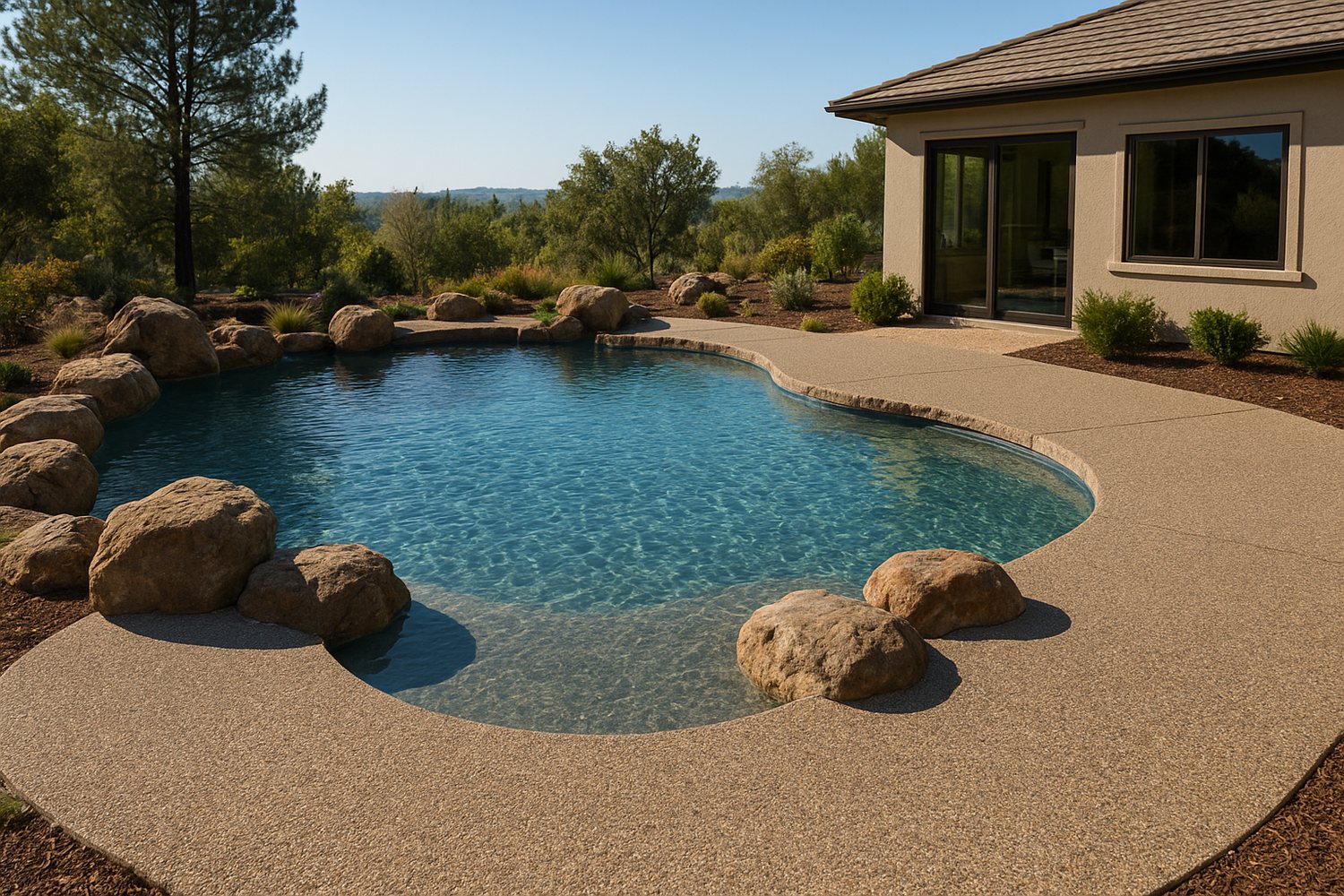
Seeded vs Integral: Understanding Exposed Aggregate Concrete
Get clear, practical guidance on the real differences between seeded and integral exposed aggregate concrete. Learn how stone choices and exposure depth influence results.
Exposed aggregate concrete is a favored option among homeowners looking for decorative, slip-resistant surfaces in outdoor areas. Californians have unique considerations with climate, style, and durability. If you’re planning a patio, pool deck, or walkway, understanding your exposed aggregate options can help you make the right call.
Exposed Aggregate: What It Means
Exposed aggregate concrete is a finish where the top layer of cement paste is removed to reveal natural stones embedded within. This process creates a textured, decorative look ideal for outdoor spaces. The resulting surface isn’t just aesthetic—it also offers built-in slip resistance, especially important around pools and patios.
The main appeal of exposed aggregate lies in its customizability. Homeowners can choose specific stones, aggregate sizes, or colors to complement their surroundings. The choice of cement color and finishing method affects the overall look, making each project unique.
With our region’s mix of modern and natural landscapes, exposed aggregate concrete surfaces naturally fit in yards from Folsom to Auburn. Whether you want your surface to stand out or blend in, aggregate finishes are a versatile solution.
- Slip-resistant surface for safety
- Unique custom appearance
- Durable and low-maintenance
See examples and additional details on ourExposed aggregate concretepage.
Seeded Aggregate: Maximum Customization
Seeded aggregate means additional decorative stones are hand-broadcast onto the surface of freshly placed concrete. After hand-troweling, the stones are embedded, and their exposure is controlled during finishing. This method gives you full control over aggregate color, type, and distribution density.
Homeowners looking for bold colors or a highly uniform look often prefer seeded aggregate. It lets you design your own blend and spacing, whether you want colorful glass, river pebbles, or contrasting stone. Because of this flexibility, seeded aggregate can make a distinct visual statement.
However, seeded aggregate generally involves more time and care during placement. Skilled crews are needed for even distribution, and meticulous finishing techniques help prevent stone pop-outs or bare patches.
- Custom blends—mix stone types or colors
- Precision over pattern and density
- Flexible for designs needing extra decorative effect
Integral Aggregate: The Built-In Approach
Integral aggregate is concrete made with decorative stone mixed throughout the entire batch before pouring. As the concrete is finished and the surface paste removed, the naturally mixed-in stones become visible. This technique is efficient when a subtle, even look is desired.
For homeowners preferring a more understated, natural finish, integral aggregate works well. It typically uses local river gravel, granite, or crushed stone. You can expect a more random, organic appearance due to the natural stone distribution in the mix.
Integral aggregate usually costs less labor than seeding since it doesn’t require hand broadcasting, but your customization is limited to what’s included in the concrete mix. Consistency is good, though dramatic contrasts or bold colors are harder to achieve.
- Stones mixed into the batch
- Naturally uniform look with less customization
- Simple installation, ideal for larger areas
| Feature | Seeded Aggregate | Integral Aggregate |
|---|---|---|
| Customization | High—choose color and stone | Limited—stone in mix only |
| Appearance | Bold, designed patterns possible | Organic, random look |
| Labor | More—manual seeding and finishing | Less—batch mixing |
| Best for | Statement patios, accents | Large, unified areas |
| Regional Notes | Suits premium projects | Efficient for standard jobs |
Comparing Seeded and Integral Aggregate
It’s worth weighing seeded and integral aggregate side by side. Both deliver durable, beautiful surfaces, but their specific advantages can make a difference for your project. Consider whether you value maximum design flexibility or streamlined installation.
Seeded methods let you target bold color or unusual stone, ideal for focal patios or accents. Integral works well for expansive driveways, walkways, or pool decks where cost efficiency and a natural look are priorities. Both can take our region’s temperature swings and summer heat.
Your decision will depend on your aesthetic goals, how visible the surface will be, the project budget, and the experience of the install team. Consult with a concrete pro who truly understands both options before making your call.
- Seeded: full design control
- Integral: efficient and cohesive
Selecting the Right Stone: Regional Favorites
In the Placer and Sacramento area, commonly used decorative aggregates include polished black or gray granite, natural river rock, gold or tan decomposed granite, or bold white stones. Glass chips and recycled aggregates are also sometimes used for special effects.
The choice of stone doesn’t just affect color—it also changes texture and how much the aggregate stands proud of the surface. Smaller pebbles give a tighter finish, while larger stones create a bolder, more noticeable surface profile.
Some aggregates available locally offer exceptional durability and weathering properties, holding color and resisting pit marks from freeze-thaw or pool chemicals. Always ask your concrete contractor about what’s locally available for the best balance of look and lasting power.
- River gravel: rounded, natural look
- Granite: sharp edges, lots of sparkle
- Decomposed granite: gold-tan hues, softer profile
Learn more about other decorative and functional options in ourConcrete surfaces overview.
Choosing Exposure Depth for Texture and Traction
How deeply the aggregate is exposed matters for both looks and performance. Deeper exposure reveals more stone, increasing the texture but also the potential for roughness underfoot—especially in bare feet around pools.
A light exposure keeps most stone partially embedded, offering a refined finish and moderate traction. Deeper exposure has a coarser, more visibly textured result. Each approach has benefits depending on your priorities, such as appearance, comfort, or slip resistance.
Professional installers will advise on the best depth for your specific use. Generally, walkways and patios benefit from moderate exposure, while pool decks may call for a lighter touch to balance comfort and slip-resistance.
- Light exposure: subtle, comfortable finish
- Medium: visible texture, good slip resistance
- Deep: bold look, maximum traction, can be rougher
Maintenance and Longevity Tips
Exposed aggregate is well-suited to Northern California’s mix of rainy winters and hot, dry summers. Routine cleaning with a garden hose or pressure washer removes dust, pollen, and organic buildup, preserving surface appearance.
Periodic sealing helps protect aggregate finishes from stains, water intrusion, and premature wear. Quality sealers also enhance natural colors and make cleaning easier. Ask your installer about the right sealer for your chosen aggregate and surface location.
Most issues—like pop-outs or dramatic color fading—result from improper installation or skipped maintenance. With basic care, exposed aggregate can look new for many years, providing traction and style for all kinds of outdoor spaces.
- Sweep or rinse regularly
- Reseal every 2–3 years for best results
Bringing Your Vision to Life
Planning your home’s hardscape means blending function with style and climate-smarts. Exposed aggregate offers a tough, attractive finish options for our neighborhoods in Rocklin, Roseville, Granite Bay, and beyond. Thoughtful choice of aggregate, finish method, and exposure will ensure your surface fits your family’s needs.
Work with a concrete team that understands both seeded and integral techniques and can source the ideal aggregate for Northern California. Be clear about your goals—visual impact, comfort, maintenance—and ask specific questions before you pour.
No matter your plan—patio, pool walkway, or garden paths—a well-executed exposed aggregate job can last for decades. Take your time with design decisions so you enjoy both the look and feel with every season.
For specific advice on stone, depth, and finishes for your home,request a consultation.
Planning a concrete project?
Call or text 916-741-0633, or email sales@californiahardscapes.com with your address, a short description and a few photos, and we will arrange a consultation.