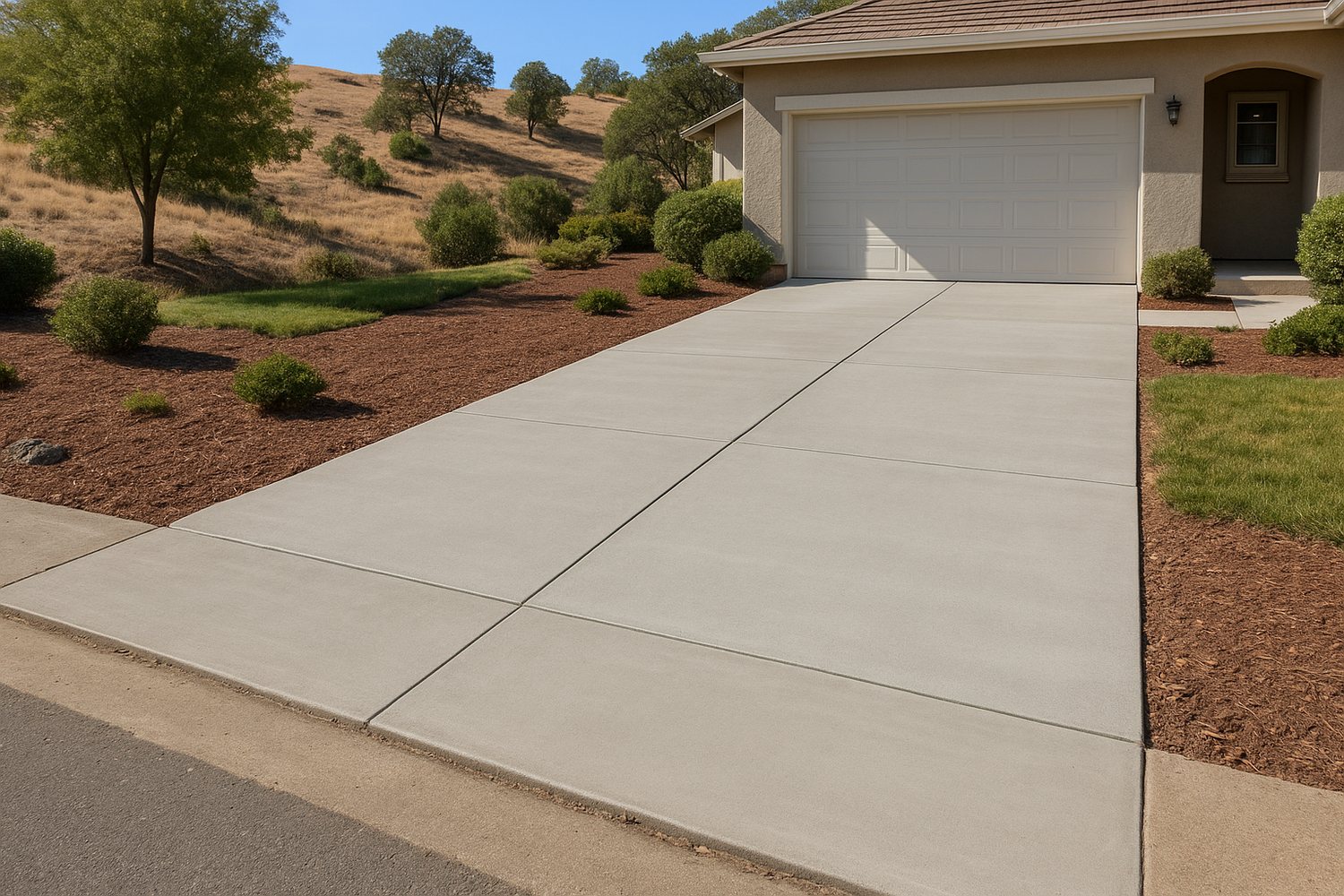
Concrete vs. Pavers vs. Asphalt: Choosing the Right Driveway for Your California Home
Deciding between concrete, pavers, or asphalt for your driveway or RV pad? Learn the advantages and trade-offs in our local climate to make an informed choice.
Driveways and RV pads set the tone—and the function—for your home’s entry. With Rocklin, Roseville, and nearby communities’ unique climate and soil, picking the right material means balancing looks, longevity, and practicality.
Understanding Our Local Climate Challenges
The greater Placer, Sacramento, and El Dorado County area battles with hot, dry summers and the occasional winter frost. Driveway materials have to manage UV, heat, and seasonal fluctuations in moisture. Whether you’re parking everyday vehicles or a heavy RV, performance under local conditions counts.
Many homeowners notice premature cracking, fading, or settling when materials aren’t matched to our weather. Soil movement, intense sunlight, and periodic rain take a toll over time. Using well-chosen materials and installation techniques ensures both durability and curb appeal.
It’s not only about temperature swings—tree roots, clay soils, and heavy use also play into how a driveway stands up year-round. Knowing what challenges you face is the first step in making a sound investment for your home.
- Intense heat can soften or crack some driveway materials.
- Heavy rain and frost cycles may cause settling or shifting.
- Tree roots and local clay soil influence long-term driveway health.
For more details, visit ourConcrete Driveways and RV Padspage.
Concrete: Durable and Practical for Every Home
Concrete is a proven choice for driveways and RV pads. When expertly installed and properly cured, it offers impressive strength against California’s summer heat and rare winter chills. Its seamless slab format helps resist weed growth and keeps maintenance minimal.
Concrete adapts well to residential loads, from compact cars to full-size RVs. It can be colored, textured, or even stamped for a custom look, but classic brushed finishes remain popular for slip resistance and longevity. Expansion joints are key to help manage cracking from ground movement or thermal stress.
In our local climate, concrete’s light color reflects heat—helping your driveway and adjacent spaces stay cooler. While small surface cracks are normal over time, with professional installation and proper sealing, you can expect concrete to serve reliably for years.
- Seamless surface reduces weeds and trip hazards.
- Can handle heavy vehicles like RVs with proper reinforcement.
- Custom looks: broom, stamped, or colored finishes available.
Pavers: Flexibility and Upscale Aesthetics
Interlocking pavers are a stylish alternative, popular for their high-end appearance and flexibility. Individual pavers naturally flex and settle with shifting soils, making them resistant to cracking compared to monolithic surfaces. This trait is particularly helpful in areas with clay soils like Granite Bay and Auburn.
Pavers are available in a wide variety of colors, textures, and shapes. Repairs are straightforward—if a section is stained or settles unevenly, single units can be swapped out. However, weeds sometimes grow between joints, so occasional maintenance is needed to keep things tidy.
While pavers excel in curb appeal, they do tend to cost more up front and require a precise installation process, especially if they’re to support heavy RVs or trucks. Your installer’s attention to base preparation and grading directly impacts paver performance over time.
- Elegant looks, many color options.
- Movable units flex with ground shifts.
- Easily repairable by replacing affected sections.
| Feature | Concrete | Pavers | Asphalt |
|---|---|---|---|
| Upfront Cost | Moderate | High | Low |
| Durability (Local Climate) | Excellent | Excellent | Fair |
| Maintenance Needs | Low | Medium | High |
| Heavy Vehicle Suitability | Excellent | Good with base prep | Poor |
| Repairability | Limited | Excellent | Good |
Asphalt: The Fast, Budget-Conscious Option
Asphalt driveways are valued for quick installation and lower initial costs. Their dark surface absorbs warmth, making them more prone to softening in northern California’s high summer temperatures. You may notice tire indentations or surface stickiness during heat waves.
The flexibility of asphalt helps manage ground movement, but it’s vulnerable to cracking over time, especially at the edges. Regular sealing is critical to block UV degradation, oxidation, and water infiltration. Without it, asphalt driveways fade and deteriorate much faster.
Compared to concrete and pavers, asphalt typically requires more frequent maintenance such as patching and resurfacing. It’s better suited for homeowners who want a functional short-term solution or who anticipate replacing or upgrading the surface in the coming years.
- Quick installation, often usable in just a day or two.
- Prone to softening and scuffing in summer heat.
- Needs regular sealing for lasting performance.
Performance Comparison Table: Concrete, Pavers, and Asphalt
To simplify your decision, here’s a practical side-by-side look at how each driveway material stands up to local conditions and key homeowner needs.
This table weighs durability, appearance, typical maintenance, and suitability for RV loads. Local climate factors like UV exposure, soil movement, and temperature swings inform each rating.
Remember, installation quality often tips the scales—a professionally prepped and poured surface outperforms any material done on the cheap.
Explore the full range of ourConcrete optionsfor your home.
What to Consider for RV Pads in Our Area
RV pads are subject to greater weight and longer stationary loads compared to regular driveways. For the Rocklin and Folsom areas, soil support and slab thickness matter—a typical driveway pour may not be robust enough for big rigs or trailers parked for months.
Concrete, with proper reinforcement and base preparation, is particularly well suited to heavy vehicles. Pavers can work if installed over a professionally prepared compacted base, but must be thick enough to handle the load. Asphalt tends to deform under prolonged, heavy weight.
Drainage is another key consideration, especially near house foundations or landscaping. Ensuring water flows away from the RV pad—and preventing pooling beneath tires—protects both your vehicle and hardscape from damage.
- Use thicker, high-strength concrete for RV pads.
- Pavers require extra base prep for RV use.
- Mind drainage to avoid water settling under tires.
Installation: Why Professional Prep Matters
Correct base preparation shields your driveway from settling, cracks, and premature repairs. Local soils can expand, contract, and shift seasonally. A well-compacted, properly graded base makes the most difference—no matter which material you choose.
For concrete and pavers, precision in grading, reinforcement, and joint placement helps handle tree roots and thermal movement. Skimping on this step leads to the headaches homeowners fear: regrading, trip hazards, and uneven surfaces.
With decades of experience in concrete and hardscape construction throughout this region, the right contractor knows what to expect—and how to prevent costly mistakes before concrete or pavers go down.
- Poor prep leads to visible problems within months.
- Clay and expansive soils complicate local installations.
- Choose experienced crews for optimal driveway life.
Maintaining Your Driveway for Longevity
Regardless of which surface you select, routine upkeep extends lifespan and keeps your investment looking sharp. Sealing concrete and asphalt driveways shields them from water, de-icing agents, and lubricants. It also helps retain surface color and resist minor staining.
For paver surfaces, regular sweeping and occasional weed control keep joints clean and attractive. Resetting settled sections promptly avoids trip hazards and water pooling. Occasionally adding sand to paver joints preserves lock-up and stability.
Well-maintained driveways perform better when stressed by seasonal weather or heavy RV parking. With the right care, the best surface for your home and lifestyle can offer reliable service and upscale curb appeal for years.
- Seal concrete and asphalt surfaces every few years.
- Keep paver joints clean and replenish sand as needed.
- Address stains or cracks early to prevent bigger repairs.
Ready to start planning?Request a consultationwith California Hardscapes.
Planning a concrete project?
Call or text 916-741-0633, or email sales@californiahardscapes.com with your address, a short description and a few photos, and we will arrange a consultation.