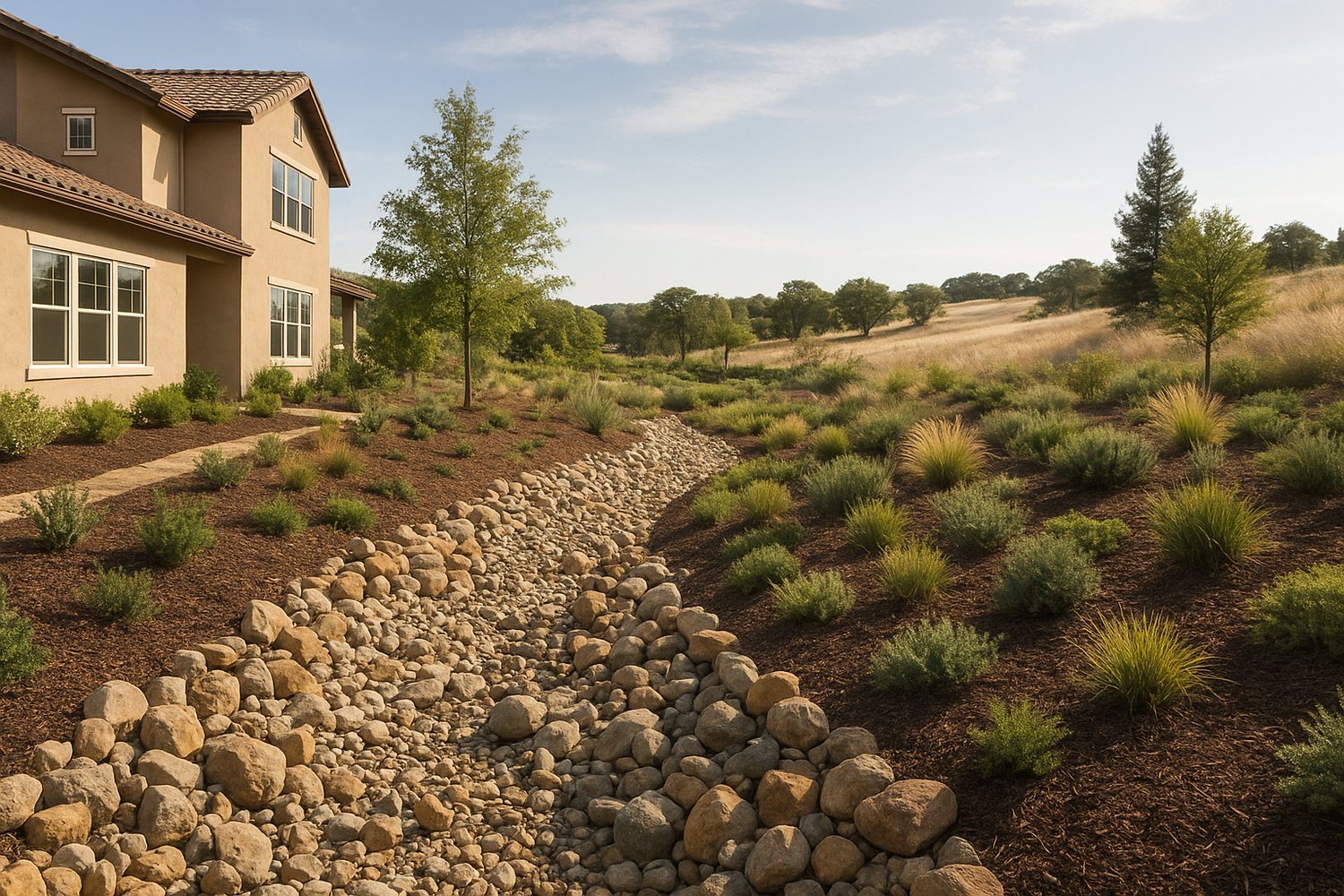
Where a Dry Creek Bed Fits Into Your Yard Plan
Find out how to choose the best location for a dry creek bed in your Northern California landscape. See practical planning tips from industry professionals.
A dry creek bed can solve drainage issues or add striking beauty to your yard. Smart planning—based on real landscape needs—brings the best results.
Understanding the Purpose of a Dry Creek Bed
A dry creek bed is more than decorative—the right planning can turn it into a problem solver. For many Rocklin, Granite Bay, and Auburn homeowners, it acts as both functional drainage and an eye-catching feature. Knowing your priorities will shape every decision moving forward.
Start by identifying what you want the dry creek to achieve. For some landscapes, it helps move water away from homes or patios after storms. For others, it provides an attractive focal point, breaking up lawn space or substituting for high-maintenance grass.
Remember that no two yards have identical terrain. Taking stock of unique water flow, low spots, or existing garden zones will help you get the most out of your dry creek bed. Local soils and rainfall patterns also play a role, especially in Placer and Sacramento foothill neighborhoods.
For more inspiration and regional planning advice, explore ourDry creek bedspage.
Analyzing Your Yard’s Natural Water Movement
Observation is key before digging a single trench. Pay attention after a heavy rain—where does water pool, run off, or cause erosion? This data helps map the best path for a dry creek bed, whether you’re in Folsom or along Auburn’s rolling lots.
Take note of any high and low points in your landscape. Water always follows gravity, so understanding natural swales or slopes helps you plan a creek bed that works with—not against—the land. Document these findings on a rough sketch of your property.
It’s also wise to consider outside influences: gutter downspouts, impervious patio areas, or neighbors’ runoff. Don’t guess at drainage. Careful analysis up front saves both time and later headaches.
• Walk your yard during or after rain to see water patterns.
Choosing the Best Location for Impact
Where your dry creek bed goes affects not only appearance but also long-term function. Lining it up along a natural slope or following a historic drainage swale helps it blend. Spaces between patios, retaining walls, or down a side yard can provide ideal creek paths.
Avoid running a dry creek too close to foundations or right at fence lines where water can pool or undermine structures. Leave space for plant roots and consider access for maintenance. Areas bordered by trees or shrubs often disguise the edges for a more natural feel.
Think visibility: do you want to make a statement in a front yard, or quietly tuck the creek away? In communities like Roseville and Granite Bay, visible dry creek beds can anchor overall curb appeal—that’s worth consideration in your planning.
| Solution | Appearance | Drainage Function | Maintenance | Typical Uses |
|---|---|---|---|---|
| Dry creek bed | Natural, visible | Surface, decorative & functional | Moderate—debris, weeds | Accent & drainage |
| Swale (grass or gravel) | Subtle, blends in | Surface water only | Low—mowing | Simple runoff control |
| French drain | Invisible | Subsurface, efficient | Low—periodic check | Water table or focused drainage |
| Drain pipe | Invisible | Targeted, efficient | Low—clogs possible | Major stormwater |
Integrating with Surrounding Landscaping
A dry creek isn’t an island—it should interact well with existing plants, patios, and hardscapes. Choose rock sizes and colors that echo other landscape elements for cohesion. Blend your creek edges into mulch beds or groundcovers for a seamless appearance.
Native and drought-tolerant plants work well along a dry creek’s banks in the Sacramento region. Plantings soften rock edges and provide color through the year. Look for grasses, sedges, or low shrubs that thrive in intermittent moisture.
If you already have paths, patios, or outdoor lighting, think about how a dry creek bed enhances them. You might use the creek to define a new outdoor room or separate zones, making each part of the yard feel purposeful.
- • Echo stone color from patio or retaining walls.
- • Use plantings that match the yard’s existing palette.
- • Extend mulch or gravel into creek edges for easy transitions.
- • Consider night lighting for drama and safety.
Addressing the Practical Side: Drainage Concerns
In many California landscapes, dry creek beds double as informal drainage systems. The main concern is moving water safely away from structures, preventing erosion and pooling after our occasional heavy rains.
Slope is crucial—a dry creek must follow the natural grade or be gently regraded to encourage water movement. The creek bed should never trap water against a house or patio. Adding a layer of landscape fabric under the rocks can help control weeds and erosion.
Think long-term: creeks need maintenance, especially after storms. Make sure you have clear access for removing debris, checking gravel compaction, and inspecting any pipes or outlet drains if used.
You’ll find more ideas for your property in the fullLandscaping optionsoverview.
Materials and Regional Considerations
Local stone types work best for dry creek beds: they’re more affordable, suited to our weather, and blend naturally. In the Rocklin and Auburn area, look for river rock, cobbles, or decomposed granite that won’t fade or shift easily.
Bulk materials should be sized to prevent them from washing away in fast water. Typically, a mix of large stones for edging and smaller gravel inside offers durability and a realistic look. Layering these sizes mimics authentic stream beds.
Remember our hot, dry summers and mild, wet winters. Select plants and mulch that can stand both conditions—most importantly, avoid weed-prone materials to cut maintenance throughout the seasons.
- • Use a blend of 2–3 local stone sizes.
- • Choose mulch or gravels that stay put even with runoff.
- • Prioritize California natives or adapted plants along banks.
Weighing a Dry Creek Bed Against Other Solutions
Not every yard benefits equally from a dry creek—the right drainage or accent option depends on your goals and landscape layout. Sometimes, a simple drainage swale or underground pipe works better.
Compare your property’s needs to other common approaches. Creek beds offer natural looks, but need space and some upkeep. Underground drainage is invisible but often costlier and may need professional install. French drains are another hybrid option.
Choose based on available yard size, maintenance tolerance, and your interest in a visible feature. There’s no one-size-fits-all solution—never hesitate to get site-specific advice from a seasoned pro.
Bringing It All Together: Getting Started
After careful planning, mark your intended creek path with a hose or string and step back for perspective. Does it look natural? Does it fit visually and solve practical drainage issues? Adjust now before construction starts.
Document your game plan: location, materials, intended grading, and plant choices. Don’t forget details like where mulch ends or the line of sight from main patio areas. These steps prevent last-minute changes and keep your vision on track.
Partnering with a hardscape professional ensures the build matches your expectations and area requirements. With experienced oversight, you’ll get a dry creek that works and looks right for your Northern California yard.
- • Outline the creek path before any digging.
- • Double-check drainage away from structures.
- • Keep a written plan for plants and materials.
- • Seek expert input when dealing with challenging sites.
Ready to discuss your yard’s layout?Request a consultationwith California Hardscapes today.
Planning a landscaping project?
Call or text 916-741-0633, or email sales@californiahardscapes.com with your address, a short description and a few photos, and we will arrange a consultation.