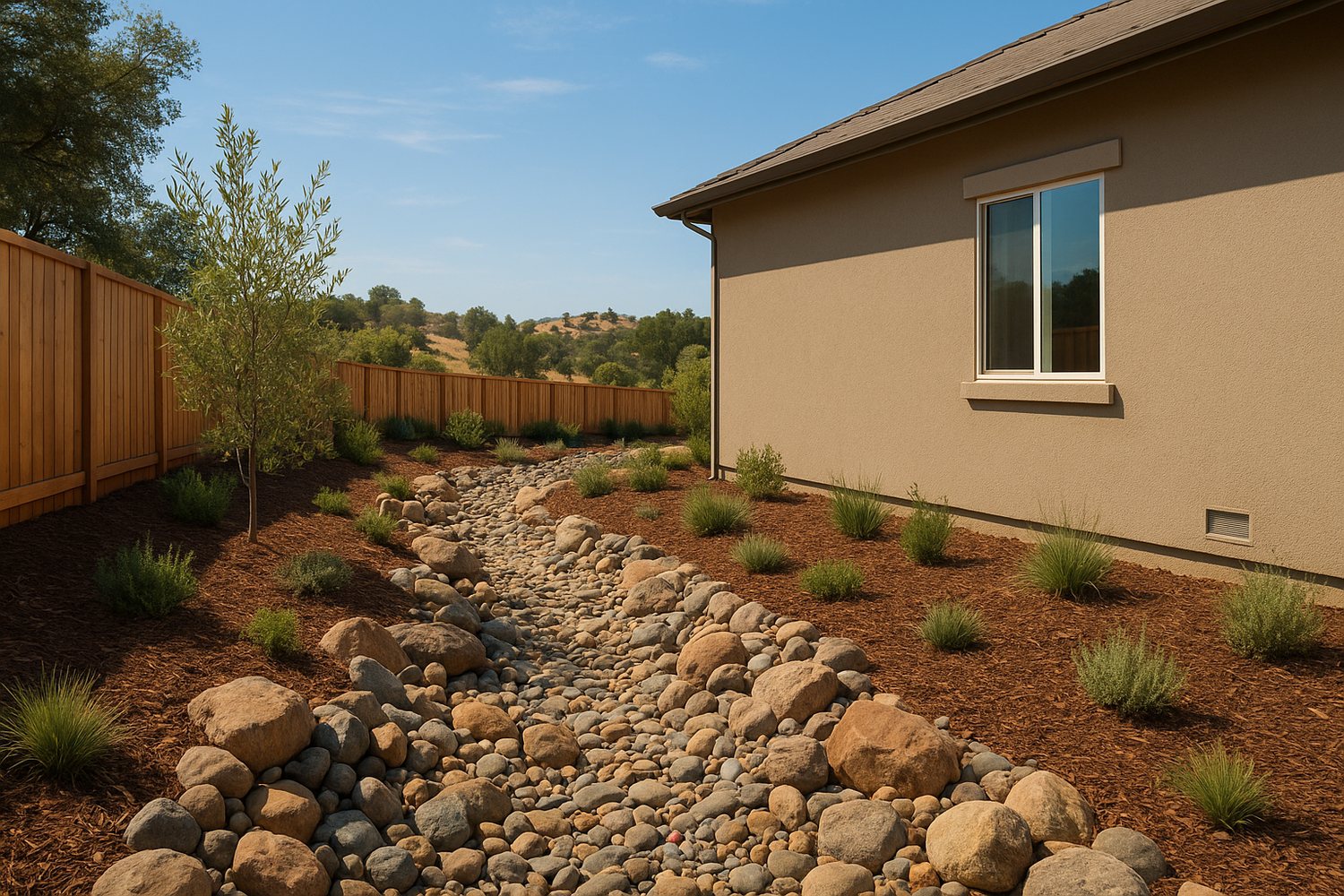
Dry Creek Beds That Really Handle Runoff: A Homeowner’s Guide
A dry creek bed can do more than look good—if it’s built right, it can move water away from your home and control erosion. Here’s what really works here locally.
Dry creek beds combine beauty with practical stormwater management—if they’re designed for our real Northern California conditions. Here’s how to get it right.
What Is a Dry Creek Bed—And Why Use One?
A dry creek bed is a shallow, stone-lined trench designed to guide stormwater runoff in your landscape. It mimics the look of a natural stream, but only fills with water during heavy rain. Homeowners in our local foothill and valley communities often consider dry creeks for the blend of curb appeal and erosion control.
Unlike simple swales or decorative rock, a proper dry creek bed directs runoff away from foundations and trouble spots. It slows and disperses water, helping prevent soil loss and drain blockages caused by pooling. If you struggle with water moving across your property during storms, a dry creek bed can help.
Dry creek beds also filter runoff, catch debris, and offer a low-maintenance landscape feature. They complement the native soils and slopes common in places like Rocklin, Roseville, and Granite Bay—and when installed right, they work year after year.
Curious to see more? Visit ourDry creek bedspage to learn about options and inspiration.
Where They Work Best in Placer, Sacramento, and El Dorado Counties
Not every yard will benefit equally from a dry creek bed. If you have a gentle slope, clay-based soils, or hardscapes that channel water, a well-designed creek bed can help prevent waterlogging and foundation issues. Our region’s quick-draining, rocky soils in foothill areas make them especially effective.
In newer Roseville and Folsom developments, you may notice more hard surfaces and compaction—meaning more runoff. A dry creek can slow and direct that water, keeping it out of patios, pathways, and planting beds. This feature shines in areas that see both winter storms and summer dry spells.
The key is placement. Install dry creeks where water naturally wants to flow—often at the lowest point of your yard or along the property edge—never fighting gravity. Properly integrated with existing drainage, these dry beds provide results, not just appearance.
- Ideal for sloped or uneven terrain
- Supports foothill and valley soil types
- Works with landscape drainage, not against it
Design Principles for Runoff You Can Rely On
Effective dry creek beds in our region require more than laying rocks in a trench. Start by mapping your yard’s runoff patterns—where does water collect after rain? This guides the shape and direction, ensuring your creek handles the actual volume, not an imagined one.
Depth and width matter. A typical dry creek is 12–18 inches deep and up to 36 inches wide, sized based on your property’s runoff. Layering is key: a base of compacted soil, followed by river rock, then decorative boulders and cobble. Proper grading ensures water keeps moving without causing washouts.
Native plants complete the design, stabilizing the banks and blending the creek into your landscape. Their roots reduce erosion and maintenance, supporting year-round function and beauty.
- Map runoff during a storm before digging
- Use mix of rock sizes for stability
- Slope at 1–3% for steady flow
Choosing Materials That Perform and Last
The stones and plants you choose for your dry creek bed have a lasting impact—not all are created equal. River rock from local suppliers resists movement and weather wear better than lighter decorative gravel. Go for stones between 3 and 8 inches for the creek base, with larger accent boulders to anchor high-flow areas.
Concrete or mortared stones can help in areas with especially heavy runoff, but most well-built creek beds use loose stones so water percolates through. For lined creeks, professional-grade landscape fabric prevents weeds but lets water through. Skip plastic liners, as these often lead to pooling or clogging.
Incorporate California native grasses or low shrubs along the banks for stability. They handle drought, make maintenance easier, and look natural with the stones.
- River rock (3–8 inches) for main channel
- Larger boulders for turns and drops
- Native plants for erosion control
Building for Real Rain, Not Just Looks
Our region gets unpredictable storms, from sudden downpours to sustained soaking rains. A dry creek bed must be sized to handle your worst-case runoff—not just what looks good in the sun. Plan for volume, with extra width or depth if in doubt.
Install rock check dams or step-downs at intervals to slow heavy flows. These features drop water levels and disperse energy, keeping soil and stones in place. In steeper yards, incorporate terraces or small pools within the channel to catch debris and let water settle.
Maintenance is another part of real-life performance. Occasional re-setting of rocks, debris clearing, and plant thinning ensure your creek bed works for years—not just through its first rainy season.
- Size it for major storms, not just drizzle
- Add check dams for stability
- Choose wider channels for heavy runoff
Explore our full range ofLandscapingsolutions tailored for Northern California homes.
Integrating Dry Creeks with Your Existing Landscape
A dry creek should fit into your landscape, not dominate it. Curving shapes mimic natural waterways and work with existing grades. Integrate the channel with hardscape features, directing water safely around patios or driveways instead of toward them.
Tie in natural-looking edges using flagstone or open gravel pads where needed. Native plantings and boulder groupings make the creek bed look intentional and established right from the start, instead of out of place or forced.
Consider adding low-voltage outdoor lighting along the channel for evening interest and safety. Careful integration enhances both function and appeal, transforming a practical feature into a unique landscape highlight.
- Blend creek beds with patios and walls
- Use complementary plant palettes
- Soft curves look more natural
| Feature | Dry Creek Bed | French Drain | Swale |
|---|---|---|---|
| Visible Appearance | Natural, decorative | Hidden underground | Low, grassy slope |
| Maintenance | Clear debris, occasional reset | Flush/snake pipe | Mow or trim grass |
| Best For | Surface water, curb appeal | Subsurface water, wet soil | Broad, shallow flow |
| Cost | Varies by size/material | Usually higher (materials, install) | Lowest, if lawn is present |
Comparing Dry Creek Beds with Other Drainage Solutions
Dry creek beds offer more than curb appeal—they compete with standard solutions like French drains and swales. The key is understanding the pros and cons for your specific needs and local conditions.
Unlike a French drain, a dry creek collects and channels surface water above ground, making maintenance easy and repairs straightforward. Swales often require turf or thick planting, while creek beds are better suited to ornamental and low-water landscapes.
Choose a creek bed when you want to combine function with beauty—especially on slopes or where landscaping is a priority. French drains work best for subsurface water issues, and swales are cost-effective but less visually interesting.
Getting Started: What to Expect and When to Call Pros
If you’re handy and patient, small dry creeks can be a realistic DIY project—just plan for some serious digging and rock hauling. Accurate grading and sizing are where most DIY attempts fall short, so consider consulting a pro for larger or more complex yards.
Local contractors bring knowledge of soil conditions, drainage codes, and the right material choices for our mix of clay, sand, and granite. Licensed, bonded and insured contractors like the ones California Hardscapes works with ensure drainage features really perform, not just look finished.
Ready to see how a dry creek could solve your yard’s runoff? Gather photos and notes on your water trouble spots, and reach out for an expert opinion. Solid planning now means less stress—and water—next storm season.
- DIY is possible for small creeks
- Complex grading needs professional help
- Gather info on water flow before starting
Ready to tackle runoff or want experienced advice?Request a consultation—we’re here to help.
Planning a landscaping project?
Call or text 916-741-0633, or email sales@californiahardscapes.com with your address, a short description and a few photos, and we will arrange a consultation.