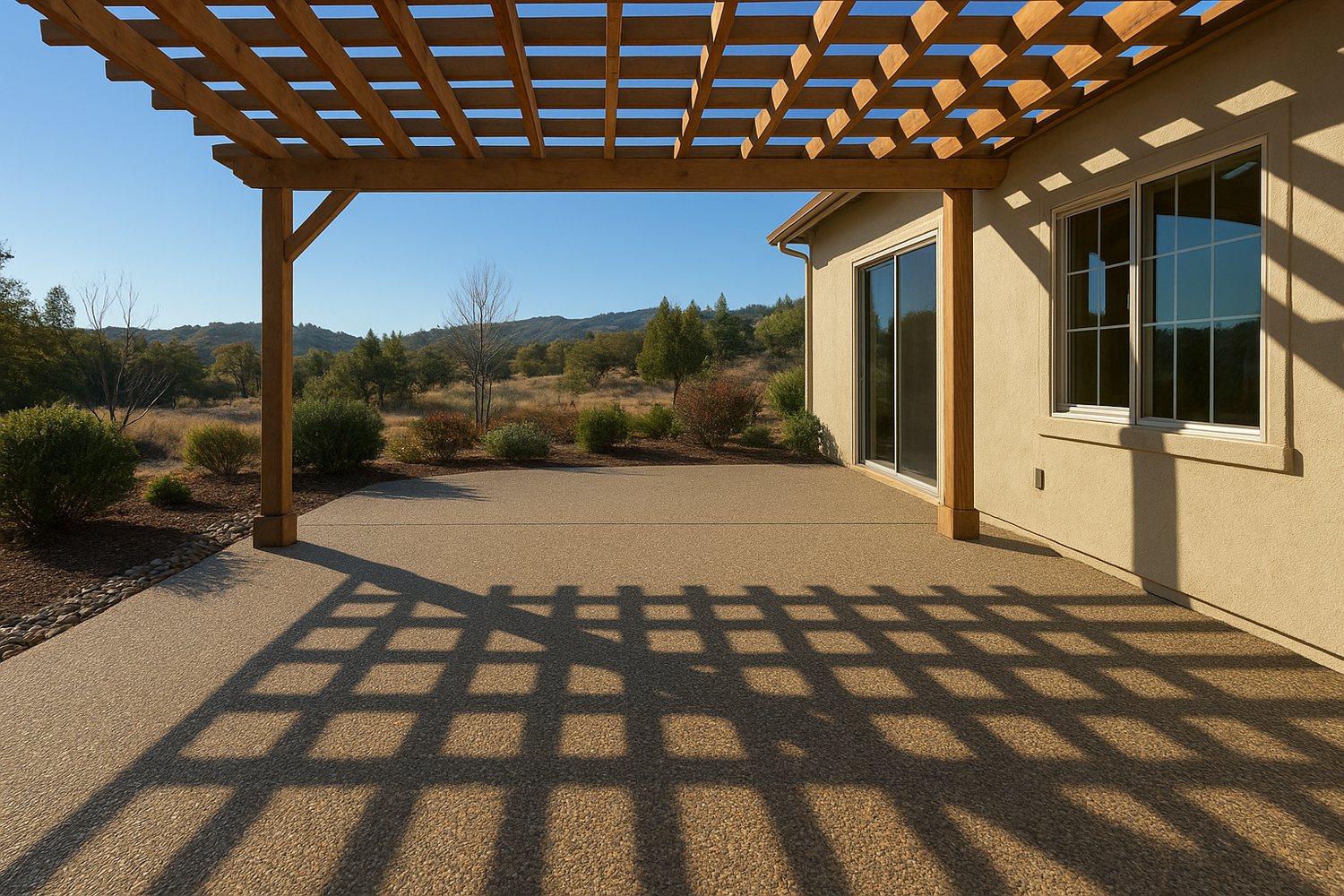
Caring for Exposed Aggregate Concrete: Sealing & Surface Repair
Proper care keeps exposed aggregate concrete beautiful and resilient. Learn regionally specific tips on sealing schedules and restoring worn or loose areas.
Exposed aggregate concrete offers both beauty and grip, but it needs attention to last in our unique Sacramento area climate. Here’s what homeowners need to know about protecting and maintaining their investment.
Why Exposed Aggregate Needs Care
Exposed aggregate concrete stands out for its texture and durability, but it’s not immune to weather and wear. Rain, irrigation, and local temperature swings can loosen stones and dull the surface. Over time, grit and debris can also build up.
Without regular care, aggregate surfaces may lose their luster and structural integrity. Unsealed concrete is more likely to absorb water, leading to staining or premature breakdown, especially near landscaping or shaded areas.
A little effort goes a long way. With a sound maintenance plan, exposed aggregate can keep looking premium and performing well for decades—a wise investment for your patio, driveway, or walkways.
For in-depth details on finishes and applications, visit ourExposed aggregate concretepage.
Understanding Sealing and Its Benefits
Sealing is crucial for exposed aggregate. It acts as a barrier against water, stains, and UV rays, which are plentiful in the Sacramento Valley. A quality sealer also restores depth and darkens the colors of the stones, showing off their natural beauty.
There are two main types of sealers: penetrating sealers and film-forming sealers. The right type depends on your use and desired finish (matte or glossy). Both help limit damage from freeze/thaw cycles and increase resistance to de-icing salts or pool chemicals.
Besides enhancing curb appeal, sealing helps lock in loose aggregate and deter moss or mildew—common concerns in shaded or irrigated areas around Rocklin and Granite Bay.
- Protects against stains and UV rays
- Reduces risk of loose or dislodged stones
- Enhances natural stone color and surface gloss
When to Reseal: Schedules for Local Conditions
Most exposed aggregate concrete in our region should be resealed every 18 to 36 months, depending on sun exposure, foot or vehicle traffic, and irrigation runoff. Observe your surface after rain or cleaning—if water soaks in instead of beading, it’s time to reseal.
The ideal time for resealing is spring or fall. Avoid sealing during extreme heat or just after rain, when the aggregate is wet. Proper prepping—cleaning thoroughly and letting it dry—is just as important as choosing the right sealer.
If you notice dullness or fading before your next scheduled reseal, you can spot treat high-traffic or sunny zones. This approach helps protect trouble spots without the need for a full reseal.
- Check for water absorption every few months
- Plan to reseal walkways and patios every 2–3 years
- Spot treat busy or sun-exposed areas after one year
| Surface Problem | DIY Solution | When to Call a Pro | Usual Tools/Materials |
|---|---|---|---|
| Loose single stones | Epoxy patch kit | If area exceeds palm size | Epoxy kit, trowel, matching stones |
| Dull/faded surface | Clean & reseal | Recurring after sealing | pH-neutral cleaner, sealer, roller |
| Deep staining | Scrub with cleaner | Stain is widespread | Soft brush, pH-neutral cleaner |
| Chipped edges | Fill with patch product | Edge spalling or cracking | Concrete patch or mortar |
| Slippery surface | Add anti-slip with sealer | Slip persists or large surface | Anti-slip additive, sealer |
Dealing with Loose Stones and Dull Surfaces
Loose aggregate stones are common with older concrete or areas under heavy stress (like driveway tire tracks). If just a few pebbles come loose, repair is usually straightforward: clear debris, use a two-part epoxy or patch product, and press the stones back.
For larger patches or consistently loose stones, contact a concrete specialist. Sometimes the underlying matrix may need attention, especially if water has seeped below or the original pour was thin.
Dull or chalky surfaces often occur when sealers break down under UV rays or heavy use. A gentle cleaning and reapplication of sealer can restore most finishes. Avoid aggressive scrubbing, which can erode aggregate or drive stones loose.
- Replace missing aggregate promptly to avoid further damage
- Epoxy patch kits or polymer-modified mortars are best for small areas
- Call a pro if large areas loosen or the concrete substrate is compromised
Cleaning Tips That Won’t Damage Aggregate
Routine cleaning keeps your exposed aggregate looking sharp. Gentle sweeping every week and seasonal hosing off typically suffice. Use a leaf blower or soft brush to dislodge debris between the stones without scratching or pulling them loose.
Avoid high-powered pressure washers unless used skillfully at low pressure and a wide spray angle—a too-strong jet can dislodge aggregate or create pits. A mild pH-neutral cleaner is enough for most spills or surface stains.
Prevent organic buildup by trimming nearby plants and clearing mulch or leaves regularly. Reducing shaded, damp zones minimizes moss or algae growth, especially in the cooler neighborhoods around Auburn or Folsom.
- Sweep or blow debris weekly
- Rinse gently—use pressure washers with caution
- Clean stains with pH-neutral solutions, not acids
You can also explore allConcretesurface options to compare practical differences.
Common Local Issues and How to Prevent Them
Our region’s combination of clay soils, irrigation, and sun can bring on unique challenges. Poolside aggregate is prone to chemical exposure, while front walkways often battle irrigation overspray and mud.
Proactive edging, well-planned drainage, and keeping sprinkler heads adjusted away from hardscape help reduce surface wear. Limiting fertilization or chemical runoff onto concrete also helps avoid staining or deterioration.
Ask about slip-resistant surface options or additive treatments if your area gets a lot of shade, such as under mature oaks in Granite Bay or in Auburn’s wooded settings. These can be added during sealing to increase safety.
- Redirect sprinklers to minimize overspray
- Sweep up soil or lawn clippings promptly
- Consider anti-slip treatments for shaded patios
When It’s Time to Call a Local Pro
DIY patching is effective for minor issues, but persistent loose stones, large worn patches, or recurring staining may point to deeper problems. Local pros know how to assess sub-base issues or structural wear tied to our soils and weather patterns.
A professional can also recommend the best sealers for your exact microclimate—matte for shady spots, gloss for sun, specialty formulas for pool decks. Tailored advice matters as materials and local plant debris can impact longevity.
If you’re not sure whether to patch or resurface, an in-person consultation will clarify your options. A pro can also ensure repairs blend in, maintaining that premium finished look throughout your outdoor living areas.
- Persistent issues? Seek a regional expert
- Pros help with color matching and seamless repairs
- Special advice for pool decks and tree-covered patios
Your Exposed Aggregate Can Go the Distance
A bit of routine maintenance—sweeping, strategic cleaning, and timely resealing—preserves the investment you made in exposed aggregate. When problems do pop up, they’re much simpler to address early, before they spread.
Homeowners in Rocklin, Roseville, Granite Bay, Folsom, and Auburn all share the same local challenges, from intense summers to clay soils and active landscaping. With a solid care plan, exposed aggregate can keep looking stunning for many years.
If you need concrete advice, have a question about sealing schedules, or want repairs assessed, start by talking to a seasoned local provider. Durable hardscapes begin with the right upkeep.
If you’d like advice or a site assessment, you’re welcome torequest a consultation.
Planning a concrete project?
Call or text 916-741-0633, or email sales@californiahardscapes.com with your address, a short description and a few photos, and we will arrange a consultation.