Exposed Aggregate vs. Broom Finish: What’s Best for Your Driveway?
Explore whether exposed aggregate or broom finish concrete is the better fit for your driveway or sidewalk. Learn the pros, cons, and practical factors for the Rocklin area.
Concrete surfaces set the tone for home exteriors across Placer, Sacramento and El Dorado Counties. With driveway and walkway options ranging from simple to striking, two finishes stand out: exposed aggregate and broom finish.
Understanding Surface Finishes: Exposed Aggregate and Broom Finish
Both exposed aggregate and broom finish are popular for driveways and walkways, but they create distinct looks and textures. Exposed aggregate reveals natural stone and gravel, giving a pebbled, textured effect. Broom finish uses a brush to create subtle, linear grooves for grip on otherwise smooth concrete.
Homeowners in Rocklin, Roseville, Folsom and nearby towns often debate which finish will handle weather, local soils, and curb appeal best. The right answer depends on function, style, and your maintenance preferences.
Concrete is more than gray slabs—it adds context and beauty to landscaping. Picking a finish means considering how it complements your home architecture, nearby landscaping, and daily foot or vehicle traffic.
Explore the details on ourExposed aggregate concretepage.
Exposed Aggregate: Durability Meets Design
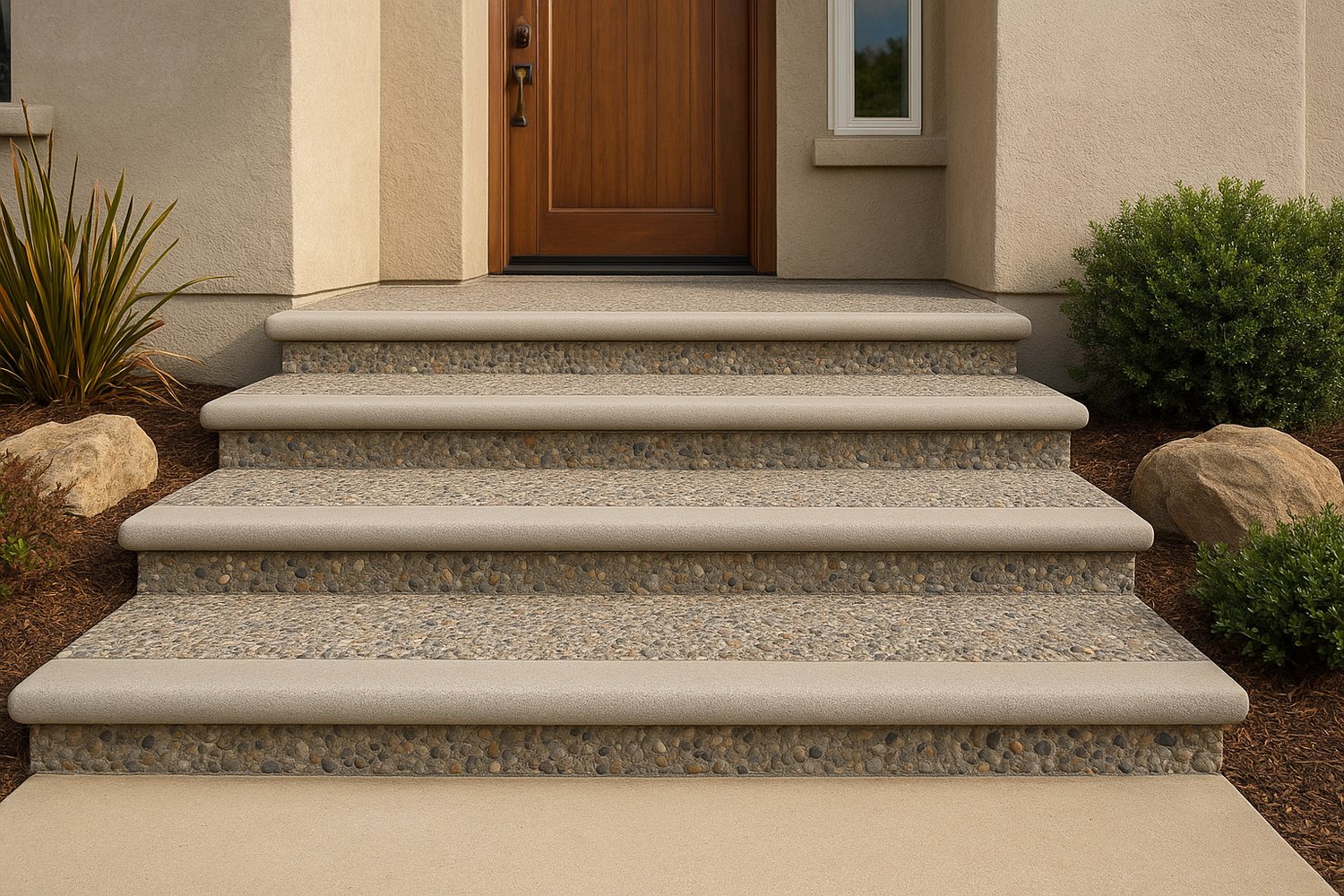
Exposed aggregate stands out for its colorful, stone-studded surface. After pouring, contractors wash away the top layer to reveal the decorative aggregates beneath. This process leaves a surface that’s both tough and visually distinctive, with a regional limestone or granite look common to our area.
Local homeowners value exposed aggregate for its skid resistance, making it a safe choice where rain, pool water, or irrigation can cause slick spots. It’s particularly attractive for sloped driveways, curved paths, and pool decks that need grip.
The textured appearance also offers versatility in color and material choices, letting you match or contrast nearby landscaping or stonework. While installation expertise matters, exposed aggregate is designed to endure seasonal changes and heavy use.
- Highly slip-resistant surface
- Visually striking with decorative aggregates
- Resists cracks and minor surface wear
Broom Finish: Simple, Clean, Practical
Broom finish concrete remains the standby for many driveways and walks. After concrete is placed, a specialized broom is dragged across the surface for a clean, subtle texture. This process is simple and widely used across our region.
Broom finish tends to blend in with most architecture and landscaping. Its light grooves provide enough traction for vehicles and pedestrians in rain or dew but aren’t as deeply textured as exposed aggregate.
For cost-conscious projects or those seeking a minimal look, broom finish delivers performance without drawing much attention. It’s also straightforward to clean and maintain, making it a practical selection for busy households.
- Budget-friendly installation
- Clean, understated appearance
- Easy maintenance and repairs
| Finish Type | Pros | Cons | Best Uses | Maintenance |
|---|---|---|---|---|
| Exposed Aggregate | Slip-resistant, decorative, durable | More involved install, may need resealing | Sloped driveways, pool decks, statement walks | Reseal every 2–4 years |
| Broom Finish | Simple, cost-effective, easy to repair | Less decorative, basic look | Large flat areas, basic walks and drives | Basic cleaning, occasional repairs |
Performance in Our Region: What to Expect
Our Placer, Sacramento and El Dorado County climate—including hot, dry summers and occasional winter freeze—puts exterior surfaces to the test. Both finishes handle sun and weather, but their textures affect performance in specific spots.
Driveways and walks in shaded or wet areas, or downhill stretches, benefit from exposed aggregate’s non-slip quality. For broad, flat surfaces that see more debris, broom finish may be easier to sweep or keep clean.
Both options hold up against heat and soil movement common in Rocklin and Folsom. Key is proper installation: experienced contractors like California Hardscapes prepare the subgrade, reinforcement, and drainage to local standards.
- Both resist summer heat and winter chill
- Exposed aggregate preferred on slopes/pool adjacencies
- Broom finish well-suited for level, high-traffic zones
Maintenance and Longevity: Real-World Considerations
Exposed aggregate and broom finish concrete are both tough, but maintenance routines differ. Aggregate may need resealing every few years to enhance color and preserve stone exposure.
Broom finish requires less ongoing care. Dirt and stains tend to be more noticeable, but are usually easier to wash off with basic equipment. Repairs—even future patchwork—blend more easily with broom finish than with distinct aggregate patterns.
Whichever finish you choose, keep expansion joints clear and address cracks early. Regular cleaning ensures your investment keeps its curb appeal, especially through pollen, leaves, or irrigation overspray.
- Aggregate: periodic resealing optimizes appearance
- Broom finish: easy cleaning and patching
- Keep surfaces clear of debris for best lifespan
For a broader list of options, see ourConcrete options overview.
Aesthetic and Curb Appeal Differences
If your goal is to make an entrance, exposed aggregate creates visual interest and can complement stone, stucco, or modern architecture. Using local materials, it blends with historic or contemporary styles in Roseville, Auburn and Granite Bay.
Broom finish is classic and neutral. For homes with bold landscaping or colorful exteriors, its simplicity may be a better backdrop. Since broom finish is a time-tested standard, it works well for those who prefer understated looks.
Either finish provides a professional, sturdy first impression. The right call aligns with your home’s style, existing hardscapes, and even local HOA preferences.
- Aggregate: stands out, complements stone and tile
- Broom: blends in, suits traditional curb appeal
- Regional aggregate choices available
The Installation Process: What Homeowners Should Know
The real success of any driveway or walkway finish is in the installation. Exposed aggregate takes extra skill and time—proper washing, timing, and seeding of decorative stone are key for even results.
Broom finish is more forgiving and fast to install, but still requires expertise to achieve consistent texture and avoid premature drying in summer. California Hardscapes draws on decades of local experience to get both finishes right.
Permitting, grading, compaction, and weather timing are all part of the process. No matter the choice, be clear about your maintenance preferences when you consult with a contractor.
- Aggregate: more steps, needs experienced crew
- Broom: quicker, easier for small or large slabs
- Timing and weather critical for both
How to Choose: Decision Tips from Local Experts
Before you commit, weigh aesthetics, function, future care, and daily use. If slip resistance or eye-catching design matter most—especially on slopes, near water, or with lots of foot traffic—exposed aggregate stands tall.
If you prefer simpler looks, want easy future repairs, or are building over large areas, broom finish may be the smarter investment. Consider where debris settles, whether the surface will see oil, shade, or lots of vehicles.
California Hardscapes brings local knowledge—of soils, material sources, and installation best practices—to every project. Reach out for real advice as you weigh the best finish for your walk or driveway.
- Prioritize safety for slopes or wet spots
- Think about future maintenance and repairs
- Work with a contractor who understands local soils and weather
If you’d like tailored advice,request a driveway or walkway consultationtoday.
Planning a concrete project?
Call or text 916-741-0633, or email sales@californiahardscapes.com with your address, a short description and a few photos, and we will arrange a consultation.