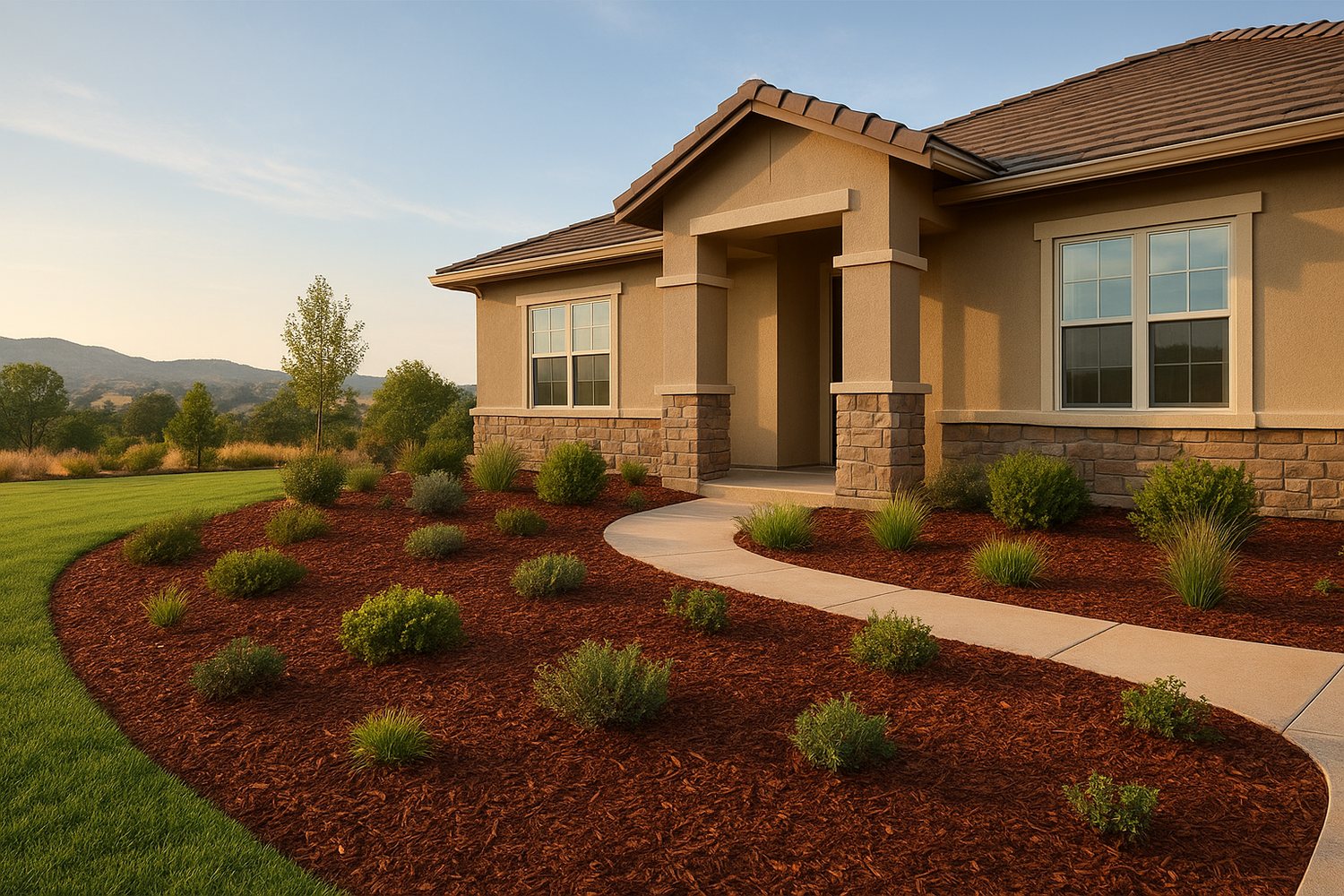
Fire-Wise Mulch and Bark Choices for Local Homes
Select mulch or bark with fire safety in mind. Protect your home with the right materials and smart placement for defensible, attractive landscaping.
Choosing mulch and bark is about more than curb appeal—it’s a critical step to making your landscape safer from wildfire risks. Here’s what homeowners in Rocklin, Roseville, Granite Bay, Folsom, Auburn and neighboring areas should know about planning fire-wise mulch zones near the house.
Why Fire-Wise Mulch Matters Here
Our foothill and valley communities experience hot, dry summers and increasingly variable fire seasons. Mulch is common for controlling weeds and keeping plant roots cool, but not all mulch materials behave the same when exposed to sparks or embers. The right choice near your home can reduce the risk of ignition during a wildfire event.
Research and recent fire guidelines from Cal Fire and UC Cooperative Extension emphasize that homes should have a buffer zone with non-combustible or low-flammability materials. In practice, this means the first five feet around your home’s foundation is a critical area to plan carefully. What you put here can buy precious time in the event of airborne embers.
Using fire-resistant mulch materials and techniques is a practical, affordable layer of defense. It won’t stop a wildfire alone, but it makes your landscaping part of your larger home protection strategy. That’s why every mulch or bark choice matters, even if it’s just a thin layer around your beds.
For more details on types, benefits and proper placement, visit ourMulch and barkpage.
Common Mulch and Bark Materials
Homeowners have several options for mulch and bark, each with different appearance, cost and safety profiles. Typical organic choices found at most landscape supply yards include shredded wood mulch, bark nuggets, and wood chips. Inorganic options like decomposed granite (DG), gravel, and rock can also be used for ground cover.
The wood-based mulches are widely used for their attractive, natural look and ability to hold moisture in the soil. These can range in flammability depending on type and size: fine shredded materials or mini-chips tend to ignite more easily than larger bark chunks. Inorganic mulches don’t add nutrients to soil but offer advantages for fire resistance.
Understanding the real differences between these materials helps you make a choice that matches both your landscape vision and your region’s fire risk. Knowing how each product reacts to embers brings you one step closer to a defensible landscape.
Proximity: Where Mulch Actually Goes
Not all mulch in your yard is equal. Experts recommend special attention to the five-foot zone surrounding your structures—this area is where wind-blown embers tend to land, so every material here should be scrutinized for its fire risk. Mulch that’s perfectly safe farther from the house may not be appropriate close to walls or decks.
For this critical zone, Cal Fire and regional authorities encourage removing or limiting combustible mulches and using hardscape or non-flammable materials instead. That means gravel, rock or bare soil closest to the foundation, transitions to bark, mulch, or plantings further away.
Resist piling up any loose mulch, wood chips, or bark directly against siding, wood fences, posts or base of structures. Even decorative boulders or stepping stones can act as a fire-wise, attractive buffer that ties your landscape together.
- Keep mulch low (no more than 2 inches deep).
- Start with gravel, DG, or stone nearest your home.
- Never mound mulch against wood surfaces.
| Material Type | Best Use Zone | Fire Risk | Maintenance | Looks |
|---|---|---|---|---|
| Pea Gravel | 0–5 ft | Very low | Minimal | Neutral, blends easily |
| DG (Decomposed Granite) | 0–5 ft | Very low | Minimal | Fine, compacted look |
| Large Bark Nuggets | 5+ ft | Moderate | Seasonal refresh | Natural, bold texture |
| Shredded Wood Mulch | Beyond 5 ft | High | Seasonal refresh | Soft, natural finish |
| River Rock | 0–5 ft | Very low | Minimal | Decorative, classic stone |
How Organic Mulches Stack Up for Fire Safety
Organic mulches burn at different rates and temperatures, depending on how fine they are and what tree species they came from. Research shows shredded cedar and gorilla hair (fibrous, fine-textured mulches) ignite quickly and sustain flames longer than large bark nuggets or hardwood chips.
Pine bark and cocoa hulls, both popular for their appearance, are among the most flammable choices and not recommended close to fire-prone structures. By contrast, larger nuggets of fir or hardwood resist ignition longer, but all wood products still catch if exposed to intense embers or flames.
If you’re committed to using mulch for aesthetics or moisture retention, opt for the coarsest, largest chips you can, and avoid any finely shredded or sawdust-like products near the home’s edge. Mulch blends with recycled wood fiber can vary widely—ask your supplier about exact composition and fire performance.
- Best: Large hardwood nuggets or chips
- Avoid: Shredded cedar, pine and fine mulch
- Always: Use inorganic mulch within 5 feet of the house
Best Inorganic Alternatives for Defensible Zones
Inorganic mulches are top performers for fire-wise zones. Crushed rock, pea gravel and decomposed granite don’t support combustion and make excellent choices directly adjacent to building foundations, patios and wood decks.
Not only do these options reduce fire risk—they’re often low-maintenance, visually appealing and work well with both contemporary and traditional landscape design. They won’t improve soil quality, but in perimeter areas that’s less of a concern than protecting your home.
Consider mixing inorganic mulch with pavers, flagstone, or a pathway to break up the look and integrate the buffer area seamlessly with the rest of your landscape. With a smart plan, you get both fire protection and good design.
- Pea gravel and crushed stone are great around patios.
- DG compacts for walkways and visually clean zones.
- Decorative options include lava rock, river rock and cobble.
Explore more landscaping options by checking our overview ofMaterials.
Installation Techniques: Real-World Tips
Fire safety depends on both the material you pick and how you install it. For any mulch near your home, keep the layer thin—generally two inches or less. Thicker layers of wood mulch hold embers longer and can create a persistent smoldering risk if fires occur nearby.
Sweep or blow leaves, pine needles, and other debris regularly out of mulched beds. Even inorganic mulch beds aren’t fire-proof if debris accumulates on top. Clean zones make the best defensible buffers and preserve the look of your landscaping, too.
If you’re refreshing old mulch or bark, pull back any material that’s touching structures or is piled higher than recommended. This quick step gives you more control over moisture, weed prevention, and fire risk in your landscape.
- Keep mulch away from wood posts and siding.
- Top up inorganic mulch seasonally to fill gaps.
- Pair mulch beds with drip irrigation over spray.
Visual Appeal Without Sacrificing Safety
Many homeowners worry that using gravel or rock makes the yard look stark or inhospitable. But thoughtful design easily incorporates hardscape features, stepping stones, and clusters of potted plants for visual softness around walkways and home foundations.
Blending materials—such as alternating mulch beds, stone bands and drought-adapted plants—achieves both vibrant appearance and improved fire safety. Talk to your landscape professional about creative transitions between buffer zones and lush planted areas.
In areas farther from the home, you can safely return to more traditional bark mulch or groundcover plants, provided you maintain adequate separation and manage plant mass. With a layered approach, there’s no need to choose between landscape style and resilient design.
- Combine boulders with groundcover for softness.
- Use decorative gravel as mulch between stepping stones.
- Pots with succulents or flowers break up rock zones.
Making the Right Choice for Your Home
Each home and site in Rocklin, Roseville, Granite Bay, Folsom, Auburn and nearby areas is different—and so is every landscape. Your mulch or bark decision should balance curb appeal, property layout, and your home’s unique fire exposure.
A knowledgeable landscape contractor can advise on the best mix of fire-resistant mulch, hardscape and plantings for your property’s look and safety. Be sure to communicate any HOA guidelines, personal aesthetic preferences, and long-term maintenance goals up front.
When planning defensible landscape zones, it rarely works to copy one neighbor’s design wholesale. Instead, draw on regional best practices, expert recommendations and your own family’s priorities to create the right fire-wise solution for your outdoor space.
Ready for a fire-wise landscaping plan?Request a consultationwith our team.
Planning a materials project?
Call or text 916-741-0633, or email sales@californiahardscapes.com with your address, a short description and a few photos, and we will arrange a consultation.