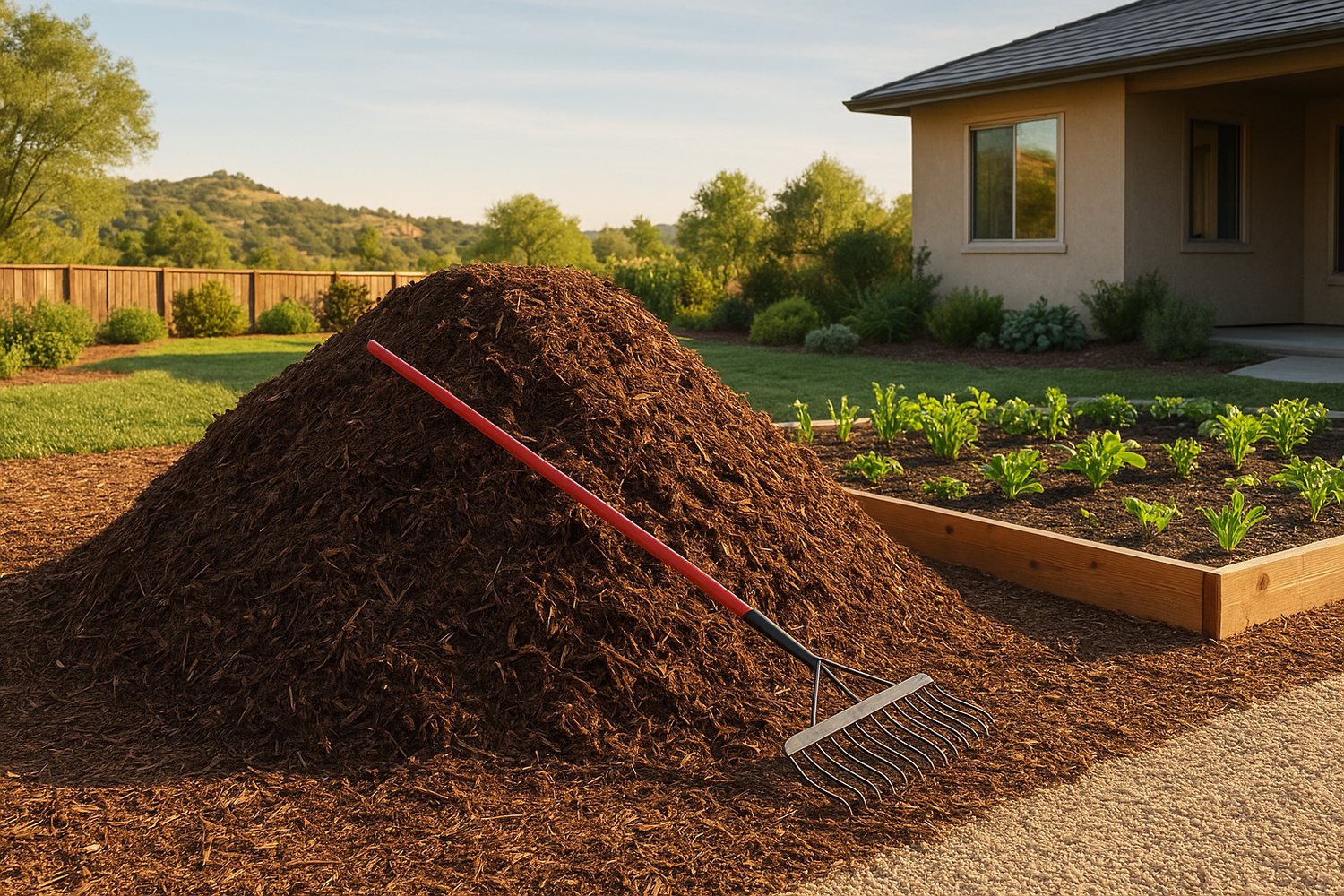
Bark, Wood Chips, or Rock: The Right Mulch for California Yards
Not sure whether bark, wood chips, or rock mulch is best for your landscape? Here’s a side-by-side look at the pros, cons, and practical tips for homeowners.
Choosing between bark, wood chips, and rock mulch often confuses homeowners. With the right info, you can invest wisely in materials that work for California’s climate and your yard’s needs.
Why Mulch Matters in Our Region
In areas like Rocklin, Roseville, and Folsom, mulch does more than make your yard look tidy. It regulates soil temperature, suppresses weeds, and reduces water evaporation, making irrigation more effective. The right mulch also helps with erosion during our rainy spells and keeps roots shaded when the summer sun hits hard.
The Placer, Sacramento, and El Dorado county climate—marked by long, dry summers and occasional heavy rain—demands a practical approach to mulch choice. Homeowners often overlook how certain mulches perform under intense UV, clay soils, or sloped lots. Picking carefully can mean less maintenance and a better-looking landscape year-round.
California Hardscapes gets questions about mulch daily. We know that the material you choose should balance beauty, function, and effort. There’s no one-size-fits-all solution, but knowing the basics of each type helps ensure you’re not wasting time or resources.
For details on available products and coverage tips, see ourMulch and barkpage.
Bark Mulch: The Decorative Standard
Bark mulch, often made from fir or pine, is prized for its natural look and ability to blend with most landscapes. It works well around trees, shrubs, and flower beds. Its texture and color range help highlight plants and soften hard edges, which is why you’ll see bark in so many front yards.
One substantial advantage is how well bark suppresses weeds while letting water reach the soil. It also slows erosion and breaks down over time, adding organic matter. In our hot summers, bark mulch keeps root zones cool and slows moisture loss—a boon for thirsty ornamentals.
However, bark mulch requires regular top-ups. Wind and rain can move lighter grades, and decomposition changes its look after a couple of years. If you love a tidy appearance and are prepared to refresh the surface periodically, bark mulch remains a top pick.
- Natural, classic appearance
- Boosts soil as it decomposes
- Needs renewal every 1–2 years
Wood Chips: Functional and Budget-Friendly
Wood chips are another organic option. Made from mixed tree trimmings or chipped branches, they tend to cost less and offer a chunky, rustic alternative to bark. They’re especially popular for informal areas, pathways, and play zones because they aren’t as uniform as bark.
In our climate, wood chips slow down water evaporation and moderate soil temperature nearly as well as bark mulch. They’re a good fit for large spaces, dog runs, and places where budget matters most. While chips suppress weeds, they may compact more over time, and some types can develop fungal growth in damp spots.
If keeping things low-maintenance is the goal, wood chips require less frequent replenishing than shredded bark. Just know that they’ll look rougher and may fade to gray within a season or two. For utility or casual plantings, chips offer genuine value.
- Chunky, less uniform than bark
- Often most economical choice
- Good for large or informal areas
| Material | Appearance | Water Retention | Maintenance | Best Use |
|---|---|---|---|---|
| Bark Mulch | Natural, classic | Excellent | Refresh 1–2 years | Beds, plantings |
| Wood Chips | Coarse, informal | Good | Top-off every 2–3 years | Large areas, play zones |
| Rock Mulch | Clean, modern | Low | Leaf/debris removal only | Xeriscape, slopes |
Rock Mulch: Low-Maintenance, but Not for Every Yard
Crushed rock and decorative gravel present a different set of advantages. With colors ranging from gold to slate, rock mulch never needs to be replaced and is immune to wind and rot. Homeowners like the crisp lines and permanence, especially under drought-tolerant landscapes or hardscape features.
Rock mulch is ideal for dry creek beds, cactus gardens, and areas with heavy runoff since it won’t break down or float away. It can also deter some pests. But rocks absorb and radiate heat, which might stress softer plants during our triple-digit days. Without a quality weed barrier underneath, weeds can push through gaps.
Installing rock mulch is a bigger upfront job compared to organic materials. Once it’s in, though, there’s almost no maintenance aside from blowing out leaves or debris. Before choosing rock, think about how the reflected heat and permanence mesh with your plantings and style.
- Permanent solution—no decomposition
- Best for xeriscape and modern looks
- Needs proper weed barrier below
Head-to-Head Comparison
When it comes to choosing between bark mulch, wood chips, and rock mulch, consider how each stacks up by category. Use this summary table to weigh what matters most for your landscape—and remember, local factors like soil type, slope, and sun exposure can influence performance.
Think about comfort and access: wood chips are a little softer underfoot for play areas, while rocks are perfect for high-drainage or non-irrigated spaces. Bark strikes a balance with looks and plant health. All three have specific maintenance and installation factors that may tip your decision.
Take a look below to see how they measure up in our area’s unique climate and landscaping needs. This quick reference can help you have an informed conversation with your contractor or materials supplier.
Explore all your options on ourMaterialsoverview page before making your final pick.
Tips for Buying and Installing in Placer, Sacramento and El Dorado Counties
When sourcing mulch in our region, always check for local suppliers familiar with area soils and water needs. Ask about mulch freshness and avoid any pile with sour, ammonia-like odors. Make sure products are free of construction debris and certified for landscaping use.
For best results, prep your soil by removing weeds and leveling before spreading mulch. Organic mulches should be applied 2–4 inches deep; rocks often need only 1–2 inches to cover thoroughly. Always install a weed fabric under rock mulch if you want to reduce maintenance and prevent mixing with soil.
After placement, water organic mulch lightly to help it settle and avoid wind blow-off. With rock or gravel, compact with a rake and rinse for a finished look. Each type has its own quirks—an experienced contractor can help ensure lasting performance.
- Check for mulch quality and source
- Install at correct thickness for function
- Use weed barrier under rock mulch
Real-World Maintenance: What to Expect Each Season
Expect to refresh or rake bark mulch yearly as spots break down or shift, especially after heavy winds or rain. Wood chips, though chunkier, might need only a top-off every three years. Survey for bare spots or compacted areas at the start of each growing season for a neat look.
With rocks, maintenance shifts to leaf and debris removal, especially in the fall and after storms. A leaf blower on low or stiff broom does the job, but be mindful if rocks are near delicate plants. Check fabric weed barriers annually; if weeds break through, spot-treat as needed.
In fire-prone areas, keep organic mulch away from structures and use rock mulch as a buffer where fire safety is a concern. For all mulches, watch for signs of fungal growth after heavy winter rains—removing affected spots helps protect plants.
- Refresh organics yearly or as needed
- Blow debris from rock mulch regularly
- Check mulch depth spring and fall
Choosing What Works for Your Home
Your landscape goals, personal style, and yard conditions all play a part in your mulch choice. Bark mulch suits homeowners wanting a classic, plant-friendly look with manageable upkeep. Wood chips are practical for backyards, dog runs, or spots where durability trumps appearance.
Rock mulch’s durability makes it the go-to for drought-tolerant themes, hillsides, or high-traffic locations where you want stability and little fuss. Just weigh its permanence and reflective heat against the needs of the greenery you have or plan to plant.
Working with local professionals who know our region’s quirks means smarter decisions, fewer surprises, and outdoor spaces that thrive. Whichever material you select, the right prep and installation make all the difference in long-term satisfaction.
When to Call in a Pro
DIY mulch projects can be straightforward for small beds, but consider an expert for large, sloped, or complicated installations. Professionals understand soil prep, correct grade, and the nuances of matching mulch type to plant selection and yard layout.
At California Hardscapes, our team draws on years of outdoor construction management experience. Every project is built with licensed, bonded and insured contractors skilled with landscape materials, concrete, and outdoor living features. This means your mulch won’t just look good—it’ll work as intended.
Whether you want to refresh a front yard, overhaul your entire outdoor living area, or need guidance specific to our local climate, a call or text to our office is a practical first step. We’re happy to answer questions and discuss options tailored to your property.
Ready to discuss your project?Request a consultationwith our knowledgeable team today.
Planning a materials project?
Call or text 916-741-0633, or email sales@californiahardscapes.com with your address, a short description and a few photos, and we will arrange a consultation.