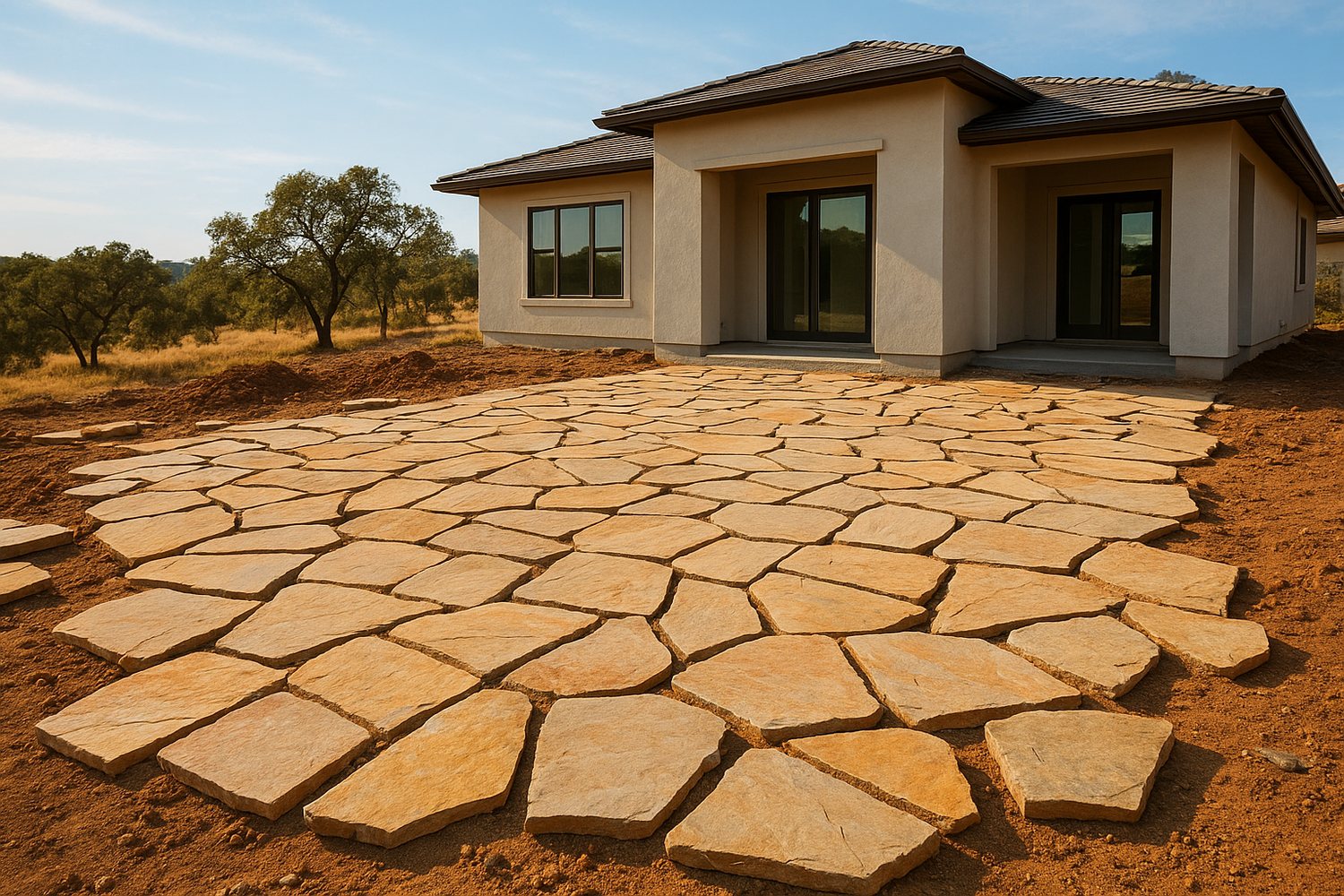
Flagstone Thickness: Choosing the Right Stone for Every Outdoor Use
Flagstone thickness matters for patios, walkways, pool areas, and outdoor features. Learn what works best in our climate and soil conditions.
Choosing flagstone and natural stone is about more than looks. The right thickness makes all the difference for strength, safety, and stability.
Understanding Flagstone Thickness
Flagstone and natural stone come in a variety of thicknesses, each serving distinct construction purposes. Choosing the right thickness is crucial for both appearance and function, especially in California’s climate and soils. In the Rocklin, Roseville, Granite Bay, Folsom, and Auburn areas, not every stone performs equally.
Generally, flagstone comes in three main ranges: thin (under 1 inch), standard (1–2 inches), and heavy-duty (over 2 inches). Each works best for specific projects and base preparations. The intended use directly guides what to buy.
Understanding thickness is important for safety, maintenance, and comfort underfoot. Homeowners benefit from starting with the end use, then working backward to the fit-for-purpose stone—with advice from experienced contractors.
- Thin: often decorative, not load bearing
- Standard: versatile for most patios and walkways
- Heavy-duty: for driveways and high-load surfaces
Want more details? See ourFlagstone and natural stone guidefor a full overview.
Flagstone for Patios: What Works Best?
The most popular use for flagstone in our region is patios. A smooth, even surface is ideal for furniture and foot traffic. In Northern California, a 1.5–2 inch thick stone is recommended for enduring stability on well-prepared bases.
Patios experience shifting from local soils and temperature swings. Thicker flagstone resists breakage, especially when installed over sand and compacted base. Thinner stone may work only if mortared over concrete.
For most backyard patios, choose stones in the standard range and avoid overly thin or uneven slabs. Thicker pieces mean fewer seams and a better long-term surface that stays level despite weather and use.
- 1.5–2 inches ideal for patios on gravel or sand bases
- Thick enough to resist shifting and breaking
- Ensures stability across clay soils common in the region
Choosing Flagstone for Walkways
Walkways see concentrated foot traffic and edged wear. A thickness of 1.25–2 inches holds up well, minimizing wobble when installed on compacted base. Thinner flagstone might tilt or crack, which can be a trip hazard.
In shaded or damp areas, flagstone is often mortared or set over concrete to prevent shifting and weed growth. If you’re considering a dry-set path, thicker pieces are less likely to move over time as soils settle.
Consider both width and thickness for walkways, but never sacrifice stability for looks. Consistent thickness creates a safer and smoother route between landscape features or along the side of a home.
- 1.25–2 inch stone for walkways
- Thicker is better for dry-set paths
- Mortared installation can allow for slightly thinner material
| Project Type | Recommended Thickness | Installation Method | Key Benefit | Notes |
|---|---|---|---|---|
| Patio | 1.5–2 in | Dry-/wet-laid on compacted base | Stable, long-lasting | Thicker stones for clay/loam soils |
| Walkway | 1.25–2 in | Dry-set or mortared | Safe and level | Go thicker for high traffic |
| Driveway | 2–3 in | Mortared over reinforced slab | Resists heavy loads | Requires proper sub-base |
| Steps | 2 in minimum | Mortared or set | Safe, non-flexing | Wider treads need more thickness |
| Decorative Use | Under 1 in | Mortared to surface | Lightweight, easy install | Not for walking surfaces |
Driveways, Steps, and Heavy-Duty Areas
Driveways, steps, and areas supporting vehicles or frequent heavy use demand thick flagstone. Stones 2–3 inches thick—or more—on a reinforced concrete base are standard for these settings.
These outdoor surfaces require not just thickness, but also toughness and a proper base. In Rocklin, Folsom, and similar climates, freeze-thaw isn’t a big issue, but clay soils may move, so a solid sub-base is essential.
Choose flagstone rated for these loads: not every species or type will survive driveway wear. For steps, both tread thickness and length matter to prevent cracking or movement under repeated impact.
- 2–3 inch flagstone for vehicular use
- Only recommended over proper concrete bases
- Check with a contractor for local soil considerations
Flagstone vs. Other Natural Stone Options
Flagstone is popular for its natural look and flat surface, but it’s just one of several natural stone materials available. In our area, slate, quartzite, sandstone, and bluestone are common alternatives. Each differs in density, slip resistance, and thickness requirements.
Other stones may come in irregular shapes or more uniform paver cuts. Some types, like slate, can be split thinner but might become brittle if not installed correctly. Always match thickness to both material and use-case.
Consulting an expert helps avoid costly mistakes. Local professionals weigh both stone type and thickness recommendations against each project’s function and appearance.
- Slate: best for covered patios or low-traffic areas
- Quartzite & bluestone: very dense, suitable for all uses
- Sandstone: attractive, but check durability before using for driveways
Explore all your options with ourmaterials overview page.
Regional Considerations: Soils, Climate, and Maintenance
Our region’s soils—especially in Placer and Sacramento Counties—range from rich loam to clay, which expand and contract seasonally. Choose flagstone thicknesses that resist movement and minimize cracking for long-term satisfaction.
Climate plays a major part. While freeze-thaw is less severe here than up north, hot summers mean extra expansion and contraction. Thicker stones buffer these swings better than thin materials.
Maintenance is also a factor: joints between thin stones open faster, encouraging weeds and shifting. Well-chosen thicknesses not only look good but also reduce upkeep for busy homeowners.
- Thicker stone for clay-rich soils
- Consistent thickness = fewer maintenance headaches
- Climate-tested materials hold up longer
Installation Techniques for Each Thickness
Proper base preparation is the key to lasting flagstone installations. Thinner stone—under 1 inch—should only be mortared over a concrete slab to avoid breakage. For standard 1.5–2 inch flagstone, a dry or wet-laid system works on well-graded compacted base.
Heavy vehicular areas always require extra reinforcement beneath the flagstone, typically a poured and cured concrete slab. Joints can be filled with grout, polymeric sand, or decorative rocks, tailored to the stone thickness and desired aesthetic.
Partnering with a contractor experienced in flagstone and natural stone placements gives the best outcome. They know which regional sands and gravels promote enduring strength, and how to level and space thicker flagstone for both beauty and longevity.
- Thin stone: mortar over concrete only
- Standard: dry- or wet-laid on compacted base
- Thick: always reinforced sub-base for high-load areas
Making the Smart Choice for Your Project
Every home and landscape is unique. Start with where and how you’ll use your natural stone, and use these thickness guidelines to narrow down choices. Regional knowledge is invaluable with California’s mix of soils and sun.
Discuss your site conditions, project goals, and budget with an experienced hardscape contractor. Their hands-on understanding, developed over decades, ensures that you invest in materials built to last for our particular climate and ground conditions.
Take your time evaluating flagstone samples and thicknesses. Whenever in doubt, go with slightly thicker material and solid base prep—it often means fewer problems and more enjoyment down the road.
- Assess traffic and load: more weight = thicker stone
- Get local advice on base prep and best-fit materials
- Quality installation makes all the difference
Ready to get specific advice for your yard?Request a consultationwith our team.
Planning a materials project?
Call or text 916-741-0633, or email sales@californiahardscapes.com with your address, a short description and a few photos, and we will arrange a consultation.